How a Medieval Port Lost, and Regained, Its Freedom
In the first years of the thirteenth century Bishop’s Lynn looked like a town with a future. The Wash was a broad highway to the North Sea and the shipping lanes of the Low Countries. The geography was not simply convenient; it was commercially decisive. Even before Lynn’s best documented medieval growth, the place was already a working market town with river access, coastal connections, and a bishop as lord who had every reason to encourage rents and trade.

In such a setting, “civic freedom” was not a philosophical idea. It was a set of practical privileges which determined who held courts, who collected tolls, how disputes were settled, and how confidently merchants could do business beyond their own gates. Lynn received those privileges from the Crown in 1204, then lost them in the political turmoil of Henry III’s minority, and regained them in 1223. The sequence is dramatic, but it is not a mere local curiosity. It shows how conditional borough liberty could be in medieval England, and how quickly a town could be punished when the king judged it disloyal.
A Free Borough, but Not a Free Hand
On 14 September 1204 King John granted a charter to the burgesses of Lynn. The document is a major survival in the town’s record tradition, still treated by the Norfolk Record Office as one of the earliest and most significant items in the borough archives. It granted Lynn the status of a free borough, a milestone which provided a legal and economic framework for an already thriving place to continue developing as an urban community and commercial centre.
The substance of the grant matters. The charter associated Lynn with the customs of Oxford, a common medieval device: a smaller town was given a ready model, rather than being left to improvise law and procedure from scratch. It also granted extensive exemptions from tolls and similar charges across England, with the important exception of London, and it recognised the borough’s right to have a merchant guild. These were not decorative clauses. Toll exemptions reduced trading costs in a world where every bridge, market, and lordship might have its own demands. A recognised guild helped merchants regulate local commerce and protect collective interests, even if that regulation served a narrow oligarchy rather than the whole population.
Yet Lynn’s chartered “freedom” had limits built into it. The charter explicitly saved the existing liberties and customs of the bishop of Norwich (and other lords with interests in the town – such as William d’Aubigny II). That kind of saving clause is more than polite legal wording. It reveals the town’s unusual situation: Lynn was being encouraged to behave like a free borough, but it still lay within a powerful ecclesiastical lordship. The ambiguity could be productive, allowing town and bishop to coexist when interests aligned, but it could also produce friction, misunderstandings, and occasional conflict.

This is the first key point for understanding what happened later. Lynn’s liberties rested on royal authority, but they were exercised in a place where another lord’s rights were also entrenched. Borough independence in such circumstances was always partly negotiated, and it could become suddenly fragile when wider politics turned violent.
Civil War on the Fen Edge
King John died in October 1216 in the midst of a civil war which had begun as a crisis over Magna Carta and widened into a struggle for the throne after the rebel barons invited Prince Louis of France to England. Henry III was nine years old, and the realm was held together by the regency government around William Marshal and the papal legate. In many regions, loyalties were uncertain, provisional, and sometimes opportunistic.
Eastern England was not a quiet backwater during these years. The Fenlands and the Isle of Ely could foster resistance because the landscape offered concealment and made royal control difficult. Lynn, as a port on the edge of that world, inevitably felt the pull of regional politics. If the town’s merchants had profited from royal favour in 1204, they also had to live through the dislocation and pressure which followed.
Later local historians believed that men of Lynn were drawn into the rebel cause during this period and that their participation had consequences for the borough as a corporate body. Henry J. Hillen’s narrative, though written in the early twentieth century and often coloured by the tone of civic history, preserves a specific tradition: Lynn’s disloyalty was connected with fighting near Littleport, and after the rebels were “severely handled” the town paid a price.
It is worth being careful here, because the surviving evidence is not as clear as one might like. We do not possess a tidy record of a town assembly formally “voting” for rebellion. Medieval towns rarely leave that sort of evidence, and in any case political action often rested with leading men rather than the whole community. What mattered to the Crown was that boroughs were treated as corporate entities. If a group of townsmen fought against the king, the town could be punished as if it had acted with one will. The corporate identity created by charters was also a mechanism for collective discipline.
How Lynn “Lost” its Charter
After the defeat near Littleport, Hillen states that “the chartered rights of Lenne were forfeited”. That phrase should not be read too literally as a ceremonial destruction of a parchment. In practice, a forfeiture could mean that the charter’s protections were treated as suspended. Liberties might be withheld, local courts overridden, privileges disregarded by royal officials, and the borough’s claims placed in jeopardy until the king chose to restore them.

The punishment was not only legal. Hillen also records the burning of twenty-two tenements beyond the East Gates, explained as being “for the safety of the burgh”. Whatever defensive argument was offered, the effect was unmistakable. Burning properties outside a gate was a grimly effective statement: the town’s outer fringe, where houses were both part of the community and vulnerable to attack, could be sacrificed to enforce obedience. It was a reminder that the Crown could reach into the texture of ordinary urban life, not merely into the formal wording of charters.
Even so, the punishment appears to have been calibrated. A king who needed revenue and stability had little interest in permanently wrecking a functioning port. Lynn’s trading position was useful, and a prosperous harbour could be turned back into a loyal one more profitably than it could be obliterated.
Lynn’s Route Back: The Apology that Cost Seven Shillings and Eight Pence
The forfeiture did not last long. According to Hillen, the town gathered to consider “the gravity of the situation”, and Richard de Oxwikes was deputed to approach the king with penitential apologies and a request that the borough be restored to the position granted by its earlier charter. Hillen adds a revealing practical detail: the cost of the mission was recorded as seven shillings and eight pence. It reads like the sort of small, concrete financial note that survives when a community is keen to document the steps it took to repair damage and re-enter royal favour.
The decisive moment came in February 1223. Hillen dates a confirmatory charter of Henry III to 6 February 1223, issued at Westminster, which confirmed and prolonged the liberties.
It is tempting to treat this as a neat moral tale: the town repented, the king forgave, and harmony returned. Medieval kings did indeed use pardon as a political language, but this restoration is better understood as an act of government. In the early 1220s Henry III’s realm was still being stabilised after years of civil war and invasion. Loyal, productive towns mattered. They paid customs, supported markets, supplied shipping, and offered administrative footholds in regions where magnates and ecclesiastical lords were powerful. Lynn’s submission offered the Crown a chance to turn a troublesome borough back into a useful one. The restoration was therefore not only mercy; it was a settlement which served royal authority and royal revenue.

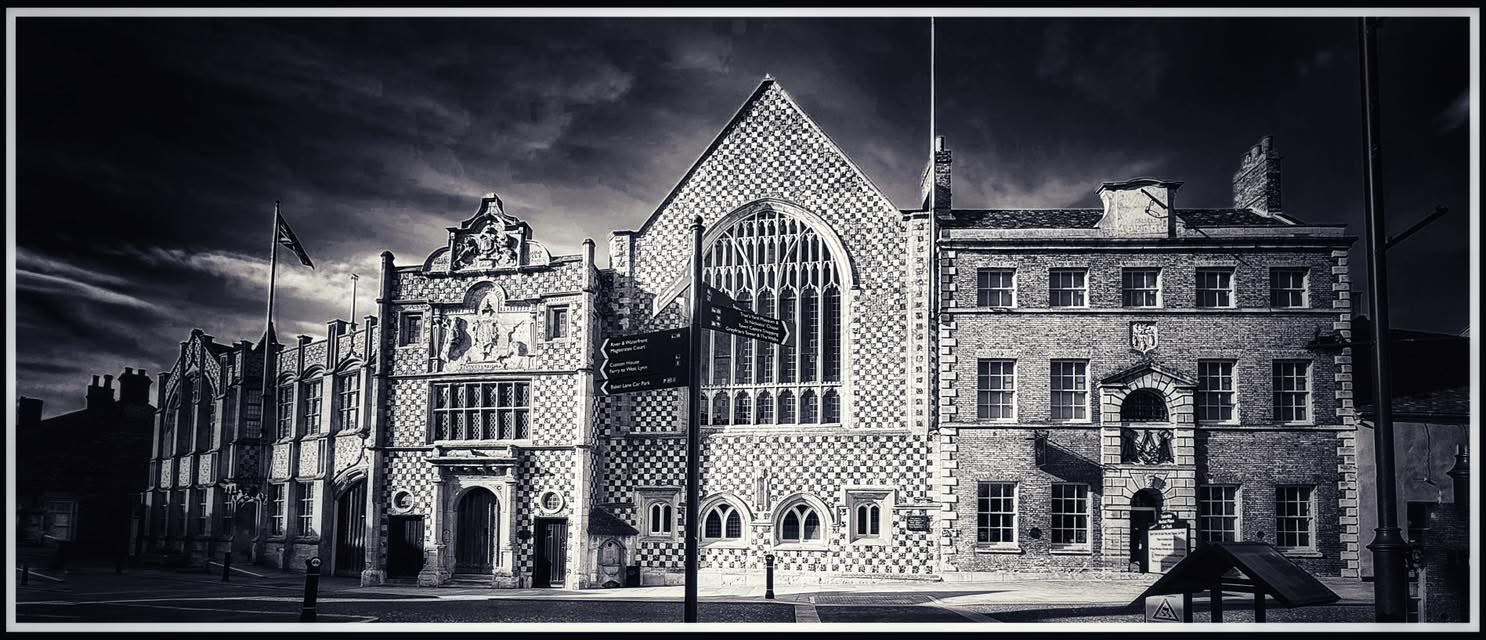
Photo © James Rye 2023
Consolidating Freedom: Later Confirmations and a Mayor
Lynn’s regained liberties were reinforced later in Henry III’s reign. Hillen lists two further charters, dated 14 April 1255 (at Windsor) and 26 March 1268 (at Westminster). The charter of 1268 is particularly important in the town’s constitutional development because it confirmed earlier grants and permitted the inhabitants to elect a mayor, in accordance with a previous ecclesiastical charter from the bishop and chapter of Norwich.
That last element deserves emphasis. Even the right to elect a mayor, often treated as a hallmark of civic maturity, is presented as resting on both royal and ecclesiastical foundations. Lynn’s liberty was not a straight line away from lordship into independence. It was a set of negotiated powers operating within a framework where king and bishop remained decisive players.
What Lynn’s Setback Reveals About Medieval Liberty
Lynn’s experience in the years between 1216 and 1223 is a sharp corrective to comfortable stories about inevitable civic progress. Borough charters were enormously important, but they did not create permanent rights. They created delegated authority. A charter could strengthen a community’s identity, improve its commercial position, and stabilise local governance, but it remained tied to loyalty and usefulness. When the Crown judged a town disloyal, liberties could be treated as forfeit. When the Crown saw advantage in reconciliation, those liberties could be restored and even extended.
In other words, Lynn’s “civic freedom” was a relationship. In the early thirteenth century, relationships between Crown and borough could be strained rapidly by war. They could also be repaired by apology and political calculation. Lynn survived because it mattered economically, because it knew how to submit when it had to, and because royal government had reasons of its own to welcome it back.
© James Rye 2026
Listen to the Seven Shilling Apology Podcast on this material.
Book a Guided Walk with a Trained and Qualified King’s Lynn Guide
Further Reading
- Hillen, Henry J. History of the Borough of King’s Lynn. Vol. 1. Norwich: East of England Newspaper Company, 1907.
- Norfolk Record Office. “One of King’s Lynn Borough Archives’ earliest documents: the Charter of King John to the Burgesses of Lynn, 14 September 1204.” Norfolk Record Office Blog, October 21, 2016.
- Richards, William. The History of King’s Lynn. Vol. 1. King’s Lynn: W. Whittingham, 1812. Digitised text at Reading Rooms.
- Rye, James. “King’s Lynn’s Charters.” Circato (Circato.co.uk). https://circato.co.uk/kings-lynns-charters Accessed February 22, 2026.
- Turner, Ralph V. King John. London: Longman, 1994.