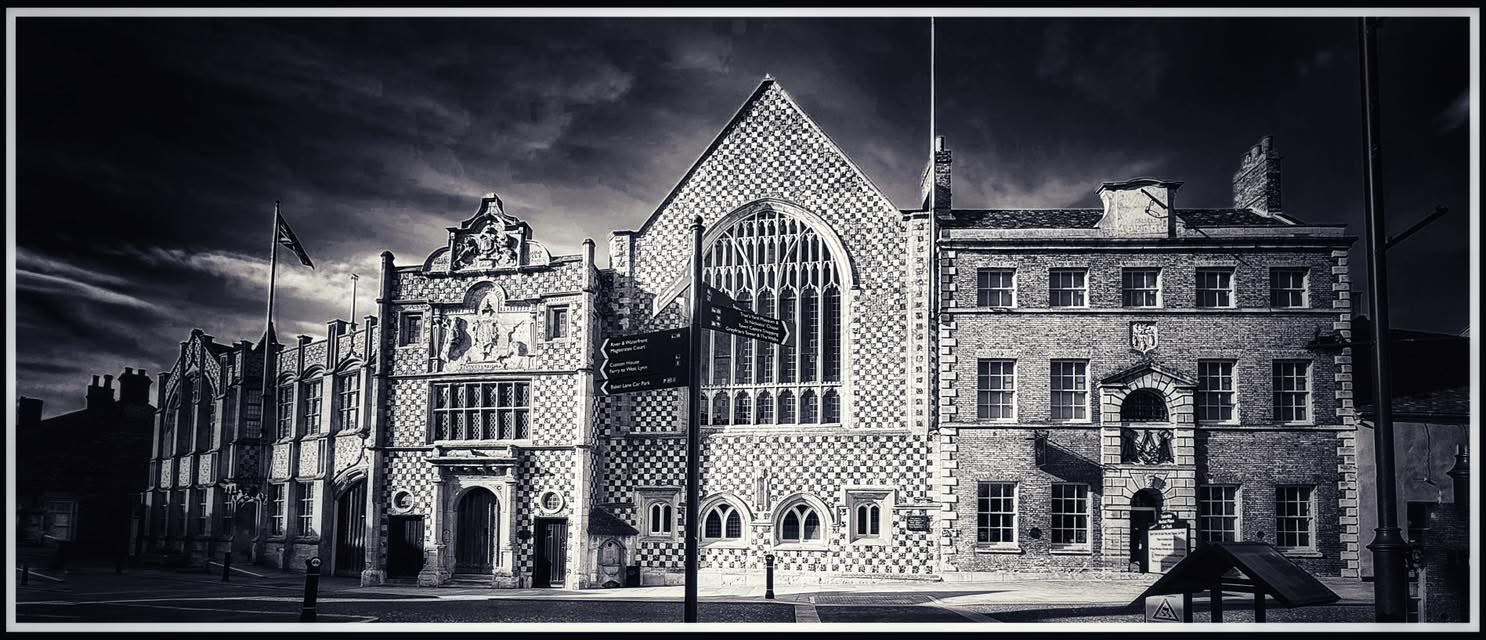
Sometime in 1592, William Shakespeare may have walked into King’s Lynn with a company of travelling actors. He was not yet thirty and was only […]
Read moreCategory: King’s Lynn History
Information about the history of King’s Lynn
The Corpus Christi Guild: How a Single Candle Led to One of Medieval Lynn’s Wealthiest Guilds
In 1349, as the Black Death swept through Bishop’s Lynn, three townsmen noticed something that troubled them deeply. The consecrated bread, which Catholics believed to […]
Read moreThe Norfolk Potters Who Conquered the North Sea: Grimston, Pott Row, and Medieval King’s Lynn
How a small Norfolk community became an unlikely centre of international trade, producing pottery that travelled from the streets of Bishop’s Lynn to the merchants […]
Read moreA Shorter History of King’s Lynn
Chronological Timeline of King’s Lynn 1100 Years of King’s Lynn History Before 1100 – Lynn’s Saxon Beginnings c. 9th–11th centuries: A small coastal community forms […]
Read moreThe Sinner and the Dragon: St Margaret’s, King’s Lynn
We all have three lives: a public life, a private life, and a secret one. Gabriel García Márquez The novelist García Márquez once said that […]
Read moreThe King’s Lynn Bank That Helped Create Barclays
The riverside restaurant at Bank House was once a bank counting house. Clerks worked behind its arched windows, handling merchants’ bills, paying out gold, and […]
Read moreVotes for Women: The Suffrage Campaign in King’s Lynn
The struggle for votes for women has left us some unforgettable images: Emmeline Pankhurst addressing crowds, suffragettes chained to railings, arrests, hunger strikes, and force-feeding. […]
Read moreHow People Remade the Great Ouse at King’s Lynn
The river beside King’s Lynn looks natural. It is anything but. Over perhaps nine centuries people diverted rivers, cut new channels, blocked old ones, constructed […]
Read moreSt George’s Guildhall: King’s Lynn’s medieval theatre
Beneath the modern seating of St George’s Guildhall lies an oak floor built more than 600 years ago. It survived religious upheaval, Georgian theatre managers, […]
Read moreThe Gunpowder Chapel: The Red Mount and the Siege of King’s Lynn, 1643
For centuries, the Red Mount Chapel has been one of King’s Lynn’s most unusual buildings. Built for medieval pilgrims, it later became a store for […]
Read moreWhen Lynn’s Mayor Became an Enemy Alien
In 1272 the king’s officials described John de St Omer as a merchant of Lynn. A year later he was a burgess. In 1277 Edward […]
Read moreWhen London Came to Lynn: Council Housing and the Overspill Years
For Lynn people who remembered the town before the Second World War, its expansion during the 1960s must have been astonishing. Streets and houses spread […]
Read moreSir John Turner: The Wine Merchant Who Gave King’s Lynn Its Grandest Face
A Man Hidden in Plain Sight Sir John Turner is one of those late Stuart figures who changed the look of King’s Lynn without quite […]
Read moreThe Chapel That Refused to Stay Small: Inside St Nicholas’ Chapel, King’s Lynn
From the outside, St Nicholas’ Chapel is impressive enough. Its long walls, enormous windows and slender spire announce a building of unusual ambition. Step through […]
Read moreWhen Pigs Ruled the Streets of Medieval Lynn
In September 1331, the authorities in Bishop’s Lynn decided that something had to be done about the pigs. Too many were wandering through the streets, […]
Read moreBank House: Wine Vaults, a King, a Tollbooth, and a Bank
The statue of Charles I above Bank House may be older than the building supporting it. The vaults beneath the garden were discovered, forgotten, and […]
Read moreSeven Dangerous Days: King’s Lynn and the Wrong Queen
On 11 July 1553, Sir Robert Dudley arrived in King’s Lynn with a demand. The town must recognise Lady Jane Grey as Queen of England. […]
Read moreWhen Lynn Tried to Tax Invisible Georgian Wealth
In Georgian King’s Lynn, the hardest wealth to tax was the wealth that moved. A house stood still. A field could be measured. Rent could […]
Read moreFrom Clay Holes to a Steel Whale: The Strange Survival of Harding’s Pits
Why does a giant whale stand beside the River Nar at the southern entrance to King’s Lynn? The answer lies beneath the grass. Harding’s Pits […]
Read moreWho Would Look After Emma? A Widow’s Fight in Medieval King’s Lynn
The house was locked. Emma de Beston was gone. When the royal official arrived to place her in her uncle’s custody, he found neither the […]
Read moreThe Day Lynn Burned in Norway
On 22 April 1393, twenty-one buildings belonging to English merchants went up in flames. Their goods were seized, merchants were captured and ransomed, and valuable […]
Read moreThe Sluice King’s Lynn Wanted Destroyed
A threat thirty miles up river On 6 January 1696, Edmund Hooke, mayor of King’s Lynn, appealed to William Russell, Duke of Bedford, about a […]
Read more“None Were Stiffer”: How King’s Lynn Fought Edward VI for Its Guild Lands
In 1547, the government of the young Edward VI prepared to take the property of England’s chantries and religious guilds. King’s Lynn’s representatives in Parliament […]
Read moreCampbell’s in King’s Lynn: The Rise and Fall of the Soup Factory
The red tower on Hardwick Road For more than fifty years, Campbell’s was one of the landmarks by which King’s Lynn announced itself. The factory […]
Read moreNine Centuries Under One Roof: Inside St Margaret’s Church, King’s Lynn
St Margaret’s looks like a great medieval church, but look more closely. Its nave is largely Georgian, its floor is Victorian, medieval merchants lie beneath […]
Read moreKing’s Lynn’s Victorian Engineering Revival: Aickman, Savage, Dodman, and Cooper
By the end of the nineteenth century, King’s Lynn could manufacture a locomotive, a steam traction engine, a fairground galloper, a marine boiler, and agricultural […]
Read moreMargery Kempe and St Margaret’s: The Church at the Centre of Her Lynn
Margery Kempe is usually remembered for her visions, her tears, and her extraordinary journeys. Yet one of the strongest threads running through The Book of Margery […]
Read moreThe Ballroom Built to Keep Out the Town?
A King’s Lynn tradition says that Edward Everard built a private ballroom at his house opposite St Margaret’s Church because he did not want his […]
Read moreThe Exorcist’s House: Who Lived Beside St Nicholas’s Chapel?
The iron numerals on the gable say 1635. Yet the little house beside St Nicholas’s Chapel is said to have belonged to a medieval exorcist. […]
Read moreA New Road Through Old Lynn: The Creation of London Road
Stand in London Road and look south towards the South Gate. The broad street seems to belong to the medieval gateway. It runs straight towards […]
Read moreWhen the King and Queen Visited Lynn
Recorded and possible visits to Lynn by monarchs, royal consorts, future monarchs, and two royal princes whose visits help to explain the reception given to […]
Read moreWhen King’s Lynn Ships Sailed for Africa
On 18 November 1738, the Elizabeth was entered in King’s Lynn’s Town Dues Book. Part of her business looked unremarkable. Edward Everard, a leading Lynn merchant, was […]
Read moreWas Herbert de Losinga Really “Herbert the Flatterer”?
The name Herbert de Losinga looks straightforward. Medieval names containing de usually identify a person’s place of origin. William de Warenne came from Varenne, Robert de Beaumont […]
Read moreMarriott’s Warehouse: 700 Years on Lynn’s Waterfront
Marriott’s Warehouse has been standing beside the Great Ouse for so long that its familiar name is almost misleading. The Marriotts belong to only the […]
Read moreThree Ways of Seeing the River: Art on King’s Lynn’s South Quay
A steel rack crowded with fish stands beside Marriott’s Warehouse. Farther north, a bronze column measures the river’s rise. At the end of the quay, […]
Read moreThe Blue Death in Lynn: Cholera, Poverty, and the Streets of a Sick Town
On 5 July 1832, the curate of St Margaret’s recorded the near destruction of one Lynn family. Mrs Ormiston had been buried on Monday afternoon. […]
Read moreEngland’s War with the Hanse: The Treaty That Gave Lynn Its Steelyard
In April 1475 Edward IV transferred a collection of houses opposite St Margaret’s Church in Lynn to the German Hanseatic merchants. They acquired accommodation, storage […]
Read moreThe Soldiers Who Stayed: Lynn’s Ten Years as a Garrison Town, 1643–1653
When King’s Lynn surrendered to Parliament on 16 September 1643, the immediate price of defeat was £3,200. The Corporation had to find the money to […]
Read more“As Long as the World Shall Endure”: Lynn’s Lost Chantries
Thomas Thoresby intended to be remembered for ever. When the wealthy Lynn merchant died in 1510, he left behind a college beside St Margaret’s Church […]
Read moreA Refuge on the Sands: George Holditch and the Lynn Life-Beacon
A ship could run aground in the Wash and its crew might feel, for a few hours, that they had been lucky. As the tide […]
Read moreWhat King John’s 1204 Charter Really Did for Lynn
On 15 September 1204, the morning after King John granted Lynn its royal charter, the town probably looked much as it had the day before. […]
Read moreThe Red Register of King’s Lynn: A Medieval Port Written on Paper
The book rather than the monument King’s Lynn has never lacked visible evidence of its medieval importance. The Guildhall still holds the eye. St Margaret’s, […]
Read moreWhen Lynn Went Fishing in Iceland
In the autumn of 1467, sailors from Bishop’s Lynn reached Iceland and killed the Danish king’s governor, Björn Þorleifsson. They plundered his household, burned buildings, […]
Read moreGustav Metzger in King’s Lynn: the artist who learnt destruction beside St Nicholas’ Chapel
A refugee artist on the Tuesday Market Place In the mid-1950s, shoppers on King’s Lynn’s Tuesday Market Place may have noticed a thin, intense young […]
Read moreOne Master, 230 Boys: King’s Lynn’s Lancasterian Schools
On Wednesday, 11 May 1808, a new school opened in King’s Lynn for 230 boys. One master was expected to teach them all. Under conventional […]
Read moreBehind the Georgian Façade: How King’s Lynn Put a New Face on an Old Town
Stand in King Street or Queen Street and choose one of the most orderly Georgian façades. Now imagine removing it. Behind the sash windows and […]
Read moreWool, Wine, and Wheat: How King’s Lynn Made Its Money
King’s Lynn’s history is written in movement. The town grew where river traffic could meet sea traffic, and where inland produce could be gathered, stored, […]
Read moreAll Saints’: King’s Lynn’s Oldest Church
All Saints’ Church looks stranded in the middle of Hillington Square, as though the medieval building were an afterthought in a modern housing development. The […]
Read moreThe Sailors, the Mayor, and the Battering Ram: King’s Lynn’s Strike of 1814
A crowd with a heavy timber stood outside King’s Lynn’s gaol in December 1814. Inside were imprisoned sailors. Their supporters intended to batter down the […]
Read moreHow Did Herbert de Losinga Find £1,000 to Buy a Bishopric?
In about 1091 Herbert de Losinga made William Rufus an extraordinary financial offer. Herbert became Bishop of Thetford, while his father, Robert, was installed as […]
Read moreThe Church Lynn Took Apart: The Rise and Fall of St James’ Chapel
Behind the former Methodist chapel near London Road stands a fragment of flint wall containing a broad, altered window. It is an unassuming remnant of […]
Read moreLinay’s Yard: The Lost Court Behind Friarscot
Behind Church Street, where Friarscot now looks across its quiet garden, there was once a narrow yard containing nine houses, three privies and enough foul […]
Read moreFrom the Purfleet to the Prison Camp: King’s Lynn and Norman Cross
On 2 April 1797, six transport vessels entered King’s Lynn harbour carrying about 900 French prisoners of war. Lynn was used to ships bringing coal, […]
Read moreTwo Witches of Lynn? Margaret Read, Mary Smith and the Evidence
There is a curious mark on the brickwork of the Tuesday Market Place which generations of Lynn people have known as the Witch’s Heart. According […]
Read moreWhen Lynn’s Coal Measurers Cheated the King
On 11 July 1701, royal customs officers brought an embarrassing accusation before King’s Lynn Corporation. Men employed in the port had been taking bribes, falsifying […]
Read moreHow Bishop’s Lynn Helped Pay for Agincourt
In the summer of 1415, Henry V was preparing to invade France. Soldiers had to be paid, horses transported, provisions purchased and hundreds of ships […]
Read moreWhen the King Took Control of King’s Lynn: The Corporation Crisis of 1684–88
In June 1688, King James II effectively sacked the government of King’s Lynn. Mayor Robert Sparrow was removed from office. So were five other aldermen, […]
Read moreBefore the Great Ouse: The Lost River of King’s Lynn
Stand on King’s Lynn’s quayside and the Great Ouse seems permanent. The town faces it, streets lead towards it, and for centuries ships have entered […]
Read moreThe Bonfires of Lynn: Tracing the Town’s Reformation Purges, 1552–1568
Ask most people what happened to King’s Lynn’s Catholic past at the Reformation and you’ll likely get a single mental image: a mob, a market […]
Read moreThe Community That Vanished: The Pogrom against Lynn’s Jews in 1190
In March 1194, representatives of England’s Jewish communities met at Northampton. King Richard I had returned from captivity, and the Jews of England were ordered […]
Read moreMadam Mayor Takes the Chair: Ada Coxon and a King’s Lynn First
A woman in an old civic chair In November 1925, Florence Ada Coxon became the first woman mayor of King’s Lynn. The borough had been […]
Read moreThe Songs Vaughan Williams Found in King’s Lynn
On 15 January 1905, Ralph Vaughan Williams sat down at Cozens’ Temperance Hotel in King’s Lynn and wrote to his cousin. After mentioning plans to […]
Read moreKing’s Lynn in the Nineteenth and Twentieth Centuries: Port, Industry, and Change
In 1800, King’s Lynn was still recognisably the town it had been for centuries. Ships crowded the river and quays, merchants traded from substantial houses […]
Read moreWhen the Peasants’ Revolt of 1381 Reached Bishop’s Lynn
On 18 June 1381, the king’s peace was formally proclaimed in Bishop’s Lynn. It did not work. According to evidence later given to royal justices, […]
Read moreThe Lawns Above the Bodies: St James’ Park, King’s Lynn
The lawns of St James’ Park cover one of King’s Lynn’s former burial grounds. Men, women, and children still lie beneath the grass, but the […]
Read moreKing’s Lynn in Fiction: From Stories about Margery Kempe to Murder Mysteries
Novels set in King’s Lynn have imagined the town as a Georgian port, medieval Bishop’s Lynn, a centre of queer working-class life, and the headquarters […]
Read moreAround 48 Unemployed! When the Monks and Friars Left Lynn
On 30 September 1538, two of Lynn’s religious houses surrendered to the Crown. At Whitefriars, Robert Newman, the prior, and ten companions signed. At Austin […]
Read moreMilk, Sewage, and Cleopatra’s Needle: King’s Lynn’s Forgotten Chemist
In 1881 the drinking water of King’s Lynn received an impurity score of 110. A month later it had improved dramatically, falling to 48. Within […]
Read moreThe Dutch Captain, the Ship-Boys, and the Scandal Lynn Tried to Contain
In late July 1608, a furious Dutch shipmaster stepped into one of the most uncomfortable episodes in the civic history of King’s Lynn. His name […]
Read moreElsden’s Almshouses, Friars Street: The Gift That Had to Wait
The history of Elsden’s Almshouses contains a date that refuses to behave. Later directories say that they were founded in 1842. The buildings in Friars […]
Read moreWhen War Came Out of the Sky: King’s Lynn and the Zeppelin Raid of 1915
A quiet January night On Tuesday, 19 January 1915, King’s Lynn became part of a frightening new kind of war. The First World War was […]
Read moreTwo Lost Inns of the Tuesday Market Place
Walk across the Tuesday Market Place from the Duke’s Head to the Corn Exchange and you pass between the sites of two vanished inns. The […]
Read moreThe Royal Arms of St Margaret’s: A Restoration Puzzle
High above the chancel arch in St Margaret’s Church, now King’s Lynn Minster, hangs a large, brightly painted royal coat of arms. At first sight, […]
Read moreRobert FitzWalter: The Baron Who Defied King John
In the summer of 1216, soldiers supporting a French claimant to the English throne descended on Bishop’s Lynn. They captured townspeople, carried prisoners away and […]
Read moreTide and Seek: The Purfleet and Lost Waterways of King’s Lynn
The town beneath the town King’s Lynn looks solid underfoot. Queen Street, King Street, Saturday Market Place, Tuesday Market Place, Pilot Street, Purfleet Quay, South […]
Read moreThe Gate That Stood in the Way: A History of King’s Lynn’s East Gate
According to one of King’s Lynn’s most persistent stories, the East Gate met its fate because Catherine the Great bought too much art. In 1779, […]
Read moreThe Merchants Who Busted Richard the Lionheart’s Sanctions in Bishop’s Lynn
Richard the Lionheart never needed to come to Bishop’s Lynn for his foreign policy to cause trouble there. By the later 1190s, Lynn was already […]
Read moreOrange, Blue, and Broken Hustings: King’s Lynn’s Election Riot of 1822
An Election with Two Meanings The King’s Lynn riot of June 1822 was an election riot, but it was never only about one vacant seat. […]
Read moreGrain, spectacle and survival: the Corn Exchange, King’s Lynn
Some buildings in King’s Lynn reward a second look. The Corn Exchange grabs you at once. Its front rises above Tuesday Market Place with columns, […]
Read moreMore Than a Memorial: Burkitt Homes and the Tradition of Charity in King’s Lynn
Queen Street is one of the finest historic streets in King’s Lynn. Walk its length and almost every building hints at a different chapter in […]
Read moreThe Hospital That Refused to Disappear: St Mary Magdalen at King’s Lynn
A small courtyard of brick almshouses stands on Gaywood Road on the east side of King’s Lynn. Their low roofs, Dutch gables, and enclosed court […]
Read moreFramingham’s Almshouses: the King’s Lynn charity with two founders
Framingham’s Almshouses in King’s Lynn stand beside The Walks, near the meeting of London Road and St James’s Road. Their quiet nineteenth-century buildings conceal a […]
Read moreThree horses and a fortune: what Lynn paid for King John’s charter
In September 1204, King John issued a charter to the burgesses of Lynn. The document still survives in the King’s Lynn Borough Archives, with part […]
Read moreWhen the Music Stopped: King’s Lynn and the Plague of 1636
In September 1636, the official musicians of King’s Lynn asked the Corporation for financial help. The waits normally earned money by playing at civic ceremonies, […]
Read moreMintlyn Church: King’s Lynn’s Lost Medieval Church Hidden in a Field
A little over two miles east of historic King’s Lynn stands the broken west wall of a medieval church. There is no village around it, […]
Read moreHow Did Lynn’s Samuel Gurney Cresswell Cross a Passage His Ship Never Sailed Through?
Samuel Gurney Cresswell is often described as the first Royal Navy officer to cross the North-West Passage. Yet HMS Investigator, the ship that carried him into […]
Read moreProstitution in King’s Lynn: From Medieval Meretrices to Paradise Lane
On 22 April 1852, government inspector William Lee walked into Paradise Lane and recorded one of the starkest sentences ever written about Victorian King’s Lynn: […]
Read moreThe Priest, the Son, and the Scribe: Who Helped Make Margery Kempe’s Book?
Margery Kempe’s Book did not simply appear. It was argued about, postponed, mistrusted, rewritten, and copied. Behind its survival stands a small cast of men […]
Read moreMooring Dues and Swimming Shoes: The Secret Pool of Common Staithe
The Pool Beneath the Pilot Office King’s Lynn has always had a gift for hiding excellent stories in perfectly ordinary places. On Common Staithe Quay, […]
Read moreStalls, Shambles, and Merchant Houses: Tuesday Market Place, King’s Lynn
A Market-Place Made by Water Tuesday Market Place is one of King’s Lynn’s great urban spaces, but it was never just a handsome square. Its […]
Read moreWhen the Wick Bay Broke Her Back: The Wreck that Changed King’s Lynn
A ship in the channel On a December afternoon in 1889, the iron steamship Wick Bay grounded in the approaches to King’s Lynn. She was not an […]
Read moreKing’s Lynn Press Gangs: Why 1755 Mattered
Britain and France were not officially at war in the spring of 1755. In King’s Lynn, however, sailors were already fleeing and the mayor was […]
Read moreSir Benjamin Keene: the King’s Lynn diplomat who mastered the Spanish court
At the east end of St Nicholas’ Chapel in King’s Lynn stands a great marble monument shaped like an urn. Designed by Robert Adam, it […]
Read more“This Is My Father”: The Stolen Children of Medieval Lynn
In a London street, sometime around 1416, a badly injured child saw a merchant passing through the crowd. “This is my father,” he cried. The […]
Read moreHow Lynn’s Merchants Helped Finance Edward III and the Start of the Hundred Years’ War
In April 1337, Thomas de Melchebourn of Bishop’s Lynn supplied four anchors, three cables, and rope for one of Edward III’s great ships. Two months […]
Read moreBefore the Roundabout: The Forgotten River That Built South Lynn
The road hides the river Thousands of vehicles pass through Southgates every day. Most drivers notice the medieval South Gate standing awkwardly in the middle […]
Read moreBound to the Borough: Freemen and Apprentices in Old Lynn
The names in the books The old civic records of Lynn are not quiet books. They are full of boys sent into service, craftsmen taking […]
Read moreDiana Bullock OBE and the Saving of King’s Lynn
The Headteacher Who Helped Preserve The Town At 28 Bridge Street stands one of King’s Lynn’s most remarkable historic buildings. Greenland Fishery was built in […]
Read moreThe Ship Nicholas: When Edward I’s Scottish War Reached Bishop’s Lynn
A medieval king’s war could arrive in a town in several ways. It might arrive as a royal command, a tax demand, a requisitioned cargo, […]
Read moreThe Hanseatic League, the English Crown, and King’s Lynn: A Northern Story of Privilege, Profit, and Friction
King’s Lynn’s Hanseatic past is often reduced to one striking survival: the Hanseatic warehouse by the river. That building matters, but it is only the […]
Read more