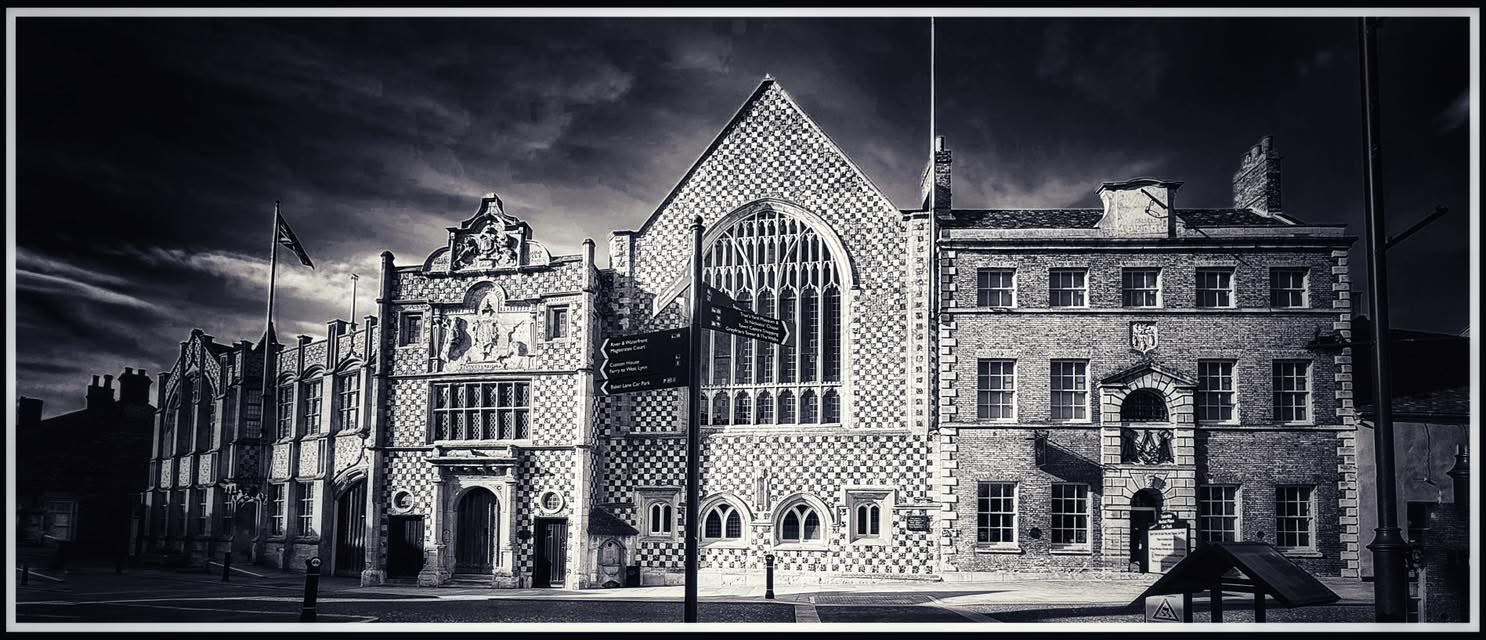
On 30 September 1538, two of Lynn’s religious houses surrendered to the Crown. At Whitefriars, Robert Newman, the prior, and ten companions signed. At Austin Friars, Prior William Wilson and ten others did the same. The next day, Greyfriars’ warden, Edmund Brygat, and nine friars followed them. Three communities, thirty-two men, and two days. These figures come from the surrender records reproduced by the Victoria County History.
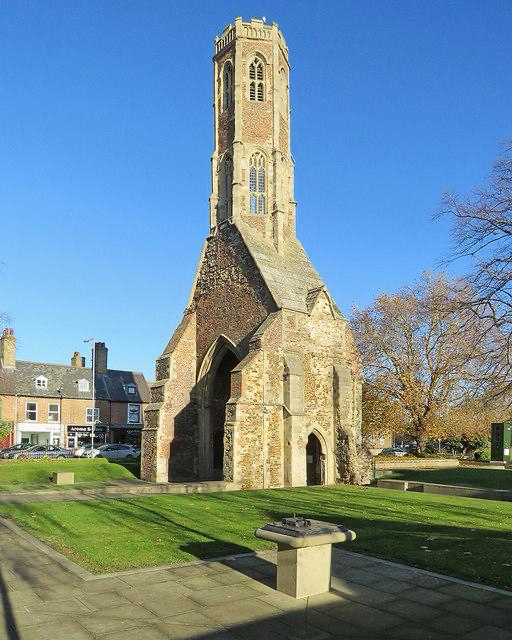
Photo © John Sutton
Henry VIII closed the religious houses after breaking with the Roman Church and declaring himself supreme head of the Church in England. Royal visitors accused many communities of corruption, poor discipline, and declining usefulness, although their reports were written to support the Crown’s policy. The monasteries and friaries also possessed valuable land, buildings, plate, and income. Suppressing them allowed Henry to remove institutions that still owed allegiance to international religious orders, seize their property, and reward his supporters. Lynn’s Benedictine priory closed in 1537, followed by the four friaries in 1538.
Blackfriars closed in the same round of suppressions. The small Benedictine priory beside St Margaret’s had already ended in 1537. Put the surviving evidence together and the best answer is about forty-eight monks and friars: roughly forty-four friars and four Benedictine monks.
That figure is a reconstruction, not a census. The records do not treat every house in the same way, and a later Lynn historian disputed one of the totals. Even so, about forty-eight is the most convincing working answer.
A town of monks and friars
Monks and friars were not the same. Lynn’s Benedictines belonged to a settled monastic community linked to Norwich Cathedral Priory. The Franciscans, Carmelites, Dominicans, and Austin Friars were mendicants. They lived in urban friaries and depended heavily on preaching, gifts, and alms.
By the early sixteenth century, their houses formed a chain through the town. Greyfriars, Whitefriars, Blackfriars, and Austin Friars survive in street names and fragments of masonry. A fifth order, the Friars of the Sack, had once been present, but its Lynn house disappeared more than two centuries before Henry VIII’s closures and does not belong in the total.
Four monks beside St Margaret’s
The Benedictine priory was never a large abbey. Founded around 1100 as a cell of Norwich, it stood on the south side of St Margaret’s Church, now King’s Lynn Minster. The Historic England research record describes its community simply as a prior and three monks. That gives us four Benedictines.
Evidence from the royal visitation of 1535 supports the picture of a very small and troubled household. The visitors, Thomas Legh and John ap Rice, reported that all but two of the community wished to be released from their vows. Two members were accused of sexual misconduct. Such reports have to be handled carefully. Henry VIII’s visitors were collecting evidence that could be used against religious houses, and allegations were not necessarily tested fairly. Even so, the report confirms that only a handful of monks remained.
When the priory ended in 1537, its property became part of the endowment of the new Dean and Chapter of Norwich. The last prior, Edmund Norwich, also known as Drake, became a prebendary there. The community vanished, but its assets and at least one of its careers were folded into the reformed cathedral establishment.
Thirty-two names in two days
The friary records are strongest for three houses. The Carmelite surrender was signed by Robert Newman and ten others, giving eleven Whitefriars. Edmund Brygat and nine others signed for Greyfriars, giving ten. Together, those documents account for thirty-two men.
The Austin Friars surrendered on the same day. Prior William Wilson and ten brethren signed the document, again giving a community of eleven. This friary had once been much larger. During the fifteenth century, when John Capgrave was among its leading members, it had been an important centre for study and preaching. By 1538 its numbers had fallen sharply.
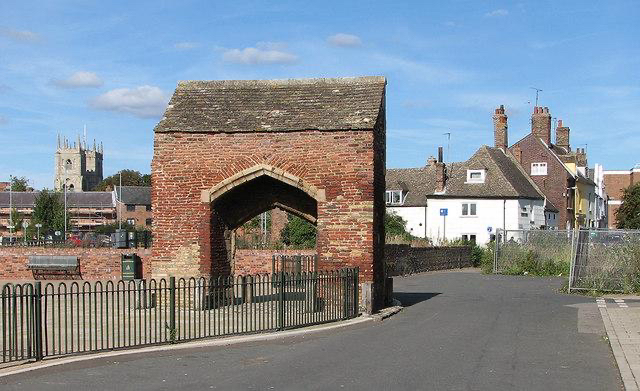
Photo © John Sutton
Blackfriars is harder. The surviving account names Prior Thomas Lovell and Robert Skott, a bachelor of theology, but does not offer the same neat modern headcount. William Richards, writing his history of Lynn in 1812, stated that the Dominican house was surrendered by the prior and eleven brethren. If accepted, that gives twelve Blackfriars.
Twelve Dominicans added to the thirty-two named at the other friaries gives about forty-four friars. Add the four Benedictine monks, and Lynn’s total comes to about forty-eight.
Why the number cannot be exact
Richards also created the main complication. An older source said that the Austin house surrendered with a prior and four brethren. Richards thought that four must be a mistake for fourteen, making fifteen Austin Friars. Yet the surviving surrender list records William Wilson and ten others, which points to eleven. The Norfolk Historic Environment Record supports this smaller figure.
If Richards’s larger Austin figure were correct, the overall total would rise from forty-eight to fifty-two. Signatures do not always equal residents, either. A sick, absent, or recently departed friar might escape the list. That is why “about forty-eight” is safer than claiming an exact total, with fifty-two as a plausible upper estimate.
Who is not included
The count answers a narrow question: monks and friars. It does not include Lynn’s parish clergy, chantry priests, chaplains, or the priests associated with the Trinity Guild and Thoresby College. Count every man in a religious occupation, and the total would be higher. They belonged to a different clerical world and should not be slipped into the monastic figure.
What Lynn lost
The suppression displaced about forty-eight monks and friars. It also ended four networks of preaching, burial, charity, learning, and patronage. Their churches, cloisters, gardens, water supplies, libraries, and burial grounds passed into new hands. Stone was sold or reused, precincts were divided, and familiar routes through the town changed.
Most of the buildings disappeared. Greyfriars Tower still rises above The Walks, Whitefriars retains its northern gate, and the Benedictine site preserves only a short length of wall within later fabric. The surrender deeds preserved something more fragile: Edmund Brygat, Robert Newman, William Wilson, Thomas Lovell, and the men who signed beside them.
The buildings mostly vanished. The names, and a few pieces of stonework, are what Lynn kept.
References
- Historic England. “Kings Lynn Priory.” Historic England Research Records. Heritage Gateway.
- Norfolk Historic Environment Service. “Site of Austin Friary.” Norfolk Heritage Explorer.
- Page, William, ed. “Friaries: Lynn.” A History of the County of Norfolk. Vol. 2. London, 1906, 426–428.
- Page, William, ed. “Houses of Benedictine Monks: The Priory of Lynn.” A History of the County of Norfolk. Vol. 2. London, 1906, 328–329.
- Richards, William. The History of Lynn. Vol. 1. Lynn: W. G. Whittingham, 1812.