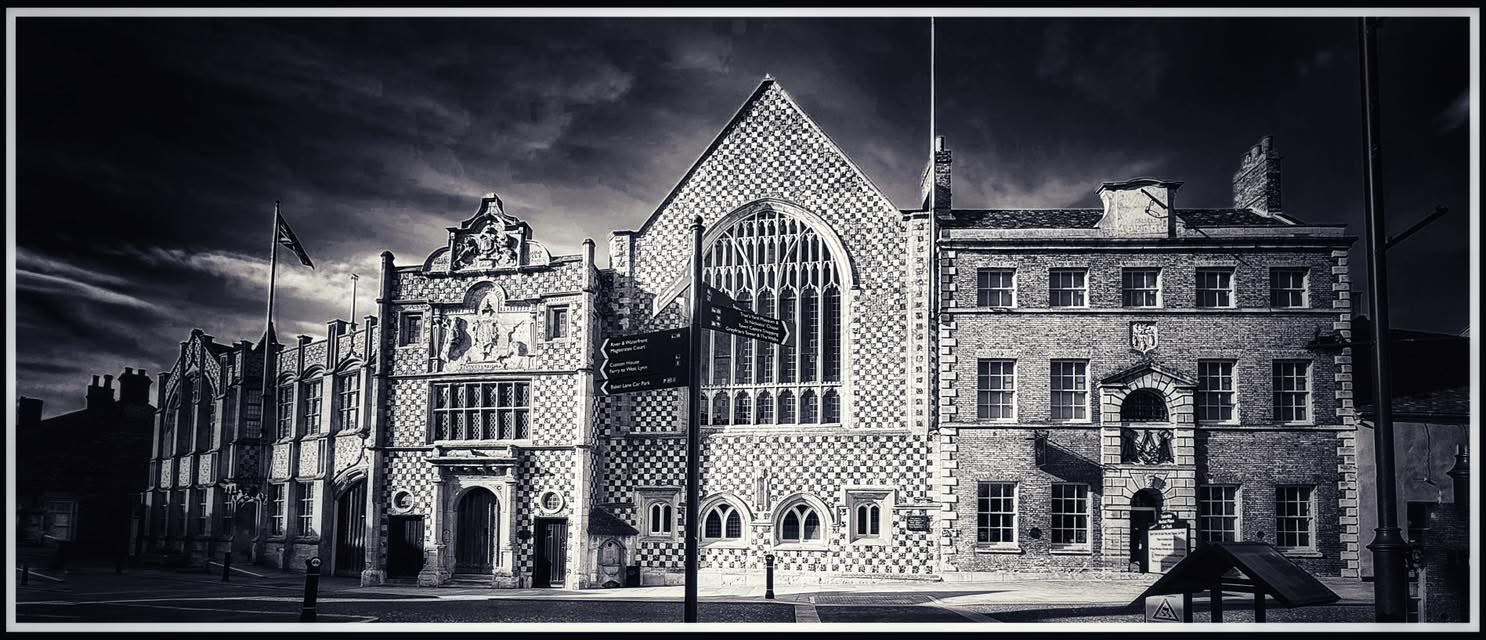
For most of its history, the building now numbered 2 Nelson Street, King’s Lynn, has been more than timber, plaster and brick. It has been a working house: an inn, a home, and a point of continuity in a town that has often changed around it. Its story is one of occupation and resilience, told through the men and women who lived and worked within its walls.
See also: The Valiant Sailor (I): The Architectural Story fo 2 Nelson Street, King’s Lynn
A Maritime Beginning
The first known residents were close to the sea in more ways than one. In the early seventeenth century, when the Mayor and Burgesses of King’s Lynn held the head lease from the Dean and Chapter of Norwich, the house was rented to William Gabb, a shipmaster active between 1634 and 1655. Lynn at that time was a port of small traders and coastal carriers, and timber-framed and jettied houses such as this were often homes to mariners who combined commerce with lodging or retail.

Photo © James Rye 2021
Later tenants reflected the same pattern of maritime prosperity. In 1663 the lessee was William Wharton, a coal merchant and Mayor of Lynn; by 1680 the property had passed to William Lynstead, surveyor of the port and himself Mayor in 1691. Their occupations hint that the house’s street-front shop bays were still in use, selling imported goods or coal by the chaldron. The rhythm of shipmasters and merchants passing through its door continued into the next century.
Becoming the Valiant Sailor
By 1728 the property appears in records as The Valiant Sailor Inn. The name is no idle flourish. Though it may have originated as a generic tavern sign, local tradition later connected it with the hero of Camperdown, Jack Crawford, who nailed Admiral Duncan’s flag to the mast during the naval battle of 1797. By the 1860s this link was celebrated in the pub’s signboard, painted by Henry Baines of King’s Lynn, depicting Crawford in action.
Another possibility is that the inn was named for Sir Charles Wager, the English admiral whose act of courage in 1689 (in attacking a much larger French ship off Cartagena) made him a popular figure in seafaring towns. Whatever its inspiration, the name suited a port like Lynn, where every other house had some connection with the sea.
The inn’s clientele would have included sailors awaiting berths, lightermen, and the workers of nearby yards. The 1841 census lists William Lemon as innkeeper, presiding over a household of twenty-five. The women were probably servants and lodgers; the men almost certainly included mariners. In its busiest years the building would have been noisy with conversation, boots, smoke, and the smell of ale from the brewery cellars below.
The Bagges of Stradsett
In 1735 John Bagge, a brewer, became the first member of his family to lease The Valiant Sailor. The Bagges, later of Stradsett Hall, built their fortune in beer and malt, and their name appears throughout the eighteenth- and nineteenth-century records of Lynn’s public houses. Their leasehold interest in the inn continued for nearly 150 years, passing from one generation to another until 1885, when Thomas Edward Bagge purchased the freehold from the Dean and Chapter.
The Bagge period coincided with the growth of Lynn’s brewing industry, and The Valiant Sailor was part of that network – one of the tied houses through which the family distributed its ale. It stood close to the heart of the old port, on what was then Lath Street, renamed Nelson Street in 1809 as part of the town’s wave of patriotic street-naming after Trafalgar.
Two separate plans, in 1805 and 1816, proposed the inn’s demolition or the removal of its jettied upper storeys, both in the name of civic improvement. Neither was carried out. The building’s survival was due less to affection than to inaction, but it meant that when other coaching inns were rebuilt in brick, the timber-framed Valiant Sailor remained, an anachronism even in its own day.
From Alehouse to Residence
The end of The Valiant Sailor as a public house came in 1925. By then, brewing in Lynn was consolidating under larger firms, and the Bagge family, having held the building for nearly two centuries, sold it off. The northern part, containing the bar and public rooms, went to Ada Ann Bell, who turned it into a private dwelling; the southern part was sold to Mary Ann Oswald and incorporated into No. 4 Nelson Street.
What had been an inn of sailors and labourers thus became two modest domestic houses. In 1926 the butcher Walter Juby purchased the northern section; it later passed through several owners, including Edward Marsh, before being bought in the early 1950s by the artist Walter Dexter.
Walter Dexter and the Artist’s House
Walter Dexter RBA, born in 1876, was a painter and potter whose work captured the life of King’s Lynn and its marshes. When he acquired the house in 1953, it had just been flooded to a depth of three feet in the great East Coast surge. Dexter repaired what he could and made a studio on the first floor, living among the exposed beams and uneven floors that later restorers would come to value.

Dexter’s residence tied the building to a different tradition: that of the artist-observer, recording local character rather than serving it from behind a bar. He remained until his death in 1958, leaving behind paintings that still surface in local collections. His life and work are best described in Charlotte Paton’s A Portrait of Walter Dexter (2014).
Colin Orchard’s Restoration
In 1966 Colin Orchard, a young man with more enthusiasm than means, bought the old house for £550. The north side still bore the scars of the 1953 flood, and part of the building was missing: the section sold off in 1925 to No. 4 Nelson Street. Orchard tracked down its owners and, two years later, repurchased it, reuniting the divided structure.
His repairs were practical rather than scholarly, but they saved the building at a time when many of Lynn’s older houses were being replaced or “modernised” beyond recognition. For the first time in half a century, The Valiant Sailor was whole again.
The Doctor at the Valiant Sailor
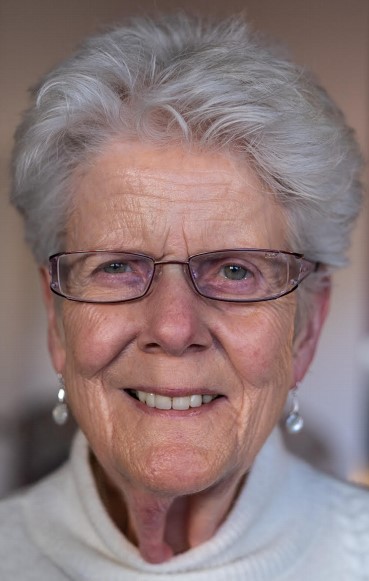
Dr Elizabeth Harrison bought the reunited property in 1971 and became its longest-serving occupant, living there for fifty-one years. Born in East London in 1940, she trained at the Royal Free Hospital and, in 1969, became King’s Lynn’s first female general practitioner. Her professional life was marked by quiet determination and public service: she introduced nurse-led family planning clinics, mentored medical students, and campaigned for UNICEF UK and the Soroptimists against human trafficking and female genital mutilation.
During her ownership, The Valiant Sailor became not only a home but a reflection of her sense of stewardship. In 1974 she undertook careful restoration with a conservation architect, uncovering two sealed dormer windows and reinstating the attic rooms with respect for the surviving sixteenth-century timbers. After the floods of 1978 she replaced the earth-laid floorboards with tiles to resist future water damage, ensuring the building’s continued habitability.
Harrison’s residency bridged the worlds of medicine, civic engagement, and conservation. She saw the building not as a museum piece but as a living space that carried history into daily life. When she died in 2022, she had lived there longer than any previous resident.
Continuity and Renewal
Today, under the ownership of Peter and Lindsey Berthoud, The Valiant Sailor stands reunited and cared for once more. In 2025, for the first time in a hundred years, it opened to the public during Open House Day, allowing visitors to see what five centuries of adaptation can produce.
The house’s social history mirrors that of King’s Lynn itself: from merchant port to brewing town, from industrial decline to heritage revival. Its occupants have ranged from mariners and mayors to an artist and a doctor, yet each, in their own time, has found within its walls a space suited to work, community, and endurance.
To pass along Nelson Street today is to sense not just the age of the timbers but the continuity of occupation – the rhythm of a house that has served its town in many guises, and that still, in its modest way, embodies the “valiant” quality of its name.
© James Rye 2025
Book a Guided Tour with a Trained and Qualified King’s Lynn Guide
Further Reading
- Bagge Family Papers. Leases and deeds relating to brewery properties in King’s Lynn, 1735–1885.
- Berthoud, Peter (2025). Notes on the Valiant Sailor. (Shared with King’s Lynn Town Guides)
- Harrison, Roger. Unpublished research on the ownership and tenants of 2 Nelson Street.
- Historic England. List Entry 1195431: 2 Nelson Street, King’s Lynn (last amended 1993).
- Paton, Charlotte (2014). A Portrait of Walter Dexter: Artist of King’s Lynn 1876–1958. The Larks Press.
- Soroptimist International, King’s Lynn Club. Biographical Notes on Dr Elizabeth Harrison FRCGP (2021).
- Wright, James (2024). Historic Building Mythbusting: Uncovering Folklore, History and Archaeology. The History Press.