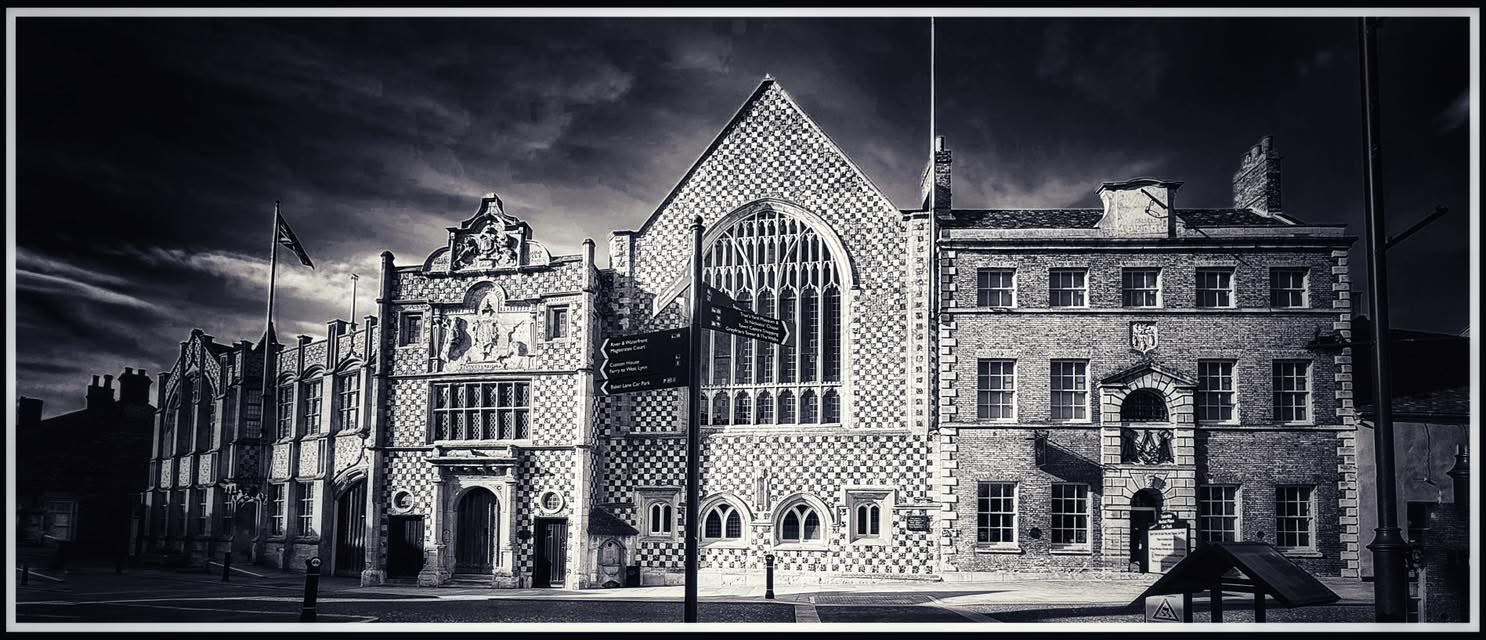
Little Massingham Manor: Reinvention in the West Norfolk Landscape
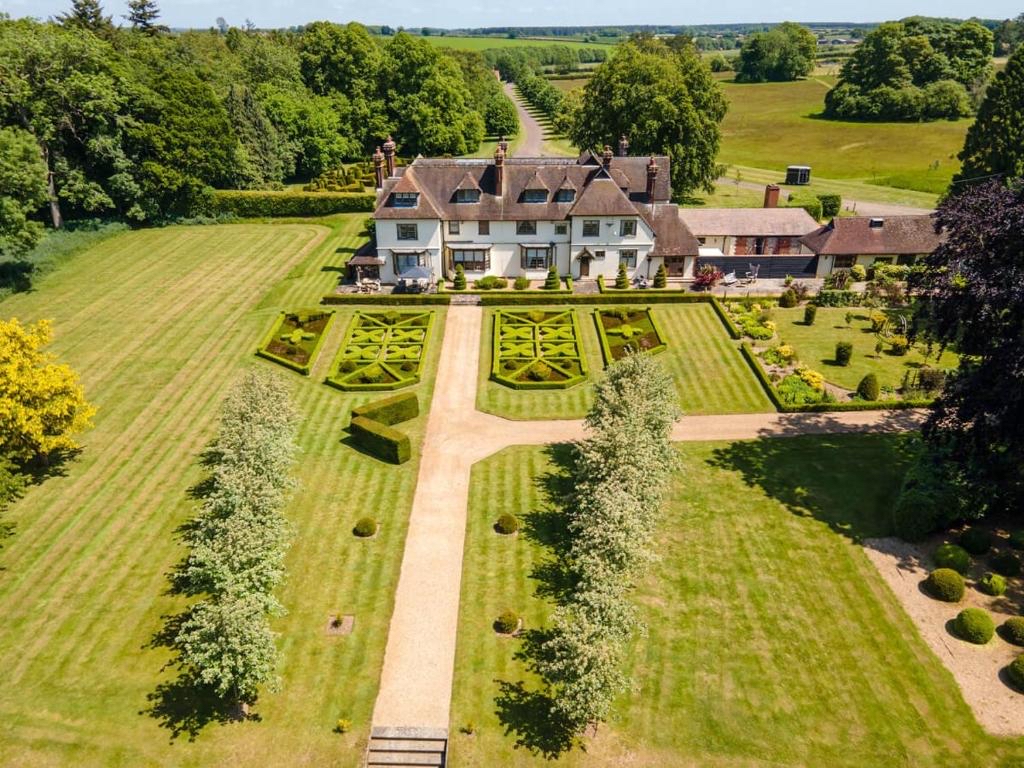
Few buildings in West Norfolk demonstrate more clearly how the English country house has survived by adaptation rather than continuity than Little Massingham Manor. Standing in gently undulating countryside between Great Massingham and Harpley, the house appears at first glance to belong to an older manorial tradition. In reality, its history is comparatively recent and strikingly modern, shaped less by medieval lordship than by twentieth-century social change, war, religion, and the search for new uses for large rural houses.
https://www.groupaccommodation.com/properties/little-massingham-manor-little-massingham-norfolk
Understanding the manor therefore requires separating two histories: the much older story of the Little Massingham estate and the quite different story of the present building, erected only in the early twentieth century.
The Earlier Estate and the Disappearance of the Old Hall
Little Massingham possessed a manorial structure from the medieval period, like most Norfolk parishes recorded in Domesday Book, but the earlier manorial centre did not survive into modern times. By the late eighteenth century the estate was undergoing consolidation, reflecting wider agricultural reorganisation across Norfolk during an era of improvement and enclosure.
In 1807 the estate was purchased by Joseph Wilson, a wealthy silk manufacturer associated with evangelical philanthropy in London. Wilson’s acquisition illustrates a familiar pattern of the period: industrial wealth moving into landed property, particularly in agriculturally progressive counties such as Norfolk. Contemporary accounts indicate that the existing Little Massingham Hall was already in decline when Wilson acquired the estate and was subsequently demolished during the early nineteenth century.
The demolition created an unusual situation. For decades the estate possessed land and status but lacked a principal residence of architectural consequence. The house now called Little Massingham Manor does not descend directly from a medieval or Tudor predecessor. It represents a later reinvention of country-house life rather than survival.
Edwardian Confidence: the Building of the Manor in 1907
The present manor was constructed in 1907 at a moment when country-house building experienced a final flourish before the upheaval of the First World War. Its commissioner was a Harley Street surgeon (Dr Appleton-Meredith), reported in later property histories as American-born, who retired to Norfolk seeking the privacy and prestige associated with rural residence.
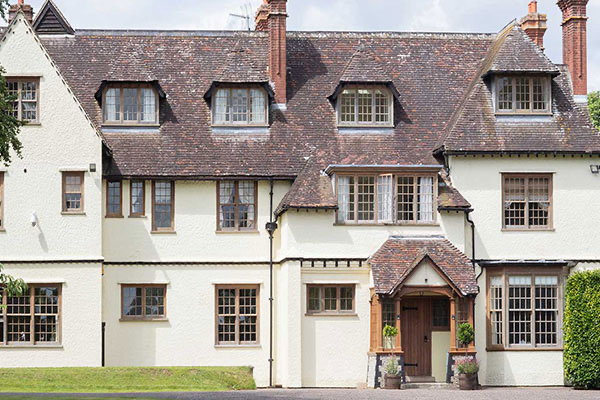
Architecturally, the house belongs firmly within the Arts and Crafts tradition. This movement, influential from the late nineteenth century into the Edwardian period, favoured craftsmanship, vernacular inspiration, and harmony with the landscape over Victorian grandeur. Such houses were designed to appear rooted in their surroundings even when newly built. The emphasis lay on comfort, proportion, and carefully composed gardens rather than aristocratic display.
https://norfolkbound.co.uk/
The choice of style is revealing. By the early twentieth century, the country house was no longer solely the preserve of hereditary landowners. Successful professionals increasingly adopted rural estates as expressions of cultural aspiration and social arrival. Little Massingham Manor emerged from this moment of confidence, when prosperity and optimism still supported ambitious domestic architecture.
That optimism proved short-lived. The owner died in 1916, and the death of his son soon afterwards left the property without a clear successor. In 1919 the widow sold the estate to the Dixon-Spain family, local farmers whose ownership marked a decisive shift in the building’s social role.
A Working Rural Household
Under the Dixon-Spain family the manor became less a symbol of elite leisure and more a substantial farmhouse within an active agricultural landscape. This transition mirrors a wider interwar trend. Across England, many large houses passed into the hands of prosperous farming families who could sustain them through agricultural income rather than inherited estates.
Local recollections describe the house during this period as sociable and active, hosting gatherings that reflected the continued importance of rural community networks in west Norfolk. The manor functioned as a family centre embedded in the rhythms of farming life rather than as a detached gentleman’s seat.
This phase lasted more than two decades, ending only with the national emergency of war.
Wartime Requisition and the RAF
During the Second World War Little Massingham Manor was requisitioned by the Royal Air Force and converted into an officers’ mess. West Norfolk became heavily involved in wartime aviation, with nearby airfields supporting bomber and fighter operations. Large country houses provided ready-made accommodation and administrative centres, and many were pressed into service.
https://norfolkbound.co.uk/Properties/Little-Massingham-Manor
The transformation would have altered daily life dramatically. Rooms designed for Edwardian domesticity became communal dining areas and social spaces for officers; grounds were adapted for practical military needs. Surviving wartime structures in the landscape, including bunkers reported within the grounds, offer physical reminders of this period when rural Norfolk became part of an intensely militarised environment.
Across Britain, wartime requisition often marked a turning point for country houses. Maintenance backlogs, structural wear, and post-war taxation made a return to traditional private occupation increasingly difficult.
A Religious House, 1962–2001
In 1962 the Dixon-Spain family sold the property to a religious community of nuns, who established a retreat house within the manor. For nearly forty years the building served as a place of prayer, reflection, and spiritual retreat.
This transformation was far from unusual. After 1945 many country houses found new life as schools, hospitals, or religious institutions. Religious communities in particular valued secluded rural settings, and Norfolk provided an environment suited to contemplation while remaining accessible.
The change also altered the building’s relationship with the public. Where earlier owners had lived privately, the retreat welcomed visitors seeking quiet and spiritual renewal. The house shifted from domestic residence to shared institutional space, its identity reshaped by communal use rather than family occupation.
The retreat closed in 2001, reflecting a broader national decline in religious vocations and the consolidation of church property holdings at the turn of the twenty-first century.
Restoration and a Modern Reinvention
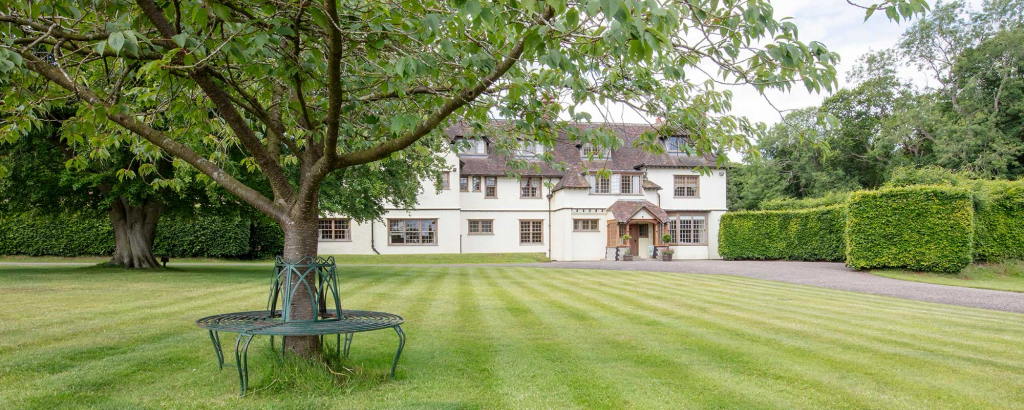
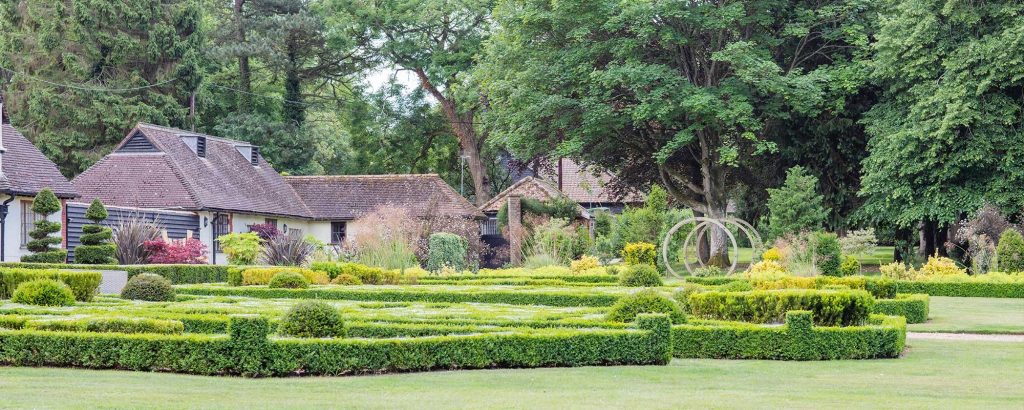
Following several ownership changes, the manor underwent significant refurbishment after 2008. Restoration work modernised services while preserving the Arts and Crafts character that defines the building’s architectural identity.
https://norfolkbound.co.uk/Properties/Little-Massingham-Manor
A further transition came in 2021 when new ownership reimagined the property as a retreat and events venue set within approximately sixty-three acres of woodland, gardens, and meadow. This latest phase aligns with a national pattern in which surviving country houses increasingly depend upon hospitality, tourism, or wellbeing enterprises for economic sustainability.
What once symbolised private status now functions as a shared experiential space. Visitors arrive not as tenants or parishioners but as guests seeking rest, nature, or community. The building continues to change purpose while retaining its physical presence within the landscape.
Continuity in Landscape Rather than Ownership
If Little Massingham Manor lacks architectural continuity with the medieval manor, it nevertheless shares a deeper continuity rooted in place. The surrounding countryside, shaped by centuries of agriculture and later conservation initiatives, remains central to its identity. Heathland, woodland margins, and open farmland still define the character of the Massingham area much as they did for earlier inhabitants.
The building’s repeated reinventions have therefore taken place within a remarkably stable rural setting. Each generation has interpreted that landscape differently: as estate, farm, wartime base, religious refuge, and modern retreat.
Conclusion
Little Massingham Manor tells a story common across England yet rarely traced so clearly in a single building. It was not the enduring seat of medieval lords but an Edwardian creation shaped by modern ambition. Within little more than a century it has passed through professional ownership, agricultural family life, military requisition, religious community, and commercial reinvention.
Its survival rests precisely on this flexibility. Rather than preserving a fixed social role, the house has adapted repeatedly to changing economic and cultural conditions. In doing so, it reflects the wider fate of the English country house in the twentieth and twenty-first centuries: no longer sustained by inherited land and servants, yet capable of renewal whenever a new generation finds a fresh purpose for old walls.
© James Rye 2026
Book a Guided Tour with a Trained and Qualified King’s Lynn Guide
Further Reading
- Blomefield, Francis. An Essay towards a Topographical History of the County of Norfolk. Vol. 8. London: William Miller, 1808–1810.
- Kelly’s Directory of Norfolk. Various editions, late nineteenth and early twentieth centuries.
- Mandler, Peter. The Fall and Rise of the Stately Home. New Haven: Yale University Press, 1997.
- Pevsner, Nikolaus, and Bill Wilson. The Buildings of England: Norfolk 2: North-West and South. New Haven and London: Yale University Press, 1999.
- Strong, Roy. The Spirit of Britain: A Narrative History of the Arts. London: Pimlico, 2000. (Contextual discussion of the Arts and Crafts movement and Edwardian country houses.)
- Worsley, Giles. England’s Lost Houses: From the Archives of Country Life. London: Aurum Press, 2002.