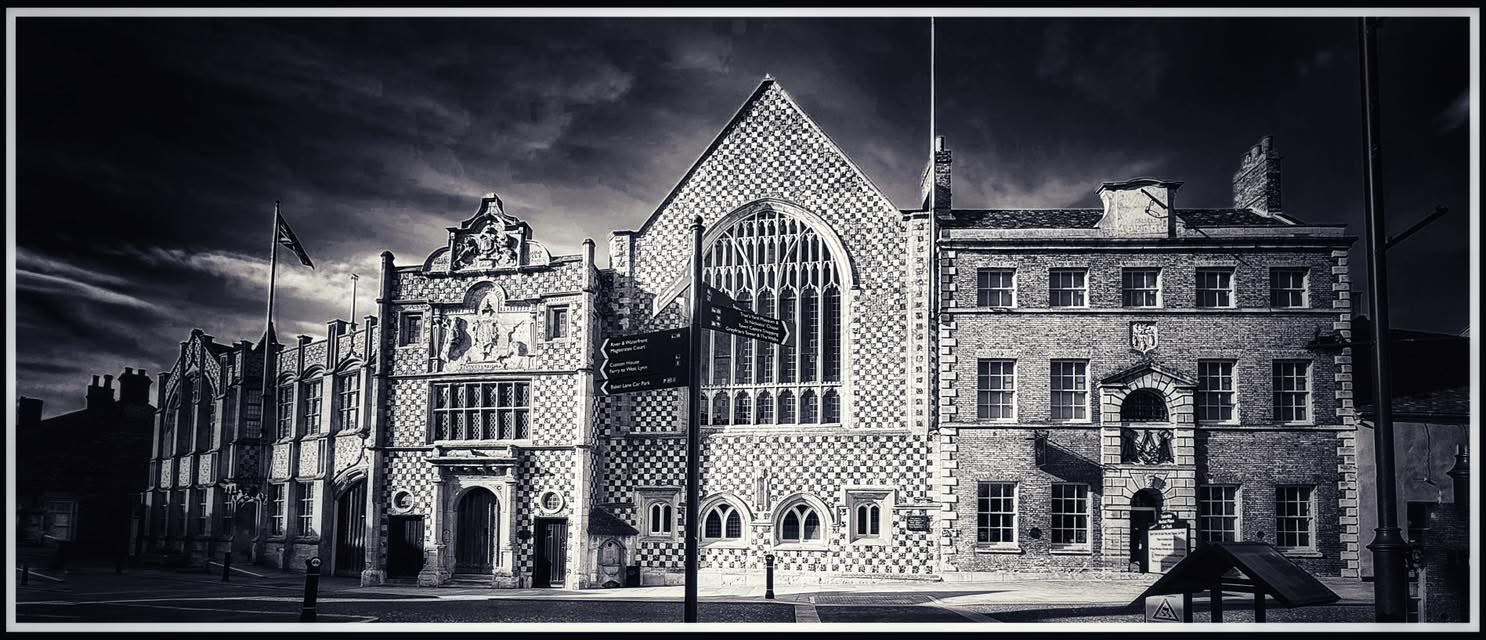
Immigration, Religion, and Work in King’s Lynn, c.1565–1580
For a short period in the later sixteenth century King’s Lynn became, quite literally, a town of foreigners.
They appear in the records under a blunt administrative label: “Strangers.” The word did not imply criminality or suspicion. It was the standard Tudor term for non-English residents, most often refugees from the Low Countries. In Lynn’s case they were largely Dutch and Flemish speakers, many of them Calvinists, some skilled textile workers, and a few ministers of European reputation.
https://www.elisenederveen.com/
For roughly a decade, from 1567 until the later 1570s, they formed a recognisable community within the borough. They had official permission to settle, a minister, a congregation meeting in St Margaret’s church, identifiable trades, and a presence strong enough to trouble census-takers and fill several pages of the Hall Books and State Papers. After that, they recede. Some returned to the Netherlands as the Revolt gathered force. Others merged into the English population. A few linger in the accounts as “poor Strangers”.
This episode has usually been overshadowed by Norwich. Yet the documentation shows that Lynn’s experience was not incidental. It was organised, planned, and large enough to alter the town’s economy and religious life for a generation.
Trouble At Home
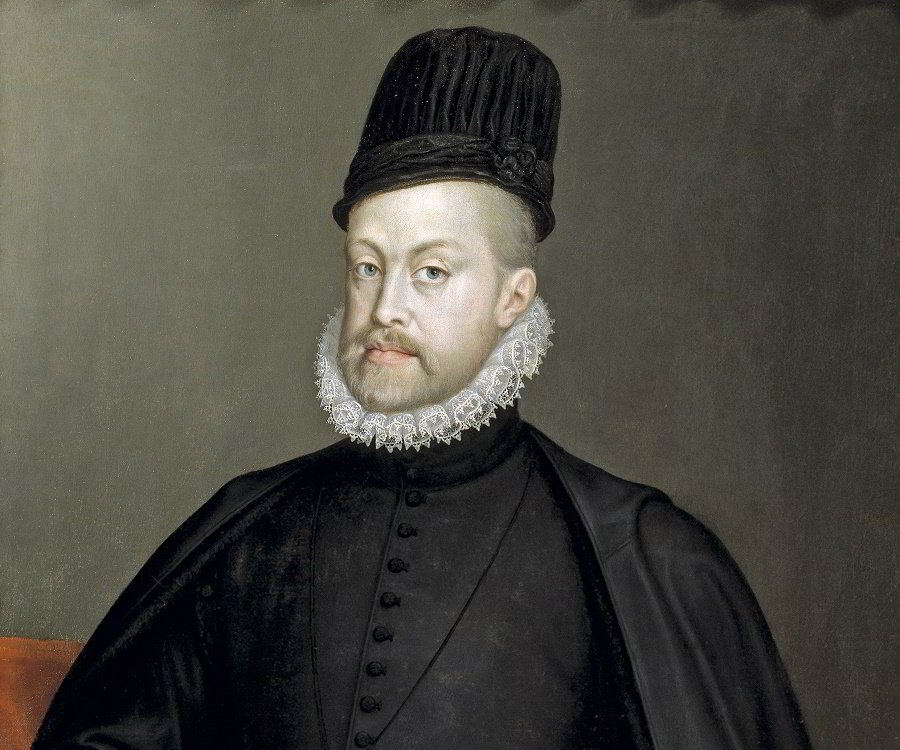
Between the years 1568-1648 there was domestic upheaval in the Low Countries. The period is known as the Eighty Years’ War. There was a massive, messy, and ultimately successful uprising against the rule of King Philip II of Spain.
ttps://alchetron.com/
The Protestant Reformation (specifically Calvinism) was spreading fast in the Netherlands. Philip II was a staunch Roman Catholic. He saw Protestantism as heresy and launched an inquisition to crush it. Philip also imposed heavy taxation from Madrid to pay for his European Wars.
Before 1567: Why Lynn Could Receive Refugees
Lynn already possessed two preconditions for immigrant settlement: habit and necessity.
The habit was commercial. For centuries the port had traded across the North Sea. Merchants from the Low Countries were familiar figures in the town. The movement of people and goods between Norfolk and the Scheldt or Zuiderzee was routine, not exotic .
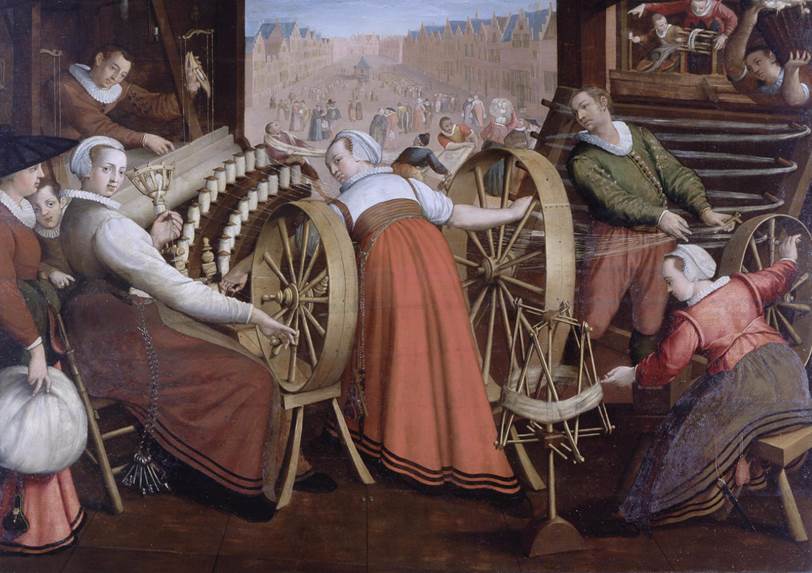
The necessity was economic. Like other East Anglian textile towns, Lynn had suffered from declining demand for older cloth types. The dissolution of the religious houses removed an important source of institutional spending. Norwich’s decision to attract skilled immigrant weavers in the mid-1560s offered an obvious model. There, “Strangers” revitalised the manufacture of lighter new draperies. The invitation to foreigners was not merely religious sympathy. It was civic strategy.
August 1567: the Corporation Acts
The turning point is unusually clear in the borough records. On 4 August 1567, the mayor Robert Gervys and the common council resolved to seek support from the Duke of Norfolk for permission that “Strangers” might settle and work in the town .
This was followed immediately by practical steps:
- 7 August: two representatives, Mr Grebby and Mr Spence, appointed to travel to the Duke
- 14 August: further action taken to pursue the same business
Textile Policy and the New Draperies
The connection between immigration and industry appears almost at once.
On 21 January 1568, the Hall Book records a petition concerning the making of “tappestere & bayes” .
“Bays” were lighter worsted fabrics associated across England with immigrant techniques. The bayes were a lighter, cheaper, and more versatile alternative to the heavy traditional broadcloths that had dominated the Middle Ages.
The material was a “mixed” fabric, typically made with a combed wool (worsted) warp and a carded wool weft. It was relatively thin and “open” making it breathable and easier to drape. Because it was lightweight it was perfect for warmer climates. Massive quantities were exported to Spain, Portugal, and to the American and Asian colonies
| Feature | Broadcloth | Bayes |
| Weight | Very heavy, thick, and stiff | Lightweight and flexible |
| Cost | Expensive (luxury item) | Affordable (middle-class / mass market) |
| Production | Slow, traditional methods | Faster using varied wool types |
| Primary Use | Heavy winter coats and upholstery | Linings, everyday clothing, tropical wear |
Norwich’s prosperity rested heavily on precisely this sort of production. Lynn was clearly attempting to cultivate the same sector.
This tells us something important about the newcomers. They were not primarily agricultural labourers or sailors. They were skilled artisans, especially in weaving and finishing cloth.
The First Count: the 1568 Census
A 1568 return of Strangers records that Elizabeth’s government had permitted up to 300 families to settle in Lynn, though the number actually present was smaller. Even the ceiling is striking. Permission for hundreds of households represents a major planned influx for a town of Lynn’s size.
The same evidence suggests that many were already in residence by August 1567, indicating rapid migration once the civic invitation was secured. There are hints, too, of secondary migration. Sandwich had previously become overcrowded with refugees, who at one stage formed more than half the population. Movement from Sandwich to other towns, including Lynn, appears to have been encouraged.
A Church Inside St Margaret’s
By late 1567 the Strangers had a minister and were worshipping in St Margaret’s church .
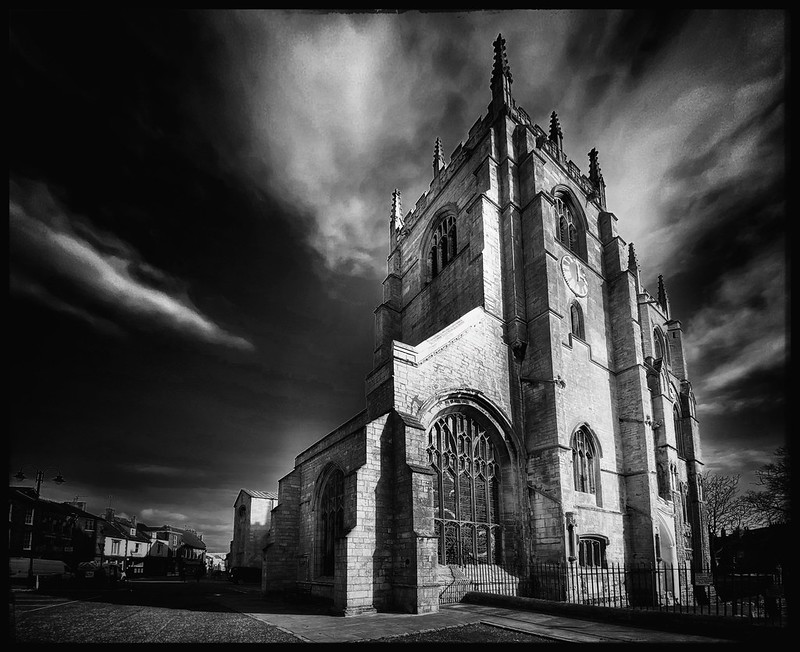
Photo © James Rye 2023
This detail matters. They were not meeting privately in houses. They were using the parish church itself. St Margaret’s had recently been reshaped by the English Reformation:
- roods removed under Edward VI
- restored under Mary
- removed again under Elizabeth 1559
- “popish” images and books burnt in 1561
The interior would have been plain and suitable for Reformed worship . Into that space came Dutch psalm singing and Calvinist preaching. For several years, the soundscape of Lynn’s principal church was bilingual.
Gerardus Gallus: a European Minister in a Norfolk Port
The Lynn congregation’s minister was no obscure figure.
He appears under the Latinised name Gerardus Gallus Gallinaceus, also known as Gerard Martensz or Gerard de Haan.
His biography reads like a compressed history of the early Dutch Reformation:
- born in Utrecht
- former monk in Middelburg
- active in London
- later involved in Bruges
- connected with Hendrik van Brederode
- possibly associated with the iconoclastic outbreaks of 1566
By October 1567 he was serving the Lynn congregation. The church is listed as having six elders and six deacons.
This was a minister with continental political experience and international contacts. His presence shows that the Lynn church belonged to the organised Reformed movement, not to an isolated local sect. When he returned to the Low Countries in 1572, at the moment the Revolt gathered force, he joined the emerging Dutch Reformed establishment .
For a few years, therefore, Lynn functioned as a refuge and staging post for leaders of the wider Protestant cause.
The Fullest Snapshot: May 1571
The most revealing document is the May 1571 census, preserved among the State Papers Domestic.
It lists the “Duchemen and not denisons” living in Lynn, giving: personal names, occupations, and length of residence. From this, the population can be calculated at over 200 individuals. Two hundred is not a scattering of families. It represents a compact community, probably concentrated in particular streets near work and worship.
Occupations show a heavy bias towards textiles. However, other occupations include cutlers, smiths, carpenters, masons, gardeners, and a surgeon. Ten are listed as having “no occupation”. The Lynn aldermen observed that the Strangers were “for the greatest part pore” but importantly were “of good behaviour”.
Parish Life: Baptisms and Burials
The parish registers of St Margaret’s add a quieter, more intimate layer. They record Dutch baptisms and burials alongside those of English parishioners.
One entry from 24 July 1574 notes the burial of “Paule Pope, a Duche boye”. Other Dutch names recur through the 1570s. These small entries do what statistics cannot. They show children dying, families settling, ordinary life taking place. The Strangers were not simply an economic category. They were neighbours using the same churchyard.
Connections Beyond Lynn
The community did not exist in isolation. Correspondence between exile churches still included Lynn. A letter of 29 April 1576 from Sandwich asked that invitations to a colloquium be passed on to other congregations, including Lynn. This indicates that, even after Gallus’s departure, Lynn was still recognised as part of the Dutch-speaking ecclesiastical network.
Economically, too, links with Norwich are evident. Cloth produced in Lynn could be sealed there, suggesting shared systems of regulation.
Decline and Afterlife
After the mid-1570s the trail thins. There is no dramatic expulsion. Instead we see small, telling signs of contraction.
In 1579 the borough paid 20 shillings to William Mason “for the lodgings of certain poor Strangers” . The phrase suggests a remnant population, perhaps those unable to return home or lacking steady work.
By then many others had likely left, drawn back to the Netherlands as rebellion hardened into state formation. Some, inevitably, stayed and disappeared into English society through marriage and language shift. The church itself seems to have faded quietly.
Repositioning King’s Lynn in the Story
The cumulative evidence challenges an old habit of treating Norwich as the only significant East Anglian centre of Dutch exile life.
King’s Lynn had:
- a formal civic invitation
- royal authorisation
- a documented minister
- worship in St Margaret’s
- two official censuses
- over 200 residents at its height
- continued traces into the later 1570s
This is not a footnote. It is a functioning exile church and labour settlement that shaped both the town’s economy and its religious life for over a decade .
© James Rye 2026
Book a Guided Walk with a Trained and Qualified King’s Lynn Guide
Source
Joby, C. (2025) “The Dutch Exile Community in King’s Lynn: A Forgotten Moment in Anglo-Dutch Contact.” History, 110 (390). pp. 194-214.