In the autumn of 1467, sailors from Bishop’s Lynn reached Iceland and killed the Danish king’s governor, Björn Þorleifsson. They plundered his household, burned buildings, seized royal revenues, carried his body to their ships, and threw it into the sea.
The violence was extraordinary, but the presence of Lynn sailors in Iceland was not. By then, merchants and fishermen from the Norfolk port had spent decades crossing the North Atlantic in pursuit of fish. Their voyages connected Lynn with Icelandic harbours, English markets, continental merchants, and the competing claims of northern European kings.
What happened in 1467 grew out of that larger relationship. Lynn’s connection with Iceland was built on commerce, navigational skill, political defiance, and dependence upon one of medieval Europe’s most important foods.
Fish from the north
Medieval Lynn stood at the centre of an extensive trading system. Through the Great Ouse and its tributaries, the port served much of eastern and central England. Grain, wool, salt, wine, timber, cloth, and other goods passed through its warehouses and quays. Merchants from the Low Countries and the German Hanseatic towns were familiar figures in the town.
Fish was equally important. Christian religious observance created regular demand because meat was prohibited on numerous fast days. Coastal and freshwater fisheries supplied part of the market, but preserved sea fish could be transported over much greater distances. Among the most valuable northern products was stockfish, usually cod dried in cold air until it became hard, light, and durable.
Iceland possessed rich fishing grounds and a climate well suited to drying fish. Its population also needed imported grain, cloth, timber, metal goods, beer, and other commodities that could not be produced locally in sufficient quantities. The conditions for exchange were obvious.
For English merchants, however, the attraction was not simply the purchase of fish. Direct voyages allowed them to bypass some of the continental intermediaries who had previously dominated the trade. By sailing to Iceland themselves, English merchants could exchange their cargoes for stockfish closer to its source.

Source: Guide to Iceland
English ships cross the North Atlantic
English voyages to Iceland became increasingly important during the early fifteenth century. Ships sailed from Hull, Bristol, Scarborough, Lynn, and other ports. Lynn’s participation formed part of what historians sometimes call Iceland’s “English Century”, a period when English fishermen and merchants became a conspicuous presence around the island’s coast.
The voyage was dangerous. A vessel leaving Lynn first had to navigate the Wash and the North Sea. From there, it might pass north of Scotland, cross waters exposed to Atlantic storms, and approach an Icelandic coast marked by reefs, sudden winds, limited shelter, and few familiar landmarks. Crews also faced the ordinary hazards of medieval navigation, including imperfect charts, variable compasses, damaged rigging, spoiled provisions, and disease.
The rewards justified the risks. Some English ships carried merchants seeking established trading partners. Others combined commerce with fishing. Surviving evidence does not always allow a clean distinction between a merchant ship, a fishing vessel, and an armed private venture. Cargoes, crews, and purposes could change during a voyage.
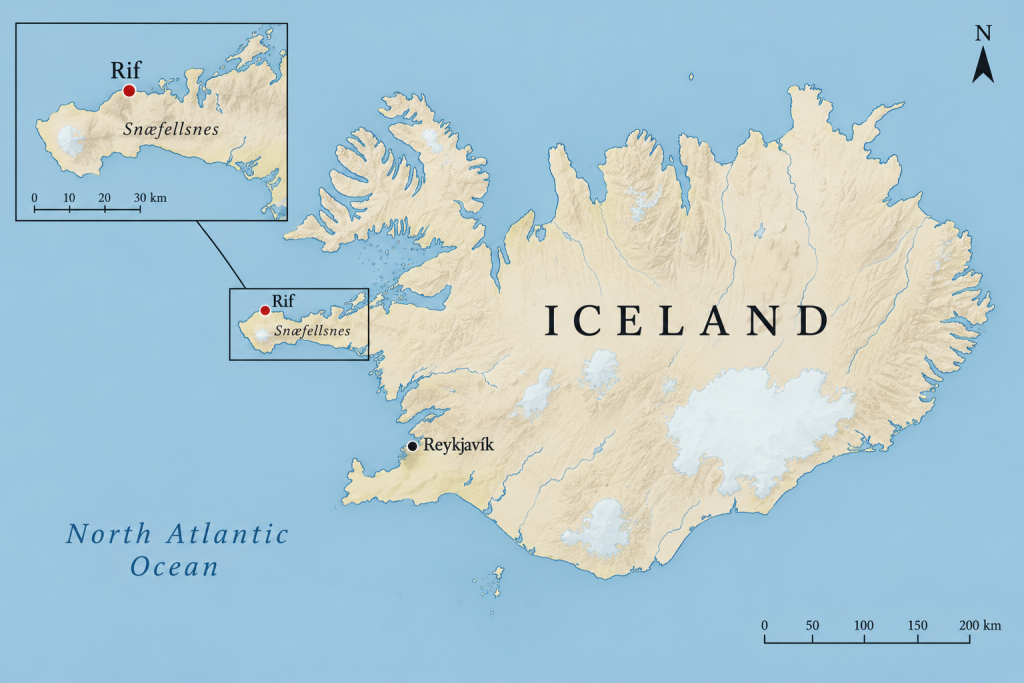
English visitors concentrated on a number of Icelandic harbours rather than occupying a single permanent settlement. Archaeological and documentary research indicates activity in the south-west, west, and north of the island. The harbour at Rif, on the Snæfellsnes peninsula, became particularly associated with the events of 1467.
Commerce did not take place in a political vacuum. Iceland belonged to the Norwegian, and later Danish, crown. Its rulers claimed the right to regulate foreign trade, issue licences, collect duties, and exclude unwanted merchants. English crews, meanwhile, sometimes behaved as though longstanding practice, commercial necessity, or armed strength gave them a right to continue trading.
Orders from distant kings
In 1465, Edward IV of England and Christian I of Denmark concluded an agreement intended to regulate relations between their subjects. Christian’s surviving letter of 1468 states that the agreement forbade English merchants to sail to Iceland without his licence, on pain of losing their goods and their lives. It also says that Edward’s command had been proclaimed in several English towns.
The rule was difficult to enforce. Iceland lay far from Copenhagen, while English crews were mobile, commercially motivated, and sometimes heavily armed. Local officials could attempt to collect duties or prevent unlicensed trade, but they did not necessarily possess enough force to control a crowded harbour.
Nor did English merchants speak with one voice. Towns competed against one another, merchants competed within towns, and the conduct of one crew could endanger vessels whose owners had taken no part in its actions. Christian’s response to the violence of 1467 shows that he understood these divisions and tried to exploit them.
Murder at an Icelandic harbour
Icelandic historical tradition identifies the murdered royal governor as Björn Þorleifsson, known as Björn ríki, or Björn the Rich. He was a powerful landowner and official whose family occupied a prominent place in fifteenth-century Icelandic politics.
Accounts of the confrontation vary in detail, and later retellings have sometimes added particulars that are difficult to verify. Christian I’s letter, written within a year of the event, provides the strongest contemporary description of the Danish crown’s accusation. It does not name Björn or Rif, but its account can be connected with Icelandic sources that identify the governor and location.
According to the king, men from Lynn sailed to Iceland around Michaelmas, 29 September, 1467. There they cruelly killed his governor. They stripped the governor’s wife, children, and household of gold, silver, clothing, valuables, and possessions. They burned houses and other buildings, took revenues traditionally reserved to the crown, and devastated part of the country through plunder and fire. Finally, they carried the governor’s body to their ships and threw it into the sea.
The wording requires care. Christian alleged that Björn was killed, while his wife, children, and household were robbed. It does not say that the entire family was murdered. The letter later refers to the children, heirs, relatives, and connections of those killed, suggesting that Björn may not have been the only fatality, but it does not provide a reliable death toll.
The king’s account was a formal accusation intended to justify retaliation. It should therefore be read as a partisan document rather than a neutral report. Even so, its detail, date, and intended audience make it indispensable. It shows that the crown regarded the affair not as an accidental harbour brawl, but as an armed assault on royal authority.
The letter that excluded Lynn
On 20 June 1468, Christian issued a formal notification from Copenhagen Castle. It has sometimes been described as a letter to Lynn, but its address says precisely the opposite. Christian directed it to the mayors and governors of all the cities, towns, and boroughs of England “except those of Lynn”.
That exclusion changes the meaning of the document. Christian was not treating Lynn’s government as a cooperative civic authority. He was appealing over its head to the rest of urban England.
The king announced that he had arrested and detained certain Lynn ships that had fallen into his hands. He presented the arrests as security for compensation owed to himself and his subjects. Yet he promised that merchants and ships from other English towns would not be detained merely because of Lynn’s offence. Those merchants could pass safely through the Øresund, provided that they carried properly sealed documents proving where they came from.
Christian then asked the governing authorities of England’s other towns to help obtain suitable amends from Lynn. The strategy was clear. He wanted to isolate the borough, separate innocent merchants from the offenders, and make Lynn answer for the actions of its sailors.
The letter also reveals how medieval responsibility could extend beyond the individuals who committed an offence. Ships, merchants, relatives, civic authorities, and sometimes whole communities could become entangled in claims for restitution. A violent act in an Icelandic harbour could lead to the seizure of unrelated vessels elsewhere in the Danish king’s dominions.
An English translation of the letter, and the full Latin text, appear in the appendices.
Danzig ships and Danish retaliation
Christian’s letter explains why the ships were seized but does not identify the men who carried out the operation. That information appears in the chronicle of Caspar Weinreich, a contemporary merchant and shipmaster from Danzig, now Gdańsk.
Weinreich recorded that during 1467 many captains from Danzig went to Christian accompanied by marines and experienced commanders. They entered the Danish king’s service for pay. Describing the following year, Weinreich wrote that Christian had many English ships and their valuable cargoes taken in the Øresund. This, he said, was done chiefly by “our people”, meaning men from Danzig who had entered Danish service in 1467.
It is therefore broadly true that Christian used Hanseatic ships and sailors to retaliate against English shipping. The description requires an important qualification. The participants came from Danzig, which was a member of the Hanseatic League, but they were serving Christian for wages. The surviving evidence does not show that the Hanseatic League collectively authorised the operation.
Danzig’s authorities subsequently denied that their citizens had participated and disowned anyone who had entered Danish service. Weinreich’s account suggests that men from the city had indeed played a substantial part, possibly without the formal approval of Danzig’s council.
“Danzig captains and marines in Danish pay” is therefore more accurate than “a Hanseatic fleet”. Medieval Hanseatic towns protected their own interests and did not always follow a single policy. A sailor, shipowner, or privateer from a Hanseatic city could serve a foreign ruler without making his actions those of the entire League.
There is also a difference between the two contemporary accounts. Christian referred specifically to “certain ships from Lynn”, while Weinreich wrote that “many English ships” were taken. The Danish operation may have caught vessels whose owners had no direct involvement in the Rif attack. Christian acknowledged that innocent merchants might have suffered because of their association with Lynn and directed them to seek repayment from the borough.
From Rif to the Anglo-Hanseatic War
The English response widened the dispute. Denmark had comparatively little direct commerce in England, making Danish merchants difficult to reach. Edward IV’s government instead struck at Hanseatic merchants, whose compatriots had assisted Christian. Hanseatic people, ships, and goods in England were arrested.

Source: https://livinglondonhistory.com/
This treated the Hanseatic League as collectively responsible for the conduct of Danzig seamen in Danish pay. Cologne and other Hanseatic towns protested that they had played no part in the seizures. Danzig officially denied responsibility as well. England’s actions nevertheless united towns whose policies and commercial interests had previously differed.
The crisis did not begin with Rif alone. English and Hanseatic merchants had been quarrelling for decades over access to Baltic markets, trading privileges in England, piracy, disputed cargoes, and unpaid compensation. English privateers had already captured ships from Lübeck and Danzig in 1449. Negotiations produced an armistice in 1456, but they did not remove the underlying causes.
Rif supplied the immediate spark for a new and more dangerous confrontation. Lynn men attacked Christian’s authority in Iceland. Christian seized English ships with the assistance of Danzig mercenaries. Edward IV answered by arresting Hanseatic merchants and property throughout England. Open maritime warfare followed, culminating in the Anglo-Hanseatic War of 1469–74.
The conflict was fought mainly through commerce raiding rather than great fleet battles. Privateers captured merchant ships and sold their cargoes. One of the most successful was Paul Beneke of Danzig, who became captain of the formidable Peter von Danzig. In 1473, he captured the San Matteo, carrying valuable goods and Hans Memling’s painting now known as The Last Judgement.
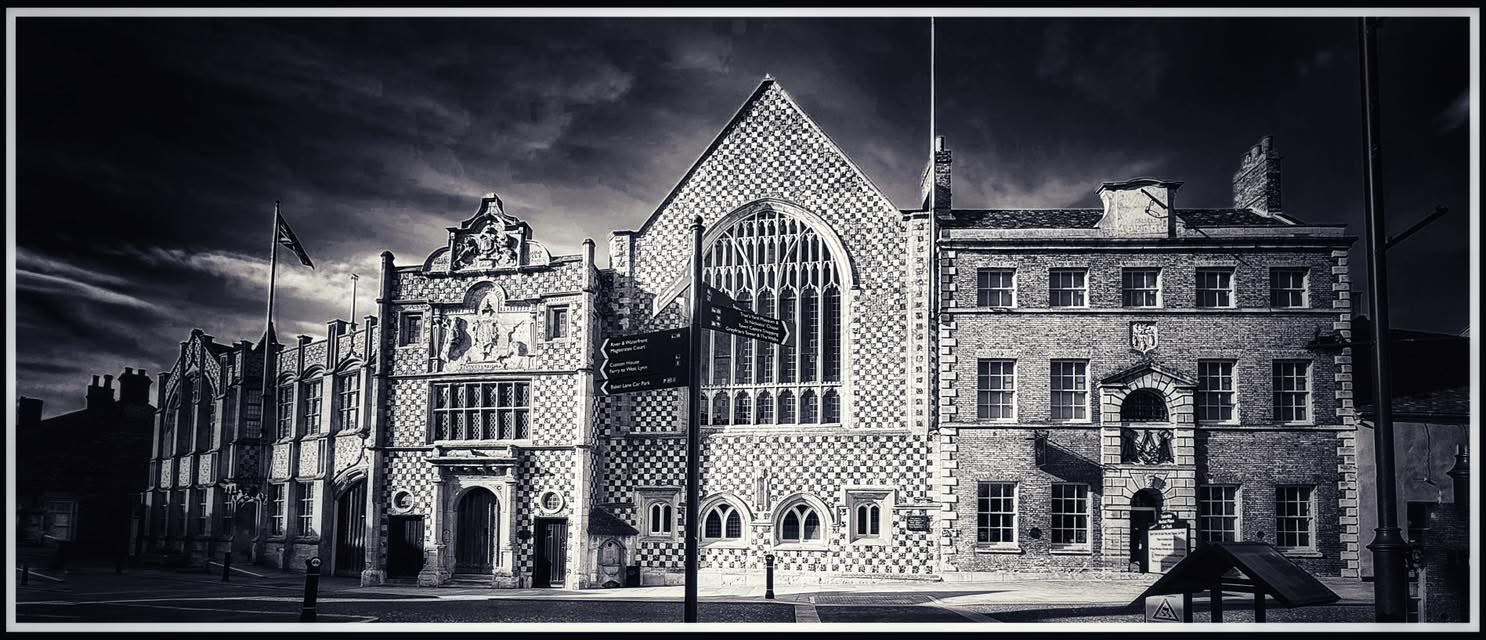
The Treaty of Utrecht ended the war in 1474. England restored and enlarged Hanseatic privileges, including control of the Steelyard in London. The Hanse also secured property in Boston and Lynn. The surviving Hanse House in King Street belongs to the history of those privileges, although its present buildings are later than the Rif confrontation.
The killing of Björn did not single-handedly cause the Anglo-Hanseatic War. It intensified existing hostility and set off a chain of retaliation that made compromise considerably harder.
[Illustration: Hanse House, King Street, King’s Lynn. Caption: The Treaty of Utrecht strengthened Hanseatic privileges in Lynn. The surviving Hanse House contains later buildings on a site associated with the German merchants. Photograph: author’s collection or properly licensed alternative.]
A town tied to distant waters
The confrontation did not end Lynn’s northern voyages. Fish remained too valuable, and the town’s maritime experience was too deeply established. During the late fifteenth and early sixteenth centuries, Lynn vessels continued to participate in Icelandic commerce and fishing.
Evidence for individual voyages is scattered through customs accounts, legal proceedings, port records, royal correspondence, and foreign archives. This makes the scale of the trade difficult to measure precisely. Ships may appear under a master’s name rather than an owner’s, while the spelling of Lynn varies considerably. Cargoes were sometimes divided among several merchants, and official records did not necessarily distinguish fish caught by English crews from fish purchased from Icelanders.
What survives nevertheless points to organised investment. A voyage required a seaworthy vessel, provisions, fishing equipment, trade goods, experienced officers, and a crew willing to spend months away from home. Merchants might divide the financial risk among several partners. On returning to Lynn, cargoes of fish could be sold locally or carried inland through the river system.
The profits extended beyond the merchants who financed the voyages. Shipwrights, rope-makers, sail-makers, coopers, smiths, porters, carters, innkeepers, and victuallers all benefited from maritime activity. So did the religious institutions and civic buildings supported by mercantile wealth.

Source: Churches Conservation Trust.
St Nicholas’ Chapel, close to Lynn’s northern waterfront, preserves a vivid reminder of the town’s seafaring culture. Its medieval carvings include ships and maritime imagery. They do not document a particular Iceland voyage, but they belong to the social and religious world of the merchants, masters, and sailors who undertook such journeys.
Twenty-five ships lost
The sea that offered prosperity could destroy it in a single season. A sixteenth-century account records that 25 ships from Lynn were lost during an Iceland voyage in 1528. The report is brief, and the details require further archival verification, but the number conveys the scale on which the town was operating.
A fleet of that size represented an enormous concentration of labour and capital. Its loss would have affected owners, merchants, creditors, crews, widows, children, and suppliers throughout the town. Even if some men survived, wrecked vessels and lost cargoes could ruin businesses that depended upon a successful return.
The disaster also helps explain why the Iceland trade never became a simple story of expansion. Political restrictions, competition from other English and German ports, piracy, shipwreck, changing markets, and the growing importance of other fishing grounds all shaped its course. By the later sixteenth century, Lynn’s direct involvement in Iceland was no longer as prominent as it had once been.
When Lynn was part of the North Atlantic
It is easy to imagine medieval Lynn as a provincial English town whose world ended at the Wash. Its relationship with Iceland shows otherwise. The borough belonged to a maritime network that stretched from inland English markets to the North Sea, the Danish straits, continental ports, and the fishing grounds of the North Atlantic.
That network was not peaceful or orderly. Trade depended upon negotiation, privilege, personal trust, and the threat of force. Kings issued prohibitions that merchants ignored. Officials attempted to collect revenues from sailors who might outnumber or overpower them. Town governments benefited from ventures they could not always control.
Christian I’s letter brings this unstable world into unusually sharp focus. It records an Icelandic governor killed, a household plundered, royal property seized, Lynn ships arrested, and other English towns offered safe passage if they could prove that they had no connection with Lynn.
For a moment, Bishop’s Lynn was not merely one English port among many. It was the town that a Scandinavian king deliberately excluded when he addressed the rest of urban England.
Appendix I: English translation of Christian I’s Letter, 20 June 1468
Notification sent by the King of Denmark to the cities of the Kingdom of England.
Christian, by the grace of God King of Denmark, Sweden, Norway, the Goths, and the Slavs, Duke of Schleswig, and Count of Holstein, Stormarn, Oldenburg, and Delmenhorst, to the mayors and governors of all the cities, towns, and boroughs of the Kingdom of England, except those of Lynn, our friends: royal goodwill and greetings.
We do not doubt that it has been brought to your attention that, three years ago, a brotherly alliance was concluded between the most serene King of England and us. In that alliance it is expressly provided that English merchants are not to sail to Iceland without our licence, on pain of losing their goods and their lives. This command of the most serene King of England was proclaimed in several cities of his kingdom.
Certain men of Lynn, however, treated it with contempt. Around the feast of St Michael last past, they sailed to Iceland, where they cruelly killed our noble governor. They stripped his wife, children, and household of gold, silver, clothing, valuables, and every kind of possession. They reduced houses and buildings to ashes. They also took the revenues that had long been reserved to us by right. They devastated a very large part of the country with plunder and fire, and carried away whatever in buildings, fields, or pastures pleased their lawless desire. Finally, so that they should omit nothing in their wickedness, they carried the body of the governor whom they had killed away with them to their ships and threw it into the sea.
At the urgent request of the children and heirs, blood relatives, and relatives by marriage of the innocent people who were killed, we therefore arrested and detained certain ships from Lynn that fell into our hands. We did this so that the men of Lynn might provide us and our subjects with the compensation they owe for the violence, losses, and injuries inflicted.
We neither wish nor intend, because of the guilt of those of Lynn, to obstruct or arrest in any way your merchants or ships when they happen to pass through our sea of the Øresund. Instead, we grant them safe conduct, receive them under our royal protection, and shall assist them in every proper way, provided that they prove by lawful documents that they belong to your communities. Those documents must be authenticated with the seal of their city, or of another prominent and reputable city.
If any of your people have lost property because of the crimes of the Lynn men, or through association with them, let them seek from the Lynn men an assessment and repayment of their losses, as is just. We earnestly ask each and every one of you to ensure, and to take care to procure from the Lynn men themselves, suitable amends to us for the offence and just satisfaction to our subjects for the violence and injuries.
Farewell, and may you prosper.
Given under our privy seal at our castle in Copenhagen on the twentieth day of June in the year of Our Lord 1468.
Appendix II: Latin text of Christian I’s letter, 20 June 1468
The following transcription is taken from Diplomatarium Islandicum, volume 10, document 22, pages 24–25, where the text is reproduced from Hansisches Urkundenbuch, volume 9, document 468. The edition states that its source was an old copy in the Cologne City Archives, Acta Anglicana, folios 11–12. Paragraphing has been added for readability, but the published spelling has been retained. The brackets in fer[r]ant are editorial.
Certificatio missa per regem Dacie civitatibus regni Anglie.
Christiernus, Dei gracia Dacie Swecie Norwegie Gotthorum Sclavorumque rex dux Sleswicensis comes Holsacie Stormarie Oldenburgie et Delmenhorste, universis civitatum, villarum et opidorum regni Anglie preter illos de Lyndene majoribus et rectoribus, amicis nostris, benevolenciam regiam et salutem.
Ad vestram notitiam deductum esse non ambigimus, quod inter serenissimum regem Anglie et nos ante annos tres fraterna conclusa fuit confederatio et in eadem exprimitur, ne sine nostra licencia mercatores Anglici sub amissione bonorum et vite ad Isslandiam vela fer[r]ant, hocque serenissimi regis Anglie preceptum in pluribus illius regni civitatibus promulgatum extitit.
Quod tamen quidam de Lyndene habuerunt contemptui, qui circa festum beati Michaelis quidem jam preteritum in Islandiam navigabant, ubi nobilem prefectum nostrum crudeliter necaverunt conjugemque ejus et liberos ac familiam auro, argento, vestibus, clenodiis omnique supellectili nudaverunt redegeruntque in cineres edes et edificia, tulerunt et tributa, que nostro fuerunt juri a longo reservata tempore, plurimam patrie partem predis vastaverunt et incendiis quidquid et in penetralibus, agris aut pascuis illorum placuit libidini abstulerunt, novissime ut de impietate nichil omitterent, secum ad naves corpus prefecti, quem necaverant, rapuerunt et in mare projecerunt.
Nos autem per innocentium occisorum filios et heredes, consanguineos et affines efflagitati naves quasdam de Lyndene, que nobis in manus collapse sunt, arestando detinuimus, ut sic nobis et nostris pro illatis violenciis, dampnis et injuriis satisfaciant, ut tenentur, nec ob culpam illorum de Lyndene quoquo modo impedire vel arestare volumus aut intendimus mercatores vestros aut naves, dum eas per mare nostrum Oresunde transire contigerit, sed salvum eis damus conductum et sub regia nostra protectione recipimus et ad omne bonum promovebimus, ubi se de vestris esse per scripta probent legitima, que civitatis aut majoris civitatis famose sigillo fuerint consignata.
Etsi qui vestrum propter flagicia seu societatem Lyndensium res quaslibet amiserant, dampni estimationem a Lindensibus, ut justum est, repetant. Vos autem omnes et singulos rogamus attente, quatenus dignam nobis emendam pro offensa, subditis vero nostris pro violenciis et injuriis justam satisfactionem faciatis et curetis ab ipsis Lindensibus procurare.
Valete feliciter. Ex castro nostro Haffnensi 20. die mensis Junii nostro sub secreto anno Domini 1468.
© James Rye 2026
Book a Guided Tour with a Trained and Qualified King’s Lynn Guide Through Historic Lynn
References
Childs, Wendy R. “England’s Icelandic Trade in the Fifteenth Century: The Role of the Port of Hull.” In Northern Seas: Yearbook of the Association for the History of the Northern Seas, 1995.
Fulton, Thomas Wemyss. The Sovereignty of the Sea. Edinburgh and London: William Blackwood and Sons, 1911. Project Gutenberg.
Gardiner, Mark. “The Character of Commercial Fishing in Icelandic Waters in the Fifteenth Century.” In Cod and Herring: The Archaeology and History of Medieval Sea Fishing. Oxford: Oxbow Books, 2016.
Gardiner, Mark, and Natascha Mehler. “English and Hanseatic Trading and Fishing Sites in Medieval Iceland: Report on Initial Fieldwork.” Germania 85, no. 2, 2007.
Jakobsson, Sverrir. “Iceland’s English Century.” History Today 76, no. 5, May 2026. History Today.
Jón Þorkelsson, ed. Diplomatarium Islandicum: Íslenzkt fornbréfasafn. Vol. 10. Reykjavík: Hið Íslenzka Bókmenntafélag, 1911–1921, document 22, 24–25. Digitised edition.
Stein, Walther, ed. Hansisches Urkundenbuch. Vol. 9, 1463–1470. Leipzig: Duncker & Humblot, 1903, document 468, 326–27. Google Books record.
Visser-Fuchs, Livia. “English Events in Caspar Weinreich’s Danzig Chronicle, 1461–1495.” The Ricardian 7, no. 95 (December 1986): 310–20. https://richardiii.net/wp-content/uploads/2021/08/07-95-English-Events-in-Caspar-Weinreichs-Danzig-Chronicle-1461-1495.pdf.