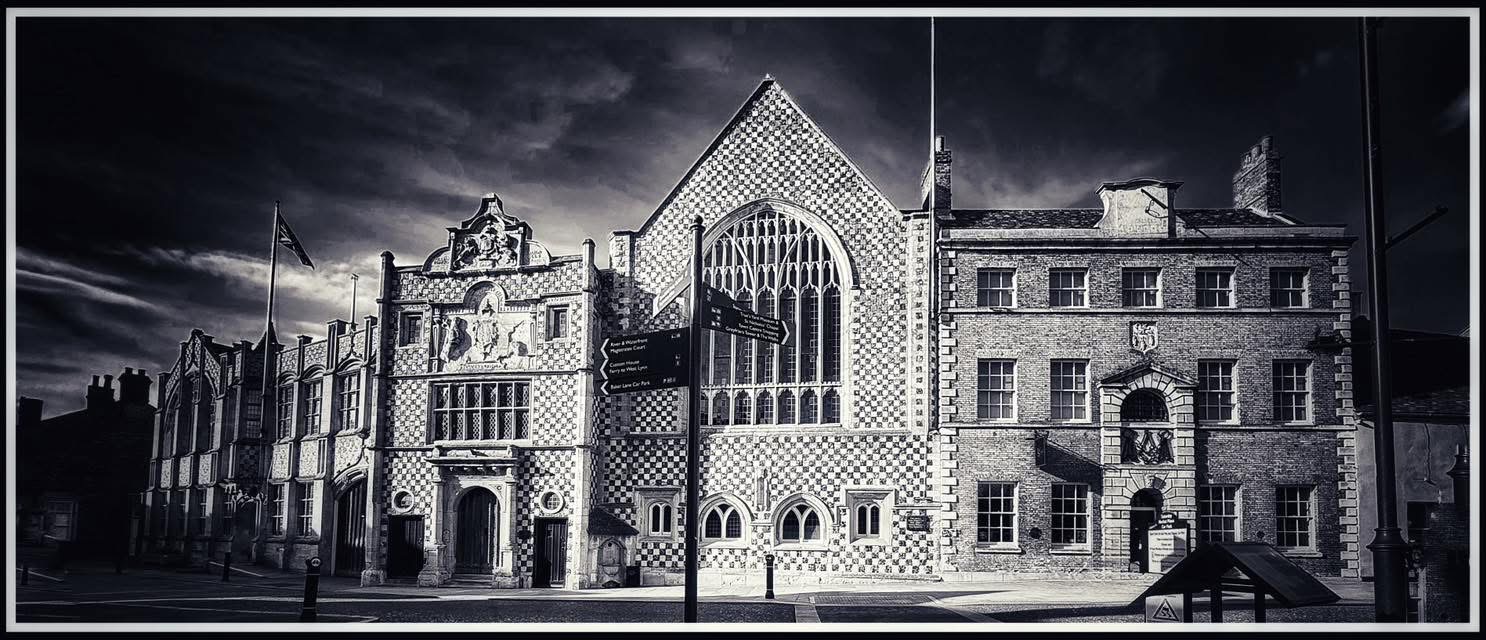
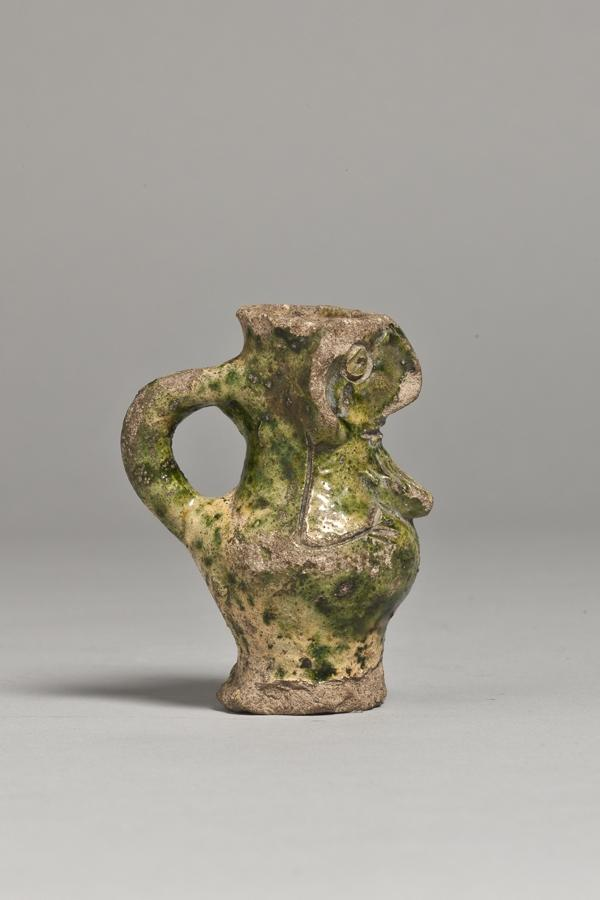
Photograph: C B PY-SA 2.0, the Portable Antiquities Scheme/The Trustees of the British Museum.
How a small Norfolk community became an unlikely centre of international trade, producing pottery that travelled from the streets of Bishop’s Lynn to the merchants of medieval Norway.
Somewhere beneath the streets of Bergen, on the western coast of Norway, archaeologists uncovered the broken remains of thousands of medieval pottery vessels. Many had travelled more than 500 miles across the North Sea, having begun their lives in an unlikely place: the Norfolk villages of Grimston and Pott Row, a few miles east of King’s Lynn.
Among them were beautifully decorated green-glazed jugs, some ornamented with extraordinary human faces, complete with pointed beards, prominent noses, and occasionally arms and hands. These were not rare luxury objects destined for royal palaces. They were everyday possessions, made by rural craftsmen and used by people living and working in one of northern Europe’s busiest trading ports.
Their story offers a fascinating insight into the commercial success of medieval Lynn. We generally associate the town’s prosperity with wealthy merchants, great trading ships, and the wool and grain that passed through its warehouses. Yet the potters of Grimston remind us that economic development also depended upon people whose names have largely disappeared from history.
This is the central argument of an important study by archaeologist Ben Jervis, published in Antiquity in August 2025. In Minoritarian Entrepreneurs: Pottery, Commerce and Urbanisation in Medieval England, Jervis challenges the familiar picture of economic progress driven primarily by powerful landowners, wealthy merchants, and institutions. Instead, he draws attention to the initiative and ingenuity of ordinary craftspeople, whose decisions helped transform the medieval economy.
Although Grimston is not one of his principal case studies, its extraordinary pottery industry provides an excellent illustration of his argument.
An Industrial Village in Medieval Norfolk
Today there is little to suggest that Grimston and neighbouring Pott Row were once centres of an internationally important industry. Yet the evidence beneath the ground tells a remarkable story. Pottery production in the parish began during the late Anglo-Saxon period and continued for several centuries. By the thirteenth century, the local craftsmen were manufacturing substantial quantities of pottery, supplying households across Norfolk and reaching increasingly distant markets.
The industry benefited from deposits of suitable clay and access to fuel, both essential for operating pottery kilns. More importantly, however, it enjoyed a commercial advantage that other pottery-making communities could only envy: proximity to Bishop’s Lynn. By 1200, Lynn was becoming one of England’s leading ports, its harbour providing access to the North Sea and its rivers connecting the town with the Fenland and settlements further inland. The potters of Grimston were therefore ideally placed to supply an expanding urban market and participate in the trading networks that radiated from it.
Their achievement might have remained largely forgotten without the archaeological investigations that began in the 1960s. Excavations at Grimston and Pott Row revealed kilns, working areas, domestic buildings, and enormous quantities of broken or discarded pottery. These discoveries were eventually brought together in Mark Leah’s comprehensive 1994 study, The Late Saxon and Medieval Pottery Industry of Grimston, Norfolk.
Curiously, despite the scale of production, contemporary written records tell us remarkably little about the industry. We cannot identify individual potters with confidence, reconstruct their commercial arrangements, or establish precisely how their workshops were organised. We do not even know how much responsibility for production was shared among the different members of pottery-making households. What we can establish is that these were not simply villagers making cooking pots for their neighbours. By the thirteenth century, Grimston had developed an industry capable of supplying markets far beyond the immediate locality. Its potters were also remarkably inventive.
The Fashion for Bearded Jugs
The most distinctive products of Grimston were its highly decorated glazed jugs. Their glossy green surfaces were frequently ornamented with applied strips of clay, scales, or elaborate patterns. Some featured human figures or faces, producing vessels that must have attracted considerable attention when placed on a medieval table.
The famous Grimston face jugs were particularly striking. Their exaggerated noses, staring eyes, and pointed beards gave them an almost comical appearance. Occasionally, little clay hands appeared to clutch a beard or rest against the vessel’s body. These creations demonstrate something important about medieval manufacturing. Potters were not simply producing essential household equipment. They were experimenting with appearance and design, offering customers objects that were attractive, amusing, and perhaps capable of conveying social meaning. A cooking pot was principally a practical purchase. A decorated jug might also have been a statement of taste or prosperity.
This distinction matters because the thirteenth century witnessed changes in the material culture of ordinary households. As towns grew and commercial opportunities expanded, increasing numbers of people acquired possessions that went beyond their immediate practical needs. Decorated pottery formed part of this changing world.
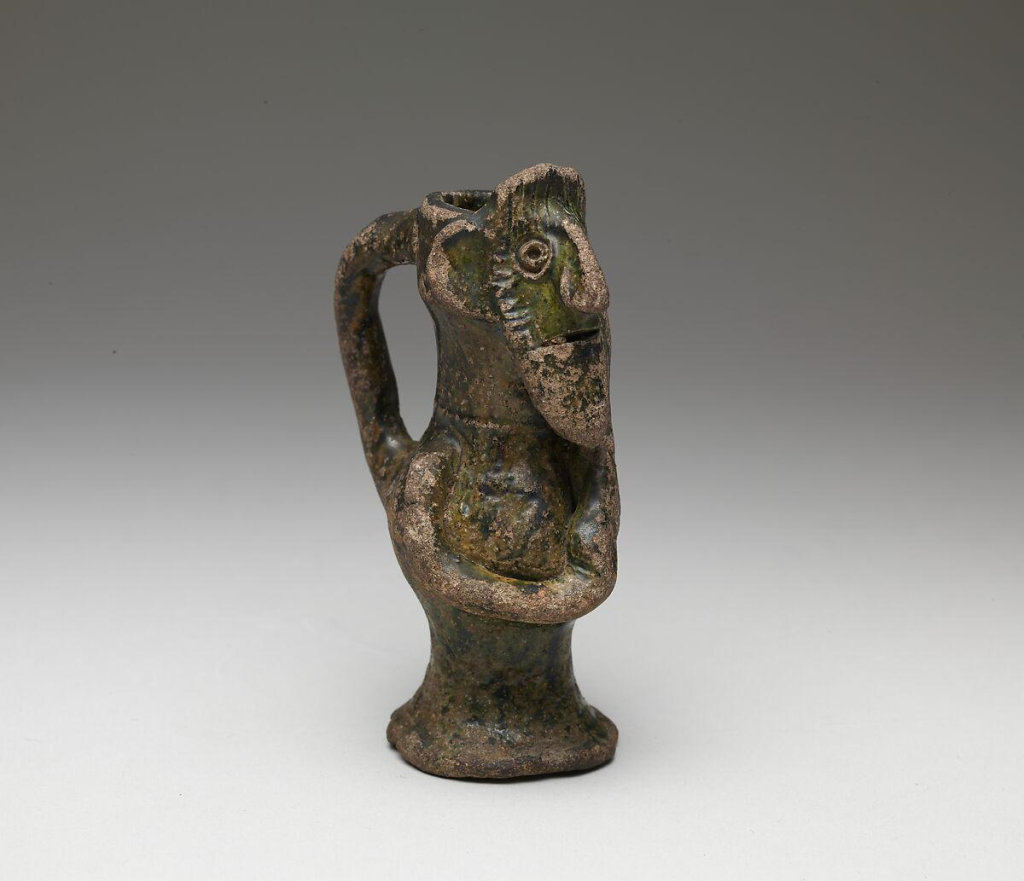
Photograph: CC BY SA 2.0, the Portable Antiquities Scheme/The Trustees of the British Museum.
The significance of face jugs has been explored by archaeologist Kelly Green, whose study of their distribution around the North Sea provides some particularly interesting evidence about Lynn. Green examined pottery discoveries from approximately 190 archaeological sites and found that bearded face jugs were especially associated with the mercantile and artisan populations of towns, notably King’s Lynn. Their popularity was not simply explained by proximity to the Grimston kilns, since similar vessels were available across a much wider area. Her research raises an intriguing possibility. In medieval society, beards could symbolise masculine maturity and virility. A jug decorated with a bearded face might therefore have conveyed meanings associated with male identity, particularly in the drinking culture of merchants and craftsmen.
We cannot know whether individual purchasers consciously understood their jugs in these terms. Some may simply have enjoyed their appearance. Nevertheless, Green suggests that these distinctive objects helped reinforce social relationships among the commercial communities of North Sea ports. That interpretation becomes particularly interesting when we examine the pottery recovered from Lynn itself.
What the Archaeology of Lynn Reveals
Excavations in King’s Lynn have produced substantial quantities of Grimston pottery, showing just how closely the town’s households were connected with the rural industry. The findings from Baker Lane are especially revealing. Of 964 medieval pottery fragments included in Green’s analysis, 367 were identified as Grimston ware, while 28 fragments belonged to face jugs. Other discoveries came from All Saints Street, Friars Street, and elsewhere in the town, frequently in contexts associated with merchants or craftsmen.
Although these figures represent only the surviving and excavated evidence, they suggest that decorated Grimston pottery occupied an important place in the domestic lives of Lynn’s commercially active inhabitants. It was not confined to the most prosperous members of society, and its appeal extended beyond purely practical considerations.
The town was also importing pottery from other English production centres. Of the 45 face jugs in Green’s Lynn dataset, 18 were identified as Scarborough ware, manufactured in Yorkshire. Their presence is a reminder that Lynn was simultaneously a market for locally produced goods and a destination for products arriving from elsewhere.
A particularly attractive fourteenth-century Grimston-type jug, excavated on the former Marks & Spencer site in Lynn, is now in the British Museum. With its green-brown glaze and carefully shaped body, it provides a tangible connection with the households that once occupied the medieval town.
These discoveries allow us to glimpse a side of medieval Lynn that rarely appears in its charters or commercial records. We see merchants entertaining visitors, craftsmen gathering after work, and families using the products of a thriving regional economy. The decorated jug was part of this social world. It could be an object of display, a useful household possession, and perhaps an expression of the relationships that bound people together.
From Bishop’s Lynn to Bergen
The international success of Grimston pottery is the most extraordinary part of the story. During the thirteenth century, substantial quantities were shipped across the North Sea to Norway, particularly Bergen, where archaeological excavations at Bryggen, the historic waterfront, have revealed thousands of fragments of Grimston-type pottery. Norway had no comparable indigenous pottery industry during this period. Imported vessels therefore supplied a substantial market, and the glazed products of Grimston became particularly important.
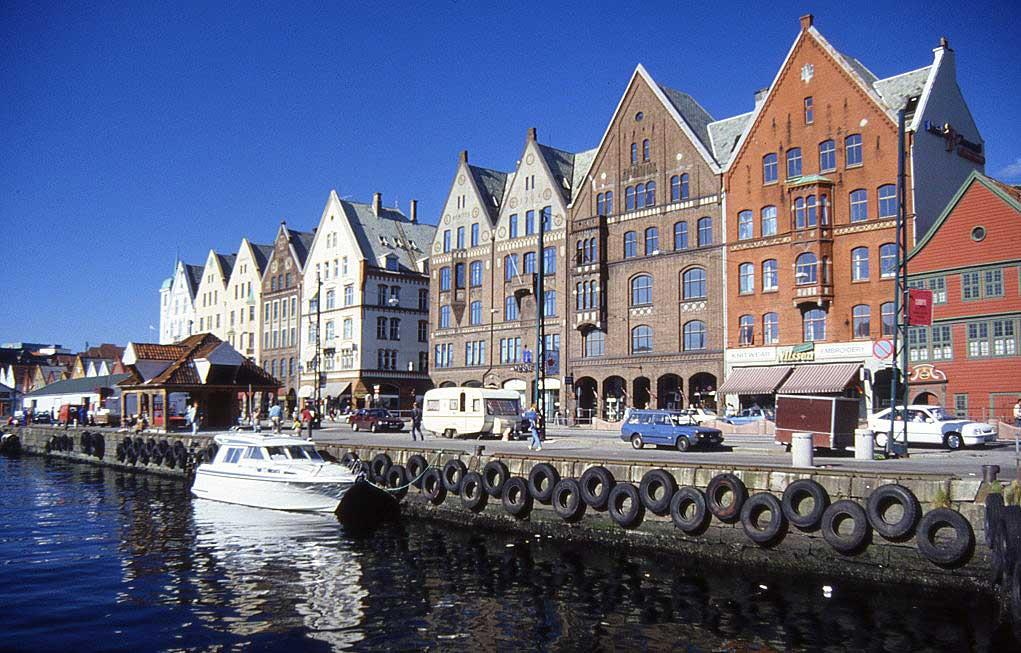
Photograph: Wikimedia Commons
Lynn provided a major commercial connection between the potters and their Scandinavian customers. Goods arriving from the Norfolk countryside could pass through the port into the hands of merchants trading with Norway. We should not necessarily imagine ships sailing from Lynn with holds filled exclusively with pottery. Ceramic vessels could accompany other merchandise, and their transport was probably closely connected with the wider movement of goods between English and Norwegian ports. Nevertheless, their abundance at Bergen is striking. It demonstrates that a rural Norfolk industry had become part of an extensive international commercial network.
The connection extended beyond ordinary pottery. Numerous bearded face jugs also reached Bergen, where examples have been recovered from archaeological contexts associated with the town’s merchant community. Green records that 65 such vessels were displayed at Bryggens Museum during an exhibition held between 2013 and 2014.
There is something wonderfully human about this connection. A merchant in Bergen might have entertained a visitor using a green-glazed jug decorated with a bearded face, unaware that it had been fashioned from Norfolk clay by a craftsman working near Grimston. Meanwhile, a merchant in Bishop’s Lynn might have possessed a remarkably similar vessel.
The same objects were being used in two distant communities linked by commerce. It is possible that they also reflected something of a shared drinking culture among the merchants who moved between them. And their distribution tells us something more. The economic importance of medieval Lynn did not end at its quayside. Its prosperity depended upon a network of villages, workshops, and producers whose goods passed through the town on their way to distant customers.
The Forgotten Entrepreneurs
This brings us back to Ben Jervis’s argument. Historians have long recognised the importance of landowners, institutions, and wealthy merchants in creating medieval markets. Bishops and other landlords encouraged the foundation of towns, while merchants developed the commercial relationships that enabled goods to circulate. But such an explanation risks overlooking the people who actually made the things being bought and sold.
Jervis suggests that medieval craftsmen were capable of recognising opportunities and responding creatively to them. They could develop new products, experiment with manufacturing techniques, and help shape consumer demand rather than simply respond to it.
The Grimston potters were working within an economic system they did not control. They were dependent upon access to clay and fuel, the availability of markets, and the merchants who transported their products. Nevertheless, their willingness to manufacture distinctive and increasingly sophisticated pottery contributed to the expansion of the very markets upon which they depended.
We cannot prove that individual Grimston potters deliberately targeted the Norwegian market or consciously developed products for particular groups of consumers. Indeed, the extent of their direct involvement in marketing remains uncertain. Yet the archaeological evidence suggests that production and consumption were influencing one another across considerable distances.
This was entrepreneurship on a very different scale from that associated with great medieval merchants. It involved practical decisions about materials, craftsmanship, production, and the changing preferences of customers. The cumulative consequences were remarkable. The industry’s greatest period of international success did not last indefinitely. During the fourteenth century, changing commercial relationships, including the growing influence of German Hanseatic merchants in Bergen, disrupted the trading connections that had favoured Lynn. The fashion for elaborately decorated face jugs also declined.
Pottery production continued around Grimston and Pott Row, but the industry gradually lost its earlier importance and had disappeared by the sixteenth century. Its history then slipped almost completely from memory, until archaeological discoveries began to reveal the extraordinary scale of what had once taken place.
There is a wider lesson here for anyone interested in medieval Lynn. The town’s prosperity was not created exclusively by its wealthiest merchants or the bishops who encouraged its development. It also rested upon the skills and initiative of people living well beyond its boundaries, producing goods that gave the port something to trade. The potters of Grimston and Pott Row left no grand merchant houses to commemorate their achievements. Their workshops disappeared, their names were forgotten, and their kilns eventually became archaeological curiosities. Yet hundreds of miles away, beneath the streets of Bergen, their work survived.
Those fragments of Norfolk clay are a powerful reminder that the history of a great medieval port cannot be told entirely through the activities of its richest inhabitants. Sometimes the most revealing evidence of commercial success is not a magnificent surviving building or an ancient charter.
Sometimes it is simply a broken jug.
© James Rye 2026
Book a Walk with a Trained and Qualified King’s Lynn Guide
Sources and Further Reading
Ben Jervis (2025). ‘Minoritarian Entrepreneurs: Pottery, Commerce and Urbanisation in Medieval England (c. AD 1200–1350)’, Antiquity, 99 (406), pp. 1098–1113. Read the open-access article.
Mark Leah (1994). The Late Saxon and Medieval Pottery Industry of Grimston, Norfolk: Excavations 1962–92. East Anglian Archaeology Report 64. An essential archaeological study of Grimston and Pott Row. Read the report.
Kelly Green (2016). ‘Forming Identities, Transcending Boundaries: The Trade and Consumption of Bearded Face Jugs in the North Sea Region, 1200–1350’, Medieval Ceramics, 37–38, pp. 127–150. An important examination of pottery consumption in Lynn and its relationship with North Sea trade. Read the article.
Helen Clarke and Alan Carter (1977). Excavations in King’s Lynn, 1963–1970. Society for Medieval Archaeology Monograph 7. A foundational study of the archaeological evidence for medieval Lynn.