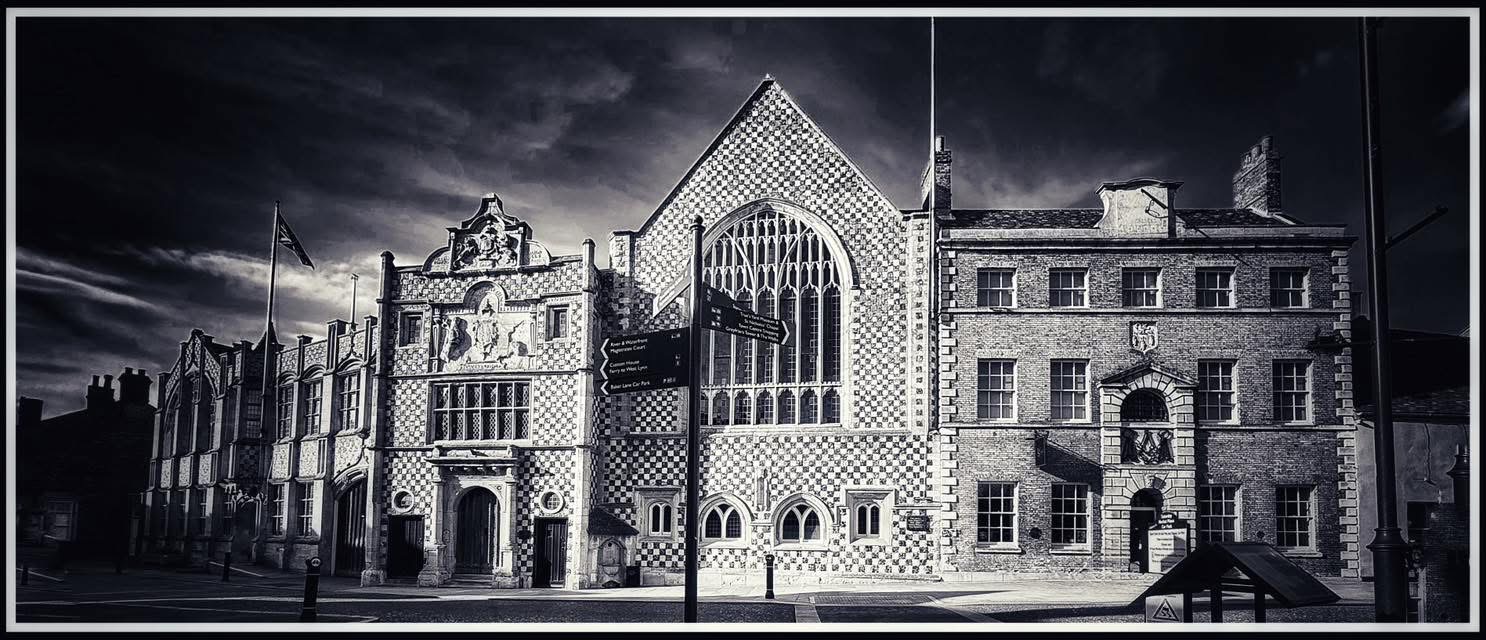

Source: Wikimedia Commons.
How a family of Norfolk farmers became aristocrats, and invented a more distinguished ancestry along the way.
In 1573, Robert Cooke, one of England’s most senior heralds, produced a magnificent illustrated pedigree of the Paston family of Norfolk. Its colourful coats of arms and elaborate family connections suggested an ancestry stretching back through generations of distinguished gentlemen. Anyone examining it might reasonably have concluded that the Pastons belonged to one of England’s oldest and most respectable families. Unfortunately, much of their supposedly ancient ancestry was fiction.
A fascinating study by John Alban, published in The Coat of Arms in September 2026, examines how the Pastons developed a misleading family history, supported by heraldry, to conceal their relatively modest beginnings. Their genuine achievements were remarkable enough. Within a few generations, they had progressed from prosperous farmers to influential landowners. Eventually, they entered the aristocracy. But in a society where ancestry counted for so much, the Pastons wanted people to believe that they had always been gentlemen.
From the Plough to the Judge’s Bench
The family’s story begins with Clement Paston, a substantial farmer from the village of Paston, near the north Norfolk coast, who died in 1419. According to a hostile account preserved among the family’s papers, Clement was a “good, plain husbandman” who cultivated his own land, carried corn to market, and possessed perhaps 100 or 120 acres. The writer also suggested that Clement’s wife, Beatrice, was of unfree status. That allegation remains unproven, and the account was plainly intended to damage the family’s reputation. Nevertheless, it reflected a social reality that their descendants found increasingly uncomfortable. Their grandfather had been a working farmer.
Clement’s son William transformed the family’s fortunes. With assistance from his uncle Geoffrey Somerton, a successful legal practitioner, William received an education and entered the law. His abilities eventually brought him an appointment as a justice of the Court of Common Pleas in 1429. He used his earnings to acquire estates and married Agnes Berry, a woman from an established landowning family. By his death in 1444, the Pastons had become members of the Norfolk gentry.

Source: Public Domain
Their new position was far from secure. The celebrated Paston Letters reveal a family constantly defending its property against powerful neighbours, pursuing lawsuits, and attempting to strengthen its influence. Their long dispute over the inheritance of Sir John Fastolf was particularly bitter. In 1469, Caister Castle, which the Pastons claimed, was besieged by forces acting for the Duke of Norfolk. The defenders eventually surrendered after one of their number had been killed.
The Pastons had acquired considerable property, but wealth did not necessarily command the respect enjoyed by families whose ancestors had held estates for centuries. Their origins were recent enough to be remembered, and enemies could exploit their supposedly inferior background. They needed something that money could not easily purchase: an ancient and distinguished ancestry.
A Family Tree with Convenient Branches
The solution was to improve the family history.
John Alban’s research shows how the Pastons developed a fictitious lineage, supported by heraldic claims, which presented their ancestors as people of much greater standing than the historical evidence justified. Some of the family’s prestigious connections were genuine. Marriage had brought the Pastons into established families, and these relationships deserved recognition. But authentic marriages could also provide the foundations for a much grander story about the family’s origins.
Heraldry was particularly useful for this purpose. Coats of arms were more than attractive decoration. They identified families and could demonstrate their ancestry through the combination of different heraldic designs. When a man married an heraldic heiress, his descendants might be entitled to display her family’s arms alongside their own. The more elaborate the resulting shield, the more impressive the family connections appeared.
The illustrated pedigree prepared by Robert Cooke in 1573 demonstrated what could be achieved. Cooke held the senior office of Clarenceux King of Arms, and his beautifully executed document presented the Pastons’ ancestry through a succession of heraldic shields and marriage connections. Its elaborate quarterings created a striking impression of hereditary distinction. The authority associated with Cooke’s office added to its apparent credibility.
Yet an official-looking pedigree was not necessarily an accurate one. Its claims depended upon whether the relationships could be established from reliable evidence. Alban demonstrates that the Pastons’ supposed ancient lineage included inventions and heraldic fabrications, forming a family history far more distinguished than the one recorded in contemporary documents.
The process continued as the family’s importance increased. The imposing monument to Sir William Paston, who died in 1610, in St Nicholas’s Church at North Walsham, contains an extraordinary display of heraldry. A griffin crest and numerous shields proclaim the family’s connections with other distinguished houses. Anyone looking at this colourful celebration of ancestry would have found little indication that the family had risen to prominence only two centuries earlier.
From Norfolk Farmers to Earls
The culmination of the Pastons’ ambitions came during the reign of Charles II. Robert Paston, born in 1631, inherited the family’s estates at Oxnead and established himself as a prominent courtier. He represented Castle Rising in Parliament from 1661 until 1673, cultivated royal favour, and developed considerable political influence. In 1673, Charles II created him Viscount Yarmouth. Six years later, on 30 July 1679, he became Earl of Yarmouth.
There was also a connection with King’s Lynn. A Paston letter from 1462 records John Paston III writing from Lynn about efforts to obtain command of a ship called the Marie Talbot for his elder brother. More than two centuries later, Robert Paston was admitted as a freeman of King’s Lynn in 1679, the very year in which he received his earldom. The family’s association with west Norfolk therefore extended beyond Robert’s parliamentary representation of Castle Rising.
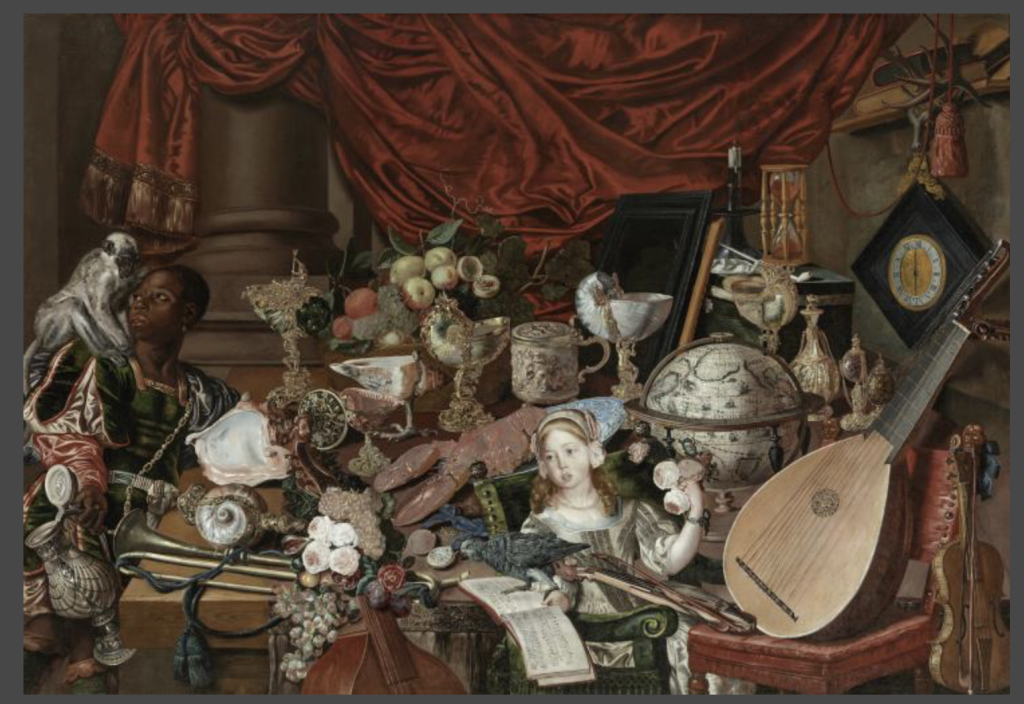
Source:The Yale Center for British Art
By this time, the Pastons enjoyed a lifestyle far removed from that of Clement and his plough. Their possessions at Oxnead Hall were spectacular. The remarkable painting known as The Paston Treasure, dating from around 1663, displays an extraordinary collection of precious vessels, exotic shells, musical instruments, and other costly objects. It was intended to celebrate the family’s wealth and sophistication, much as their elaborate heraldry celebrated its supposed ancestral distinction.
But the splendour did not last. Extravagant expenditure and serious financial difficulties undermined the family’s fortunes. Robert’s son William, the second Earl of Yarmouth, inherited substantial problems, and the family estates and collections were eventually dispersed. When he died in 1732, the earldom became extinct. The family had spent generations climbing towards the aristocracy, only to lose its noble title after fifty-three years.
The History They Could Not Erase
There is considerable irony in the Pastons’ attempt to conceal their origins. Their actual achievements were extraordinary. Clement’s prosperity made possible the education of a son who became a royal judge. William’s successful legal career enabled his descendants to acquire estates and establish themselves among Norfolk’s leading families. Subsequent generations consolidated that position through marriage, political activity, and royal favour.
But the Pastons lived in a society that placed enormous value upon inherited status. A family that had recently risen through its own efforts might still be regarded as inferior to one whose ancestry stretched back for generations. A manufactured pedigree offered an attractive solution. It transformed a story of social advancement into one of apparently continuous gentility.
Fortunately for historians, the Pastons left behind something much more valuable than their heraldic inventions. Their famous letters reveal their arguments over property, their domestic concerns, and their determined efforts to establish themselves in Norfolk society. They preserve the struggles and ambitions that the later pedigrees sought to disguise.
The Pastons wanted posterity to admire their ancient blood. Instead, their greatest distinction lies in what they actually achieved without it.
© James Rye 2026
Book a Walk with a Trained and Qualified King’s Lynn Guide
References
- Alban, John. “The Pastons and the Creation of an Heraldic Myth.” The Coat of Arms, 4th series, 9, no. 243 (2026): 1–28. https://ueaeprints.uea.ac.uk/id/eprint/104646/
- Gairdner, James, ed. The Paston Letters, A.D. 1422–1509. Vol. 1. Edinburgh: John Grant, 1910. https://www.gutenberg.org/ebooks/43348
- History of Parliament. “Paston, Robert (1631–83).” The House of Lords 1660–1715. https://dev.historyofparliamentonline.org/lord-biography/paston-robert-1631-83
- Richmond, Colin. “Paston Family (per. c. 1420–1504), Gentry.” Oxford Dictionary of National Biography. Oxford University Press, 2004, updated 2022. https://doi.org/10.1093/ref:odnb/52791
- Yale Center for British Art. The Paston Treasure: Microcosm of the Known World. 2018. https://britishart.yale.edu/publications/paston-treasure-microcosm-known-world