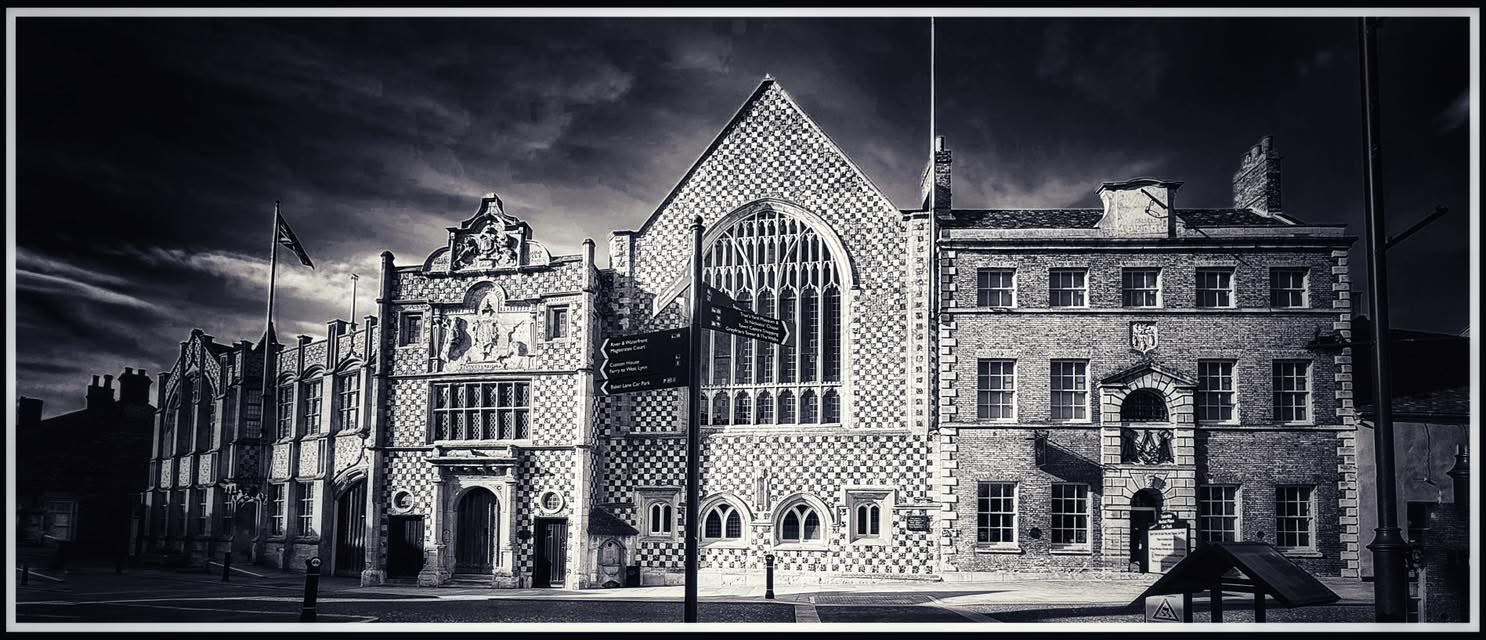
In the summer of 1643 King’s Lynn found itself caught in one of the sharpest local reversals of the early Civil War. A port with Parliamentarian MPs, a record of support for Parliament, and a clear place within the generally Parliamentarian east of England ended by declaring for the king, admitting Sir Hamon L’Estrange as governor, and forcing Parliament to retake it by siege. The siege itself lasted only a matter of weeks, from late August to mid-September, but its effects were deeper and longer than the short duration might suggest. Buildings were damaged, trade was disrupted, the borough was hit with heavy financial burdens, and the town then had to live for years with the cost and strain of occupation and garrisoning.
King’s Lynn mattered because it was not a backwater. It was still one of the most important ports on the Wash, with river access inland and maritime access to the North Sea. In wartime, that gave it military value far beyond its size. A town like Lynn could move men, supplies, coal, ammunition, and provisions. Once Parliament lost control of it, even briefly, that was a strategic problem. Once Parliament recovered it, the place became too important to leave weak, and that decision shaped the town’s next few years.
A Parliamentarian town, at least to begin with
At the outbreak of war Lynn did not present itself as a Royalist borough. Its MPs, John Percival and Thomas Toll, were aligned with Parliament, and the corporation made practical moves in support of the Parliamentary cause. The town took steps to strengthen its defences, raised and trained men, and assisted Parliament financially. It also supplied help in the region when Royalist danger threatened elsewhere. This is important, because it rules out the easy explanation that Lynn was simply Royalist underneath the surface and only later admitted it. The evidence points instead to a borough that began on Parliament’s side but was internally divided and became increasingly unstable under pressure.
That instability showed itself well before the formal declaration for the king. In March 1643 Oliver Cromwell hurried to Lynn from Lowestoft because Royalists in the town were, in contemporary language, “raising combustions” and declaring against Parliament. He disarmed those judged “malignant” burgesses, secured the town, and seized arms that had come in from Dunkirk. Even that episode has a revealing local touch: Mayor Thomas Gurlin was later reimbursed by the corporation for the cost of entertaining Cromwell. Lynn was therefore not calm, settled, or ideologically uniform. Royalist activity was sufficiently serious to provoke direct military intervention.
Why did Lynn declare for the king?
The simplest answer is that several pressures came together at once.
One was local division within the governing elite. Percival and Toll were Parliamentarian, but not every influential figure in the town shared their views, their interests, or their degree of commitment. Mayor Thomas Gurlin proved to be a central figure in the crisis, and the corporation as a whole was far from united. During civil war, towns did not act as abstract constitutional bodies. They acted through networks of office, wealth, kinship, patronage, fear, and personal influence. Lynn was no exception.
Another factor was resentment at burdens imposed in Parliament’s name. Wartime government was expensive. Taxes, levies, obligations, and military demands fell on boroughs already anxious about trade and defence. In Lynn there was dissatisfaction with the Parliamentary rate, and that mattered. Support for Parliament did not necessarily mean cheerfully accepting every associated demand, especially in a commercial town where merchants and householders were sensitive to cost and disruption. Political allegiance in 1643 was rarely a matter of pure abstract principle. It was often entangled with the more immediate questions of who was paying, who was protected, and who seemed in control.
Sir Hamon L’Estrange’s importance should not be understated. He was a leading local Royalist gentleman with family standing, regional influence, and a reputation strong enough to attract support inside and around the borough. He seems to have offered not only a political lead but practical assistance, including money towards strengthening the town’s defences. In a frightened and divided port, that combination of local authority and visible commitment mattered. A man like L’Estrange could present himself not merely as a partisan, but as someone able to defend the town in a moment of danger.
Military events in the wider region also altered the balance. Royalist successes in 1643 made Parliament’s position look less secure than it had done in the previous year. The king’s forces had made important gains, and the prospect of Royalist power bearing down on East Anglia was enough to encourage fence-sitters, alarm merchants, and embolden those already hostile to Parliament. In such conditions, local calculations changed quickly. A borough might fear punishment if it remained loyal to Parliament and Royalist forces prevailed nearby. Lynn’s declaration for the king needs to be understood against that wider military background.
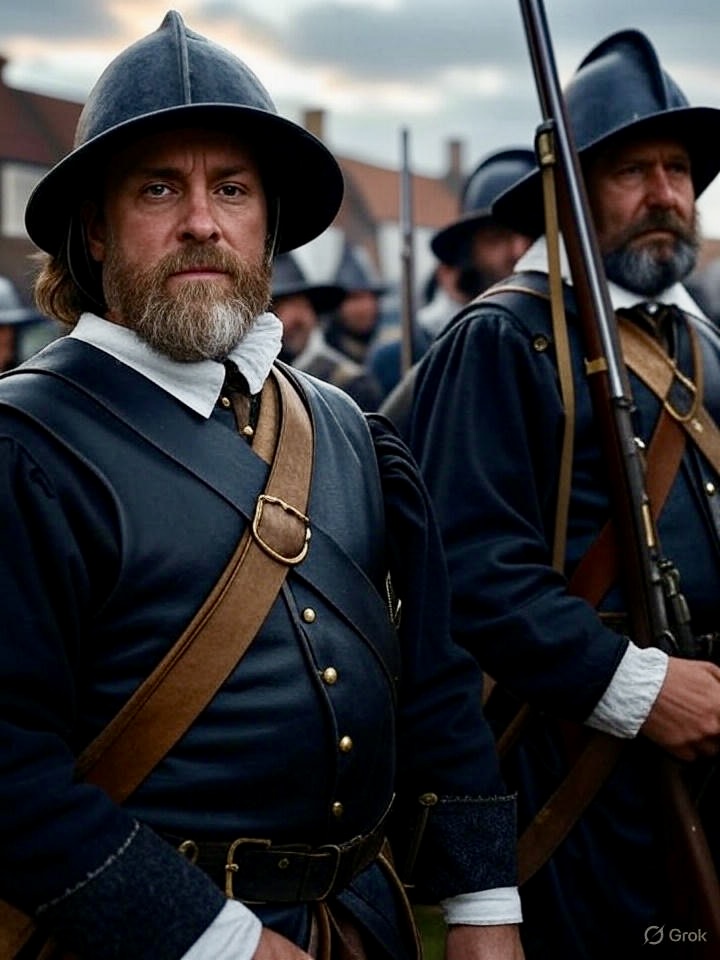
There was also a decisive issue of authority. Parliament ordered the arrest of Sir Hamon L’Estrange and other Royalist gentlemen. Those orders were not carried out. Whether this failure came from reluctance, weakness, sympathy, or fear, the effect was the same. It showed that Parliamentary authority inside the borough was no longer secure. Once the town government failed or refused to act against leading Royalists, the balance tipped further. On 13 August 1643 Mayor Gurlin ordered the house arrest of Percival, Toll, and other Parliamentarian councillors, and Sir Hamon L’Estrange was declared governor for the king. That was the turning point. It was not the unanimous voice of the whole town. It was the victory of one faction at a moment when local power and wider military pressure favoured it.
A port now too important to lose
For Parliament, Lynn could not simply be written off. The town’s position on the Wash and the Ouse system gave it logistical value that extended far beyond west Norfolk. Research on the siege and on the later fortification of the town has shown just how seriously Parliament took this. Once Lynn had been recovered, it became one of the stronger fortified positions in the region, precisely because its military and supply value had been exposed so sharply in 1643. Parliament understood that the loss of Lynn was dangerous. It also understood, after the surrender, that the town must never again be so easy to turn.
The siege begins
The siege began in earnest on or about 28 August 1643. Parliamentarian forces moved to isolate the town, cut communications, and bring artillery to bear. A detachment under Captain William Poe blocked approaches, while the Earl of Manchester and Oliver Cromwell established batteries at West Lynn on the opposite side of the river. Guns from Norwich and from the Tower were brought into service. The attackers intended not merely to demonstrate force but to bring sustained pressure against both the town’s defences and its morale.
The Royalists inside Lynn were not passive. They held both foot and horse, and early in the siege they made aggressive sallies from the gates. Houses in Gaywood were burned to deny cover to the enemy. The hospital at the Alms Houses of St Mary Magdalen was also set on fire for the same reason. There were attempts to seize cattle and to harass Parliamentary forces beyond the walls. These episodes remind us that the siege was not a simple one-sided bombardment. It involved active local fighting around the approaches to the town as well as the more famous artillery exchanges.
Yet Lynn’s basic position was difficult. It was a merchant town under pressure, not a fortress built from the ground up for modern artillery war. Parliament tightened the blockade, restricted movement, and interfered with the supplies on which a port depended. The surrounding countryside also suffered. Harvesting was disrupted, roads and bridges became militarised, and the presence of troops, horses, carts, and artillery placed heavy strain on the district around the borough. Civil war was never confined neatly within walls.
Bombardment, fear, and the strain on the town
One of the most striking features of the siege was the use of artillery and explosive projectiles, remembered in the town’s story as “grenadoes”. Their physical effect mattered, but so did their psychological effect. The people of Lynn were not hardened inhabitants of a continental war zone. Repeated bombardment, noise, fire, and uncertainty had a powerful effect on morale. The centre of the town, including the area around the Tuesday Market Place, became a place of alarm as people feared remaining in their houses. Sacred and civic buildings were not spared by the logic of artillery.

Among the specific damage recorded was the destruction of William Johnson’s mill, the burning of haystacks, damage to houses, and the ruin of the bridge at Setchey. St Margaret’s Church also suffered, with damage to the west window. Later Parliamentary action acknowledging the need for timber for repair suggests that the damage to the town’s built fabric was substantial enough to demand organised response. This was not only a contest of military wills. It was also a direct assault on urban property, infrastructure, and the daily life of the borough.
The siege also produced darker moments at close quarters. The defenders attempted to cut banks and use water to flood enemy positions, but the effort went badly wrong. Townsmen were killed, and their bodies were displayed in a way that deepened horror inside the borough. Such incidents matter because they strip away the comforting idea of a brief and almost bloodless local affair. Lynn’s siege may not have been one of the great set-piece battles of the Civil War, but for those caught in it the experience was violent, frightening, and degrading.
The division within the borough remained visible even during the siege. Thomas Toll, one of the imprisoned Parliamentarian MPs, managed to escape from house arrest by climbing through a window and making his way across the water to the besieging forces. It is one of the most dramatic episodes in the story and a vivid symbol of the town’s internal fracture. Even while Lynn was held for the king, one of its leading civic voices was literally breaking out to rejoin Parliament.
The surrender in September 1643
By mid-September the defenders were ready to negotiate. On 15 September Manchester received word from the town indicating willingness to capitulate, and a truce allowed formal discussions to begin. Lynn’s legal officers and representatives tried to secure terms that would preserve as much as possible: the town’s trading rights, freedom of movement, and some restitution or mitigation of losses. Manchester’s response was stern. He set out Parliament’s view that the town had offended by rising against Parliament, imprisoning its own MPs, refusing lawful orders, and resisting in arms. That tone mattered. Parliament was prepared to accept surrender, but not to treat Lynn as an innocent victim of events.
The final terms were serious but not utterly destructive. The town was to be surrendered with its arms and ammunition. Trade privileges were to continue. Prisoners were to be released. Some Royalist gentlemen and soldiers from outside the town were permitted to depart under conditions. At the same time, Lynn had to pay substantial sums to satisfy the besieging army and avert plunder, and leading figures including Sir Hamon L’Estrange and William Leeke were kept effectively as hostages until the terms were fulfilled.
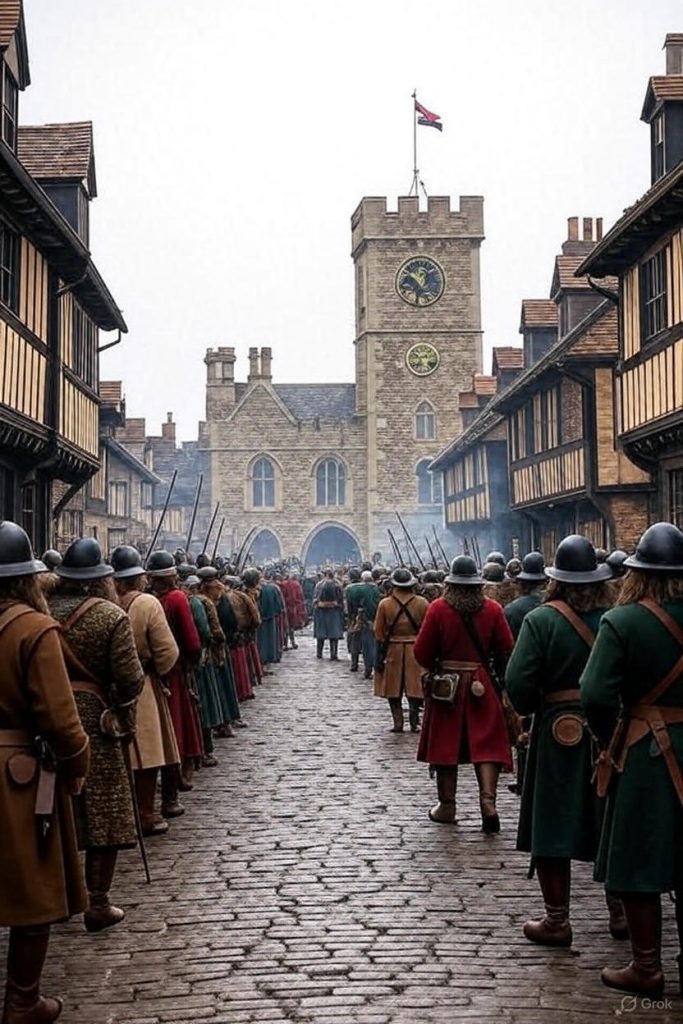
Even the actual entry of Parliamentarian troops was uneasy. There was suspicion over the manner of admission, tension in the streets, and signs that some within the town remained angry or defiant at the last moment. The surrender was therefore not the calm closing of a legal transaction. It was a nervous transition from one armed authority to another in a town that had been under intense pressure for weeks. Lynn finally yielded on 16 September 1643. Colonel Valentine Walton, Cromwell’s brother-in-law, was left in charge.
How the town suffered afterwards
The worst mistake is to think of the story ending with the surrender.
The immediate financial burden was severe. Lynn had to raise a very large sum to satisfy the occupying forces and prevent plunder – £3200. The town emerged from the siege under crushing financial pressure. A port community already damaged by war had to find ready money at once.
Repair costs followed. Damaged walls, buildings, windows, bridges, and other parts of the town fabric needed attention. Parliament also moved to strengthen Lynn militarily, developing it into a more formidable fortified site. That was sensible from a strategic point of view, but it meant that the town continued to bear the burden of war after the fighting had ceased. A garrisoned and refortified town is not a normal commercial town. Space, money, labour, and civic attention all had to be diverted toward military needs.
The garrison itself became a continuing source of strain. Fuel, candles, guard costs, quarters, and the incidental damage caused by troops had to be met somehow. Petitions from the period show the corporation complaining of these burdens and seeking relief. There were also religious and civic frictions, including damage to church glass and other alterations associated with Parliamentary rule. What had been a short siege turned into years of expensive military occupation.
Trade also suffered badly. That was perhaps inevitable. Ports depend on confidence, traffic, and continuity. Siege interrupts all three. Occupation and taxation do not help. In December 1645 the House of Commons accepted that Lynn’s assessment was too high in light of its sufferings from plague and the decay of trade, and granted a reduction. That is a revealing piece of evidence because it shows the damage had become visible at national level. The borough’s troubles were not just a matter of local complaint. Parliament itself acknowledged them.
The town’s misery did not lift quickly. By 1647 there were reports of mutinous soldiers, lack of pay, quarrels between townsmen and troops, and a general sense of strain and danger. An underpaid garrison lodged in a burdened town was a recipe for tension. Lynn therefore suffered not only from bombardment and surrender, but from the prolonged afterlife of war. The siege damaged the town in weeks. The occupation drained it over years.
Royalist families and individuals associated with the change of sides also paid heavily. The L’Estrange accounts record very substantial private losses, including sheep, horses, corn, and money. Those figures come from a partisan family perspective and must be read with that in mind, but they still show the scale of confiscation, loss, and grievance that followed. The war in Lynn was experienced not just as an episode in high politics, but as a series of very personal material catastrophes.
Why the siege still matters
The siege of King’s Lynn was not one of the largest engagements of the English Civil War, but it mattered greatly for the town and for Norfolk. It exposed how fragile borough politics could be under military pressure. It showed that Parliamentarian representation in Westminster did not guarantee firm local control. It demonstrated the power of local magnates, the effect of taxation and wartime burdens on political loyalty, and the strategic value of a port on the Wash. It also left a mark on Lynn’s physical fabric, finances, and civic life that lasted long after the surrender of September 1643.
If one asks why a town with Parliamentarian MPs ended by declaring for the king, the answer is not that the town had been misunderstood from the beginning. It is that Lynn was divided, pressured, frightened, and influenced by local power as much as by national ideology. If one asks how the town suffered afterwards, the answer is equally clear. It suffered through damage, through enforced payment, through disrupted trade, through taxation, through occupation, and through the continuing expense of being treated as a place too important to be trusted without a garrison.
© James Rye 2026
Book a Guided Walk with a Trained and Qualified King’s Lynn Town Guide
Further Reading
- British History Online http://www.british-history.ac.uk/commons-jrnl/vol4/pp534-535 (accessed April 2021)
- Flintham, D. Richard Clampe, Fortress Engineer, c1617-1696, FORT vol.46, pp.3-14, 2018
- Flintham, . “King’s Lynn under siege: how a small field in North Lynn illuminated Civil War fortress engineering.” The Past, April 6, 2023. https://the-past.com/feature/kings-lynn-under-siege-how-a-small-field-in-north-lynn-illuminated-civil-war-fortress-engineering/
- Hillen, H.J. History of the Borough of King’s Lynn, Vol.1, EP Publishing Ltd. 1907
- Holmes, C. The Eastern Association in the English Civil War, Cambridge University Press 1974
- House of Commons Journal. “Volume 4: 5 May 1646.” In Journal of the House of Commons: Volume 4, 1644–1646. London, 1802. British History Online. https://www.british-history.ac.uk/commons-jrnl/vol4/pp534-535
- Ketton-Cremer, R.W. Norfolk in the Civil War: A Portrait of a Society in Conflict, Gliddon Books 1985
- Lynn Museum. “Civil War and polite society at Lynn Museum.” Norfolk Museums Service. Accessed March 19, 2026. https://www.lynnmuseum.norfolk.gov.uk/article/30501/Civil-War-and-polite-society-at-Lynn-Museum
- Kyle, C. https://www.historyofparliamentonline.org/volume/1604-1629/member/lestrange-sir-hamon-1583-1654 (accessed April 2021)
- Rye, James. “Life after the Siege of King’s Lynn, 1643.” Circato, May 26, 2021. https://circato.co.uk/the-siege-of-kings-lynn-1643-4-afterwards
- Rye, James. “The Siege of King’s Lynn 1643 (1) – Which Side?” Circato, April 19, 2021. https://circato.co.uk/the-siege-of-kings-lynn-1643-1-of-4
- Rye, James. “The Siege of King’s Lynn 1643 (2) – Grenadoes.” Circato, April 29, 2021. https://circato.co.uk/the-siege-of-kings-lynn-1643-2-grenadoes
- Rye, James. “What brought the Siege of King’s Lynn 1643 to an end?” Circato, May 2, 2021. https://circato.co.uk/the-siege-of-kings-lynn-1643-3-ending
- Smith, Helen. King’s Lynn and West Norfolk c.1575 to 1662. PhD diss., University of East Anglia, 2012. https://ueaeprints.uea.ac.uk/40587/1/2012SmithPPhD.pdf
- Withers, A. Great Staughton And Its People, Unknown 2023
- Yaxley, S. ed. ‘A briefe and true Relation of the Siege and Surrendering of Kings Lynn to the Earle of Manchester’. In Yaxley, S. The Siege of King’s Lynn 1643, The Larks Press 1993