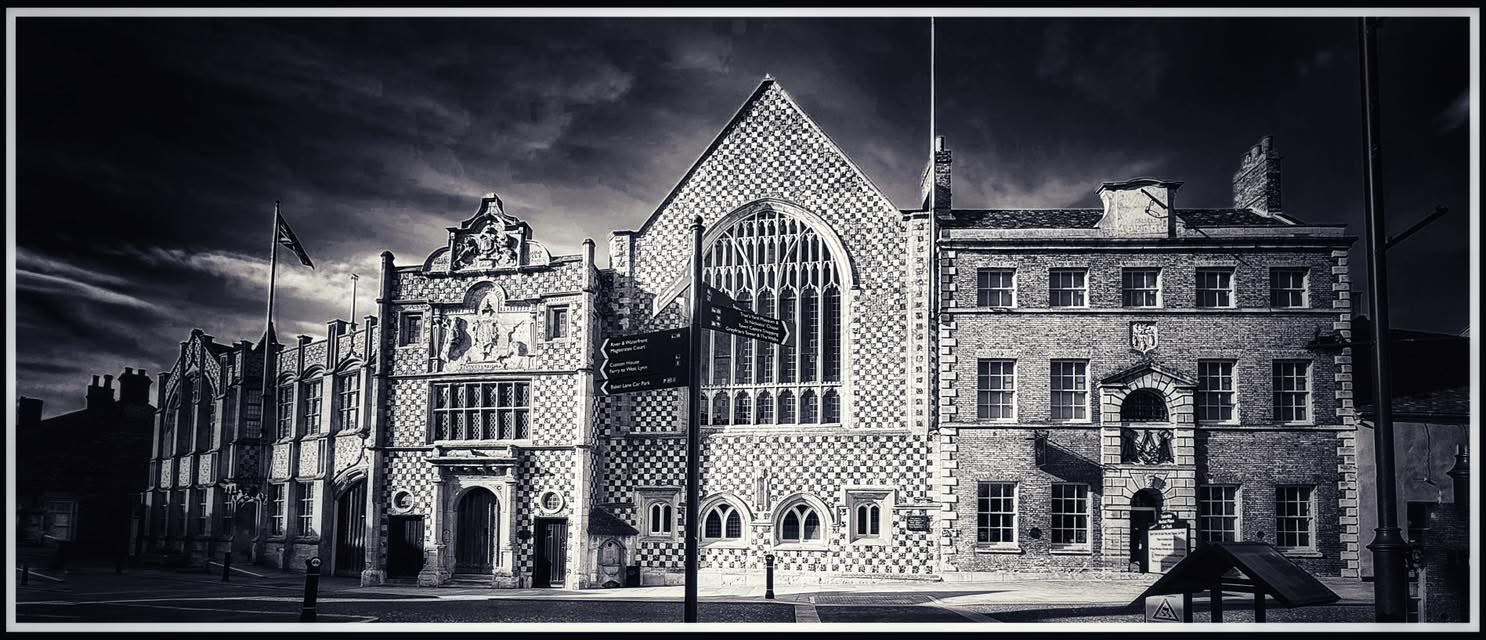
In 1303 some men from Lynn went to war in an unusual way.
Bridges at Lynn: How Carpenters in Lynn Helped Edward I’s 1303 Campaign in Scotland
In 1303, Bishop’s Lynn became the site of one of Edward I’s most practical preparations for war in Scotland. The town did not enter the campaign story through a famous battle, nor through a great political assembly, but through wood, wages, tools, shipping, and skilled labour. The strongest surviving evidence shows that carpenters were assembled at Lynn to build wooden bridges for the king’s army, intended for use in crossing the Firth of Forth during Edward’s advance into Scotland.
That matters because it gives Lynn a definite place in the machinery of war. It was not simply one more port asked for money or shipping. It was a working centre of royal military engineering.
Why Edward Needed the Crossing
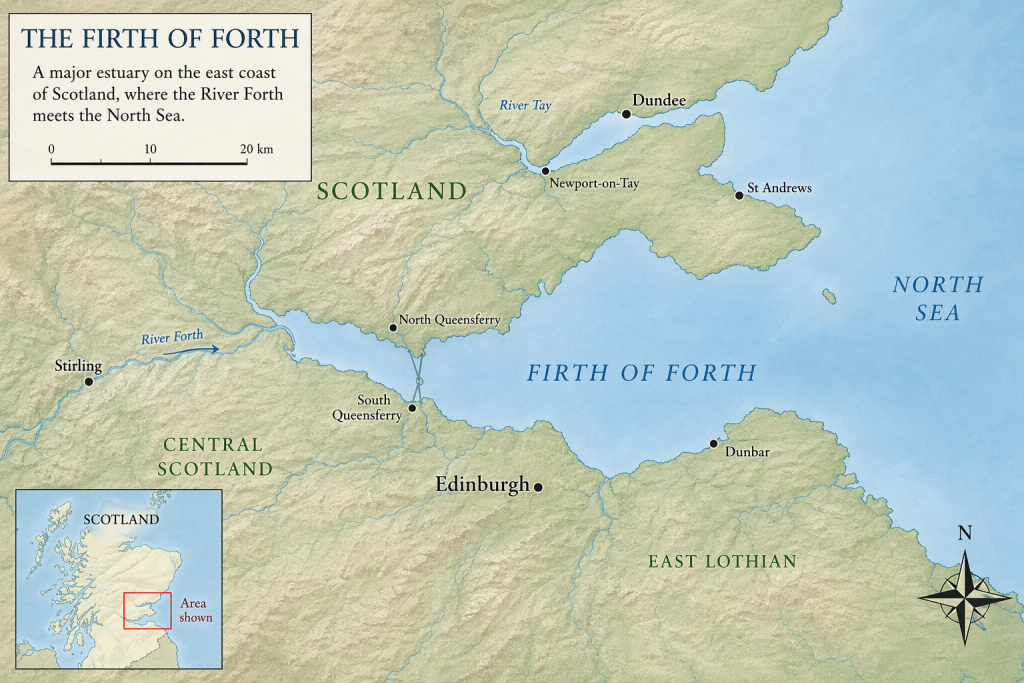
Edward I’s campaign of 1303 was meant to carry his army well beyond the Anglo-Scottish frontier and into the heart of Scotland. To do that at speed, and with authority, he needed to move a large field army northwards with its baggage, supplies, and support train intact. The Forth stood in the way.
A crossing there was not a minor convenience. It opened the route into central Scotland and reduced the army’s dependence on uncertain local arrangements. If Edward wanted to press on effectively, he needed a reliable means of getting men and matériel across a major obstacle. The bridge project linked to Lynn belongs in that setting. It was part of the practical business of making conquest possible.
The Record That Puts Lynn in the Story
The central piece of evidence is an Exchequer compotus, or account, calendared by Joseph Bain as document no. 1375 in the Calendar of Documents Relating to Scotland. It is an administrative record of expenses for bridges made at Lynn for the passage of the king and his army “beyond the Scottish sea” in 1303.
This is the document that gives the subject real weight. It is not a romantic tale or a late local tradition. It is a financial account, concerned with payment, supervision, transport, and labour. Because of that, it preserves exactly the kind of detail that narrative chroniclers usually ignore.
The account names the officials responsible for expenditure, Sir John de Swanlond and John de Portu. It also names the technical leadership. The work was directed by Master Richard, described as an engineer of Chester, and beneath him was Master Henry de Rihul, sub-master of the carpenters. That alone shows that this was an organised engineering operation rather than an improvised piece of local work.
Carpenters at Work in Lynn
The account shows carpenters being brought to Lynn from Chester. Master Henry de Rihul is recorded as bringing twenty carpenters there, while Master Richard’s movements included consultation with the king on the bridge project before returning with further men. The labour force also included a sawyer and “others of Norfolk”, which suggests that the workforce assembled at Lynn drew on more than one recruiting ground.
The practical detail is unusually vivid. Six hackneys were hired to carry tools and beds, with four grooms to manage them. Wages were paid by the day. Work continued from early February until 23 May 1303, when the bridges were said to be complete. During one stretch, from 5 to 11 May, the account states that the greatest number of carpenters at work at one time was sixty-two.
That is the clearest surviving picture of the Lynn project. The town served as a place where skilled men were gathered, maintained, and paid while a major timber structure, or set of structures, was prepared for royal use.
What the Lynn Project Produced
The broader documentary context makes the purpose of the work clearer still. Bain’s introduction to the same volume states that two fortified wooden bridges were made at Lynn Regis for the crossing of the Forth, and that they were shipped to Scotland in May under escort of thirty vessels.
Taken with the account itself, this strongly suggests prefabrication. The bridges, or major components of them, were made at Lynn, then transported by sea, and finally erected in Scotland. That reading is strengthened by another important detail in the account: after the bridges were finished, thirty carpenters were appointed to go with Master Richard to Scotland between 23 May and 12 June in order to set them up.
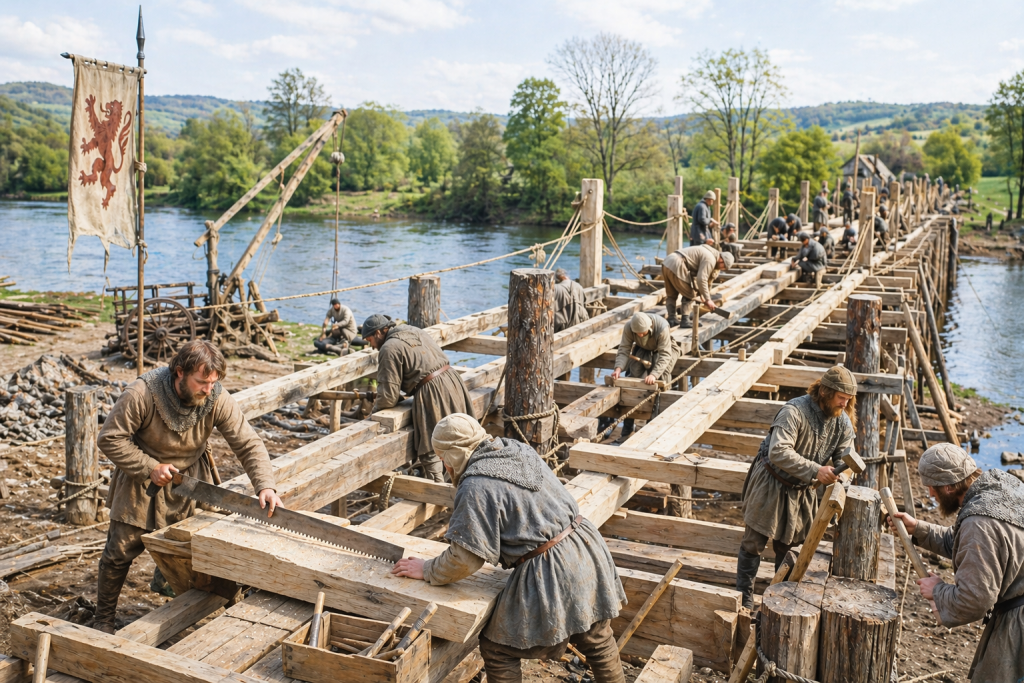
This was not ordinary building work. It was military mobility engineering. The carpenters at Lynn were helping to solve one of the army’s hardest practical problems, namely how to move a large force across a major water barrier without losing time or control.
Were These Really “Lynn” Carpenters?
The answer needs care. The work was certainly centred at King’s Lynn, and that gives the town a secure claim on the story. But the surviving account does not support a neat formula such as “fifty carpenters from King’s Lynn”.
What it actually shows is more interesting, and slightly untidier. Some carpenters were brought from Chester. Others were described as being of Norfolk. The working force at Lynn rose as high as sixty-two at one point, while the detachment sent on to Scotland numbered thirty. The record, then, is firm about a large carpentry operation at Lynn, but not about a fixed contingent of Lynn townsmen as such.
That distinction matters. Later retellings often smooth away awkward edges and turn a fluctuating workforce into a single memorable number. The evidence presently in view does not justify that. What it does justify is the claim that Lynn was the place where the Crown concentrated a substantial bridge-building force for Edward’s 1303 campaign.
East Coast Ships
Lynn’s role becomes still more striking when set against the town’s wider position. This was a major east-coast port, well placed for shipping and accustomed to royal demands. Local historical work also points to the borough bearing financial burdens connected with Edward I’s Scottish war in these same years, including expenses tied to a ship in the king’s service.
In 1302, Bishop’s Lynn recognised that it owed John de Welle £5 for the costs of his ship, the Nicholas, while it was in the king’s service in his Scottish Campaign. But John also owed the town 45s. in unpaid tallages (taxes). The town therefore deducted his unpaid taxes from what it owed him, leaving a balance of 55s. still due to John. We know that other vessels were involved in carrying the bridge structures to Scotland, including la Haukine of Wiggenhall, la Pelerine of Wiggenhall, and la Godeyere of Burnham, with further vessels from eastern ports. However, the Nicholas is not one of those bridge-transport ships.
In that light, the bridge project looks less like an isolated oddity and more like one aspect of the way the Crown used important ports. Lynn provided a place where labour, transport, and maritime movement could be coordinated. Timber structures could be built there, loaded there, and sent north from there. The town was not simply supporting the war from afar. It was participating in the campaign’s infrastructure.
Why the Carpenters Are Hard to See Elsewhere
One reason this story is not better known is that men like these seldom stand at the centre of medieval narratives. Chroniclers notice kings, battles, submissions, and castles. They are much less interested in wages, pack animals, tool transport, or the organisation of specialist labour. Modern scholarship on Edwardian military engineers has long pointed out that this kind of work often survives most clearly in administrative records rather than narrative histories.
That is exactly what has happened here. The Lynn carpenters come into focus because the Crown had to pay for them.
The Part Lynn Played
King’s Lynn’s contribution to Edward I’s 1303 campaign was skilled, practical, and strategic. It was the site where carpenters were assembled under royal direction to make wooden bridges for the army’s advance into Scotland. The workforce was supervised by named engineering officers, supplied with tools and transport, paid over several months, and then partly sent north to erect what had been built.
That is enough to place Lynn firmly within the campaign. The town helped to furnish Edward not merely with ships or money, but with the means of movement itself. In a war that depended on getting an army across the Forth and onward into central Scotland, that was no small part to play.
© James Rye 2026
Book a Guided Walk with a Trained and Qualified King’s Lynn Guide Through Historic Lynn.
References
Bain, Joseph, ed. Calendar of Documents Relating to Scotland Preserved in Her Majesty’s Public Record Office, the British Museum, and Elsewhere. Vol. 2, A.D. 1272–1307. Edinburgh: H.M. General Register House, 1884. https://archive.org/details/calendarofdocume02bainuoft
Calendar of the Close Rolls Preserved in the Public Record Office: Edward I, A.D. 1302–1307. Vol. 5. London: His Majesty’s Stationery Office, 1908. https://archive.org/details/calendarofcloser05grea
Freeman, A. Z. “Wall-Breakers and River-Bridgers: Military Engineers in the Scottish Wars of Edward I and Edward II.” In The Medieval Castle: Romance and Reality, edited by Philip Warner, 179–204. London: Society of Antiquaries of London, 1971. Cambridge Core listing: https://www.cambridge.org/core/books/abs/medieval-castle/wallbreakers-and-riverbridgers-military-engineers-in-the-scottish-wars-of-edward-i-and-edward-ii/DA13EAE97531B8A8AFB4C817A78A7799
Hillen, Henry J. History of the Borough of King’s Lynn. Vol. 1. Norwich: Jarrold & Sons, 1907. https://archive.org/details/historyboroughk00hillgoog
Historical Manuscripts Commission. Eleventh Report of the Royal Commission on Historical Manuscripts, Appendix, Part III: The Manuscripts of the Corporations of Southampton and King’s Lynn. London: Eyre and Spottiswoode, 1887. https://archive.org/details/appendixpartiiir11grea
Prestwich, Michael. Edward I. New Haven, CT: Yale University Press, 1988.
Prestwich, Michael. Armies and Warfare in the Middle Ages: The English Experience. New Haven, CT: Yale University Press, 1996.