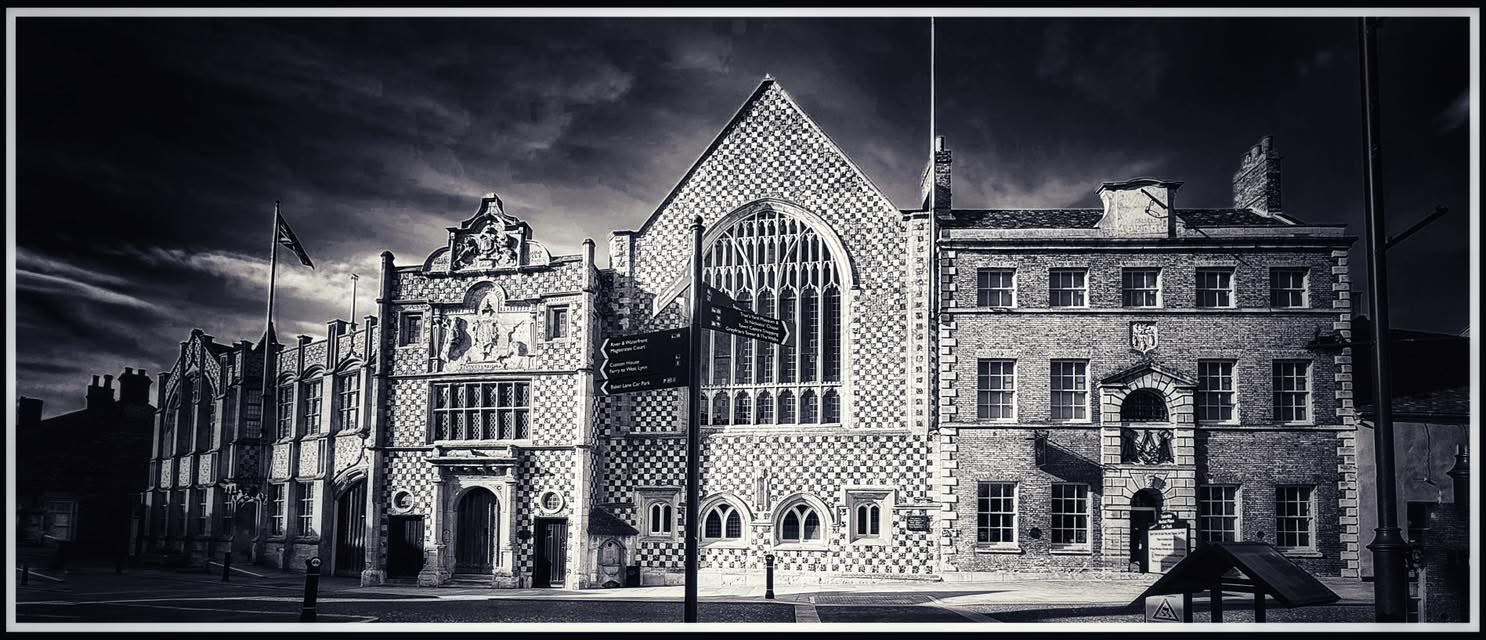
There are towns whose history can be told through a single building, a single family, or a single dramatic event. King’s Lynn is not one of them. Its story is inseparable from movement: ships, cargoes, quays, customs, foreign merchants, and the constant traffic between fenland producers and continental buyers. Among all the goods that passed through the port, wool stands out as one of the chief foundations of Lynn’s medieval prosperity. The town was not important because it was a great centre of manufacture on the scale of the Low Countries. It was important because it gathered wool from a rich hinterland, organised its export, and tied local producers to some of the most valuable markets in Europe.
Lynn: A port made for export
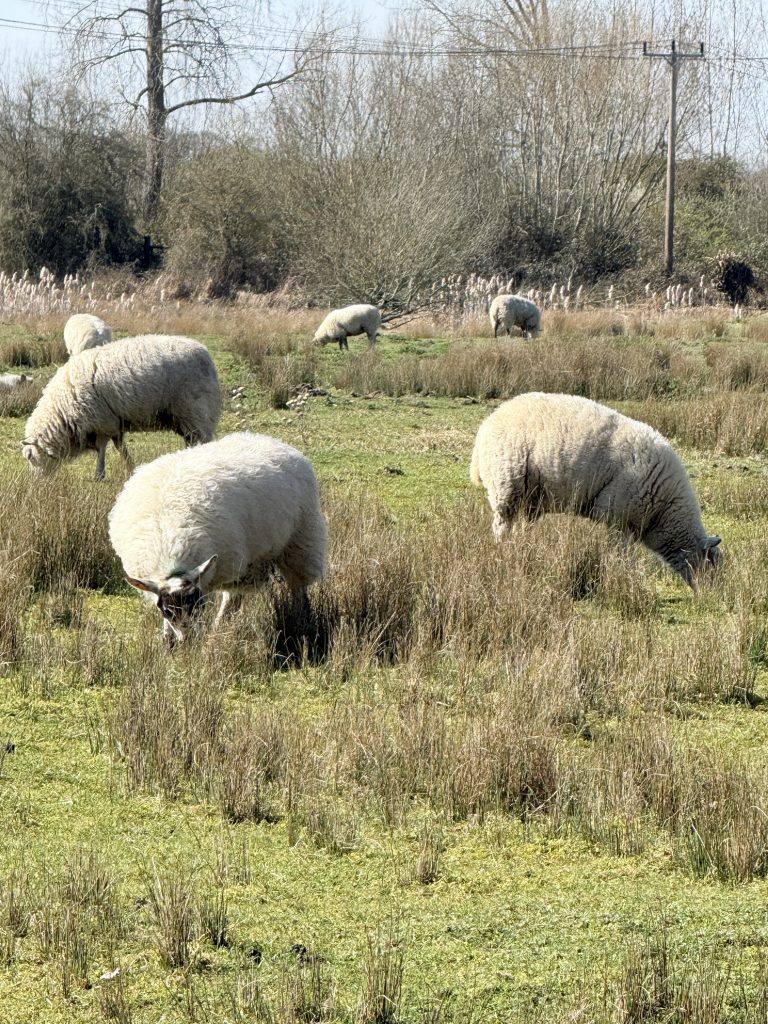
Photo © James Rye 2026
By the early thirteenth century Lynn was already one of the kingdom’s leading commercial ports. In 1203, when King John levied a tax of one fifteenth on imports and exports, Boston and Lynn together yielded more than any ports except London and Southampton. That ranking says a good deal about Lynn’s economic weight. It was handling timber, furs, wine and cloth coming in, and corn, wool, salt and fish going out. Wool was not the only export, but it was among the most lucrative and internationally important. Lynn’s position gave it access both to inland production and to North Sea routes, allowing it to serve as a collecting point for a wide region. Its commercial reach extended well beyond the immediate town and marshland.
This was precisely what made Lynn valuable to overseas buyers. Before 1200, merchants from Bruges, Ghent and other Flemish cloth towns were already coming to Lynn for wool. Great ecclesiastical landlords, including the abbeys of Ely, Ramsey, Crowland and Peterborough, sent very large quantities through the port, and fenland flocks expanded accordingly. Lynn’s strength lay in bringing together monastic, seigneurial and rural supplies, and sending them on to the cloth-making regions of north-west Europe. It was a broker’s port, a shipping port, and a customs port all at once.
Wool on a very large scale
The quantities involved were substantial. In 1267–68, 1,406 sacks of wool worth £3,440 were exported from Lynn. In the early fourteenth century about 2,000 sacks a year were leaving the port, together with corn, ale and dyestuffs. These figures place Lynn among the serious wool-exporting ports of medieval England. They also help explain why wool mattered so much to the Crown. Wool and wine were among the most profitable sources of customs revenue, and royal government watched the trade closely because it underpinned taxation, credit, and wider international dealings.
The trade was not limited to raw fleece alone. Woolfells, meaning fleeces still attached to the skin, were an established export, and cloth also formed part of the picture. Lynn supplied grain, wool, woolfells, leather, cloth and salt, while importing timber, stockfish, furs, wax, millstones, wine, spices and other goods. This mattered because it reveals the real character of the port. Lynn was not living from one narrow line of business. It was a busy entrepôt in which wool held a central place within a broad and profitable pattern of exchange.
By 1274 Hanseatic merchants were beginning to take over some of this trade in their own ships. Because English merchants were not allowed to export bullion, commercial exchange increasingly relied on bills of exchange and other financial devices. A triangular pattern emerged in which wool went to Flanders, Flemish cloth moved onwards into German markets, and Baltic goods returned to Lynn. This was not a provincial trade. It was an international system of movement, credit and resale.
Italian merchants were involved as well. Agents from Florence and elsewhere operated at Lynn, and in 1339 wool from the port was shipped to Edward III’s Italian financiers as payment in kind. Under Edward III, Italian merchants active in the trade were wealthy enough to farm the English customs in return for large loans to the Crown to help pay for the Hundred Years War. Wool from Lynn therefore sat inside a much larger political economy. The fleece loaded on a Norfolk quay might help sustain Flemish manufacture, finance royal government, or circulate through Italian credit networks far from the Wash.
Lynn Merchants, quays and civic power
The trade becomes even more vivid when one looks at the merchants themselves. The surviving biographies show that Lynn’s wool commerce was conducted by men who combined trade with property, office-holding and, in some cases, royal service. John Braunch, active in the early fourteenth century, exported wool in 1308 and 1313, dealt in timber as well, and was sufficiently active in the market to be fined for obstructing it with his goods. He was not among the very greatest merchant magnates, but he is useful precisely because he shows that wool export formed part of ordinary urban commercial life, not merely the world of a tiny elite.
John Burghard belonged to a higher rank. He purchased the Lynn franchise in 1305 and was already prospering as a wool merchant. In 1322 he was one of four Lynn men summoned by the king to attend a council of the country’s leading wool merchants. Over time he amassed extensive property in the town, including rents and two quays on the Purfleet. In 1332 the king acknowledged a debt of over £34 to him for wool taken from him, and he also held sheep farms in villages near Lynn. Burghard’s career captures the structure of the trade very well: sheep in the countryside, property and storage in town, quays for shipment, and direct financial dealings with the Crown.
Thomas de Melcheburn stood higher still. He was one of the most active Lynn merchants of his generation and has been described as among the great merchant capitalists of fourteenth-century England. He joined Lynn’s merchant gild in 1318, obtained royal safe-conduct in 1319 as a king’s merchant, and was involved in both private commerce and public service. He bought or requisitioned wool, grain and ships for the king, served in important national roles, and was elected Mayor of the Staple at Bruges. He also stood at the head of the machinery that raised customs on the English wool supply. His career shows how Lynn’s greatest merchants were never merely traders. They were civic leaders, royal agents and international businessmen at the same time. The same world is reflected in the prominence of John Weasenham and in the appointment of Melcheburn and Weasenham as deputy-butlers, linking the wool trade with Lynn’s wine traffic and customs administration.
Nor did the trade suddenly vanish after its early peak. In the later fourteenth and early fifteenth centuries Nicholas Martyn exported wool and woolfells; James Nicholasson traded in woolfells from 1387 and also handled wool, skins and occasional cloth; Richard de Thorpe exported cloth and woolfells and served as a constable of the Lynn staple; Robert de Walpole exported wool and woolfells in 1399 and 1400; and Thomas de Waterden, another major civic figure, was heavily involved in the cloth trade and also exported wool and woolfells. Their careers suggest persistence rather than collapse. The character of the trade may have shifted, and wool sat within a more mixed pattern of commerce, but Lynn remained a recognised place of export and staple administration.
Thomas Thoresby’s contribution to the wool trade in King’s Lynn belongs to its later phase rather than its great medieval heyday. By the later fifteenth century the old bulk export of raw wool from Lynn had fallen away, but Thoresby appears as one of the substantial sheep-owners and merchants who helped keep the town commercially important under altered conditions. A scholarly study of Yorkist Lynn suggests that men such as Thoresby probably sold their wool to English clothiers, while exporting only fells to the northern Low Countries, which means his role was likely part agricultural, part mercantile, and closely tied to the changing structure of the English wool economy. He was also a Baltic merchant, probably trading with Danzig from at least 1457, and in 1473–75 he was one of the four leading Lynn merchants who acted as intermediaries in securing the Hanseatic steelyard at Lynn. That mattered because it helped strengthen the town’s overseas commercial links at a time when the older wool-export system was weakening. In short, Thoresby did not create Lynn’s wool trade, but he seems to have helped sustain its later commercial life by combining sheep ownership, long-distance trade, and civic influence in a period of economic transition.

Photo © James Rye 2019
Was Lynn a cloth town?
Lynn certainly had textile activity, but it should not be mistaken for a major cloth-manufacturing centre. By about 1300 the cloth trade was important enough for a royal ulnager (cloth inspector) to be stationed there to inspect and tax material. There are also indications that woollen cloth production in Lynn was concentrated near the East Gate, perhaps on a modest scale and perhaps chiefly for local use. Chapel Street’s earlier name, derived from a Scandinavian word meaning “dyer,” points to cloth finishing or dyeing in that part of town. Yet the broader picture remains clear. Lynn lacked the deep cloth-making hinterland that supported the great manufacturing districts, and in the later Middle Ages Coventry merchants used the port to export cloth to northern Europe alongside some cloth made in East Anglia. The town’s real strength was export, transhipment and exchange, not mass manufacture.
The topography of the town preserves something of this history. St Nicholas Street was known in the sixteenth century as Woolmarket, later as Woollen Market and Woolpack Street. Those names are strong evidence that this part of Lynn retained a lasting association with the trade. There is also a long-standing tradition that a Wool Hall stood in the area, perhaps near the broad space outside St Nicholas Chapel. That idea may preserve a genuine memory, but the precise location and even the existence of a formal medieval Wool Hall are less certain than the street names themselves. The safest conclusion is that this district had a recognised connection with wool dealing, even if later antiquarian descriptions are not beyond question.
Decline, afterlife and long memory
Lynn’s supremacy in wool export did not last unchanged. Wool exports dwindled in the later Middle Ages as London increasingly dominated foreign trade. Yet the trade did not disappear from the town’s life. By 1600 Boston was shipping wool to Lynn, much of it then purchased by East Anglian cloth manufacturers, and in the 1730s Lynn was still taking half the wool shipped from Boston. In the 1720s large quantities of wool were also passing through the town in connection with the commerce of Sturbridge Fair. That was a very different world from the age of Melcheburn and Burghard, but it shows the same enduring truth: Lynn remained a useful nodal point in the regional wool economy long after its medieval high point had passed.
The making of a wool port
The wool trade did not merely enrich King’s Lynn. It helped shape the town’s character. It encouraged the growth of quays, markets and merchant property. It drew in Flemish, Hanseatic and Italian interests. It linked local sheep farming to royal finance and continental manufacture. It produced merchants whose careers straddled borough government, international shipping and national administration. Above all, it made Lynn one of those places where the produce of eastern England was turned into European commerce. That is the town’s real place in the history of wool. Not simply as a producer, and not chiefly as a manufacturer, but as a port where fleece became wealth, influence and connection.
Timeline: the rise and change of Lynn’s wool trade
Lynn’s wool trade rose early, reached its height in the thirteenth and early fourteenth centuries, became deeply entangled with royal finance and international markets, then declined relative to London while surviving in altered regional forms for centuries afterwards.
| Date / period | Development |
|---|---|
| Before 1200 | Merchants from Bruges, Ghent and other Flemish cloth towns were already coming to Lynn for wool, showing that the port had entered the international trade at an early date. |
| 1203 | Lynn and Boston produced more revenue from King John’s customs levy than any ports except London and Southampton. Wool was already one of Lynn’s key exports. |
| Thirteenth century | Great ecclesiastical landlords, including Ely, Ramsey, Crowland and Peterborough, sent large quantities of wool through Lynn, while fenland flocks expanded to meet demand. |
| 1267–68 | Lynn exported 1,406 sacks of wool valued at £3,440, confirming its place among England’s leading wool ports. |
| By 1274 | Hanseatic merchants were increasingly active in Lynn’s overseas trade. Wool went to Flanders, Flemish cloth moved onwards to Germany, and Baltic goods came back to Lynn. |
| Around 1300 | Cloth was important enough for a royal ulnager to be stationed at Lynn, and there are signs of textile activity near the East Gate. |
| Early fourteenth century | About 2,000 sacks of wool a year were leaving Lynn, alongside corn, ale and dyestuffs. This appears to have been the high point of the port’s wool-export trade. |
| 1308 and 1313 | John Braunch is recorded exporting wool, a reminder that the trade was carried on not only by the very greatest merchants but by active townsmen engaged in a wider range of business. |
| 1318–49 | Thomas de Melcheburn rose to prominence as one of Lynn’s greatest merchants, a king’s merchant and later Mayor of the Staple at Bruges, linking Lynn’s wool trade to royal finance and international administration. |
| 1322 | John Burghard and John de Swerdestone were among Lynn men summoned to counsel the king on the wool trade and staple organisation, showing Lynn’s national importance in the trade. |
| 1332–39 | Burghard remained a major wool merchant, with quays on the Purfleet and sheep farms near Lynn; in 1339 wool from Lynn was sent to Edward III’s Italian financiers as payment in kind. |
| Later fourteenth century | Merchants such as James Nicholasson, Nicholas Martyn, Richard de Thorpe, Robert de Walpole and Thomas de Waterden continued to export wool, woolfells and cloth. |
| Fifteenth century | Wool exports declined from their earlier peak as London came to dominate foreign trade, though Lynn still served as an outlet for cloth from Coventry and East Anglia. |
| Sixteenth century | St Nicholas Street was known as Woolmarket, later Woollen Market and Woolpack Street, preserving the memory of the trade in the town’s layout and street names. |
| By 1600 | Boston was shipping wool to Lynn, much of it then bought by East Anglian cloth manufacturers. |
| 1604 and 1617 | Merchant adventurers obtained charters to export English woollen goods to the Netherlands and Germany, showing the continuing overseas role of woollen commerce. |
| Late seventeenth century | Local knitters struggled against the newer worsted trade, and many poorer people in Lynn suffered as older forms of textile production lost ground. |
| 1720s–1730s | Wool was still moving through Lynn in large quantities, including trade linked to Sturbridge Fair, and in the 1730s Lynn still received half the wool shipped from Boston. |
© This Version, James Rye 2026, with thanks to Pat Fysh, King’s Lynn Town Guide, for generously making her research available.
Book a Guided Tour with a Trained and Qualified King’s Lynn Guide Through Historic Lynn
Further reading
- Gras, N. S. B. (1926) The Evolution of the English Corn Market. Harvard University Press
- Newsome, S. (2018) Chapel Street, King’s Lynn, Norfolk: The History and Archeology of the Chapel Street Car Park https://archaeologydataservice.ac.uk/library/browse/issue.xhtml?recordId=1197003
- Parker, V. (1971) The Making of Kings Lynn. Phillimore
- Richards, P. (2014) King’s Lynn Through Time, Amberley
- Sutton, A.F. Lynn Episcopi, a Yorkist Port and Borough, With Particular Reference to the 1480s and the Reign of Richard III https://richardiii.net/wp-content/uploads/2021/08/25-Lynn-Episcopi-a-Yorkist-Port-and-Borough-with-Particular-Reference-to-the-1480s-and-the-Reign-of-Richard-III.pdf
- Tyrtel’s Biographies http://users.trytel.com/~tristan/towns/biography/biolynn.html