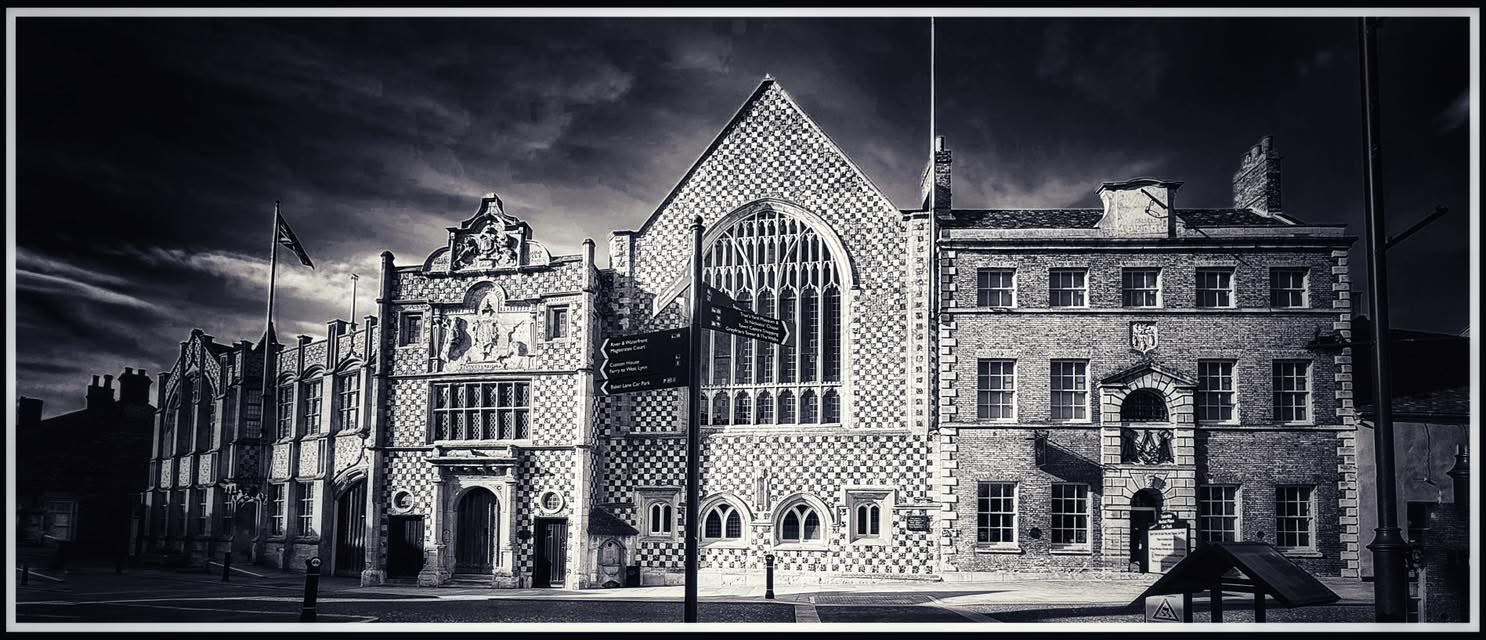
Stand on Purfleet Quay and you can still see why King’s Lynn became a port of consequence. The river meets the sea-world here, and the town behind it looks like a place designed for storage, bargaining, measurement, and enforcement. Lynn’s trade was never a single story of “rise and fall”. It is a sequence of rebalancings: different cargoes, different partners, different technologies, and repeated attempts to keep navigation workable. Yet the underlying purpose stays stubbornly consistent. Lynn connected an exceptionally productive inland region to wider markets, first across the North Sea and later through national and global supply chains.
A borough built for commerce
Historic England’s outline of the town’s early development stresses how Bishop’s Lynn expanded northwards from about the mid twelfth century, with a planned settlement north of the Purfleet and a market at Tuesday Market Place, and how the two settlements were united by a royal charter in 1204. That kind of planning only makes full sense if trade is in the background. A market needs regulation; a port needs quays, access routes, storage, and an authority capable of enforcing weights, tolls, and privileges.
By the thirteenth and fourteenth centuries the port had become nationally important. Historic England describes Lynn as one of England’s busiest ports, exporting wool and cloth and importing wine, timber and luxury goods, with membership of the Hanseatic League, and it notes that by the fourteenth century Lynn ranked as England’s third port after London and Southampton. Even allowing for the problems of measuring medieval “port rank”, the claim reflects something real: Lynn handled high-volume staples and high-value exports at scale.
A striking early fiscal snapshot comes from the 1203 levy of a fifteenth on imports and exports, where Boston and Lynn together produced returns exceeded only by London and Southampton. The point is not the detail of the tax, but what it implies. Early thirteenth-century Lynn was already pushing enough traffic to matter to royal finance.
Wool: the export that made Lynn internationally magnetic
For medieval Lynn, wool was not simply one commodity among many. It was the commodity that drew overseas buyers, bound the port into royal customs systems, and helped create the merchant class that dominated borough life.
Foreign demand was strong very early. Flemish cloth towns wanted English wool, and merchants from places such as Bruges and Ghent were coming to Lynn before 1200 to secure supply. The supply chain ran deep into fenland and inland Norfolk, and the scale of production was boosted by major ecclesiastical landlords. Ely, Ramsey, Crowland and Peterborough are among the named abbeys sending large quantities through Lynn, a reminder that the wool export trade was not merely the work of smallholders. It could be institutional and organised.
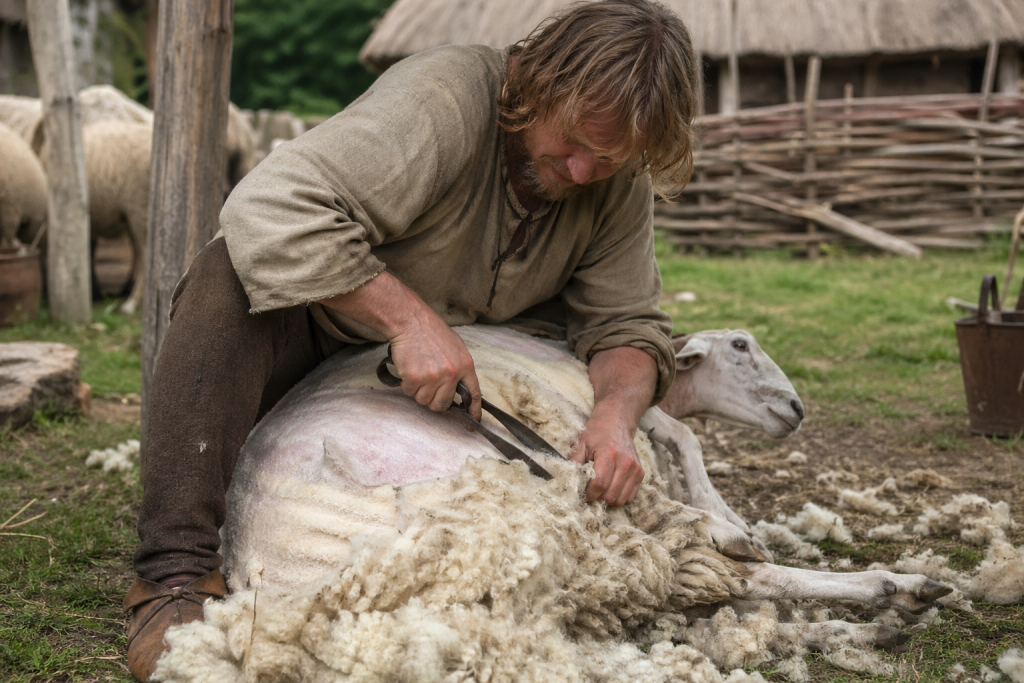
The surviving figures give an anchor for the scale. In 1267–68, Lynn exported 1,406 sacks of wool valued at £3,440, and in the early fourteenth century around 2,000 sacks a year are described as leaving the port, alongside corn, ale and dyestuffs. That kind of throughput helps explain why wool became tightly linked to royal revenue and credit. Wool and wine customs were among the most lucrative streams available to the Crown, and Lynn’s position as an export outlet mattered in the wider fiscal economy of the realm.
Wool’s outward movement also sat inside a broader exchange. Exports included raw wool, woolfells (fleeces still attached to the skin), cloth, leather and salt. Imports included timber, stockfish, furs, wax, millstones, wine, spices and other goods. In practical terms, a wool-export port needed steady inflows of ship-stores and materials. Timber and pitch kept vessels seaworthy; salt and fish supplied diet and preservation; wine and spices brought profit.
Trade at this level produced merchant careers that braided commerce with governance. John Braunch appears exporting wool in 1308 and 1313 and dealing in timber, and is even recorded being fined for obstructing the market with goods, a small glimpse of how crowded commercial space could be. John Burghard prospered as a wool merchant, purchased the Lynn franchise in 1305, accumulated property and quays on the Purfleet, held sheep farms near Lynn, and appears in the Crown’s orbit as a merchant owed money for wool taken. At a higher level, Thomas de Melcheburn appears as a king’s merchant involved in buying or requisitioning wool and grain, and connected to the machinery of the staple at Bruges.
Wool also left traces in the town’s internal geography. By about 1300, the cloth trade was significant enough for a royal ulnager (cloth inspector) to be stationed in Lynn. Later naming patterns matter too. St Nicholas Street was known in the sixteenth century as Woolmarket and later Woolpack Street, suggesting an enduring association with wool dealing and related transactions.
Hanseatic trade: Baltic goods in, English staples out
Lynn’s trade with Hanseatic merchants sits naturally on top of the wool story. The Hanseatic League’s own modern summary of King’s Lynn is unusually direct about cargo direction: herring, timber, wax, iron and pitch came into England via Lynn in Hanseatic ships, while wool, skins, cloth and lead went back to Danzig and other German harbours. That list captures the logic of a North Sea exchange economy: ship-stores and raw materials moving in, high-value English staples moving out.
The exchange becomes even more vivid in the Hanse Trail leaflet produced for local visitors. It describes cargoes arriving from Hamburg and Danzig including fish, pitch, tar, iron, furs, wax, flax, hemp and timber products, traded for wool and cloth, as well as hides, lead, beer, and sometimes cheese. It also states plainly that cloth and wool were by far Lynn’s most important exports in the fourteenth and fifteenth centuries.
Lynn retains a rare piece of physical evidence for this overseas commerce in Hanse House, associated with the kontor and its warehouses. The Hanse Trail leaflet dates the main warehouses to the late fifteenth century, and it sketches a later arc of occupation, leasing, and eventual sale in 1751. The surviving building matters because it makes the point that international trade required premises, storage, administration, and local negotiation. It was not a distant abstraction.
Merchants in office: Thomas Thoresby and the civic framework of trade
Ports run on confidence as much as cargo. Credit, enforcement, and the management of markets and quays sit behind the visible drama of ships arriving.
Thomas Thoresby belongs in this story because he illustrates the late medieval merchant embedded in borough authority. The Borough Council’s list of mayors records him as mayor in 1477, again in 1482 (in a spelling variant), and again in 1502. That is not a decorative civic career. In a port town, the mayoralty sits close to the machinery that makes trade reliable: regulation of marketplaces, local jurisdiction, and negotiation of privileges.
Thoresby’s most visible legacy is Thoresby College on Queen Street, opposite the Guildhall. Historic England describes it as a college for thirteen chantry priests attached to the Trinity Guild, founded in 1500 by Thomas Thoresby and built 1508–11. Whatever one makes of chantries as religious institutions, the form of the foundation is revealing. Merchant endowment strengthened corporate life and civic identity in the very heart of the town’s governing quarter, reinforcing the social and institutional world that supported partnership, credit, and reputation.
Early Stuart Lynn: Dutch entrepôts and an expansive import list
By the early seventeenth century, Lynn’s trade remained substantial, but its routes increasingly reflected the Netherlands’ rise as Europe’s great commercial gateway. G. Alan Metters’ study of King’s Lynn’s overseas port books for 1604–14 records 1,941 overseas shipments across the decade, a remarkable quantification for an English provincial port.
Metters’ broader point is that Lynn’s merchants operated within a world where Dutch shipmaster-merchants and Dutch markets, especially Amsterdam, could dominate supply. That matters because it alters what “imports” look like. Cargo arriving in Lynn might be routed through the Netherlands and carried in Dutch shipping, even if it originated elsewhere.
The port books show inward traffic that ranges from the everyday to the aspirational: salts in different varieties, wines, dried fruits, spices, sugar, and the practical maritime materials of rope, pitch and tar. There is also a characterful northern thread in the “Iceland Venture”, a combined fishing and trading expedition where supplies went north in spring and fish, fish oil, hawks, and Icelandic woollen cloth (wadmal) returned in autumn. This is a reminder that Lynn’s commercial world was never only “continental”. It remained thoroughly North Sea.
Corn out, coal and wine in: the fenland century and the Custom House
From the later sixteenth century, and especially the eighteenth, Lynn’s trade profile shifted towards large-scale agriculture. Historic England explicitly links Lynn’s prosperity to fen drainage and the export of corn, noting that cereal export dominated from the sixteenth century and especially in the eighteenth. At the same time, coal and wine continued to be imported for inland distribution, and Historic England describes Lynn as the chief East Anglian port for both until the railway age. This is one of the cleanest long-run import and export pairings Lynn ever had. Grain outward, fuel and wine inward, with the port acting as a hinge for regional supply.
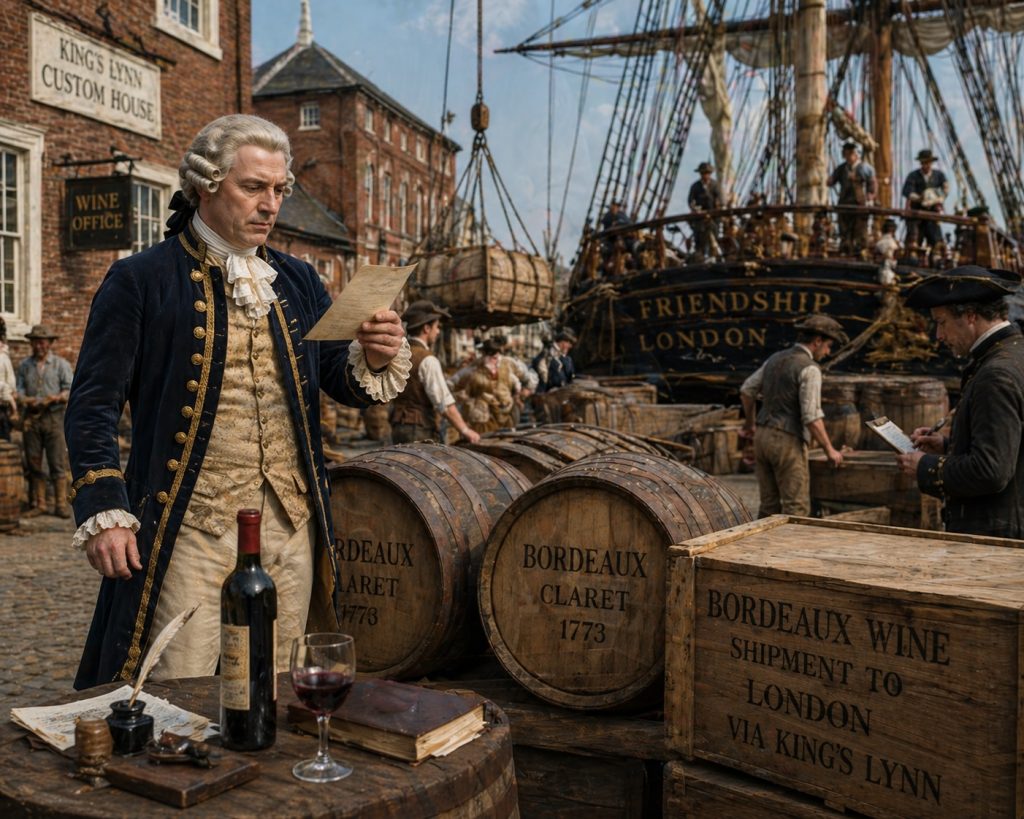
The Custom House is the architectural expression of this regulated trading world. Historic England states it was built in 1683 to designs by Henry Bell, commissioned by Sir John Turner MP, described as a local wine merchant and three-times mayor, and opened for business in 1685. It began as a merchants’ exchange and later became the official customs house, being sold to the Crown in 1717. Even the decoration speaks trade. Historic England notes masks of Bacchus and Ceres, wine and grain, carved into the keystones, a remarkably literal statement of Lynn’s commercial priorities.
Coal imports were closely supervised. The administrative attention given to coal measurement in the mid eighteenth century, including committees and standardised measures, reflects the value of the trade and the need to control disputes and revenue.
Engineering the river, then building the docks
Lynn’s location was an advantage, but never an effortless one. Navigation could be threatened by silting and shifting channels, and river engineering became a form of commercial self-defence. The Eau Brink Cut is a good example. An Archives Hub account notes that Thomas Telford acted as a “checking engineer”, appointed by the port of King’s Lynn to ensure that John Rennie’s design did not harm the port, and that the cut opened at the end of July 1821.
In the nineteenth century, modernisation became unavoidable. Larger ships, changing markets, and the growing dominance of rail and industrial logistics pushed ports to reshape their infrastructure. Local conservation area documentation explains why Alexandra Dock, opened in 1869, mattered. It could take larger deep-draught vessels and reduced dependence on the tidal constraints of the Great Ouse. Bentinck Dock followed in 1883 as part of the same modern dock system. These interventions did not change what Lynn fundamentally did, but they changed how it did it: enclosed docks, heavier handling gear, and stronger integration with national transport systems.
A working port in the present
Modern Lynn remains a working port, still centred on bulk handling. Associated British Ports describes King’s Lynn as handling around 400,000 tonnes of cargo per year and specialising in agribulk (bulk farm-related cargo, especially grain, feed, seed, or fertiliser) and aggregates (bulk building materials, especially sand, gravel, and crushed stone), with covered and open storage. The Alexandra Grain Silo complex is a visible continuation of the town’s long grain story, described by ABP as offering 25,000-tonne capacity storage with drying and screening facilities, with additional bulk stores offering up to 23,000 tonnes of storage for cereals and agribulks.
Alongside agribulk and aggregates sit modern industrial flows. ABP notes purpose-built steel transit sheds at Alexandra Dock for long-steel products such as coated pipes, coil, slab, sections and rebar, and facilities at Bentinck Dock for storage and distribution of recycled metal. In older terms, Lynn still does the job it has always done well: shifting heavy, awkward cargo efficiently, backed by storage, inspection, and reliable administration.
| Rank | Partner country | Import value 2023 (£m) | Notes |
|---|---|---|---|
| 1 | United States | 138 | Dominated by a single aircraft import. oec |
| 2 | Latvia | 35.5 | Largely timber/wood products. oec |
| 3 | Sweden | 30.1 | Timber and related products. oec |
| 4 | Finland | 14.8 | Timber/wood products. oec |
| 5 | Netherlands | 10.8 | Mixed cargoes including wood. oec |
| Rank | Product (OEC description) | 2023 value (£m) |
|---|---|---|
| 1 | Waste or scrap, of tinned iron/steel | 12.6 |
| 2 | Leguminous vegetables, dried and shelled | 11.6 |
| 3 | Barley (cereals, other than seed) | 10.7 |
| 4 | Wheat and meslin (cereals, other than seed) | 7.42 |
| 5 | Peas, dried and shelled | 5.48 |
© James Rye 2026
Book a Guided Walk with a Trained and Qualified King’s Lynn Guide
References
- Archives Hub (Jisc). “Silt, sluices and smelt fishing: The Eau Brink Cut and the Bedford Level Corporation Archive.” Archives Hub Blog, 2 July 2018. Accessed 26 April 2026. https://blog.archiveshub.jisc.ac.uk/2018/07/02/silt-sluices-and-smelt-fishing-the-eau-brink-cut-and-the-bedford-level-corporation-archive/
- Associated British Ports. “King’s Lynn.” Accessed 26 April 2026. https://www.abports.co.uk/locations/kings-lynn/
- Borough Council of King’s Lynn and West Norfolk. List of Mayors of King’s Lynn (1248–2023) (PDF). Accessed 26 April 2026. https://www.west-norfolk.gov.uk/download/downloads/id/5646/list_of_mayors_of_kings_lynn_1248-2023.pdf
- Borough Council of King’s Lynn and West Norfolk. Norfolk Street Conservation Area Character Statement(PDF). Accessed 26 April 2026. https://www.west-norfolk.gov.uk/download/downloads/id/1922/kings_lynn_norfolk_street_con_area_leafletpdf.pdf
- Historic England. “Customs House including north bank of Purfleet Quay, Purfleet Quay, King’s Lynn, Norfolk, PE30 1HP (List Entry Number: 1195414).” National Heritage List for England. Accessed 26 April 2026. https://historicengland.org.uk/listing/the-list/list-entry/1195414
- Historic England. “Thoresby College, 31–33 Queen Street, King’s Lynn (List Entry Number: 1195418).” National Heritage List for England. Accessed 26 April 2026. https://historicengland.org.uk/listing/the-list/list-entry/1195418
- Metters, G. Alan. “King’s Lynn and the Low Countries in the Early Seventeenth Century: Maritime Trade and Sexual Scandal.” History 110, no. 390 (2025): 173–193. Open-access PDF. Accessed 26 April 2026. https://ueaeprints.uea.ac.uk/98558/1/Metters_2025_History.pdf
- Norfolk Record Office. Draper, Victoria. “Carrying Coals to King’s Lynn.” Norfolk Record Office Blog, 2 August 2019. Accessed 26 April 2026. https://norfolkrecordofficeblog.org/2019/08/02/carrying-coals-to-kings-lynn/
- Rye, James. “How Wool Made Medieval King’s Lynn Rich.” Circato.co.uk. Accessed 26 April 2026. https://circato.co.uk/kings-lynn-wool-trade
- THE HANSA (Union of Cities). “King’s Lynn.” Accessed 26 April 2026. https://www.hanse.org/en/hanse/kings-lynn
- Visit West Norfolk. Hanse Trail Leaflet (PDF). Accessed 26 April 2026. https://www.visitwestnorfolk.com/wp-content/uploads/2022/03/1390-46_Hanse_trail_leaflet_web.pdf