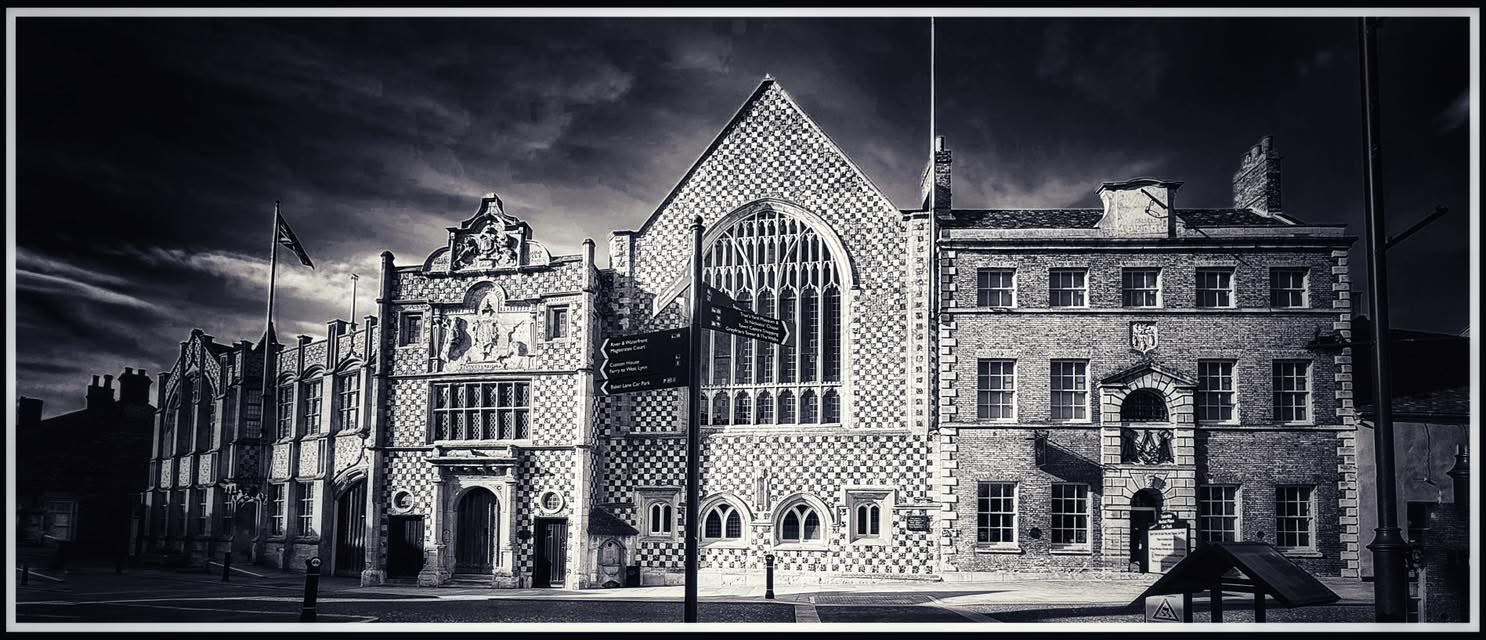
For centuries after the Reformation, Roman Catholics in King’s Lynn were easy to miss. They had no grand medieval parish church at the centre of town, no obvious public place in civic life, and for a long time they worshipped quietly on the margins. Yet by the end of the nineteenth century they had a striking church on London Road, a school, a recognised parish priest, and a restored shrine that helped bring Walsingham pilgrimage back into public life.
That change was remarkable.
In the space of a hundred years, the Catholics of King’s Lynn moved from a small mission meeting in a room in Ferry Street to a highly visible community processing through the streets with banners, hymns and the image of Our Lady of Walsingham. Their story is not a side note in the history of the town. It is one of the clearest local examples of how religious life in England changed after Catholic Emancipation, and how a once restricted faith rebuilt its public presence through worship, education, architecture and devotion.
A small mission in a Protestant town
The modern parish traces its roots to 1778, but the first clear phase of its history belongs to the early nineteenth century. At that stage it was really a mission rather than a parish in the modern sense. The priest based in Lynn served a large area of West Norfolk, including places as distant as Walsingham, Wells and Fakenham. The Catholic body in the town was small and scattered, and its earliest post-Reformation worship seems to have taken place in a modest room in Ferry Street.
That alone tells us something important. Roman Catholics in Lynn had survived, but they had survived quietly.
The character of the mission was shaped in part by wider European events. Among the earliest priests associated with Lynn were William Le Goff and Pierre Louis Dacheux, both remembered as French clergy. Dacheux in particular was described as a refugee from the French Revolution. King’s Lynn was a port, and it is easy to see how continental priests and laypeople might find their way there. Catholicism in Lynn was therefore not simply a relic of old English recusancy. It was also part of the wider reshaping of European religious life in the age of revolution and exile.
Father Dacheux and the first chapel
The first major step into public visibility came in the 1820s, when Dacheux built a chapel in Coronation Square (now partially occupied by Hillington Square) at his own expense. This was the first post-Reformation Catholic chapel in King’s Lynn. It replaced the improvised arrangements in Ferry Street and gave the mission a physical foothold in the town.
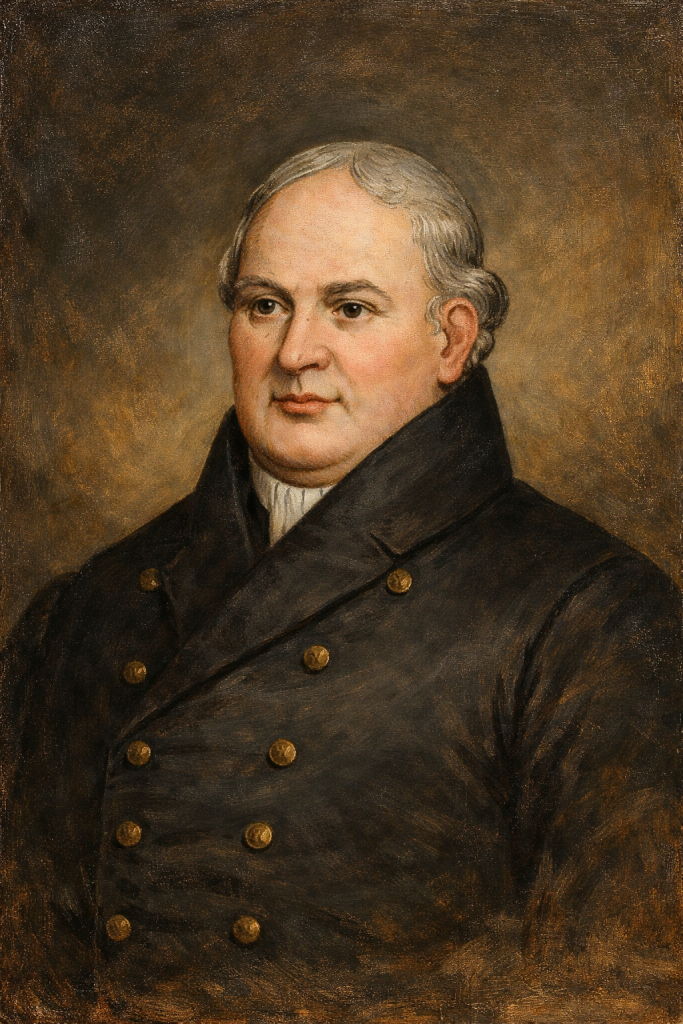
Dacheux seems to have been a man of both means and generosity. He supported himself by teaching French and, when he died in 1843, he left money for the poor of South Lynn without distinction of creed. He was buried in All Saints’ churchyard. These details matter because they suggest that, even before Catholics became numerous or influential, their priest could be known locally as a charitable and respected figure rather than merely as a religious outsider.
Growth, poverty and the need for something better
The Coronation Square chapel was an important beginning, but it was small and plain. By the 1830s and 1840s the mission appears to have been growing, helped in part by Irish migration. The congregation was still poor, but there was now enough life in the mission to justify something more ambitious.
That ambition took material form in the purchase of a site on London Road in 1839. A new church was commissioned from A. W. N. Pugin, one of the leading architects of the Catholic Gothic revival. The foundation stone was laid on 10 May 1844, and the church, dedicated to St Mary, was consecrated on 8 May 1845. It seated about 200 people and cost roughly £1,500, a substantial sum for such a small body of worshippers. A presbytery followed in 1849.
This was more than a practical enlargement. It represented a change in confidence. Pugin’s involvement placed King’s Lynn within the great nineteenth-century effort to reconnect English Catholic worship with the architecture of the medieval Church. Even a small and relatively poor congregation in Norfolk wanted a church that looked serious, historical and unmistakably ecclesiastical.
A minority still wary
For all that progress, Catholics in Lynn remained a minority and still carried some of the old caution of a community long accustomed to suspicion. One revealing episode came in 1851, when the religious census tried to measure attendance and seating across England and Wales. The Roman Catholic priest in Lynn refused to answer the enumerator’s questions, leaving him to guess at the numbers. The estimate was that the chapel could hold about 350 and that perhaps 200 attended, though even that was uncertain.
Such hesitation should not be dismissed as mere awkwardness. It suggests that legal toleration had not entirely erased older habits of reserve. Catholics were now permitted, but they did not necessarily trust official scrutiny.
Nor were they passive in local disputes. Like many nonconformists, Catholics in Lynn opposed compulsory church rates. In 1845 the Catholic priest took part in the argument over rates at All Saints, and the effort to delay matters succeeded. These episodes show that Roman Catholics were part of the wider nineteenth-century challenge to the privileges of the established Church. The religious life of King’s Lynn was not just about doctrine or devotion. It was also about money, authority and the public place of different denominations.
The school and the making of a community
A mission becomes a parish not only through church buildings but through institutions, and none mattered more than the school.
By the late nineteenth century Catholic education in Lynn had become a pressing concern. A small school had existed in connection with the old chapel, but conditions were poor. Real improvement came under Father George Wrigglesworth, who arrived in 1887 and found both church and school in a worrying state. He reorganised religious instruction, improved staffing and pushed hard for a proper school building.
The result was St Mary’s Roman Catholic School in Church Lane, built in 1894 to the designs of William Lunn. It was intended to hold about 150 children. Even if actual numbers were often lower, the building mattered enormously.
This concern with schooling fits the broader pattern of nineteenth-century Catholic life in England. Education was not seen as secondary. It was central to preserving belief, identity and discipline in a society where Catholics were still a minority. In King’s Lynn, the school was one of the strongest signs that the mission was becoming a settled community.
Wrigglesworth and the rebuilding of the church
If one man transformed Catholic Lynn in the late nineteenth century, it was George Wrigglesworth.
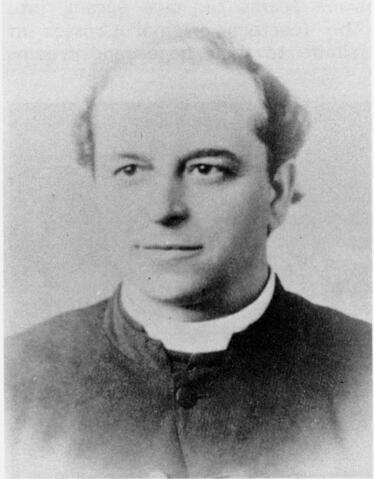
When he arrived in 1887, the Pugin church was already in poor condition. Its foundations had failed badly enough for cracks to appear in the walls and for the roof to leak. Repair was judged uneconomic. Even the Prince of Wales, later Edward VII, took an interest, apparently because Catholic guests at Sandringham found the church inadequate. He paid for a report and contributed to the rebuilding fund.
The new church was begun in 1896 and opened on 2 June 1897. It was designed by William Lunn in a Decorated Gothic style, with walls of carrstone and Bath stone dressings. It had a nave, chancel and aisle, and though it stood on the same site as its predecessor it was arranged differently to make better practical use of the ground. Important features from the earlier church were retained, including the font, stained glass and rood, so the new building carried something of the old within it.
The church was now dedicated to Our Lady of the Annunciation. Inside, it was furnished with real richness. A description published in 1902 gives a vivid account of the original high altar and reredos. The altar was said to be in a curvilinear Gothic style, with solid framed and panelled oak, a central octagonal spirelet, and a painting of the Annunciation by J. A. Pippitt on a gold ground. The tabernacle doors were of hammered brass, decorated with the lamb and pelican, while statues of St Felix and St Edmund stood at either end. Much of that arrangement has gone, but part of the reredos survives and is now displayed on the north wall.
This mattered because church furnishing was part of religious meaning. Victorian Catholics were not simply putting up shelters for worship. They were creating sacred interiors that taught doctrine, expressed continuity with the past and fostered devotion through colour, symbolism and ceremony.
The restored shrine of Our Lady of Walsingham
What made the rebuilt church truly exceptional was the small chapel added beside the chancel.
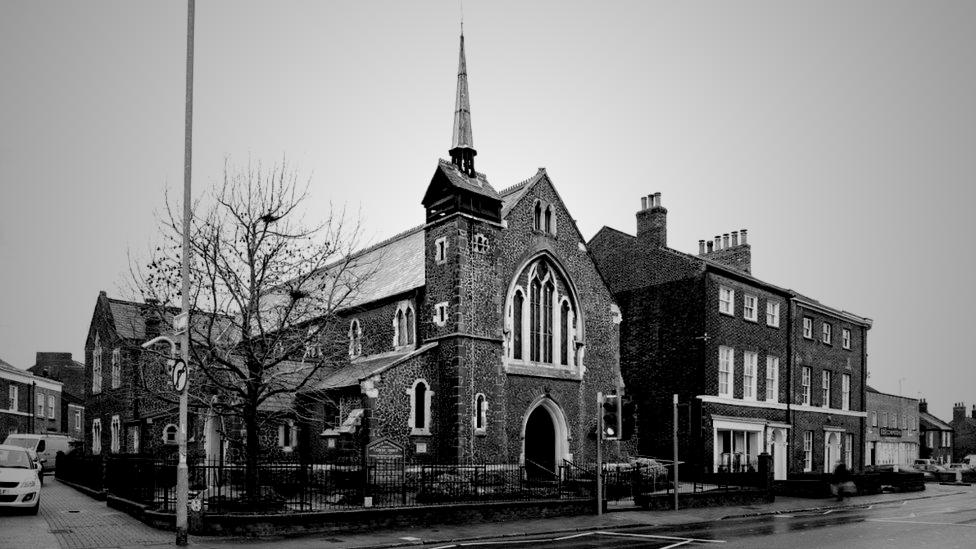
Once the decision had been taken to build an entirely new church, an opportunity was seen to do something more than replace a failing structure. The Lynn mission still covered Walsingham, and a plan emerged to restore the lost shrine of Our Lady of Walsingham within the new church. The chapel was therefore built as a replica of the Holy House of Nazareth at Loreto. Pope Leo XIII sanctioned the restoration, and the image for the shrine was based on Our Lady of Cosmedin in Rome. Later diocesan memory preserved his famous words as he signed the rescript: “When England goes back to Walsingham, Our Lady will come back to England.”
The arrival of the statue in August 1897 produced one of the most striking public religious scenes in modern King’s Lynn. Clergy and laity processed to the railway station to receive it. Banners were carried, hymns were sung, and the rosary was recited. A group of girls in white bore the image on a bier. From the station the procession moved to the Red Mount in The Walks and then back to the church, where the statue was installed in the shrine. Fifteen lamps were lit before it, representing the Mysteries of the Rosary. [unpub
This was not a one-off curiosity. Annual pilgrimages took place in King’s Lynn until 1934, when the national Roman Catholic shrine was restored at Walsingham itself. Until then, the chief restored shrine of Our Lady of Walsingham was in King’s Lynn, not Walsingham. That gives the town a significance in English Catholic history far greater than one might expect from the size of its congregation.
The twentieth century: continuity and change
The twentieth century brought consolidation rather than decline. The church remained an important centre of devotion, but it also changed with the times.
Historic England records a new decorative scheme in 1923, a sanctuary reordering in 1947 and another in 1969. The 1969 changes were especially important because they allowed Mass to be celebrated facing the congregation, in keeping with the liturgical reforms associated with the Second Vatican Council. This altered the arrangement of the sanctuary but not the essential character of the church. The building remained recognisably late Victorian in atmosphere and structure, while adapting to the new forms of Catholic worship that emerged in the later twentieth century.
The year 1947 also saw the solemn consecration of the church, an important sign that what had once been a fragile mission was now fully embedded in the religious life of the town.
The school story continued as well. In the late 1950s Catholic schooling moved to Gaywood, reflecting the changing geography of King’s Lynn as new housing estates expanded the town beyond its older core. This outward movement was repeated in parish life more generally. By the 1960s and 1970s the Catholic population had grown enough to justify a second church. Holy Family Church at Gaywood was built between 1983 and 1985. It was architecturally very different from the London Road church, being octagonal and unmistakably modern, but historically it formed part of the same longer process. Roman Catholicism in Lynn had outgrown its nineteenth-century footprint.
Roman Catholics in King’s Lynn today
The parish today still reflects all these layers of history. It includes both Our Lady of the Annunciation and Holy Family at Gaywood, and it remains a pontifical shrine of Our Lady of Walsingham. Modern diocesan information also notes Lithuanian and Syro-Malabar Masses, showing how the Catholic life of King’s Lynn continues to evolve with new communities and new forms of worship.
Yet the broad shape of the story remains clear. Roman Catholics in King’s Lynn moved from a small, cautious mission on the edge of visibility to a settled and public presence with churches, schools, processions and a shrine of national importance. Their history is a reminder that the religious life of nineteenth-century England was not only shaped in cathedrals, Parliament or the great industrial cities. It was also shaped in towns like King’s Lynn, where small congregations slowly built the institutions, confidence and visibility that turned survival into permanence.
© James Rye 2026, with thanks to Doreen Leventhall (King’s Lynn Town Guide) for generously sharing her research.
See also: Through Lynn to Walsingham
Book a Guided Walk with a Trained and Qualified King’s Lynn Guide Through Historic Lynn
References
- Catholic Bishops’ Conference of England and Wales. “Four Historic Catholic Churches Listed in the East of England.” January 19, 2023. https://www.cbcew.org.uk/four-historic-catholic-churches-listed-in-the-east-of-england/
- Catholic Diocese of East Anglia. “Bishop Helps King’s Lynn Church Mark 125 Years.” June 11, 2022. https://www.rcdea.org.uk/bishop-helps-kings-lynn-church-mark-125-years/
- Catholic Diocese of East Anglia. “King’s Lynn Celebrates a Foundation and a Prophecy.” May 9, 2022. https://www.rcdea.org.uk/kings-lynn-celebrates-a-foundation-and-a-prophecy/
- Catholic Diocese of East Anglia. “Our Lady of the Annunciation, King’s Lynn.” Accessed March 13, 2026. https://www.rcdea.org.uk/location/our-lady-of-the-annunciation-kings-lynn/
- Historic England. “Our Lady of the Annunciation and Attached Presbytery, King’s Lynn.” National Heritage List for England. Accessed March 13, 2026. https://historicengland.org.uk/listing/the-list/list-entry/1481880
- Unpublished local history assignment supplied by the Doreen Leventhall, April 2005.
- Taking Stock: Catholic Churches of England and Wales. “King’s Lynn, Holy Family.” Accessed March 13, 2026. https://taking-stock.org.uk/building/kings-lynn-holy-family/
- Taking Stock: Catholic Churches of England and Wales. “King’s Lynn, Our Lady of the Annunciation.” Accessed March 13, 2026. https://taking-stock.org.uk/building/kings-lynn-our-lady-of-the-annunciation/
- The Catholic National Shrine of Our Lady, Walsingham. “Our Story.” Accessed March 13, 2026. https://www.walsingham.org.uk/our-story/
I