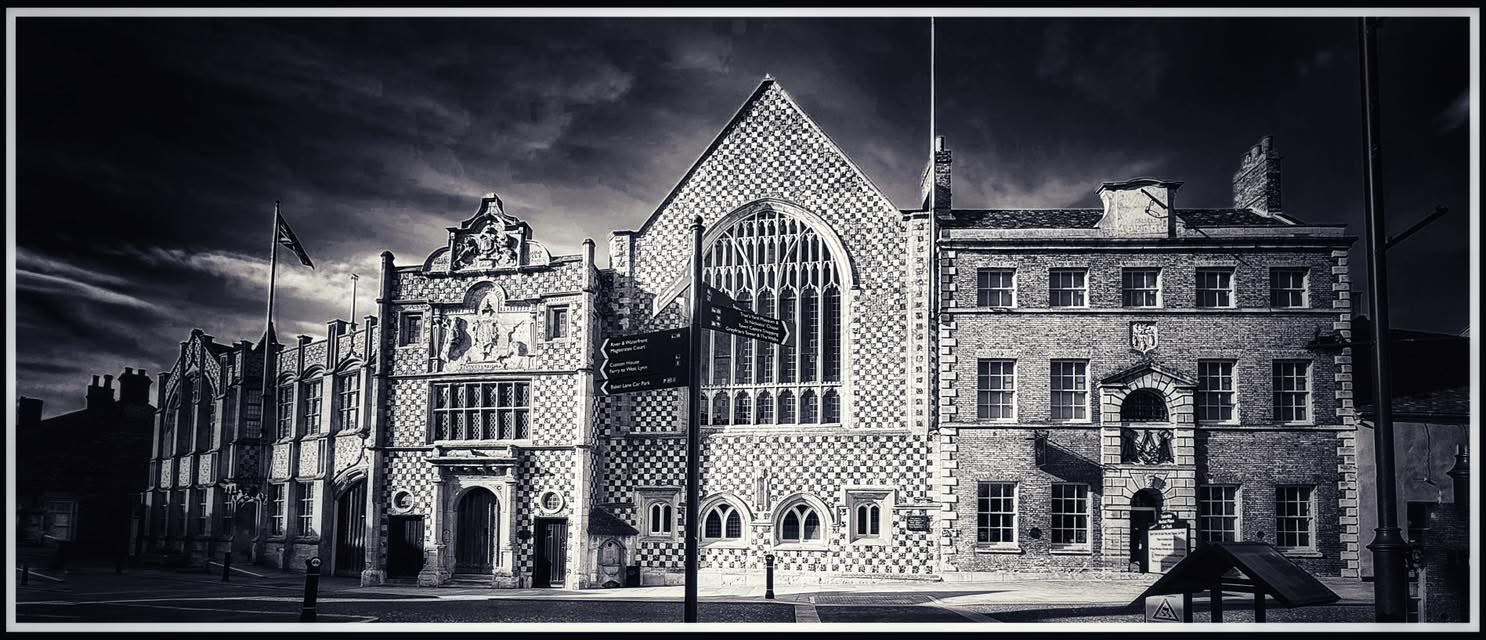
In Georgian King’s Lynn, the hardest wealth to tax was the wealth that moved. A house stood still. A field could be measured. Rent could […]
Read moreTag: King’s Lynn history
From Clay Holes to a Steel Whale: The Strange Survival of Harding’s Pits
Why does a giant whale stand beside the River Nar at the southern entrance to King’s Lynn? The answer lies beneath the grass. Harding’s Pits […]
Read moreNine Centuries Under One Roof: Inside St Margaret’s Church, King’s Lynn
St Margaret’s looks like a great medieval church, but look more closely. Its nave is largely Georgian, its floor is Victorian, medieval merchants lie beneath […]
Read moreKing’s Lynn’s Victorian Engineering Revival: Aickman, Savage, Dodman, and Cooper
By the end of the nineteenth century, King’s Lynn could manufacture a locomotive, a steam traction engine, a fairground galloper, a marine boiler, and agricultural […]
Read more“As Long as the World Shall Endure”: Lynn’s Lost Chantries
Thomas Thoresby intended to be remembered for ever. When the wealthy Lynn merchant died in 1510, he left behind a college beside St Margaret’s Church […]
Read moreOne Master, 230 Boys: King’s Lynn’s Lancasterian Schools
On Wednesday, 11 May 1808, a new school opened in King’s Lynn for 230 boys. One master was expected to teach them all. Under conventional […]
Read moreThe Church Lynn Took Apart: The Rise and Fall of St James’ Chapel
Behind the former Methodist chapel near London Road stands a fragment of flint wall containing a broad, altered window. It is an unassuming remnant of […]
Read moreThe Community That Vanished: The Pogrom against Lynn’s Jews in 1190
In March 1194, representatives of England’s Jewish communities met at Northampton. King Richard I had returned from captivity, and the Jews of England were ordered […]
Read moreThe Lawns Above the Bodies: St James’ Park, King’s Lynn
The lawns of St James’ Park cover one of King’s Lynn’s former burial grounds. Men, women, and children still lie beneath the grass, but the […]
Read moreTwo Lost Inns of the Tuesday Market Place
Walk across the Tuesday Market Place from the Duke’s Head to the Corn Exchange and you pass between the sites of two vanished inns. The […]
Read moreRobert FitzWalter: The Baron Who Defied King John
In the summer of 1216, soldiers supporting a French claimant to the English throne descended on Bishop’s Lynn. They captured townspeople, carried prisoners away and […]
Read moreThe Gate That Stood in the Way: A History of King’s Lynn’s East Gate
According to one of King’s Lynn’s most persistent stories, the East Gate met its fate because Catherine the Great bought too much art. In 1779, […]
Read moreFramingham’s Almshouses: the King’s Lynn charity with two founders
Framingham’s Almshouses in King’s Lynn stand beside The Walks, near the meeting of London Road and St James’s Road. Their quiet nineteenth-century buildings conceal a […]
Read moreHow Lynn’s Merchants Helped Finance Edward III and the Start of the Hundred Years’ War
In April 1337, Thomas de Melchebourn of Bishop’s Lynn supplied four anchors, three cables, and rope for one of Edward III’s great ships. Two months […]
Read moreWhy Elizabeth I and Charles II Look Down from King’s Lynn Town Hall
A royal puzzle above the doorway Stand in Saturday Market Place and look up at the entrance porch of King’s Lynn Town Hall. High on […]
Read moreLocked in Prayer: Anchorites and Hermits in Medieval Lynn
Medieval Bishop’s Lynn was not a quiet place. It was a port, market town and pilgrimage crossroads, with ships moving along the haven, carts passing […]
Read moreFrom hidden Catholics to public processions: the story of Roman Catholics in King’s Lynn
For centuries after the Reformation, Roman Catholics in King’s Lynn were easy to miss. They had no grand medieval parish church at the centre of […]
Read moreRefugee in King’s Lynn Minster: Naomi Blake’s Quiet Monument
Refugee in King’s Lynn Minster: Naomi Blake’s Quiet Monument in the Holy Trinity Chapel Finding the sculpture If you make your way beyond the choir stalls […]
Read more