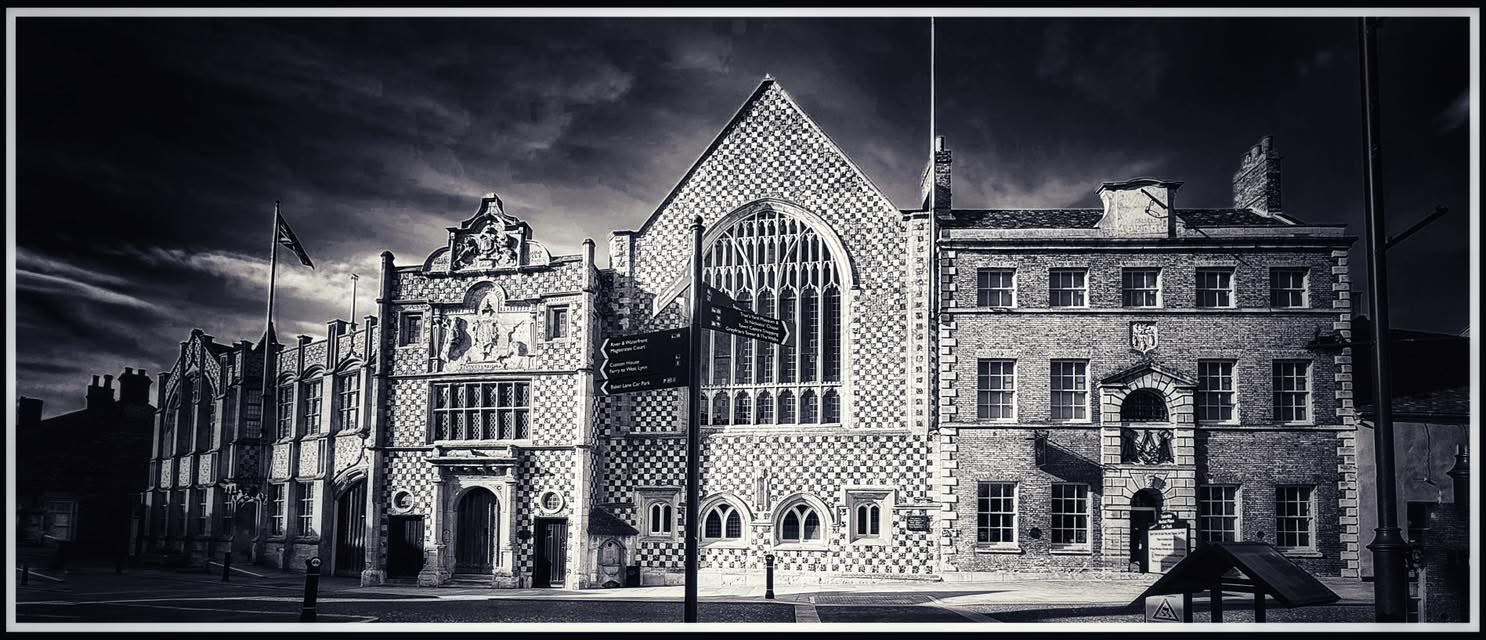
A quiet row with a deeper history
Priory Cottages in King’s Lynn are easy to underestimate. They stand in Priory Lane, close to the churchyard of St Margaret’s, now King’s Lynn Minster. To a passer-by they may look like a picturesque row of old cottages. In fact, they are listed as 12–20 Priory Lane, a Grade II* building, and Historic England identifies them as a surviving monastic range belonging to the Benedictine Priory of St Margaret.
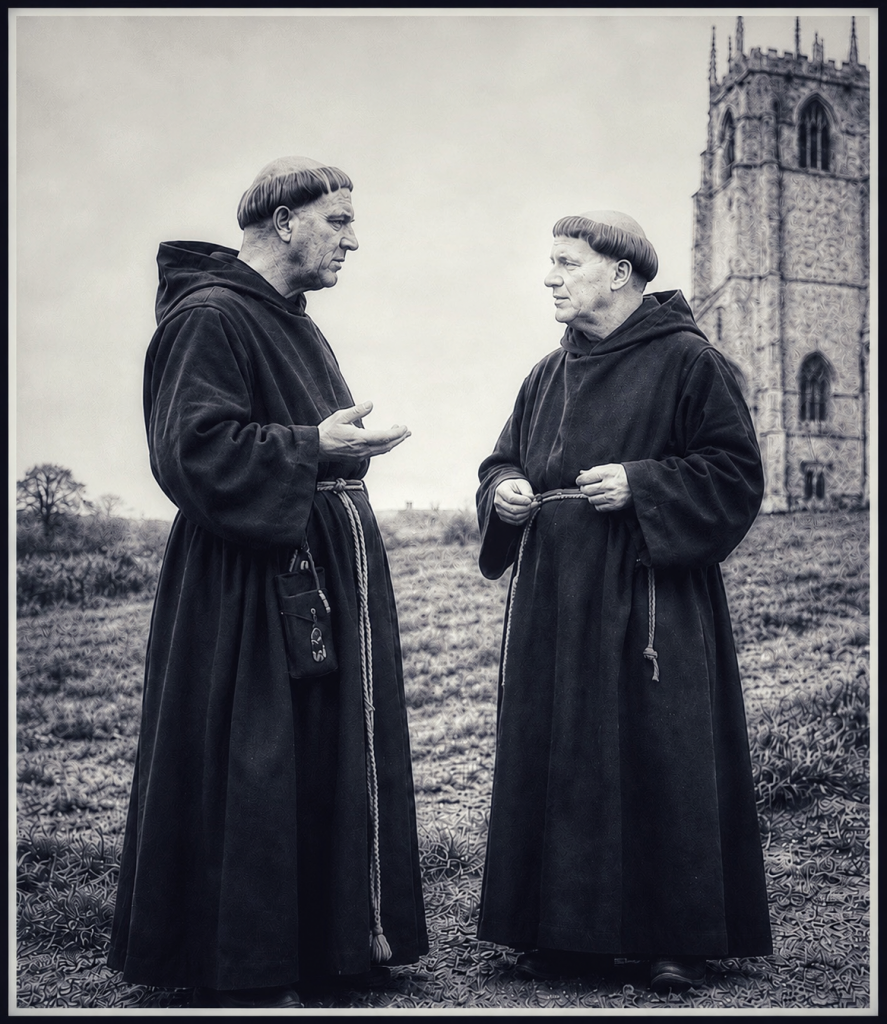
These are not simply cottages with an attractive name. They are domestic dwellings formed from a much older religious building, one connected with the medieval priory that once stood beside Lynn’s principal church.
The priory beside St Margaret’s
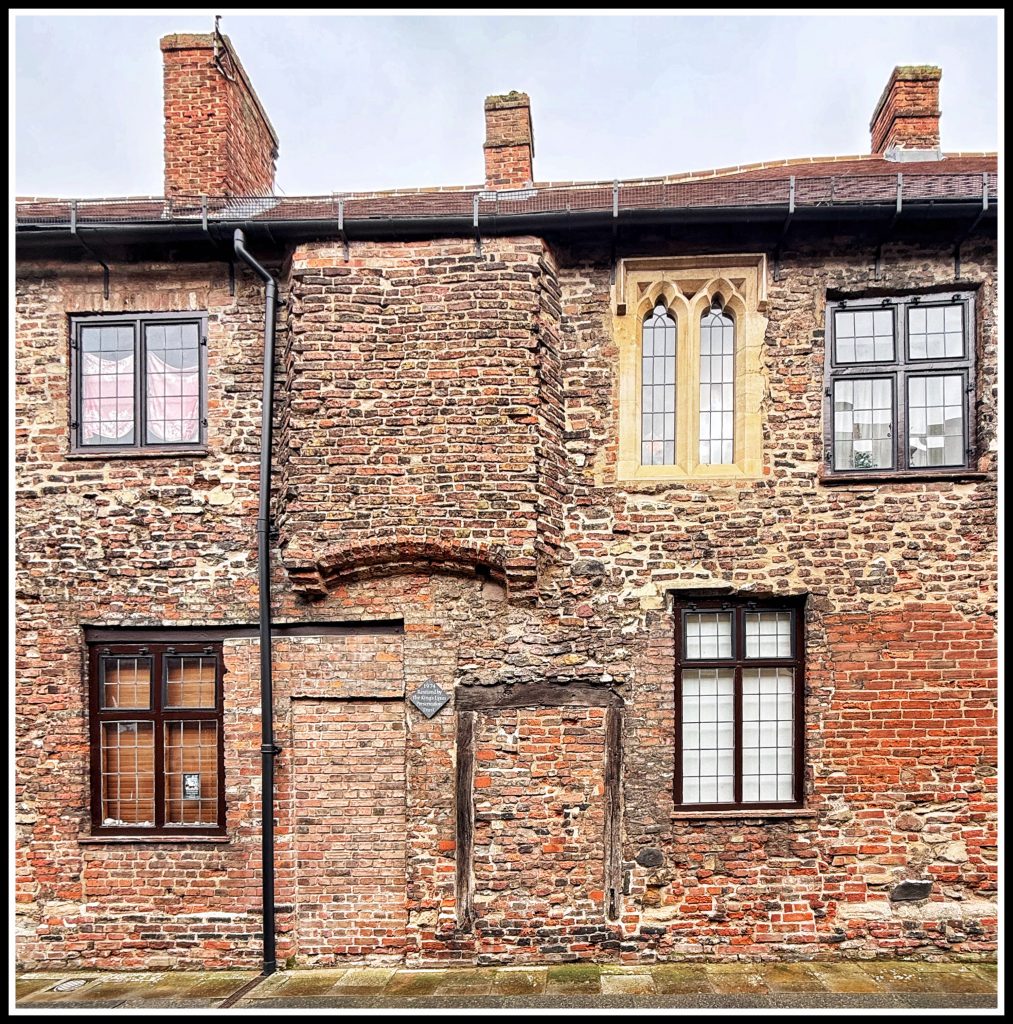
Photo © James Rye 2026
The Benedictine priory at Lynn was founded in the early twelfth century, usually associated with Herbert de Losinga, Bishop of Norwich, and the foundation of St Margaret’s. Some sources give 1100, others 1101. That small difference should not be overworked. Medieval foundations often involved several stages, including grants, building, endowment, and formal organisation.
The priory was not a great abbey. It was a small Benedictine cell dependent on Norwich, with a prior and a few monks. Its importance lay in its position: beside St Margaret’s, within the growing town, and close to the civic and commercial heart of medieval Lynn.
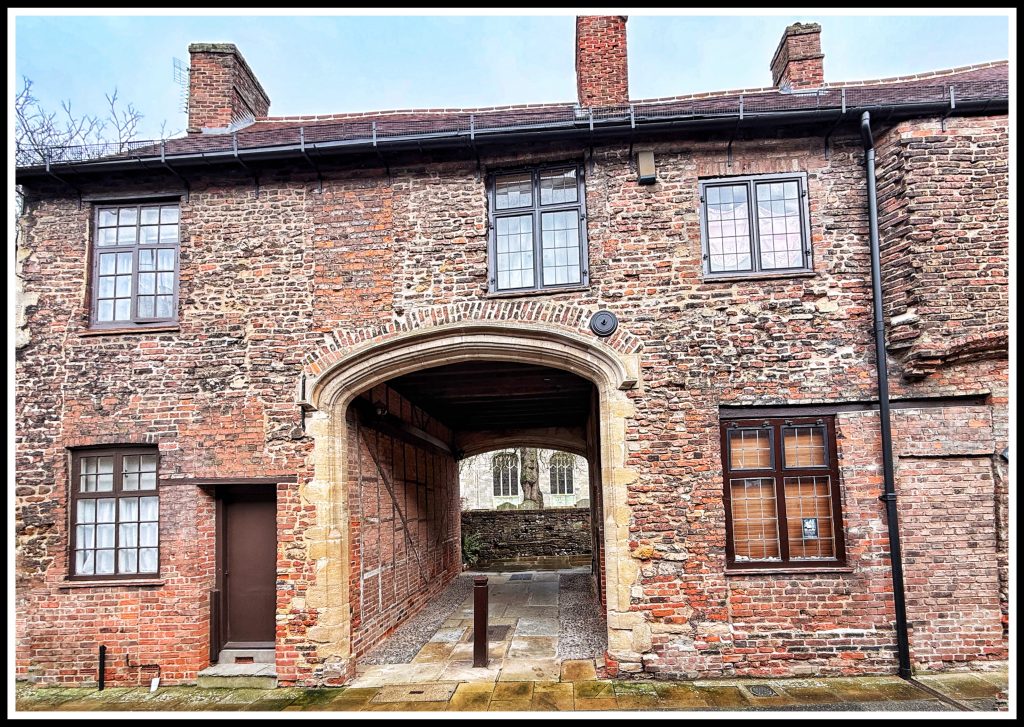
Photo © James Rye 2026
Late Medieval
The cottages were formed from a surviving medieval priory range, probably incorporating a hall or hall-like arrangement associated with the Benedictine Priory of St Margaret.
Historic England dates the standing range broadly to the fourteenth century, with its main work probably fifteenth-century. The listing notes possible links with accounts for a new hall in 1445–48, and says that a first-floor hall plan was probably an alteration to an earlier open-hall arrangement. A local conservation statement also refers to the former great hall remaining in Priory Lane.
So the building should not be imagined as the original Norman priory of 1100 or 1101. The visible fabric belongs chiefly to the later medieval life of the priory, before being converted into cottages after the Reformation.
From priory range to cottages
The priory was dissolved in 1537. After that, the monastic use ended, and the surviving range was gradually adapted for domestic occupation. Doors were made to open onto Priory Lane, the great archway was blocked, and the building was subdivided.
The result was not a clean architectural transformation, but a long process of reuse. Medieval masonry, later fireplaces, altered openings, post-Dissolution domestic work, and later additions all became part of the same building. That layered character is one reason Priory Cottages are so valuable.
Decline and rescue
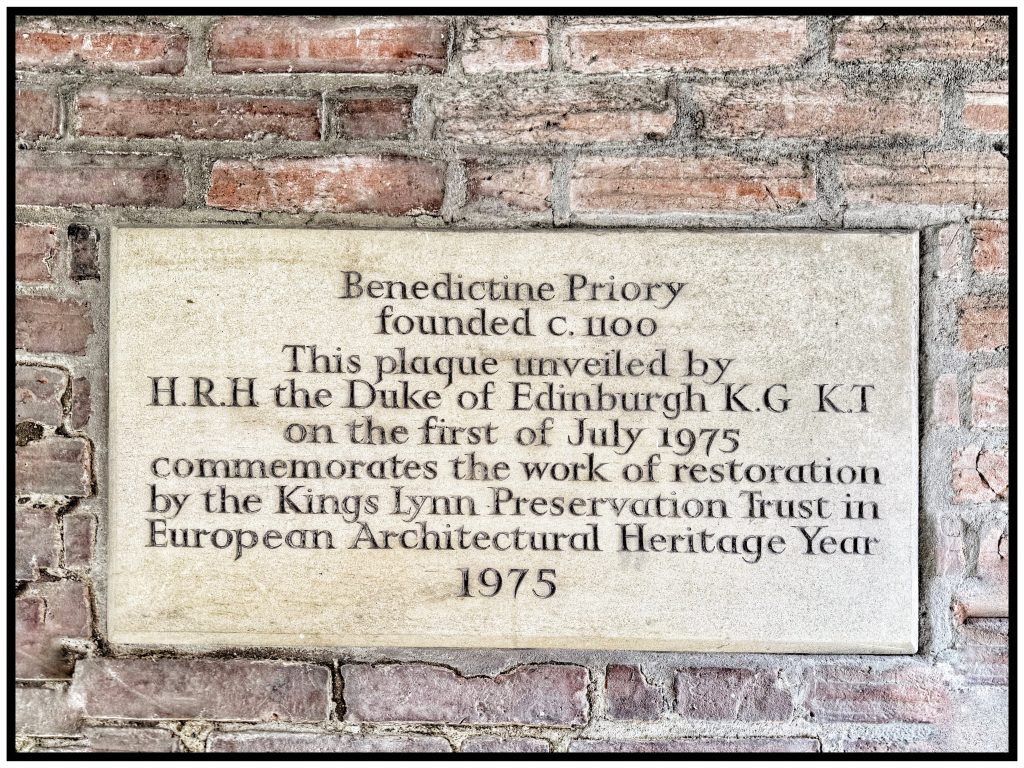
Photo © James Rye 2026
By the late twentieth century the cottages were in poor condition. King’s Lynn Preservation Trust bought them in 1972, when they were considered unfit for habitation, but still retained important historic fabric.
The restoration was carried out to designs by Michael Gooch. It reopened the archway, altered the circulation of the cottages, and created new entrances facing the churchyard. The scheme was completed in the mid-1970s, and in 1975 it received recognition during European Architectural Heritage Year.
© James Rye 2026
Book a Guided Tour with a Trained and Qualified King’s Lynn Guide Through Historic Lynn
References
Borough Council of King’s Lynn and West Norfolk. St Margarets Conservation Area Character Statement. Revised November 2008. https://www.west-norfolk.gov.uk/download/downloads/id/1912/kings_lynn_st_margarets_con_area_leafletpdf.pdf.
Church of England. “About Us: King’s Lynn Minster (St Margaret’s Church).” A Church Near You. Accessed 24 May 2026. https://www.achurchnearyou.com/church/2632/about-us/.
Heritage Gateway. “Kings Lynn Priory.” Historic England Research Records, Hob Uid 356287. Accessed 24 May 2026. https://www.heritagegateway.org.uk/Gateway/Results_Single.aspx?resourceID=19191&uid=356287.
Historic England. “12–20, Priory Lane, Non Civil Parish.” National Heritage List for England, List Entry Number 1195412. Accessed 24 May 2026. https://historicengland.org.uk/listing/the-list/list-entry/1195412.
King’s Lynn Preservation Trust. “Priory Lane Cottages.” Accessed 24 May 2026. https://www.klprestrust.org.uk/project/priory-lane-cottages/.
Norfolk Heritage Explorer. “St Margaret’s Church and Benedictine Priory.” Record MNF1026. Accessed 24 May 2026. https://www.heritage.norfolk.gov.uk/record-details?Index=884&MNF1026-St-Margaret%27s-Church-and-Benedictine-Priory=&RecordCount=64187.