Photo © James Rye 2023
The Silk Man and the Box
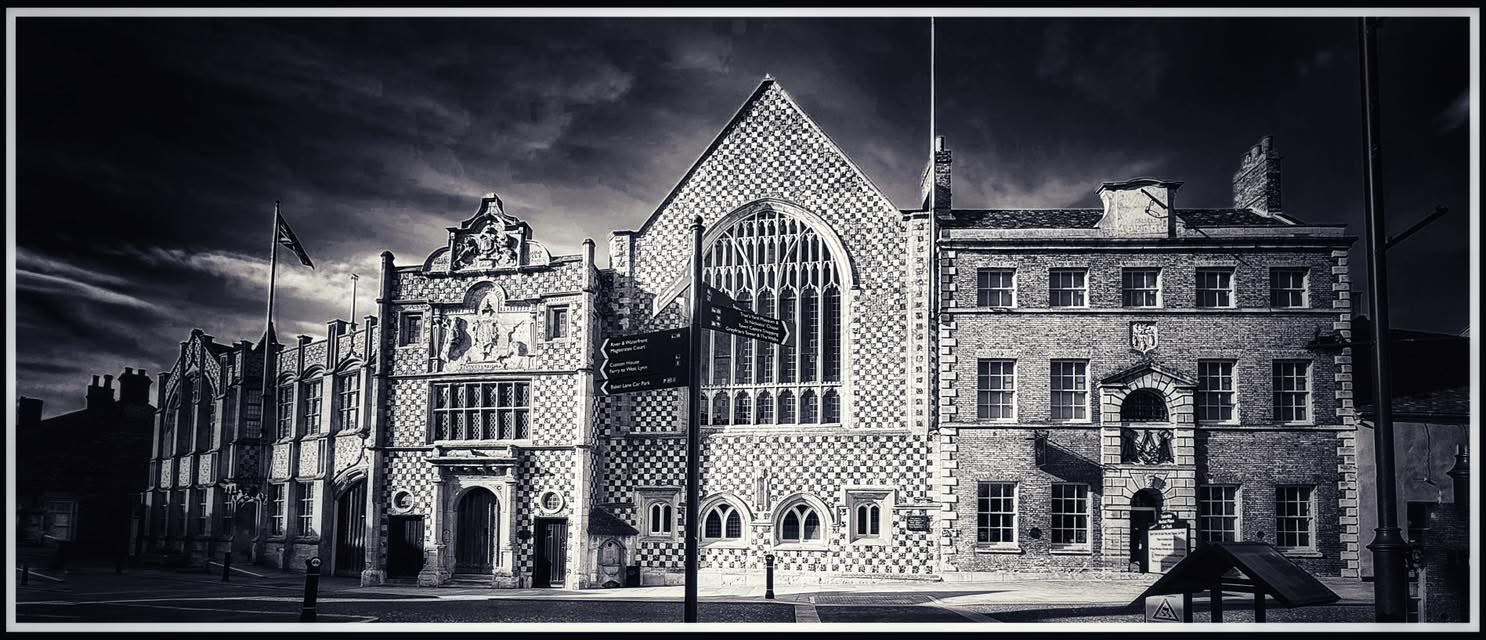
Many people are familiar with the fact that the British royal family traditionally spend Christmas on their estate at Sandringham near King’s Lynn. However, the estate has had several previous owners and was only purchased by the royal family in 1861.
One previous owner was a John Motteux who owned both the estate at Sandringham and another one at Beechamwell. Motteux was a retired silk merchant.
In 1843 Motteux was living in King’s Lynn while refurbishments were being made to his properties. One Sunday he decided to go to church and went along to St Nicholas’ Chapel and sat down in one of the boxed pews. A short time later the family that owned the pew arrived and asked him to leave. Motteux moved to another pew only to have a repeat experience. Pew places could be bought and sold for considerable sums at the time (see Appendix below). Only the rich could afford to guarantee their seat in church, even if they didn’t always avail themselves of the opportunity.
The Lack of Conformist Space
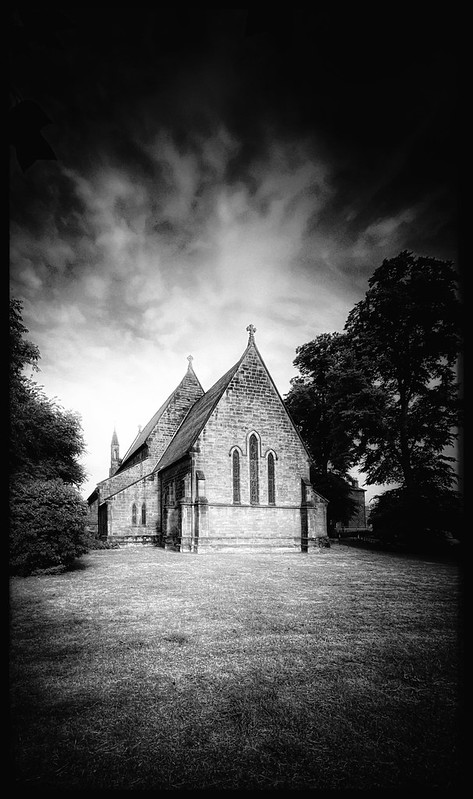
Photo © James Rye 2023
At that time the population in King’s Lynn had grown to around 16,000 which far exceeded the capacity of the existing surviving Anglican churches (St Margaret’s, St Nicholas’, and All Saints’). The rich could afford to buy pews. The large number of the god-fearing people of Lynn who were also poor had to stand at the back, or to stay at home, or go to one of the many growing alternative places of worship. There weren’t enough Anglican spaces.
And the lack of Anglican spaces mattered. Throughout history the government had wanted English people to be members of the Church of England and had tried to enforce this by penalising those who chose a different faith expression. Those who weren’t part of the established church were known as Dissenters or Nonconformists. And many Nonconformists felt like second class citizens.
The Municipal Corporations Act of 1835 opened councils to election by ratepayers. This enabled many Nonconformists to enter local government for the first time. However:
- births in their families went unrecorded unless their infants were baptised in the Church of England;
- legal marriages could be celebrated only in the Church of England;
- burials in parish churchyards had to follow the Book of Common Prayer read by the parish clergyman;
- only Anglicans were allowed to enter the University of Oxford and to graduate from the University of Cambridge;
- and in each parish Nonconformists were liable to pay the rate for the upkeep of the parish church.
It wasn’t until 1871 that most university tests were lifted. Burials were finally allowed with Nonconformist rites from 1880.
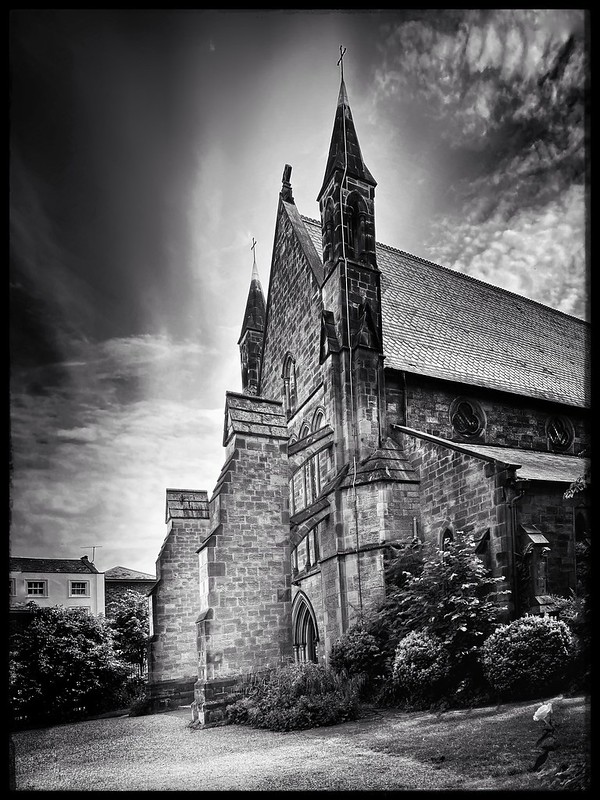
Photo © James Rye 2023
Despite the subtle pressures to conform, Nonconformist places of worship, were prospering in the town. There were no pew fees to pay, and they tended to attract the lower and middle classes.
In 1790, just a few months before his death at the age of 87, John Wesley had made his sixth visit to the Lynn to great acclaim and helped Methodism establish a strong foothold. The Methodists had grown in the town since Wesley’s first visit in 1771. In 1813 they opened their biggest chapel in Tower Street (see Reluctant Revolutionary Enriches Lynn). There were also Roman Catholics, Baptists (new large chapel in Blackfriars Street, opened in 1841), Congregationalists, Independents, Unitarians, and Quakers.
The establishment was on the back foot. At a time of increasing unrest and demands for social change, church attendance amongst the masses was on the decline. Where it was growing, its growth was outside the Church of England.
St John’s: The Poor Person’s Church
The Cambridge Advertiser, 14 June, 1843 reports:
In consequence of the present churches in Lynn being almost entirely taken up by appropriated pews, there is little church accommodation for the bulk of the people. Independently of this consideration, if all the sittings in the churches were open to the public, there is not room for one-fifth of the population. There are about 16,000 inhabitants in Lynn, and the churches would hold some- thing less than 3,000. A subscription therefore has been entered into for the purpose of building and endowing a church to consist principally of free sittings, and it is proposed that the Bishop of the Diocese should have the nomination of the ofliciating clergyman or clergymen.
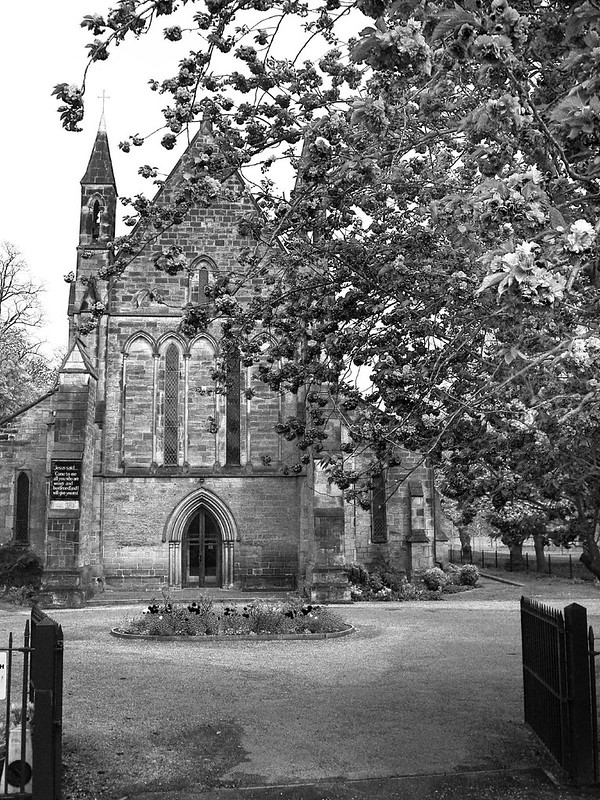
And so the poor person’s Anglican Church was built. St John’s Church was opened in 1846 and provided 800 free places. The interior was fitted with comfortable open benches. The west end was supported by two buttresses in 1889. The vicarage was opened in 1871, and the Mission Hall in Railway Road in 1881.
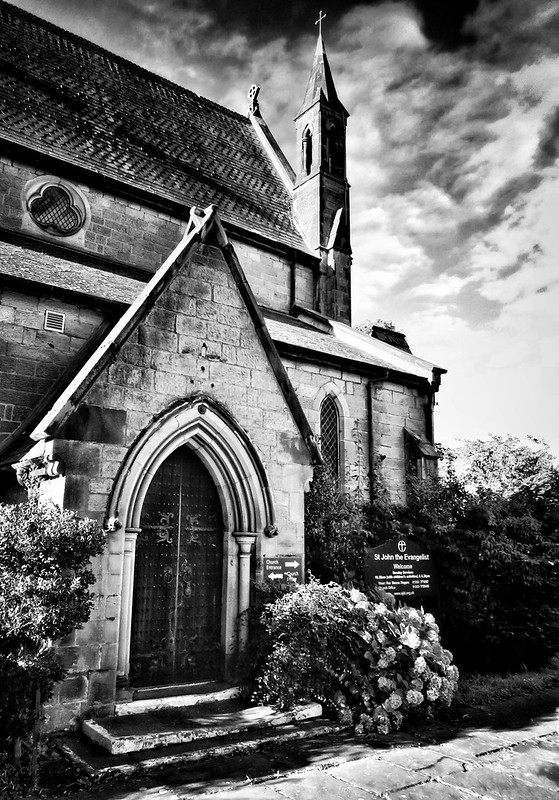
Photo © James Rye 2023
The stone church building, designed by A.Salvin, a London architect, was built by Messrs. Charles Bennet and Son, of Whittlesea at a cost £5,000. The largest donor who who helped pay for it was Anonymous – possibly Motteux (£2,000). Other donors included Spencer Cowper (£500), Daniel Gurney (£500), Church Building Society (£400), with £100 each from the Marquis of Cholmondesley, Lord George Bentinck MP, Richard Bagge, Thomas Bagge, William Everard, Francis Cresswell, Frederick Lane, Charles Goodwin, Mrs Elsden, James Dillingham, Thomas Ryley, Rev. Neville Rolfe.
The Site
The Corporation provided a site for St John’s on what was part of a paddock known as Allen’s Close. It is close to a junction where the old road into the town from the East Gate is crossed by a narrow road leading to a sluice. It is a place where people who had taken their own life were buried.
When the ground was being prepared workmen found a brass seal thought to relate to the Fitzwalter family in the C15th.
Appendix
Below is a 1783 legal document illustrating the practice of the sale of church box pews. This particular document relates to the sale of a box pew in in St Margaret’s Church. Below the image is a transcription of the document’s text, and a further modern paraphrase with explanations.
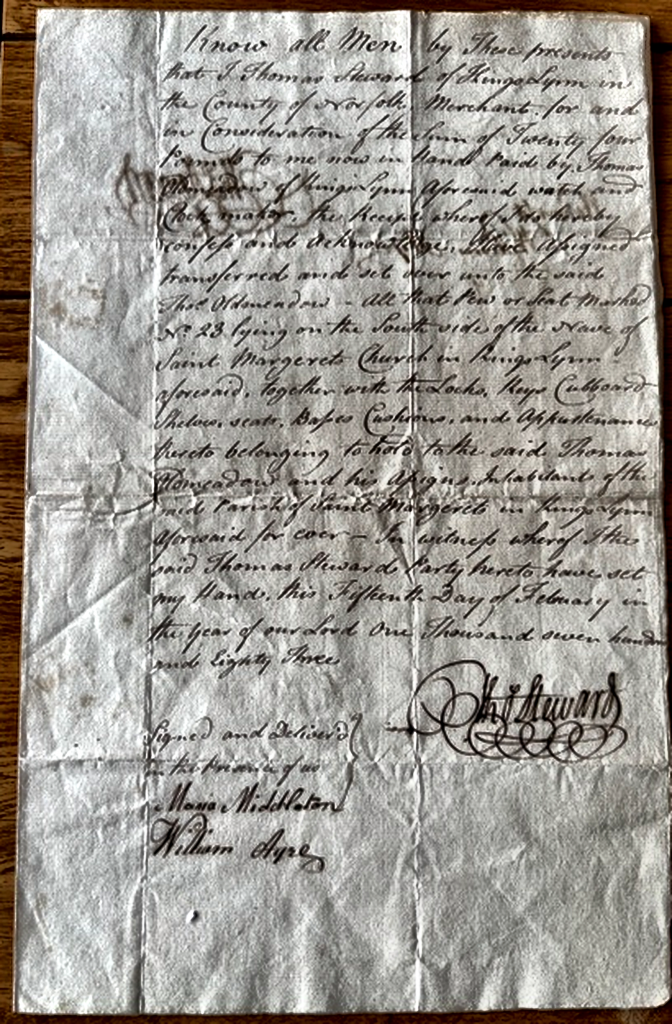
Document Transcription
Know all Men by these presents
that I Thomas Steward of Kings Lynn in
the County of Norfolk Merchant for and
in Consideration of the Sum of Twenty four
pounds to me now in hand paid by Thomas
Oldmeadow of Kings Lynn aforesaid watch and
clock maker the Receipt whereof I do hereby
confess and acknowledge have Assigned
transferred and set over unto the said
Thomas Oldmeadow All that Pew or Seat marked
No. 23 lying on the South side of the Nave of
Saint Margaret Church in Kings Lynn
aforesaid, together with the Locks, Keys, [cupboard?],
Shelves, seats, Boxes, [Cushions?], and Appurtenances
thereto belonging To hold to the said Thomas
Oldmeadow and his Assigns, Inhabitants of the
said Parish of Saint Margaret in Kings Lynn
aforesaid for ever In witness whereof the
said Thomas Steward [party] hereto have set
my hand, this fifteenth Day of February in
the year of our Lord one Thousand seven hundred
and Eighty Three.
Signed and Delivered
in the presence of us
Hana Middleton
William Ayre
Modern Paraphrase with Explanation of Terms
Official Notice:
Let it be known to everyone that I, Thomas Steward, a merchant from Kings Lynn in the county of Norfolk, have received a payment of £24 from Thomas Oldmeadow, a watch and clock maker also from Kings Lynn.
By signing this document, I confirm that I have received this money and have officially transferred ownership of Pew No. 23 to Thomas Oldmeadow. This pew is located on the south side of the main aisle (the nave) of St. Margaret’s Church in Kings Lynn.
This sale includes everything associated with the pew, such as:
- The locks and keys
- The cupboard and shelves
- The seating, storage boxes, and cushions
Thomas Oldmeadow and his successors—provided they remain residents of St. Margaret’s Parish—shall own this pew forever.
I have signed this agreement to make it official on this day, February 15, 1783.
Key Terms Explained
- “Know all Men by these presents”: A traditional legal opening meaning “Let everyone reading this document know.”
- “In hand paid”: Confirms the cash was delivered at the time of the agreement.
- “Appurtenances”: A legal term for the accessories or rights that go along with a property.
- “Assigns”: People to whom the property may be legally transferred in the future.
© James Rye 2023
See also: Reluctant Revolutionary Enriches Lynn
Book a Walk with a Trained and Qualified King’s Lynn Guide
Sources
- Bebbington, D. https://liberalhistory.org.uk/history/nonconformists/
- Hillen, H. (1907) History of the Borough of King’s Lynn Vol.2, EP Publishing Ltd
- Richards, P. (1990) King’s Lynn, Phillimore
[…] The Poor Person’s Anglican Church: St John’s […]
[…] St John’s Church wasn’t built until 1845. […]
[…] St John’s Church was opened in 1846 (contemporary with the Railway Station). Up until that time seats were purchased by rich families and there were not enough Anglican church seats in the town. And so the poor person’s Anglican Church was built. It provided 800 free places. The interior was fitted with comfortable open benches. The west end was supported by two buttresses in 1889. The vicarage was opened in 1871. […]