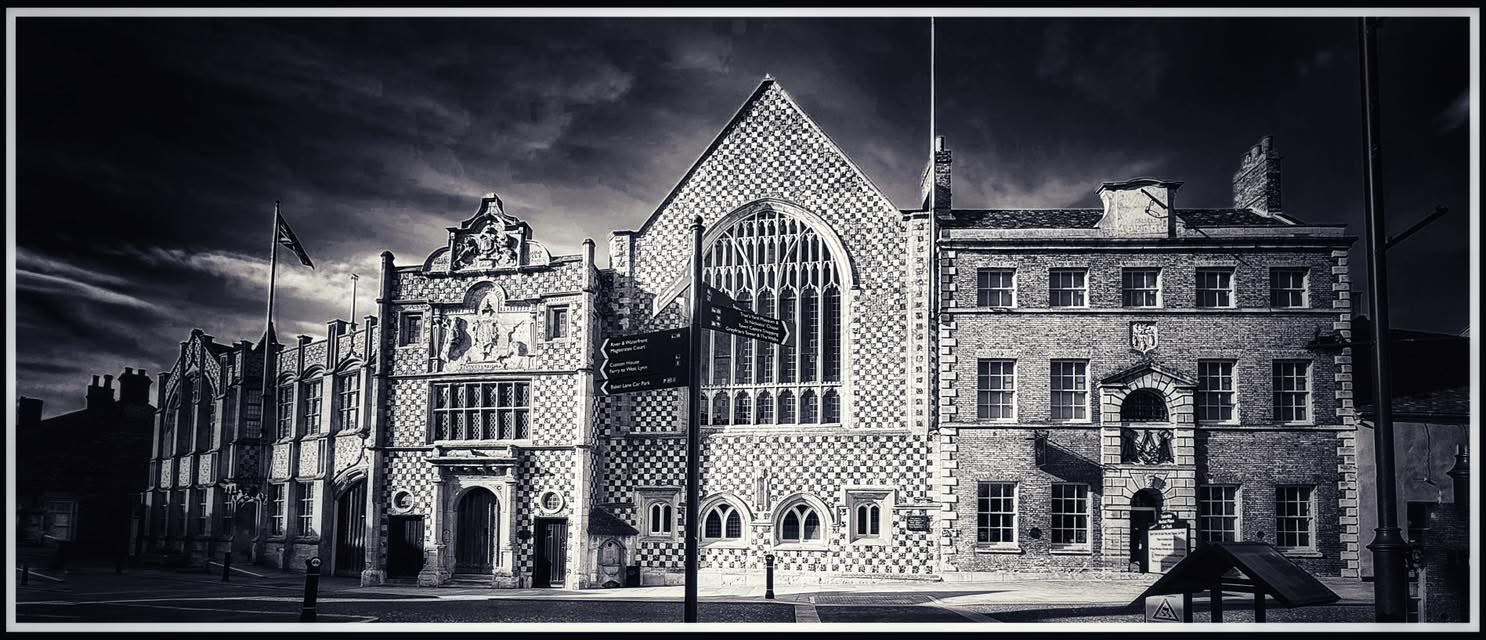
On Tuesday 27 October 1846, King’s Lynn became a railway town. A place that had spent centuries facing the Great Ouse, the Wash and the North Sea was suddenly tied to Downham Market by iron rails. Within a year, the line reached Ely. From there, Lynn was connected to Cambridge, London and the rapidly growing railway system of Victorian Britain.
For an old port, this was both exhilarating and unsettling. The railway promised speed, passengers, goods traffic, new visitors and wider markets. It also weakened some of the very advantages that had made Lynn important in the first place. For centuries, Lynn’s prosperity had depended on water. The railway did not destroy that world overnight, but it altered the balance. Goods that had once naturally passed through ports and coastal routes could now move inland by rail.
The story of the railway in King’s Lynn is therefore not a simple tale of progress. It is a story of connection, adaptation and loss. Lynn gained access to the modern world, but it also had to rethink what kind of town it was.
The first line: Lynn to Downham, then Ely
The first railway to reach Lynn was the Lynn and Ely Railway. Its northern section, from King’s Lynn to Downham Market, opened on 27 October 1846. The remainder of the line to Ely opened on 25 October 1847, by which time railway companies in East Anglia were already being reorganised and amalgamated. The Fen Line Users Association gives the sequence clearly: Cambridge to Ely opened in July 1845; Lynn to Downham opened in October 1846; the remaining stretch to Ely followed in October 1847.
That connection mattered because Ely was not just another Fenland town. It was Lynn’s route into the wider railway system. From Ely, passengers and goods could move towards Cambridge and London. Lynn, which had long depended on ships, rivers, carts and coastal trading routes, now had a faster land route into the capital and beyond.
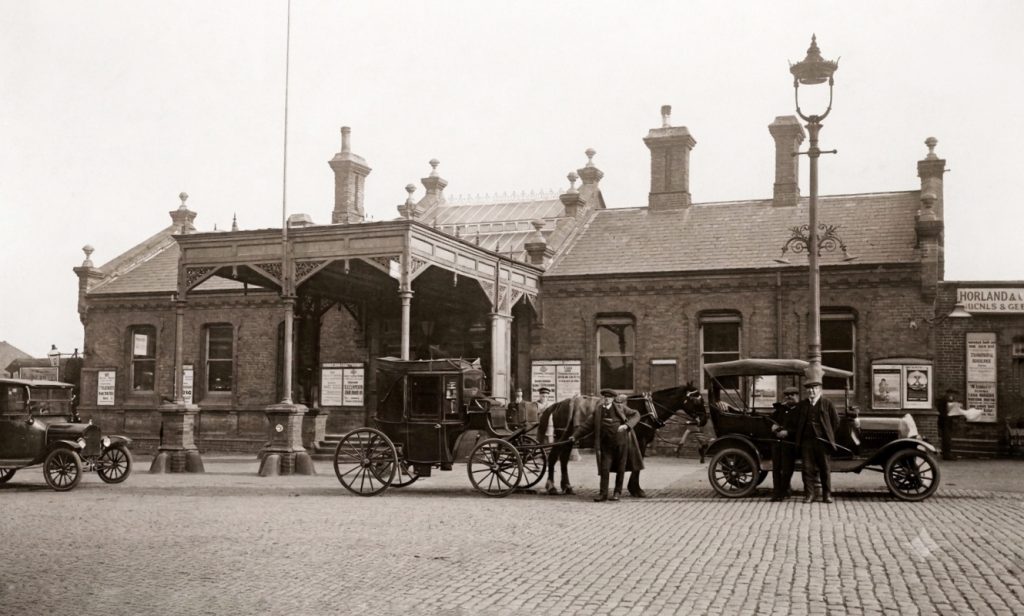
The original station at Lynn was not the grand Victorian building seen today. Historic England records that the present station was built in 1871–72 for the Great Eastern Railway and replaced a timber station of 1846. The rebuilding was “made necessary by increased traffic”, which tells us something important: within a generation, the railway was no longer an experiment on the edge of town life. It had become part of Lynn’s working machinery.
The station as a sign of confidence
The 1871–72 station is not merely an attractive building. It marks the point at which railway travel had become permanent, respectable and busy enough to require a stronger architectural statement.
Historic England describes the station as built of white gault brick with red brick dressings, with later alterations and additions in 1910. It was used not only by the Great Eastern Railway but also by other companies with links east and west. The town became part of a more complicated railway geography.
Other lines followed. The railway towards Dereham and Swaffham drew Lynn into inland Norfolk. The line to Hunstanton, opened in 1862, connected Lynn more closely with the north-west Norfolk coast. Norfolk Heritage Explorer records the Lynn and Hunstanton Railway as opening in 1862 and closing in 1969. The railway gave Lynn access not only to markets but also to leisure traffic, seaside travel and, later, the royal world of Sandringham.
A railway town and a port town
The railway did not replace the port. It worked alongside it, sometimes strengthening it and sometimes competing with it.
One of the most revealing developments was the King’s Lynn Harbour Railway. Norfolk Heritage Explorer records that this railway opened in 1849, running from Harbour Junction to Friars Fleet and the South Quay, and closing in 1968. In plain terms, this meant that the railway reached into the commercial heart of the old port. Lynn’s quays were no longer just meeting places for ships, carts, warehouses and river traffic. They became part of a mixed system in which goods could pass between water and rail.
This was vital because Lynn’s nineteenth-century port faced serious problems. The Great Ouse had long been both the town’s lifeline and its difficulty. Lynn Museum notes that in the 1800s the silting of the river required major works to support inland trade: cuts were made to straighten the river and improve tidal scouring, while improved docks were created in the redundant river bed and connected to the new railway system.
The railway, then, was not simply an enemy of the port. In some respects it helped the port modernise. It enabled goods from the docks and quays to be carried inland more efficiently. It supported a new transport system in which railway, river and sea were linked.
Yet there was another side to the story. Lynn’s older importance had depended partly on the fact that water transport gave it a natural role as a collecting and distributing point. Railways changed that. Goods could now travel quickly overland. Coastal shipping, once so important to towns like Lynn, faced powerful competition from trains. Local conservation material for King’s Lynn notes that nineteenth-century trade declined under several pressures, including the coming of the railway, which brought cheaper and more convenient transport and caused a slump in coastal trade.
That does not mean the railway single-handedly caused Lynn’s commercial difficulties. War, changing markets, silting, larger ships, dock investment, railway competition and industrial change all played their part. But the railway unquestionably altered Lynn’s place in the transport hierarchy. It made the town better connected, but it also reduced the special advantage that came from being an old port at the mouth of a great river system.
Passengers, goods and a wider world
For ordinary travellers, the railway changed the meaning of distance. A journey that had once involved slow road travel, river transport, coastal shipping, or careful planning around tide and weather could now be made more predictably. Lynn was still not close to London in the modern sense, but it was closer in practice.
For farmers, merchants and manufacturers, the railway widened options. Agricultural produce from west Norfolk and the Fens could move faster. Coal, building materials, manufactured goods and passengers could come in more easily. The railway also encouraged new patterns of employment. It required station staff, clerks, porters, guards, drivers, signalmen, maintenance workers and goods yard labour. Around the docks and sidings it supported a landscape of loading, unloading, storage and repair.
The link between railways and industry is especially visible in nineteenth-century Lynn. The town developed engineering firms, ironworks and other industrial concerns. Local conservation material for the St Nicholas area notes that after the construction of the docks and the arrival of the railway, Lynn supported heavy engineering, including Savage’s works and Dodman’s Highgate Ironworks. The railway did not create all this by itself, but it helped provide the transport conditions in which such firms could operate.
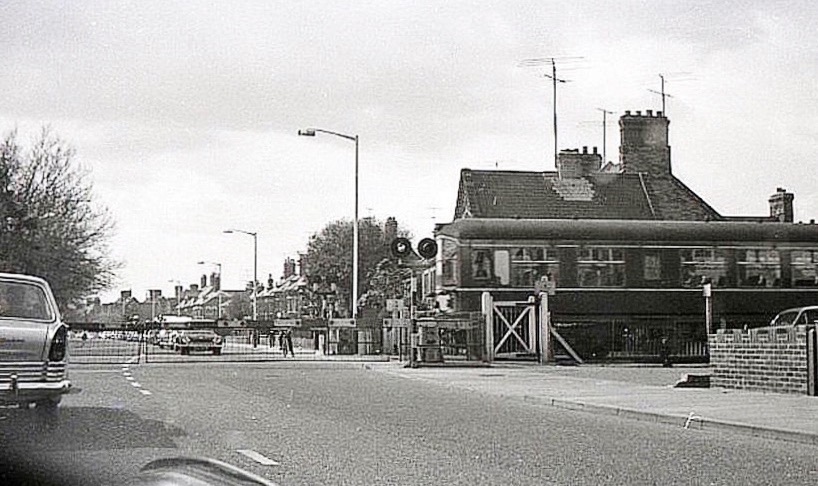
The line to Hunstanton added another kind of movement. It made the coast more accessible and helped bring seaside travel within reach of more people. The later royal association with Sandringham also gave Lynn’s railway world a particular distinction. Historic England notes that increased traffic at Lynn station was partly connected with the opening of the Lynn and Sutton Bridge Railway in 1864 and partly with Queen Victoria’s purchase of Sandringham House.
What changed in the town itself?
The railway altered Lynn physically. Tracks, sidings, junctions, goods yards, bridges and railway buildings created a new landscape around the town. The railway did not politely stop at the edge of the historic centre. It pushed into working areas, linked with the quays, and changed how goods moved through Lynn.
The railway added a new layer of routes. It did not erase the old town, but it gave Lynn a different rhythm. Timetables joined tides. Railway yards joined quays. Goods clerks joined merchants, shipowners, warehousemen and carters in the practical business of moving things.
There was also a psychological change. Lynn had once been a maritime town that looked naturally outwards by sea and inland by river. After 1846, it also looked along the line. London, Cambridge, Ely, Dereham, Hunstanton and later other railway-linked places became part of the town’s daily imagination. Newspapers, visitors, goods, letters and ideas moved faster. So did expectations.
Progress, but not without cost
It is tempting to present the railway as a heroic Victorian improvement: steam, speed and prosperity arriving in a town still shaped by medieval trade. That would be too simple. It is equally tempting to present it as the beginning of the end for Lynn’s old maritime greatness. That too would be too simple.
The railway was both.
It helped modernise Lynn’s transport system. It supported the port, encouraged dock connections, widened travel, stimulated employment and linked the town to national markets. At the same time, it undercut the older coastal trading world and made Lynn less indispensable as a maritime gateway. The railway gave the town new possibilities, but it also exposed it to new competition.
The best symbol is still the station. The first timber station of 1846 belonged to arrival and experiment. The brick station of 1871–72 belonged to permanence and confidence. Between those two buildings lies a generation of change. Lynn had not stopped being a port. It had not abandoned its river, its quays or its maritime memory. But it had become something else as well.
By the later nineteenth century, King’s Lynn was no longer only an old port with a railway attached. It was a railway town too, and that changed the way it traded, travelled, worked and imagined its place in the world.
© James Rye 2026
Book a Guided Tour with a Trained and Qualified King’s Lynn Guide Through Historic Lynn
References
- Fen Line Users Association. “Our History.” Accessed 8 June 2026. https://www.flua.org.uk/history.html
- Historic England. “King’s Lynn Railway Station, Non Civil Parish, List Entry Number 1389399.” Accessed 8 June 2026. https://historicengland.org.uk/listing/the-list/list-entry/1389399
- Lynn Museum. “Maritime History at Lynn Museum.” Accessed 8 June 2026. https://www.lynnmuseum.norfolk.gov.uk/article/30502/Maritime-history-at-Lynn-Museum
- Norfolk Heritage Explorer. “Route of King’s Lynn Harbour Railway.” Norfolk Historic Environment Record. Accessed 8 June 2026. https://www.heritage.norfolk.gov.uk/record-details?Index=12729&MNF13593-Route-of-King%27s-Lynn-Harbour-Railway=
- Norfolk Heritage Explorer. “Route of Lynn and Hunstanton Railway.” Norfolk Historic Environment Record. Accessed 8 June 2026. https://www.heritage.norfolk.gov.uk/record-details?MNF13591-Route-of-Lynn-and-Hunstanton-Railway=
- West Norfolk Borough Council. King’s Lynn: St Nicholas Conservation Area Character Statement. Accessed 8 June 2026. https://www.west-norfolk.gov.uk/download/downloads/id/1909/kings_lynn_st_nicholas_con_area_leafletpdf.pdf
- West Norfolk Borough Council. King’s Lynn: The Walks Conservation Area Character Statement. Accessed 8 June 2026. https://www.west-norfolk.gov.uk/download/downloads/id/1911/kings_lynn_the_walks_con_area_leafletpdf.pdf