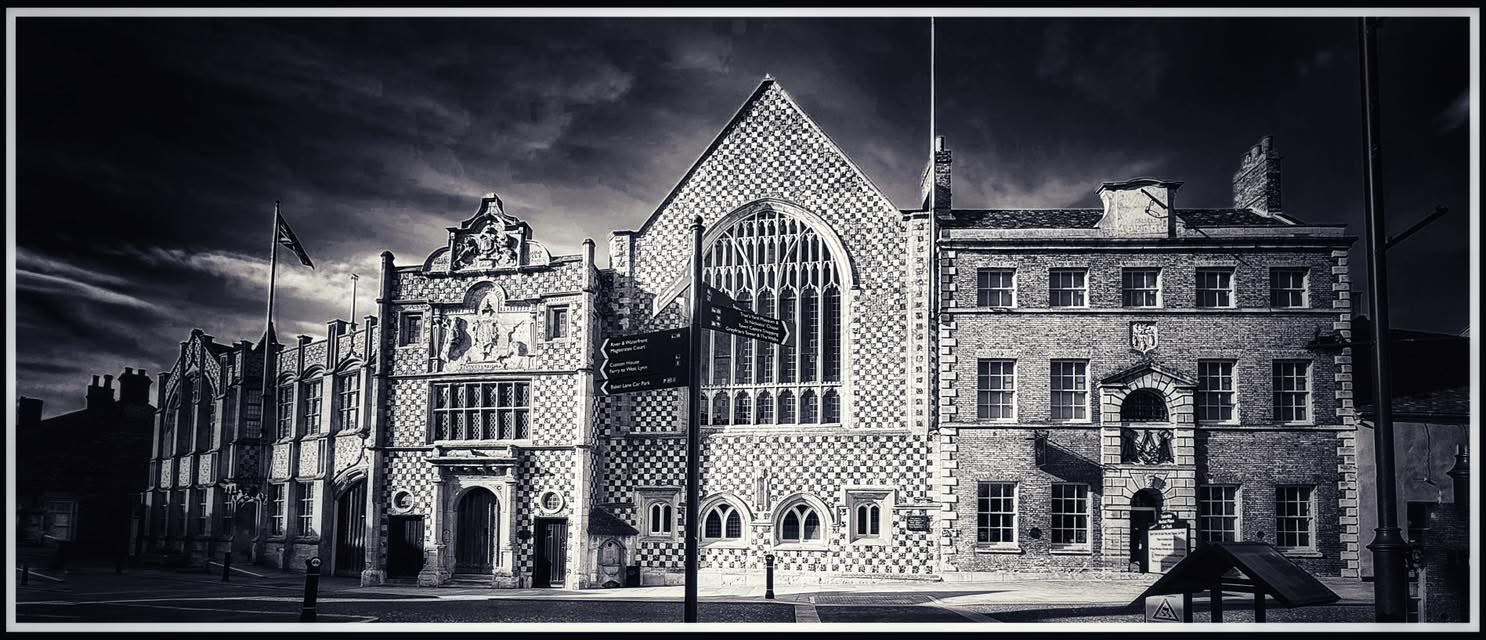
For more than a century, anyone crossing the railway bridge on Gaywood Road could look down upon one of King’s Lynn’s great industrial workplaces. Inside Dodman’s Highgate Works, iron was cast, steel plates were rolled, boilers were riveted and machinery was assembled for customers far beyond Norfolk.
The noise must have been formidable. Hammers rang against boiler plate, machine tools turned heavy components, furnaces heated rivets and cranes lifted loads that could not safely be moved by hand. Trains passed immediately behind the factory, sometimes carrying materials into the works or taking completed machinery away.
Dodman’s was not simply the maker of a curious little engine. Alfred Dodman & Company remained in business for about 120 years. It began in the age of agricultural steam, supplied boilers and machinery to British and overseas customers, worked for government departments during two world wars and eventually entered the modern industries of pressure vessels, petrochemicals and North Sea oil.
Today, almost nothing remains. The railway has gone, the factory was demolished and houses cover much of the site. Yet the bridge on Gaywood Road is still remembered as Dodman’s Bridge, while one wonderfully eccentric locomotive survives to advertise the skills of a vanished Lynn engineering firm.
Its history deserves to stand beside that of Savage’s, Aickman’s, and Cooper’s as part of the story of industrial King’s Lynn.
A Lynn engineer trained in Lincoln
Alfred Dodman was born in Norfolk in the early 1830s, probably in 1832, although some genealogical sources give 1833. More securely established is his apprenticeship to Clayton & Shuttleworth of Lincoln, then among Britain’s leading manufacturers of agricultural machinery, threshing equipment, portable steam engines and boilers.
This was first-rate training. Clayton & Shuttleworth operated on an international scale and employed highly specialised workers. Dodman would have encountered pattern-making, casting, machining, boiler construction and the organisation of a large engineering factory. He also learned how machinery was marketed through catalogues, agricultural shows and networks of commercial agents.
He returned to King’s Lynn and established his own engineering business in about 1850. Other accounts date the formal beginning of the firm to 1854. The difference probably reflects the gradual development of the enterprise rather than a single ceremonial opening.
Dodman occupied, managed or shared several smaller engineering premises before building at Highgate. The precise sequence is difficult to reconstruct without consulting the company records, borough rate books and the principal published study by Robert Trett and Winifred Tuck. What is clear is that the business expanded steadily during the 1850s, 1860s and early 1870s.
Dodman was described in directories as an engineer and ironfounder. He repaired machinery, produced castings and developed a market for steam equipment. By 1872 he had constructed his first known traction engine. Marine engines were another natural line of work in a port town.
Why Highgate was the right place
In 1875, Dodman moved to a purpose-built works at Highgate Field, on the southern side of Gaywood Road. The new factory was close to Highgate Bridge and immediately beside the railway branch serving King’s Lynn’s docks.
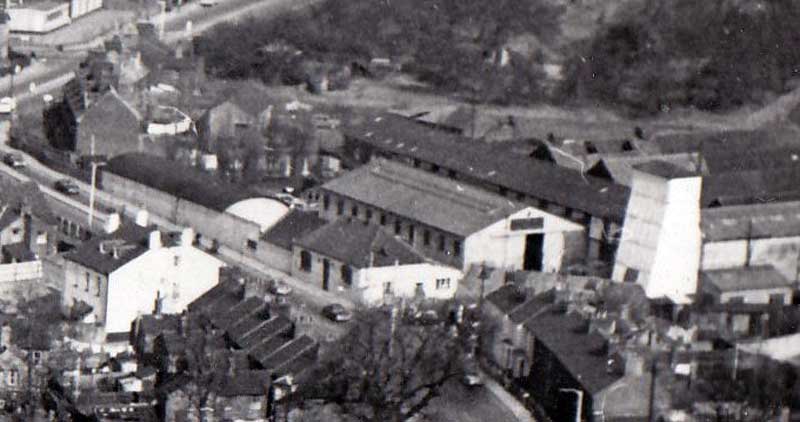
Image King’s Lynn Forums
Its location was carefully chosen. Heavy engineering required enormous quantities of coal, iron, steel plate and timber. Completed boilers could weigh many tons and were awkward to transport through crowded streets. A private siding or direct railway connection allowed materials and machinery to be moved between the works, the main railway system and Lynn’s docks.
The factory consequently became inseparable from the railway landscape. The bridge carrying Gaywood Road over the docks branch became popularly known as Dodman’s Bridge. Historic photographs show the works packed into the ground between the road and railway, with long workshop roofs, chimneys, open yards and sidings.
The Highgate site was enlarged piecemeal. It appears less like a factory designed at one moment than a collection of specialised buildings added as orders and production expanded. There were foundry areas, machine shops, boiler shops, erecting bays, offices and storage yards. Internal cranes and lifting equipment allowed large boilers and fabricated structures to be moved between stages of production.
For late Victorian King’s Lynn, it was a major industrial establishment. Alongside Savage’s St Nicholas Works, the docks, railway yards, mills and chemical works, Dodman’s helped change Lynn from a town primarily associated with trade and agriculture into one containing a substantial body of skilled industrial labour.
Boilers built at King’s Lynn
The heart of Dodman’s business was boiler-making.
Steam boilers converted heat into pressurised steam, which could power engines in factories, ships, mills, pumping stations and agricultural machinery. Their construction demanded great precision. A defective boiler was not merely inefficient. It could explode with devastating force.
Dodman’s initially concentrated upon stationary or “land” boilers, especially the Cornish and Lancashire types. A Cornish boiler normally contained one large internal furnace tube running through its cylindrical shell. A Lancashire boiler generally had two. Hot gases passed through the tubes before circulating around the boiler, heating the water contained within its shell.
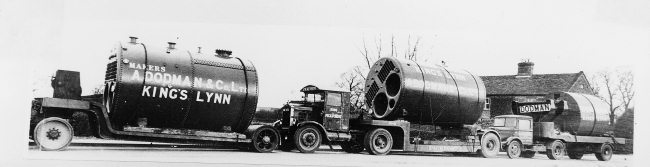
Image King’s Lynn Forums
These were large pieces of industrial equipment rather than domestic heating boilers. They could supply steam to factory engines, drainage pumps, mills and public utilities.
Dodman’s subsequently advertised or manufactured a much broader range, including:
- vertical boilers for sites where space was restricted;
- locomotive and portable-engine boilers;
- boilers for traction engines;
- marine boilers and associated equipment;
- replacement boilers for existing industrial machinery.
The National Museum Wales holds a 55-page Alfred Dodman & Co. catalogue containing numerous illustrations of boilers made at the Highgate Works. Its size is revealing. Dodman’s was not merely a repair shop accepting occasional local jobs. It marketed a recognised range of industrial products to customers who could study different designs, capacities and arrangements before placing an order.
The work drew upon several separate trades. Draughtsmen prepared working drawings and calculated dimensions. Platers marked, cut and shaped the steel. Rollers curved flat plate into cylindrical shells. Riveters joined sections while the rivets were hot, producing a tight joint as the metal cooled and contracted. Boilermakers fitted internal stays to prevent the shell deforming under pressure.
Completed boilers had to be inspected and pressure tested. Those intended for ships or insured industrial premises were often examined under recognised inspection and classification systems. Surviving Lloyd’s Register material confirms that Alfred Dodman and the later company operated within the regulated world of marine and boiler engineering.
Repair work also formed an important part of the business. Existing boilers suffered corrosion, cracking and deterioration around fireboxes, tubes and riveted joints. A manufacturer able to replace plates, tubes or complete boiler shells could maintain a steadier flow of work than one dependent entirely upon orders for new equipment.
Steam power for Norfolk agriculture
Alfred Dodman’s apprenticeship prepared him particularly well for the agricultural machinery trade.
Before tractors became common, farmers used portable steam engines and traction engines to power threshing machines, pumps, saw benches and other equipment. Portable engines had wheels but were generally hauled from place to place rather than moving under their own power. Traction engines could propel themselves and tow loads on the road.
Dodman built his first known traction engine in 1872, before the move to Highgate. He later displayed machinery at agricultural shows, where engineers competed for the attention of landowners, contractors and dealers. Shows allowed potential customers to compare engines, while manufacturers closely inspected the latest ideas developed by their rivals.
An early photograph preserved by the Road Locomotive Society shows an unidentified Dodman traction engine dating from the 1880s. It is particularly valuable because none of the company’s full-sized traction engines is known to survive intact.
Dodman never manufactured traction engines on the scale achieved by Charles Burrell & Sons of Thetford, Richard Garrett of Leiston or Aveling & Porter of Rochester. Its strength was flexibility. The same workshops could make boilers, castings, engines and specialised machinery to individual order.
The engine that brought a threat of legal action
One of Alfred Dodman’s most ambitious experiments resulted in a confrontation with Charles Burrell & Sons.
In 1889, Burrell obtained a patent for a single-crank compound traction engine. Compounding improved efficiency by passing steam through a high-pressure cylinder and then through a larger low-pressure cylinder, extracting more work before the steam was exhausted.
Dodman attempted to develop his own arrangement. He placed one cylinder vertically above the other and used a single connecting rod. The engine had cylinders measuring approximately 6¼ and 11 inches in diameter, each with a 12-inch stroke. It was a substantial and technically adventurous machine.
The completed engine was exhibited at the Royal Agricultural Show held at Cambridge in June 1894. Burrell claimed that the design infringed its patent and threatened proceedings.
The possibility of expensive litigation appears to have ended Dodman’s attempt to manufacture the engine commercially. Only one full-sized example is known to have been completed, and no confirmed contemporary photograph of it survives. A working scale reconstruction has since been produced from later drawings, but photographs of that model should not be mistaken for the original Highgate engine.
The dispute illustrates a difficulty faced by a provincial engineering company. Developing new machinery required months of skilled work, special patterns, castings and expensive exhibition. A larger competitor’s patent challenge could destroy the expected commercial return before a single customer had placed an order.
The smallest locomotive with the biggest personality
Dodman’s most famous product was not a boiler or traction engine but a tiny railway locomotive called Gazelle.
It was commissioned by William Burkitt, a prosperous King’s Lynn corn merchant with railway and dock interests. Burkitt wanted a private railway vehicle in which he could travel while inspecting his commercial interests. Dodman began work on the design during 1892, and the engine was completed early in 1893.
The original Gazelle was a 2-2-2 well-tank locomotive. This notation means that it had two leading wheels, two large driving wheels and two trailing wheels. Water was carried in a tank beneath or between the frames rather than in tanks beside the boiler.
Dodman used some features derived from traction-engine practice. The locomotive was compact, lightly built and fitted with a small passenger area at the rear. It had a steel boiler with a copper firebox and Mansell-type wheels made with wooden segments, intended to reduce noise.
In January 1893, Gazelle attracted attention while standing at King’s Lynn station. Its trial run took place on 5 February, when it travelled to Downham Market and back. Reports suggested that it could reach about 45 miles an hour, an alarming prospect in a machine that looked more like an oversized mechanical toy than a conventional locomotive.
Burkitt apparently succeeded on at least one occasion in arranging for his private engine to run over a main-line railway. It was an indulgence unlikely to survive the increasingly regulated railway operations of the twentieth century.
After Burkitt’s death, Gazelle passed through several hands. It was eventually acquired for use on the Shropshire and Montgomeryshire Railway, one of the lines associated with the celebrated light-railway engineer Colonel H. F. Stephens. The locomotive was rebuilt as a 0-4-2 well tank and fitted with additional accommodation.
Its railway duties included inspection trips and modest passenger work. Travelling behind such a small engine could be uncomfortable. Passengers were vulnerable to smoke, sparks, rain and the eccentricities of a locomotive never designed for ordinary public transport.
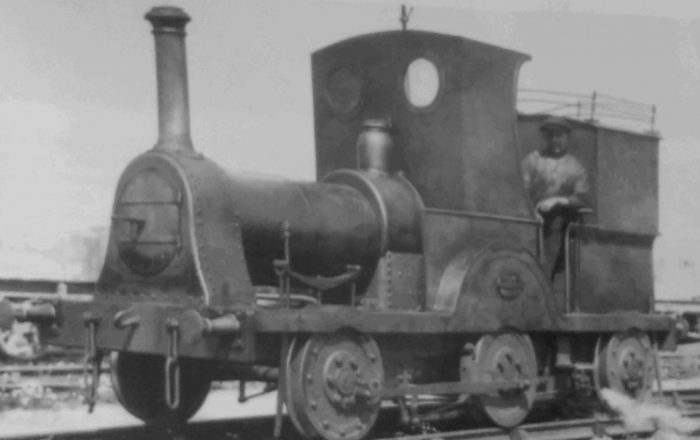
Gazelle later entered military service when the War Department took over the railway during the Second World War. After preservation in several locations, it found a permanent home at the Colonel Stephens Railway Museum in Tenterden.
It is generally regarded as the only complete new locomotive built by Alfred Dodman & Company. Claims that the firm constructed another for an industrial customer or export market have never been supported by equally convincing documentary evidence.
Its survival is extraordinarily fortunate. Most of the firm’s boilers and industrial equipment were eventually cut up when factories closed or machinery became obsolete. Gazelle, by contrast, became too unusual and too well loved to scrap.
More than steam engines
At the beginning of the twentieth century, Dodman’s broadened its range. Secondary accounts based upon the principal company history describe the manufacture of mining pumps, mill machinery, cranes and oil engines.
Oil engines offered an alternative to steam. They did not require a separate boiler, could be started more quickly and needed fewer attendants. Producing them allowed Dodman’s to remain active as industrial power moved gradually away from traditional steam installations.
The firm also retained its connection with shipping. In a working port, vessels needed replacement boilers, pumps, winches and auxiliary machinery. Marine engines and boilers were subject to inspection, making reputation and consistent workmanship particularly valuable.
Dodman advertisements appeared in specialist maritime publications beyond Britain. This was not simply a Lynn firm selling to Lynn customers. Its products entered wider British, colonial and overseas markets.
The company archives contain drawings, accounts and job files that should eventually make it possible to map those markets in detail. The National Archives’ Discovery catalogue records material extending from the late nineteenth century into the 1970s, including a large group of job files covering much of the period from 1909 to 1969.
Each job file potentially contains the story of an individual machine: who ordered it, where it was sent, what dimensions were agreed, how much it cost and whether problems arose during manufacture. Together, they offer the raw material for a far fuller history than can presently be reconstructed from published sources alone.
A company that outlived its founder
In 1897, the concern was reorganised as Alfred Dodman & Co. Ltd.
Limited liability separated the company’s financial obligations from the personal assets of its shareholders. It also allowed the enterprise to continue beyond the founder’s lifetime and may have helped it raise money for buildings, machinery and contracts.
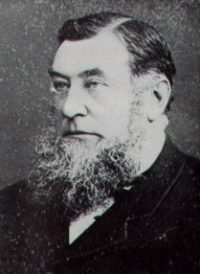
Alfred Dodman died at Swaffham on 13 December 1908. By then, the Highgate business was sufficiently established to continue without him.
The change from a founder-led workshop to a limited company was one of the reasons Dodman’s endured. Many Victorian engineering concerns declined when their founders retired or died. Alfred Dodman & Company instead survived for nearly another seven decades.
Government and colonial contracts
By the early twentieth century, Dodman’s was obtaining government work.
The firm reportedly secured contracts to supply boilers to the Army and Navy in 1902. In 1905, it received work through the Crown Agents for the Colonies, the organisation that purchased machinery, railway equipment and public-works supplies for colonial administrations.
Such contracts required manufacturers to meet formal specifications and inspection requirements. They also opened large overseas markets. Boilers and pumps were needed for railways, waterworks, harbours, mines and power installations throughout the British Empire.
Government work could nevertheless be demanding. Prices were competitive, delivery dates strict and alterations costly. A firm needed sufficient capital to buy materials and pay wages before receiving final payment.
Dodman’s continued to appear on official lists of recognised industrial suppliers. A 1940 Gazette list described the firm among ironfounders, while its name remained in a government supplier list issued in 1967. These appearances confirm the company’s continuing national commercial connections, although they do not by themselves identify particular contracts.
Dodman’s at war
The company’s boilermaking and fabrication skills were valuable during both world wars.
During the First World War, Dodman’s manufactured for the Army and Admiralty. The available published summaries do not provide a complete list of products, but the firm was equipped to supply boilers, pumping machinery, marine equipment and fabricated components.
The Highgate Works would also have faced the pressures experienced throughout British industry: shortages of skilled labour, government control of materials, longer working hours and the need to train replacements for men who entered the armed forces.
There is insufficient published evidence to state how many women worked at Dodman’s during either war. Women entered engineering in large numbers after 1914 and again after 1939, but their presence at a particular factory must not be assumed without local records or photographs.
During the Second World War, Dodman’s undertook work for the Royal Navy and Royal Air Force. Its experience in pressure equipment, metal fabrication and marine engineering made it an obvious contractor.
Skilled boilermakers, welders and draughtsmen were likely to have been regarded as valuable industrial workers. Their contribution was made in workshops rather than on battlefields, but naval bases, airfields and wartime factories depended upon the equipment produced and maintained by firms such as Dodman’s.
Life inside the Highgate Works
Engineering history can too easily become a catalogue of machines. Dodman’s was also a community of workers whose livelihoods depended upon the flow of orders through the factory.
The workforce included moulders, foundrymen, pattern-makers, platers, boilermakers, riveters, machinists, fitters, welders and crane drivers. Draughtsmen translated customers’ requirements into working plans. Estimators calculated prices, while clerks, storekeepers and buyers kept the production process supplied.
Many employees entered as apprentices. They learned by working beside experienced tradesmen, gradually acquiring the ability to read drawings, use measuring instruments and operate machine tools. A completed apprenticeship offered a recognised trade that could be carried to other engineering centres.
The work was physically demanding. Foundrymen handled molten metal. Platers moved heavy sheets of steel. Riveters worked amid intense noise and heat. Boiler repair sometimes required men to enter confined shells where ventilation was poor and movement restricted.
Industrial accidents were an ever-present risk. Heavy loads hung from cranes, belts drove unguarded machinery and sparks flew from hot metal. Pressure testing introduced another hazard if a weakness had escaped detection.
Yet skilled engineering work also brought pride. A boiler or pressure vessel leaving the Highgate Works embodied hundreds of individual operations. Workers could see the completed object and know that it would serve a ship, factory, pumping station or industrial plant for many years.
The factory’s presence affected the surrounding neighbourhood. Employees walked or cycled from Highgate, Gaywood, Railway Road and the streets east of the town centre. Shift times filled nearby roads with workers. The sound of the factory and movement of goods became part of everyday life.
From rivets to welding
After 1945, the traditional market for steam machinery contracted. Diesel engines, electric motors and national electricity supplies reduced demand for the kind of stationary steam plant on which Dodman’s had built its reputation.
The company survived by adapting its expertise. Its workers already understood the shaping and joining of thick steel plate. Those abilities could be transferred from riveted boilers to welded pressure vessels and storage tanks.
Welding gradually replaced much riveting. Pressure-vessel design required increasingly exact calculations, better steels and stricter inspection. Welds could be examined using radiography and other testing methods. The old boilermaker’s craft did not disappear, but it changed profoundly.
Dodman’s produced heavy equipment for newer industries, including petrochemical installations and, in its later years, work associated with North Sea oil and gas. Published accounts also refer to contracts in India and the Persian Gulf.
This post-war transformation is easy to overlook because no object as memorable as Gazelle emerged from it. Large tanks and pressure vessels rarely attract museum preservation. They were nevertheless more representative of the company’s later business than Victorian steam engines.
The Highgate site becomes a burden
The location that had been ideal in 1875 became increasingly inconvenient a century later.
The works were confined by Gaywood Road, housing, the railway, the Gaywood River and neighbouring industrial premises. Heavy road vehicles had difficulty entering an old factory designed around rail transport and Victorian working practices.
Modern fabrication required large, unobstructed production bays, powerful overhead cranes and sufficient space to assemble enormous structures. There was little room at Highgate for such redevelopment.
In 1972, the company’s directors planned a move to the Hardwick Industrial Estate. The intention was presumably to create a modern factory with better road access and space for expansion.
It was a logical decision, but one carrying enormous financial risk. The early 1970s were a punishing time for British manufacturing. Inflation increased the price of materials and construction. Interest rates rose, energy became more expensive and the economy entered recession after the 1973 oil crisis.
Published accounts state that financial difficulties surrounding the move led to the company’s closure in 1975.
The available online evidence does not permit a more precise judgement. It remains unclear whether the principal cause was borrowing for the new factory, losses on fixed-price contracts, cancellation of orders or a combination of these pressures. The receiver’s records, company papers and contemporary reports in the Lynn News and Advertiser should provide a clearer answer.
What is certain is that a firm which had survived major technological changes and two world wars disappeared shortly before its centenary at Highgate.
Demolition and disappearance
The Highgate Works were cleared in 1977, and housing subsequently occupied much of the site.
Its disappearance was remarkably thorough. No great erecting shop or foundry chimney survived to announce the site’s former use. Later residents could live above ground once occupied by boiler shops without realising that heavy machinery had been made there.
The railway branch beside the factory also declined and eventually disappeared. The industrial landscape that had determined the position of Dodman’s was dismantled with the works itself.
Dodman’s Bridge remained the strongest local reminder. Place-names often outlive the structures that produced them. Someone using the name today may not know why the bridge was called Dodman’s, but the word carries the memory of the factory into another generation.
What survives of Dodman’s
The most obvious survivor is Gazelle. It is now displayed at the Colonel Stephens Railway Museum at Tenterden and remains a remarkable physical link between King’s Lynn, Victorian private enterprise and Britain’s light railways.
A company boiler catalogue survives in the collection of the National Museum Wales. Historic photographs preserve views of the gates, workshops, railway siding and heavy loads being moved from the factory. An early Dodman traction engine appears in the Road Locomotive Society’s archive.
Most valuable of all are the company records held by the Norfolk Record Office. The collection includes accounts, drawings and job files extending across much of the company’s life.
Maker’s plates also survive. Once attached to boilers and machines, they bear the company name and the words “Highgate Works, King’s Lynn”. Removed when equipment was scrapped, some have found their way into private collections.
Former employees and their families may possess further evidence: apprenticeship papers, wage slips, retirement presentations, photographs, drawings and stories of working life. Such personal material would help restore human voices to a history presently dominated by machinery and company chronology.
Dodman’s demonstrated that King’s Lynn possessed a skilled industrial workforce capable of making technically demanding equipment for national and overseas customers. Its history connected the town with Victorian agriculture, steam navigation, government supply, colonial public works and the later oil and petrochemical industries.
The firm also showed an unusual capacity to adapt. It moved from portable engines and riveted boilers to welded vessels and modern heavy fabrication. That adaptability sustained it for more than a century.
Footnotes
The bridge was built about 1870, when the Docks Branch railway was constructed to link the new Alexandra Dock with the railway system. It became known locally as Dodman’s Bridge after Dodman’s Highgate works were established beside it in 1875.
In 1991 a new family-run engineering firm called Dodman Ltd. was incorporated in King’s Lynn. It specialises in the design, manufacture, and installation of advanced industrial food processing and handling equipment and operates out of the North Lynn Industrial Estate (Hamburg Way).
© James Rye 2026
Book a Walk with a Trained and Qualified King’s Lynn Guide
References
Colonel Stephens Society. “Gazelle.” Accessed 2 July 2026. https://colonelstephenssociety.co.uk/locomotive%20notes%20topics/gazelle.html.
Farnworth, Roger. “Gazelle!” 21 July 2019. https://rogerfarnworth.com/2019/07/21/gazelle/.
Farnworth, Roger. “King’s Lynn Docks Branch – Part 1.” 24 September 2018. https://rogerfarnworth.com/2018/09/24/kings-lynn-docks-branch-part-1/.
Hulse, David. “Alfred Dodman Single Crank Compound Traction Engine, 1893.” Accessed 2 July 2026. https://davidhulse.co.uk/steam-engines/alfred-dodman-single-crank-compound-traction-engine-1893/.
Lloyd’s Register Foundation, Heritage and Education Centre. “Historic Ship and Engineering Records.” Accessed 2 July 2026. https://hec.lrfoundation.org.uk/.
National Archives. “Alfred Dodman & Co. Ltd, Mechanical Engineers.” Discovery catalogue. Accessed 2 July 2026. https://discovery.nationalarchives.gov.uk/details/c/F166597.
National Archives. “Major Accessions to Repositories in 2005 Relating to Business.” Accessed 2 July 2026. https://www.nationalarchives.gov.uk/accessions/2005/05digests/business.htm.
National Museum Wales. “Alfred Dodman & Co. Ltd., Boiler Catalogue.” Collections Online, item 79.61I/39. Accessed 2 July 2026. https://museum.wales/collections/online/object/9a1c8b45-a3bf-3cf0-b1e6-11a3aedd66c7/Alfred-Dodman–Co-Ltd-boiler-catalogue/.
Road Locomotive Society. “Archive: Image of the Month.” Accessed 2 July 2026. https://roadlocosociety.org.uk/archive-image-of-the-month/.
Trett, Robert, and Winifred Tuck. “Alfred Dodman and Company of King’s Lynn.” Norfolk Archaeology 36, no. 4 (1977): 372–82.