On the evening of 28 November 1848, a Norfolk farmer put on a disguise and went to Stanfield Hall. Within minutes, Isaac Jermy and his son were dead. Two women were wounded. Papers had been dropped. A household was in terror.
The farmer was James Blomfield Rush of Potash Farm, near Wymondham. He was not a drunken intruder, a starving labourer, or a wandering criminal. He was a tenant farmer, a borrower, a man with legal knowledge, and a father of nine. That is what made the case so gripping. The Stanfield Hall murders looked less like a sudden act of violence than the last page of a dreadful balance sheet.
The farmer who wanted more
Rush was born in 1800, the son of Mary Blomfield, and was baptised at Tacolneston. His mother later married John Rush, a farmer, who adopted the boy and gave him his surname. Rush married Susannah Soames and had a large family. To outward appearances, he became part of the respectable farming world of mid-nineteenth-century Norfolk.
But respectability is not the same as security.
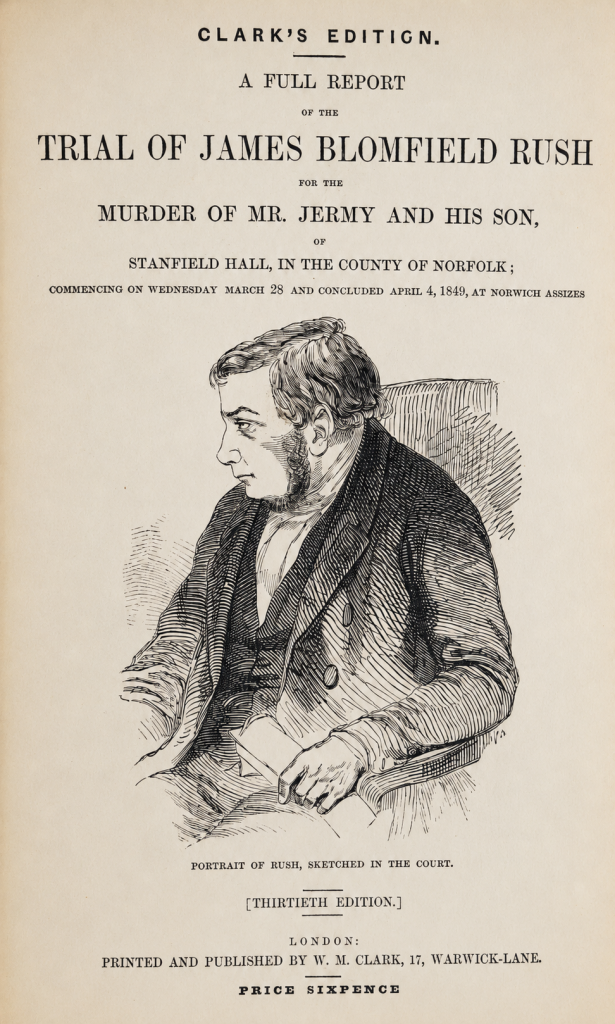
Rush farmed at several places, including Wood Dalling, Felmingham, and Potash Farm. His connection with Stanfield Hall began through the Preston and Jermy family, whose own title to the estate had a tangled history. Isaac Jermy had taken the Jermy name to strengthen his claim, and disputes over inheritance never quite disappeared from the background.
The fatal relationship was financial. Rush had borrowed from Isaac Jermy. Potash Farm, adjoining the Stanfield estate, became central to the trouble. According to the Norfolk Record Office account, Rush’s debt to Jermy eventually stood at £5,000, with repayment required by 30 November 1848.
The murders took place two days before that deadline.
A plan with paperwork
Rush’s plot was not simply to kill a creditor. It was to kill a creditor and make the crime appear to belong to the long-running quarrels over the Jermy estate. This was why the case fascinated Victorian readers. It had the ingredients of a sensational novel: disputed inheritance, forged documents, a country house, a disguised attacker, a mistress, a failed alibi, and a farmer who thought he was cleverer than everyone around him.
Emily Sandford, governess to Rush’s children and also his mistress, was expected to help him. She was to place him at home at the critical time. The plan depended on her. It also depended on the assumption that frightened witnesses would not recognise the intruder beneath his disguise.
Both assumptions failed.
Gunfire at Stanfield Hall
At about eight o’clock on 28 November 1848, Isaac Jermy left the drawing room and went towards the front door. There he was shot by a masked and cloaked man. His son, Isaac Jermy junior, came out after hearing the shot and was also shot. Mrs Jermy was wounded. A maid, Elizabeth Chestney, was shot too, but survived.
The killings were brutal, but they were not clean. Rush left evidence behind. Surviving witnesses saw enough to identify him. The disguise had hidden his face badly and his body not at all. The very theatricality of the scheme became part of its undoing.
The police went to Potash Farm and arrested him. Rush denied guilt, and would go on denying it, but the machinery of the case had begun to move against him.
Norwich turns out for the trial
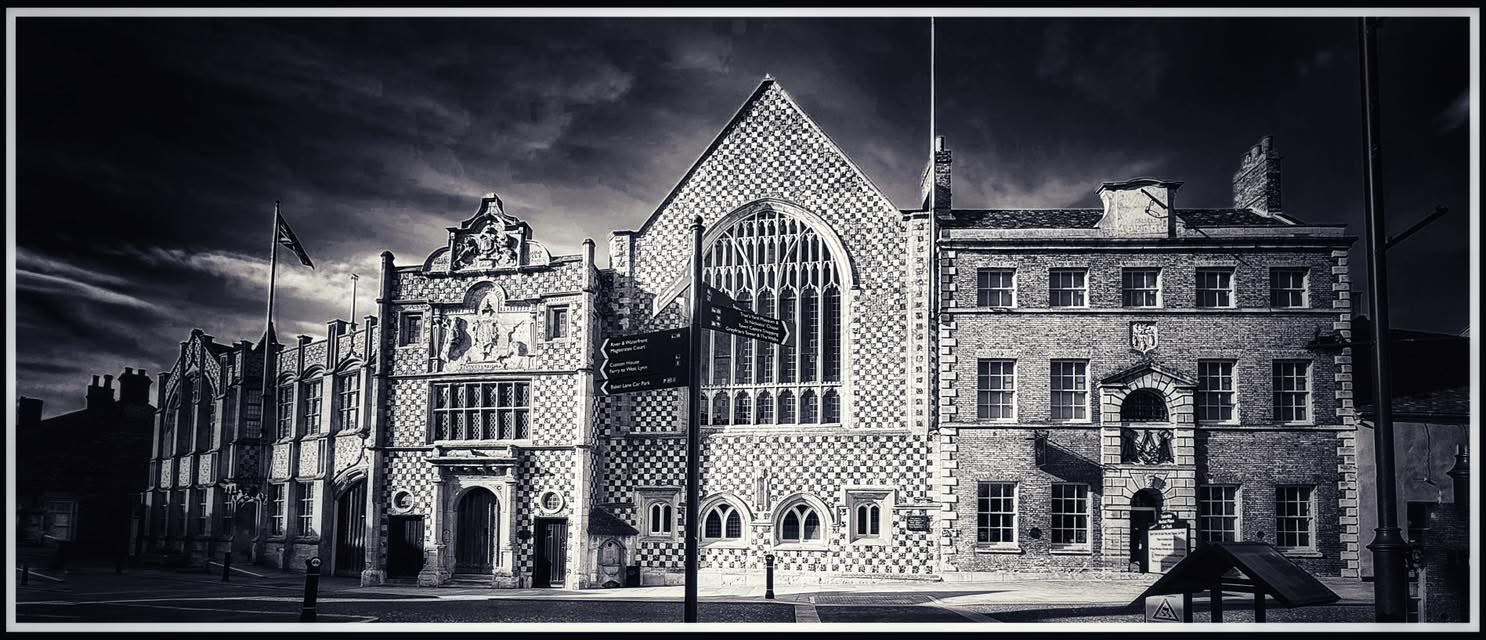
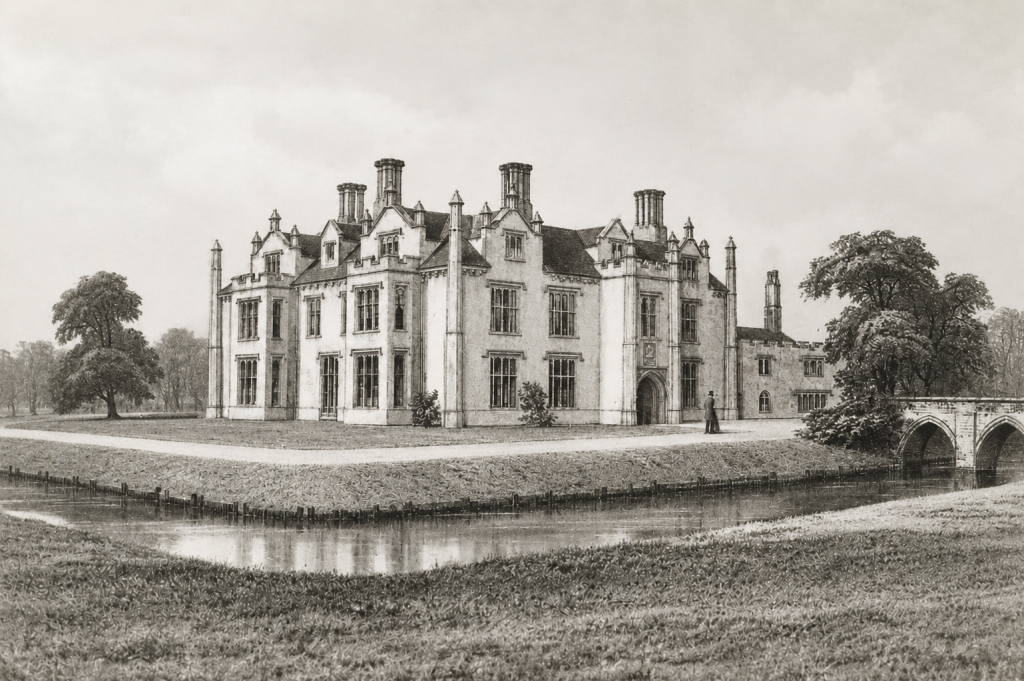
Rush’s trial began at Norwich Assizes on 28 March 1849 and ended on 4 April. The published trial report, issued as Clark’s edition, ran to eighty-eight pages and included portraits, illustrations, and a plan. The Wellcome Collection catalogue records it as the “Fiftieth edition,” which gives some sense of public appetite for the case.
The courtroom was packed. A Norfolk Record Office account, drawing on contemporary reports, describes people rushing for seats as soon as the doors opened. Police were needed to manage spectators and journalists. On a table before the judge were drawings and models of Stanfield Hall and Potash Farm. Rush entered dressed in black, apparently composed and well. He pleaded not guilty and conducted his own defence.
That self-defence gave the trial its peculiar drama. Rush was not stupid. He knew documents, leases, mortgages, and legal arguments. He had enough confidence to cross-examine witnesses and enough vanity to believe he might still talk his way out. Yet his cleverness could not erase the central facts: the debt, the timing, the disguise, the forged papers, the failed alibi, and the recognition evidence.
The jury found him guilty.
A hanging, a crowd, and a trade in murder
Rush was hanged at Norwich Castle on Saturday 21 April 1849. A contemporary pamphlet, now in the London Museum collection, describes the execution as watched by about 20,000 people.
The scene was part punishment, part theatre, part business. Norwich Castle’s execution material shows how the event was presented to the public, complete with images of the gallows and the crowd. The same source also preserves the blunt summary: Rush had been living at Potash Farm near Stanfield Hall, he had borrowed from Isaac Jermy, and Jermy’s demand for repayment came two days after the murders.
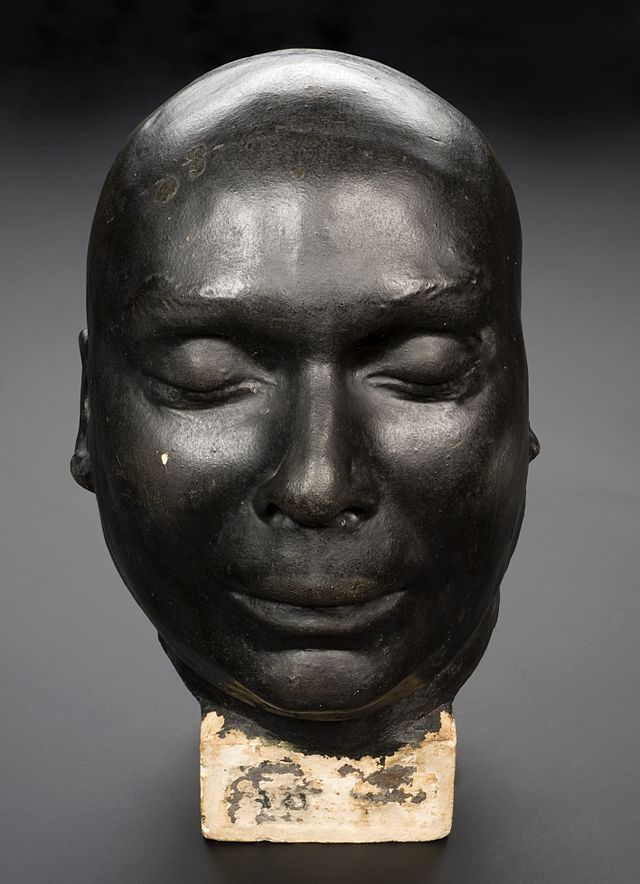
After his death, a death mask was taken. Norfolk Record Office notes that it is now associated with Norwich Castle Museum and that Rush was buried in an unmarked grave within the castle precinct, though the exact location is uncertain.
Why the story lasted
The Stanfield Hall murders became famous because they disturbed the Victorian idea of respectability. Rush was not outside society. He was inside it. He rented land, borrowed money, employed a governess, dealt with gentlemen, and understood the documents by which property passed from one hand to another.
That was the horror. He turned the ordinary tools of rural respectability, mortgages, agreements, signatures, and claims of title, into the machinery of murder.
The aftermath fed the public appetite. The London Museum pamphlet divided the story into life, murders, trial, and execution. Broadsheets circulated. Trial reports sold. Portraits and plans made the crime easy to imagine. Norfolk Record Office preserves a broadsheet relating to the case, and Clark’s trial report survives as one of the clearest printed records of the proceedings.
Rush tried to solve debt with gunfire and paperwork. He failed at both. What survived was not the estate he hoped to manipulate, but his own name: one of the darkest in Norfolk’s Victorian history.
© James Rye 2026
References
Clark, W. M., ed. A Full Report of the Trial of James Blomfield Rush for the Murder of Mr. Jermy and His Son, of Stanfield Hall, in the County of Norfolk: Commencing on Wednesday, March 28, and Concluded April 4, 1849, at Norwich Assizes. London: W. M. Clark, 1850. https://wellcomecollection.org/works/t5yyt42u
London Museum. “The Life, Trial and Execution of Rush, for the Murder of Mr Jermy and His Son.” Object ID 2002.76/50u. https://www.londonmuseum.org.uk/collections/v/object-718133/the-life-trial-and-execution-of-rush-for-the-murder-of-mr-jermy-and-his-son/
Nelson, Francesca. “The First Victorian Villain: The Murders at Stanfield Hall, Part 1.” Norfolk Record Office Blog, 11 June 2026. https://norfolkrecordofficeblog.org/2026/06/11/the-first-victorian-villain-the-murders-at-stanfield-hall-part-1/
Nelson, Francesca. “The First Victorian Villain: The Murders at Stanfield Hall, Part 2.” Norfolk Record Office Blog, 25 June 2026. https://norfolkrecordofficeblog.org/2026/06/25/the-first-victorian-villain-the-murders-at-stanfield-hall-part-2/
Norwich Castle Museum and Art Gallery. “The Execution of James Blomfield Rush on the Norwich Castle Gallows: Saturday, 21st April, 1849.” PDF. https://www.norwichcastle.norfolk.gov.uk/media/14601/download/pdf/james-blomfield-rushs-execution-report.pdf