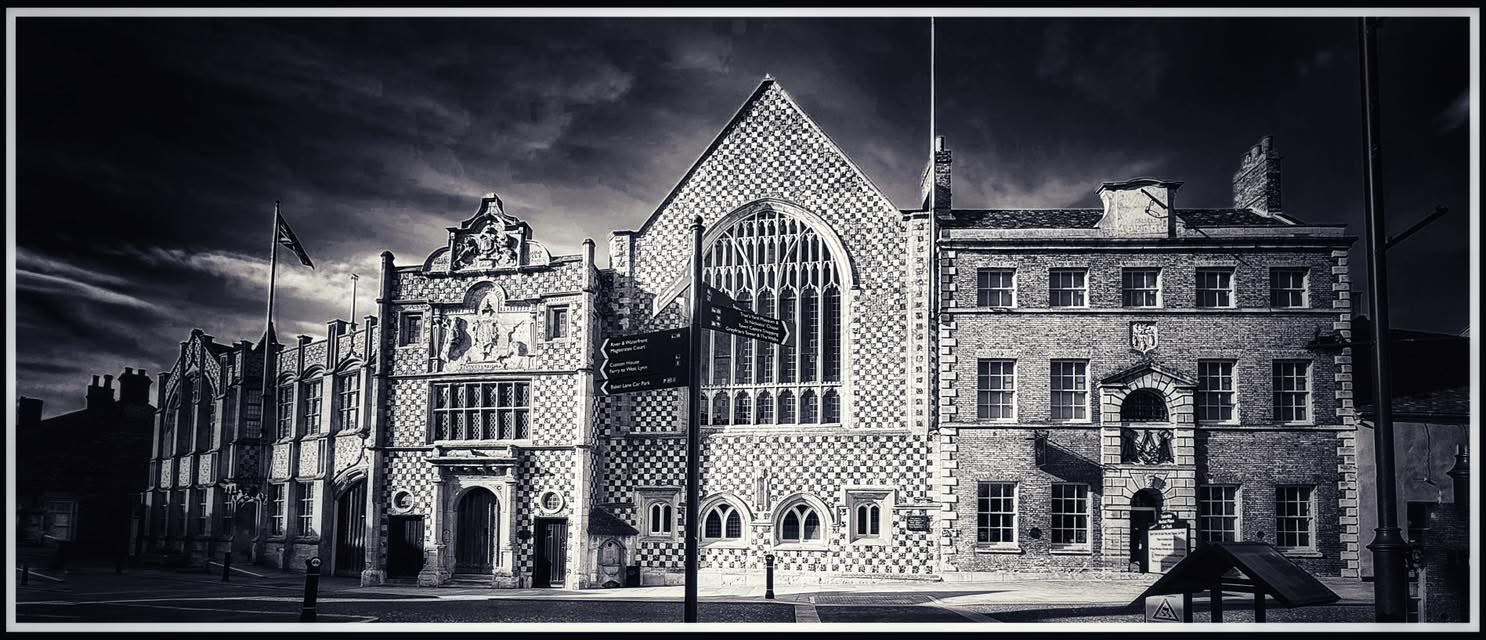
In May 1205, the monks of Norwich gave up a town.
That sounds dramatic, but the truth is more interesting. The monks did not abandon St Margaret’s. They did not surrender their spiritual income in Lynn, and they did not disappear from the town’s religious life. What they gave up were the profitable lay rights they held in the old burgh: fairs, market income, tolls, rents, legal profits, salt-pits, and urban property.
In return, they received substantial compensation. John de Gray, Bishop of Norwich, gave them the manors of Sechford and Great Cressingham, and confirmed valuable church income from St Margaret’s, St Nicholas, St James, Mintlyn, and Gaywood. The agreement was therefore not a simple seizure. It was a major exchange of power, property, and income.
The key date is 17 May 1205. That was when John de Gray made the decisive settlement with the Prior and monks of Norwich. King John confirmed the arrangement on 10 June 1205. The royal borough charter of 14 September 1204 had already given Lynn a stronger civic framework. The 1205 exchange then helped bring the old monastic burgh and the bishop’s newer northern development under one dominant lay lordship.
Two Lynns, but not quite the ones we imagine
The story is often misunderstood because “Old Lynn” and “New Lynn” can mean different things.
This agreement was not mainly about joining King’s Lynn to West Lynn across the river. The division that mattered lay inside the east-bank town. The older settlement was the burgh around St Margaret’s. The newer settlement was the bishop’s Newland to the north, formed from reclaimed ground and associated especially with St Nicholas.
Herbert de Losinga, Bishop of Norwich, had founded St Margaret’s in the early twelfth century. The old southern burgh was given to the Benedictine monks of Norwich, whose Lynn cell was attached to St Margaret’s. A cell was a dependent religious house, not an independent abbey. Later, Bishop William Turbe enclosed new land to the north. This was the “New Londe”, where St Nicholas stood as a chapel of ease, meaning a secondary chapel serving people who lived too far, or too inconveniently, from the mother church.
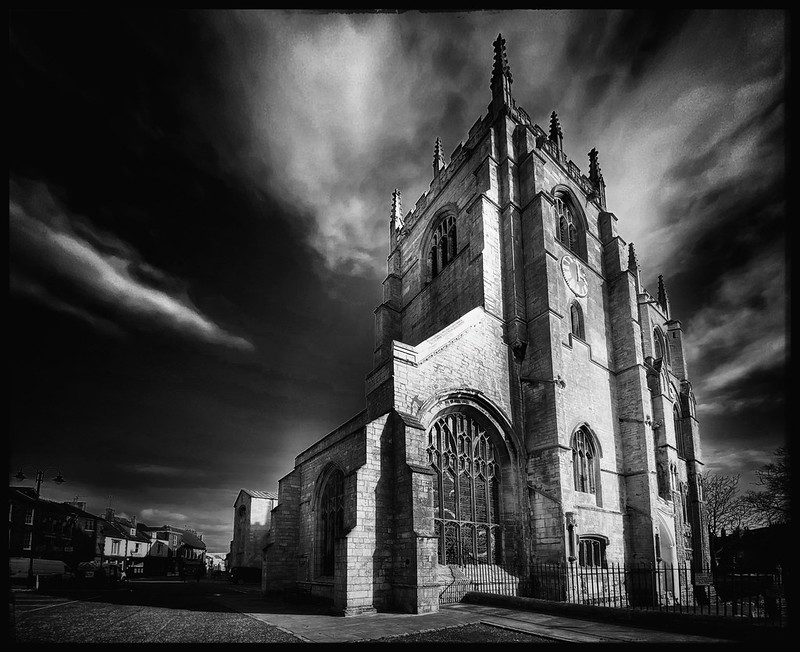
Photo © James Rye 2023
Hillen quotes the Latin description of this new site:
in fundo nostro de Lenna, in nova terra nostra quam de novo providimus habitandam
A plain translation is:
“on our ground at Lynn, in our new land, which we have newly provided for settlement.”
That sentence matters. It shows that the Newland was the bishop’s ground. St Nicholas might be linked religiously to St Margaret’s, but it stood outside the monks’ old soke. A soke was an area of jurisdiction: the district over which a lord, monastery, or other authority held legal and financial rights. (Internet Archive)
By 1200, Lynn was a growing port with a divided legal geography. The monks had important rights around St Margaret’s. The bishop controlled the newer northern land. Both interests could claim income from a town whose trade was becoming too valuable to leave divided.
The charter that made Lynn a free borough
John de Gray was no ordinary bishop. He was close to King John, politically active, and determined to strengthen episcopal control in Lynn.
King John’s great charter to Lynn was issued at Ludgershall on 14 September 1204. Mackerell printed the Latin from what he described as the original charter, “still very fair and legible”. Its most famous words declared:
Burgus de Lenna sit liber Burgus in perpetuum
That means:
“the borough of Lynn shall be a free borough for ever.”
The charter also granted the burgesses a merchant guild, a recognised association of traders with corporate privileges:
Concessimus etiam eis Gildam Mercatoriam
“We have also granted them a merchant guild.”
This was a major step in Lynn’s development. It gave the burgesses a stronger civic and commercial identity. Yet the charter did not make Lynn independent of lordship. It protected the existing rights of the Bishop of Norwich and the Earl of Arundel. Lynn became a free borough, but not a self-governing republic.
John de Gray’s own charter made the model clearer. Lynn was to enjoy the liberties of Oxford. Mackerell gives the Latin as:
Ville nostre de Len, scilicet toti Parochie Ecclesie Sancte Margarete… omnes et easdem Libertates quas habent Burgenses de Oxeneford.
In translation:
“to our town of Lynn, namely the whole parish of the church of St Margaret… all and the same liberties which the burgesses of Oxford have.”
Again, the bishop saved his own rights. Liberties were being granted, but authority was not being handed away.
What changed hands in 1205?
The crucial agreement followed on 17 May 1205. It is best understood as a transfer of the monks’ lay rights to the bishop, balanced by compensation in land and church income.
| The Norwich monks gave up to the bishop | The Norwich monks received, retained, or had confirmed |
|---|---|
| Fairs at Lynn and Gaywood | The bishop’s manors of Sechford and Great Cressingham |
| The Saturday market at Lynn | Lands and appurtenances belonging to those manors |
| Rents and tolls in the borough | Spiritualities from St Margaret’s, St Nicholas, St James, and Mintlyn |
| Pleas and profits from their lay fee | Tithes from the bishop’s demesne lands at Gaywood |
| Salt-pits and associated tolls | Oblations and obventions from Lynn’s churches and chapels |
| Urban property, including messuages near St Nicholas and Purfleet Bridge | Continuing religious income, though under the bishop’s wider authority |
In this context, appurtenances means the rights and property that naturally went with a manor, such as buildings, lands, rents, services, woods, mills, courts, or other attached benefits. Spiritualities were church revenues belonging to a religious house in its spiritual capacity, especially income from parish churches, chapels, tithes, and offerings. Oblationswere offerings made by worshippers, often at services, festivals, burials, or other religious occasions. Obventions was a broader term for occasional church income: customary payments, fees, offerings, and other profits that arose from religious duties. Demesne land was land kept directly in the lord’s own hands, rather than held by tenants; so tithes from the bishop’s demesne at Gaywood meant church payments arising from land the bishop personally controlled.
A lay fee was secular or manorial property, as distinct from church income. Pleas and profits were income from legal rights and court business. A messuage was a house plot, usually including the dwelling and its adjoining land.
The monks’ losses were therefore very real. They gave up the market-town profits of Lynn: the fairs, tolls, rents, courts, salt-pits, and pieces of urban property that generated income from a busy port.
But the compensation was also real. Sechford and Great Cressingham were not trifles. Nor were the spiritual revenues from Lynn and nearby churches. Spiritualities meant income belonging to a church in its spiritual capacity. Tithes were the tenth-part payments due to the church. Oblations were offerings. Obventions were other customary ecclesiastical profits, often connected with rites, services, and church dues. Demesne land meant land kept in the lord’s own hands, rather than granted out to tenants.
The bishop also reserved important control. The priory was to provide chaplains, but those chaplains were subject to his approval and dismissal. He also retained the right to create further churches in the parishes, although Hillen says future profits from such churches were conceded to the priory. In short, the monks gained income, but the bishop kept authority.
A bargain, not a burglary
Hillen placed this episode under the heading “Exchange, no robbery”. That is a useful warning.
John de Gray was certainly strengthening his grip on Lynn. He recovered the old burgh’s lay rights from the Norwich monks and made the name “Bishop’s Lynn” more than a convenient label. After 1205, the bishop was much more clearly the dominant lord of the town.
Yet the monks did not simply lose Lynn. They lost one kind of Lynn: the secular, profitable Lynn of markets, fairs, rents, tolls, legal claims, salt-pits, and town property. They retained, and in some ways strengthened, another kind of Lynn: the ecclesiastical Lynn of tithes, offerings, chapels, parish income, and spiritual dues.
This is why the word “uniting” needs care. John de Gray did not suddenly join two separate towns across the Great Ouse. He brought the old monastic burgh around St Margaret’s and the bishop’s Newland into a firmer episcopal framework. The town’s civic liberties were strengthened in 1204. Its divided lay lordship was largely reorganised in 1205.
When did Lynn become one town?
The answer depends on what we mean by “one town”.
If we mean the grant of borough liberties, the key date is 14 September 1204, when King John confirmed Lynn as a free borough. If we mean the legal and financial bringing together of the old monastic burgh and the bishop’s Newland, the decisive date is 17 May 1205, confirmed by the king on 10 June 1205.
The cleanest summary is this: Lynn became a free borough in 1204, and John de Gray made himself the dominant lay lord of the combined borough in 1205.
That may sound less romantic than saying that he “united Old Lynn and New Lynn”, but it is more accurate. The story is not about two villages suddenly becoming one. It is about a port whose growth had outpaced its old legal arrangements. By 1205, the bishop, the monks, and the king had all recognised that Lynn needed a new order. The bishop gained control of the town’s lay profits. The monks received manors and church income. The burgesses gained the liberties of a free borough, but within a town still shaped by powerful lords.
The result was Bishop’s Lynn: not yet the later royal borough of King’s Lynn, but already a confident medieval port with a sharper civic identity and a much clearer lordship.
© James Rye 2026
Book a Walk with a Trained and Qualified King’s Lynn Guide
References
Blomefield, Francis. “Hundred of South Greenhoe: Great-Cressingham.” In An Essay Towards a Topographical History of the County of Norfolk, Volume 6. London, 1807. British History Online. https://www.british-history.ac.uk/topographical-hist-norfolk/vol6/pp94-107
Hillen, Henry J. History of the Borough of King’s Lynn, Volume I. King’s Lynn: East of England Newspaper Company, 1907. https://archive.org/stream/historyofborough01hill/historyofborough01hill_djvu.txt
Mackerell, Benjamin. The History and Antiquities of the Flourishing Corporation of King’s-Lynn in the County of Norfolk. London, 1738. https://archive.org/stream/historyandantiq00mackgoog/historyandantiq00mackgoog_djvu.txt
Norfolk Record Office. “One of King’s Lynn Borough Archives’ Earliest Documents: The Charter of King John to the Burgesses of Lynn, 14 September 1204.” Norfolk Record Office Blog, 21 October 2016. https://norfolkrecordofficeblog.org/2016/10/21/one-of-kings-lynn-borough-archives-earliest-documents-the-charter-of-king-john-to-the-burgesses-of-lynn-14-september-1204/