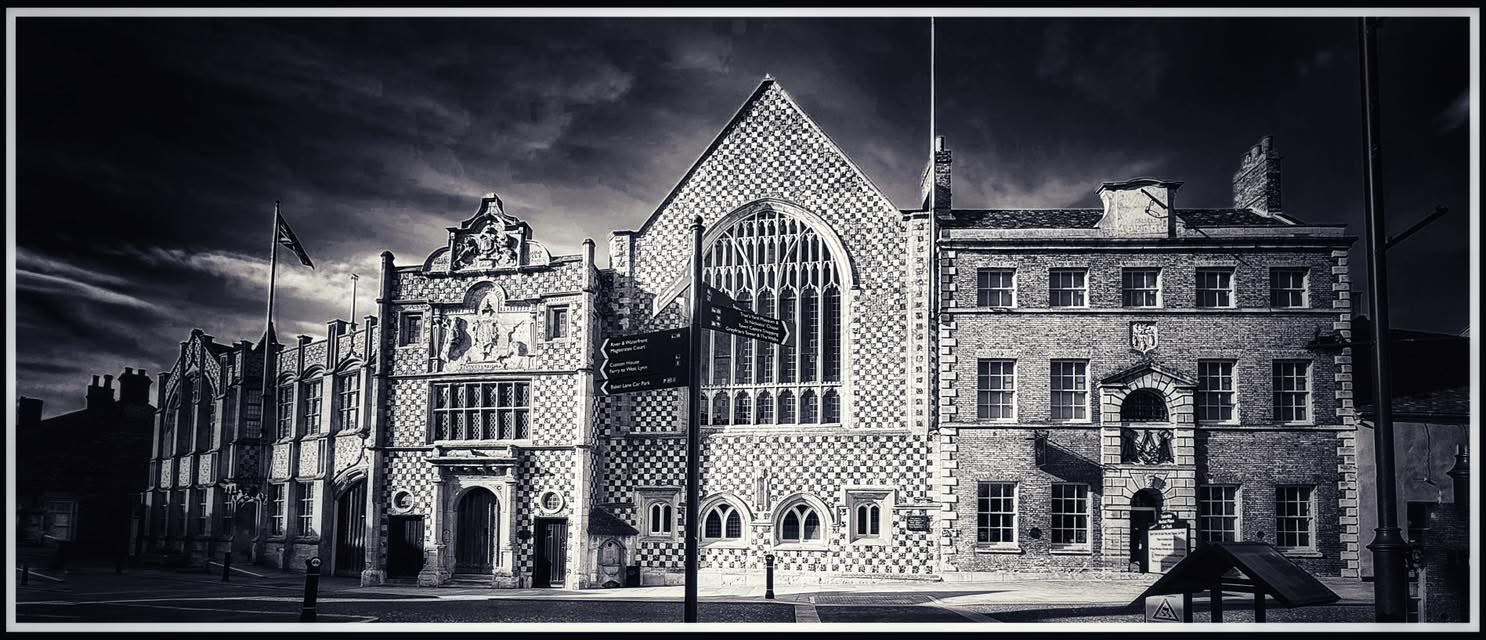
King’s Lynn has never been a town of quiet religious uniformity. Behind the great parish church, beyond the formal world of bishops and parish order, there ran another tradition: dissenting, often argumentative, sometimes burdened by debt, yet surprisingly durable. The history of Baptists in Lynn belongs to that world. It is not the tidy story of one congregation moving smoothly from one building to the next. It is a story of several related Baptist strands, with overlaps, splits, and fresh starts.
The first Baptist foothold
The Baptist presence in King’s Lynn can be traced back to the later 1680s, though the exact year is not perfectly fixed. Henry J. Hillen, drawing on earlier material, linked the beginnings of the Lynn cause to Thomas Grantham and preserved a statement that there had been a Baptist church in the town “about the time of the Revolution”. He also described Grantham as founder of the local church of believers baptised. That makes the late 1680s the safest starting point, without claiming a precision the evidence does not quite support.
The early congregation was vulnerable. Hillen records proceedings against James Martham in 1690, when fines were imposed because the house in which the Baptists met was treated as illegal, with penalties laid on both preacher and hearers. Early Baptist life in Lynn was therefore real, but insecure. It survived in a climate where dissent could still attract prosecution.
Broad Street and William Richards
By the eighteenth century the Baptist presence had become more settled, and Broad Street emerged as one of its main centres. The Norfolk Record Office lists nonconformist registers for the Particular Baptists of Broad Street, Stepney Chapel, and Blackfriars Road, which is strong evidence for an established congregational life rather than a passing conventicle.
The best-known figure in this phase was William Richards, who came to Lynn in 1776. Under his ministry and that of his successors, the congregation became strong enough for the old meeting-house to be replaced by a larger Broad Street chapel in 1808, built at a cost of £1,269 8s., though with substantial debt remaining. Richards later wrote his two-volume History of Lynn, which gives the Baptist story an unusual place in the town’s historical memory: one of Lynn’s classic historians emerged directly from its dissenting culture.
One point needs careful handling. The records do not support a simple, uninterrupted institutional line from the first Baptist cause in the 1680s to every later Baptist body in the town. What they show instead is a long Baptist presence in Lynn, made up of several related congregations and traditions. That is a more accurate way to tell the story.
Salem Chapel and doctrinal division
Baptist Lynn was never free of internal dispute. Hillen’s account shows that theological tensions at the opening of the nineteenth century led to the erection of Salem Chapel in Norfolk Street in 1811. He linked the episode with William Richards and noted that the word “Unitarians” was added to the chapel inscription at a later date. Salem therefore belongs in the Baptist story, but not as just another chapel in a neat sequence. It was a schismatic offshoot that later moved in a more explicitly Unitarian direction.
That matters because it warns against over-simple labels. “Baptist” in King’s Lynn did not always refer to one fixed theological position. The town saw changing alignments, doctrinal tension, and real division. The history is more complicated, and more interesting, than a straightforward chapel chronology suggests.
Stepney Chapel and Victorian confidence
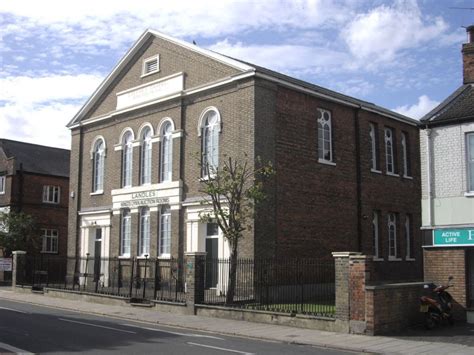
Image BritishListedBuildings
A major new stage began in 1841 with Stepney Chapel in Blackfriars Street. Historic England describes it as a Baptist church built in 1841 for the Rev. J. T. Wigner, who had attended Stepney College. Hillen adds that the move followed debt and legal difficulty at Broad Street, and that the new chapel was intended to stand in a more prominent position.
The site also carried older religious associations. Hillen wrote that the chapel stood on ground linked with the medieval Blackfriars, and described the place as “sacred ground”. That should be treated as topographical and historical context rather than as evidence of any grand symbolic intention by the Baptists. Still, it is a reminder that in King’s Lynn one religious landscape often sits directly upon another.
When Spurgeon came to Lynn
One of the most striking episodes in Baptist Lynn came on 24 June 1857, when C. H. Spurgeon preached two sermons in the Corn Exchange in aid of repairs to the Baptist chapel. Hillen records that 2,600 tickets were issued and that the collections amounted to £110 15s. Whatever one thinks of Victorian revivalism, this was plainly a major public event. It shows that the Lynn Baptists could draw the most famous Baptist preacher in Britain into the civic heart of the town and fill the Corn Exchange in support of their cause.
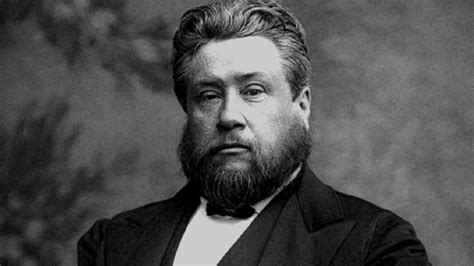
Image Leadmin
The Union Baptists and Market Street
Alongside the Broad Street and Stepney tradition there was another Baptist strand in Lynn: the Union Baptists. This should not be treated as merely the same congregation under a new name. Hillen traced its origins to disaffection among both Baptists and Congregationalists in the mid-1850s, while Historic England identifies the former Union Baptist Chapel in Market Street, now Lynn Museum, as a chapel built in 1859 by Robert Moffat Smith, with schoolrooms added in 1867 and conversion to museum use in 1904.
That distinction matters. The archival evidence separates the Particular Baptist records of Broad Street, Stepney Chapel and Blackfriars Road from Union Baptist material. The Lynn Baptist story was therefore plural rather than singular. There were related traditions, not one seamless body.
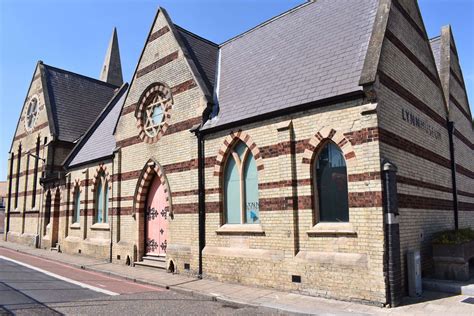
Image LynnNews
Wisbech Road and the modern church
The Union Baptist congregation later moved to Wisbech Road. The King’s Lynn Civic Society notes that the church there was originally Union Chapel and was built in 1900 to replace the former Union Baptist Chapel, now Lynn Museum. Norfolk Heritage Explorer gives the same broad account, stating that the Wisbech Road chapel opened in July 1900 and replaced the earlier Union Baptist Chapel.
The present congregation still meets on Wisbech Road. Cornerstone King’s Lynn Baptist Church gives its location as Wisbech Road, King’s Lynn, PE30 5JS. That does not prove an unbroken line back to every earlier Baptist group in the town, but it does show that Baptist worship remains a living part of Lynn’s religious landscape.
© James Rye 2026
Book a Guided Tour with a Trained and Qualified King’s Lynn Guide Through Historic Lynn
References
- Cornerstone King’s Lynn Baptist Church. “Where.” Accessed 4 July 2026. https://klbc.org.uk/where/
- Hillen, Henry J. History of the Borough of King’s Lynn. Vol. 2. Norwich: East of England Newspaper Co., 1907. Internet Archive edition. https://archive.org/stream/historyofborough02hill/historyofborough02hill_djvu.txt
- Historic England. “Stepney Chapel, Blackfriars Street, King’s Lynn.” National Heritage List for England. Accessed 4 July 2026. https://historicengland.org.uk/listing/the-list/list-entry/1298167
- Historic England. “The Lynn Museum (Formerly the Union Baptist Chapel), Market Street, King’s Lynn.” National Heritage List for England. Accessed 4 July 2026. https://historicengland.org.uk/listing/the-list/list-entry/1382343
- King’s Lynn Civic Society. “Wisbech Road (south) Baptist Church.” Accessed 4 July 2026. https://www.kingslynncivicsociety.co.uk/local_list/wisbech-road-south-baptist-church/
- Norfolk Record Office. “Family History Sources for King’s Lynn.” Accessed 4 July 2026. https://www.archives.norfolk.gov.uk/article/31103/Family-history-sources-for-Kings-Lynn
- Norfolk Record Office. Free Church Registers and Related Records in the Norfolk Record Office. Accessed 4 July 2026. https://www.archives.norfolk.gov.uk/media/14765/Free-Church-Registers/pdf/80free-church-registers.pdf