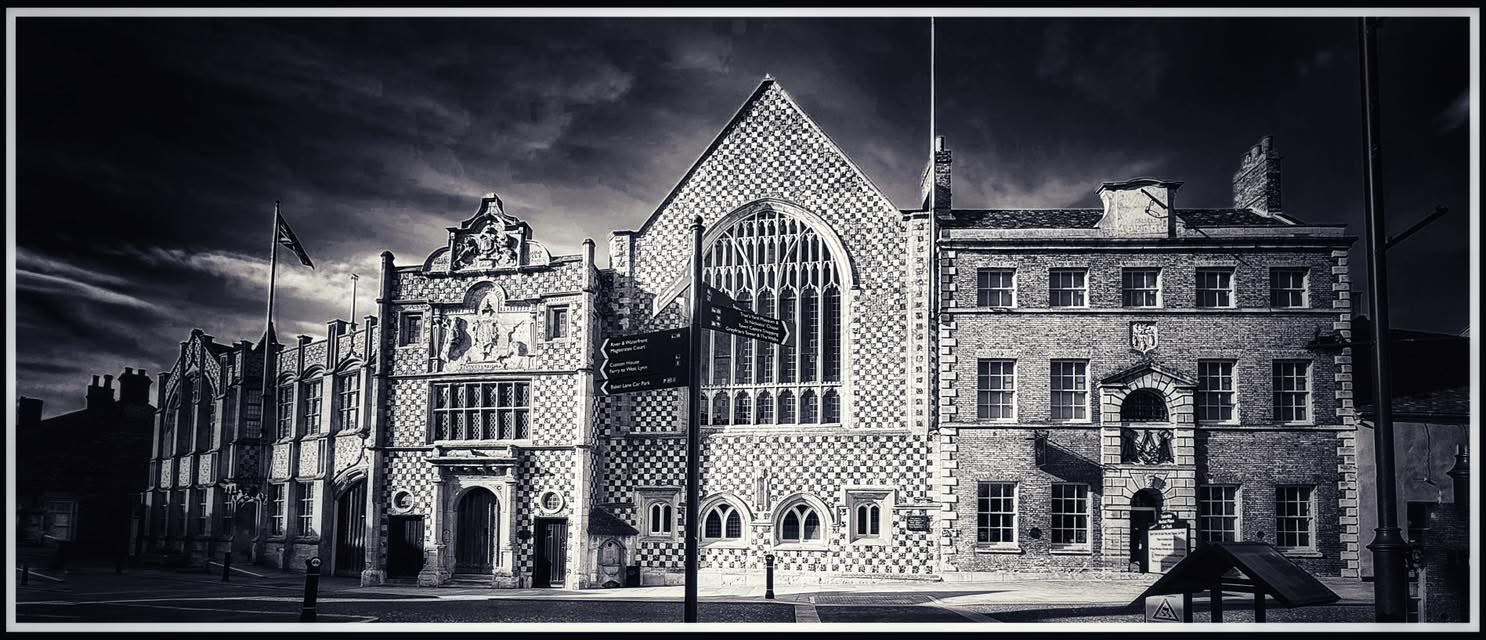
King’s Lynn’s Hanseatic past is often reduced to one striking survival: the Hanseatic warehouse by the river. That building matters, but it is only the visible remnant of a much larger story. The Hanseatic League was one of the great commercial networks of medieval northern Europe, and its relationship with England in the fifteenth century was never simple. English kings wanted the trade, the customs, and the access to Baltic goods. English merchants, on the other hand, often resented Hanseatic privileges. Out of that mixture of dependence and irritation came treaties, quarrels, seizures at sea, and finally a settlement that left its mark on Lynn itself. The town’s Hanseatic links were not ornamental. They were part of the way Lynn made its living and part of the reason it mattered internationally.
What the Hanseatic League actually was
The Hanseatic League was not a kingdom, and it was not a modern nation-state. It was a federation of merchant communities and trading towns, especially in the Baltic and North Sea regions, organised to protect and advance trade. The word Hanse came from a medieval German term meaning something like a guild or association. In practice, the Hanse brought together merchants, councils, privileges, depots, shipping interests, and diplomatic pressure into one remarkably durable commercial system.
Its roots lay in the commercial revival of northern Europe after the Viking age. German merchants and towns expanded northward and eastward, building up networks that linked ports and river routes from the Low Countries to the Baltic. The Hanse eventually stretched across a wide zone from places such as Cologne and Kampen to Tallinn, formerly Reval. It established trading centres abroad and defended mercantile interests with an energy that could shade into intimidation or piracy when required. The league did not merely trade. It also tried to make trade safer and more predictable by supporting things like pilots, markers, and coordinated protection for merchants and shipping.
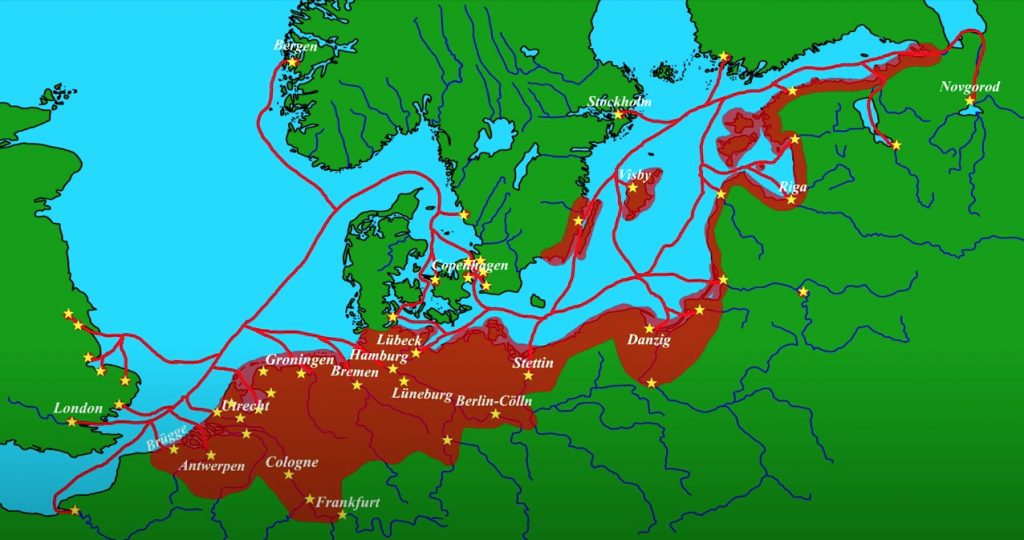
That helps explain why the Hanse became so important. It was not simply a list of towns. It was a system that connected warehouses, legal rights, cargoes, money, political leverage, and, when necessary, collective retaliation.
Why English kings dealt with the Hanse at all
From the point of view of the English Crown, the Hanse was both useful and exasperating. It was useful because Hanse merchants linked England to northern markets and to the wider world of Baltic and North Sea commerce. They helped move English goods abroad and brought valuable imports into English ports. At the same time, they enjoyed privileges in England that English merchants did not always enjoy in return overseas. That imbalance created a long history of complaint.
The legal basis of Hanseatic privileges in England had been built up over centuries and was already substantial by the early fourteenth century. Later negotiations were often less about creating new rights than about defending, interpreting, extending, or limiting old ones under changing economic conditions. English governments could not ignore Hanseatic commerce, but neither could they ignore the pressure of home-grown merchants who disliked seeing foreigners trade on better terms.
By the fifteenth century this tension had sharpened. England’s commercial ambitions were rising, especially in the cloth trade, and English merchants wanted greater access to northern markets. The Hanse, for its part, was determined to preserve its established position in England. Both sides complained of seizures, reprisals, and unfair dealing. What the Crown wanted was peace, revenue, and orderly trade. What English merchants often wanted was a reduction in Hanseatic advantage. These aims did not always sit comfortably together.
The fifteenth century: friendship turning into conflict
The fifteenth century is especially important because the relationship moved from uneasy coexistence to open conflict and then to a settlement that favoured the Hanse. The disputes of the 1460s were serious. English hostility to Hanseatic privilege was growing, and the crisis of 1468 helped push matters further. The result was the Anglo-Hanseatic War of 1469 to 1474, a conflict fought largely through commerce-raiding and maritime pressure rather than grand set-piece battles.
The outcome mattered greatly. The Treaty of Utrecht of 1474 restored and confirmed Hanseatic privileges in England. It also secured Hanseatic rights connected with London and with provincial ports including Lynn and Boston. Contemporary and later scholarship alike treat the treaty as a diplomatic success for the Hanse and, from the English mercantile point of view, a frustrating settlement. Edward IV accepted it because peace and resumed trade were worth the price, even if many English merchants would have preferred something else.
So the English Crown’s relationship with the Hanse in the fifteenth century was never one of straightforward favour. It was a practical relationship. Kings bargained with the Hanse because the Hanse mattered. They also had to manage the resentment that Hanseatic privilege provoked at home. In that sense the Crown stood between two pressures: the economic reality of international trade and the political reality of domestic complaint.
Why King’s Lynn fitted naturally into the Hanse world
King’s Lynn was exceptionally well placed to benefit from northern trade. Its position on the Wash, with access to inland routes and an outward-facing maritime outlook, made it one of the chief east-coast ports of medieval England. The town’s prosperity rested on the movement of goods, and the Hanseatic world was one of the systems through which those goods moved.
Lynn’s links with Hanse merchants are older than the warehouse that survives today. German merchants had secured trading privileges at Lynn by 1271, and these were confirmed in 1310. This is a useful reminder that the Hanseatic presence in the town did not begin in the late fifteenth century. The famous buildings came later. The commercial connection was already much older.
The town’s role made sense economically. Hanseatic ships and merchants brought in products that England needed and that the Baltic region supplied in abundance. Timber, wax, iron, pitch and fish were among the kinds of goods associated with this trade, while English exports moving out through ports like Lynn included wool, cloth, skins, and lead. Such a pattern reveals Lynn as part of a larger northern economy rather than as a self-contained local market town with a harbour attached.
Lynn, the Crown, and the settlement of 1474
The fifteenth-century settlement between England and the Hanse had a direct local consequence in Lynn. After the Treaty of Utrecht, the English king granted the Hanse a quay and tenements in the town. What is especially striking is where this site lay: within the town walls, next to the Saturday Market Place, opposite St Margaret’s Church. This was not a token concession on the edge of nowhere. It was a valuable and visible place inside the urban core.
The location alone says a great deal about Lynn’s importance and about the status of the concession. The Hanse were not merely allowed to anchor offshore or trade under sufferance. They were given a recognised base in one of England’s leading ports.
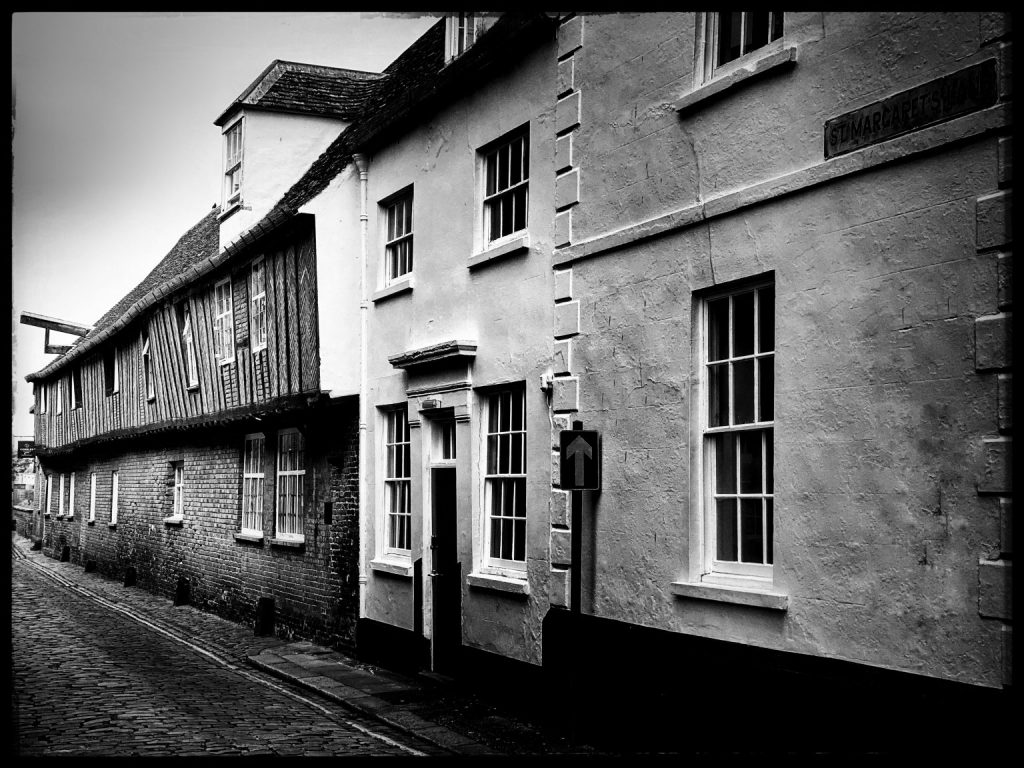
Photo © James Rye 2021
There is also an intriguing local political dimension. In 1473 to 1474 Thomas Thoresby was one of the four town merchants designated to act as intermediaries in discussions relating to Lynn during the negotiations that led to the peace settlement. Even allowing for the caution historians should bring to local interpretation, that detail suggests that Lynn’s merchant community was not passively waiting to see what kings and foreign traders decided. Local merchants were engaged because the outcome mattered directly to the town.
The Hanseatic warehouse and what it meant
The surviving Hanseatic warehouse at Lynn is often described, rightly, as the only surviving Hanseatic business headquarters or steelyard in England. The licence to build on the site dates from about 1474, and the original complex is thought to have included two Hanseatic warehouses built around 1480, together with a street range on the market side. Around 1500, about forty German merchants were based in King’s Lynn, and forest products and other Baltic goods were probably stored there.
This matters for more than architectural reasons. A warehouse is evidence of a working trade system. It implies storage, accounting, oversight, negotiation, loading and unloading, and repeated commercial contact. It tells us that Lynn was not merely one stop among many, but a recognised node in a larger Hanseatic network. The building gives physical form to a set of privileges and relationships that might otherwise seem abstract.
It also gave the Hanse a public presence in the town. Foreign merchants with special rights were not invisible. They were part of the urban landscape, part of waterfront activity, and part of the rhythm of daily business. That presence could bring prosperity, but it could also sharpen local awareness of competition and privilege.
Prosperity and resentment in the same place
There is no reason to imagine that Lynn’s townsmen responded to the Hanse in a single, uncomplicated way. Hanseatic trade brought goods, traffic, and status. It helped bind the town into northern Europe and sustain the port’s importance. Yet the very privileges that made the Hanse attractive trading partners to kings could make them awkward neighbours to English merchants.
This double-edged quality is central to understanding the subject. The Hanse did not simply enrich English ports. It also challenged them. Hanse merchants had collective strength, international connections, and legal protections. Local merchants had to reckon with all three. In Lynn, as in London and elsewhere, economic opportunity and commercial resentment could exist side by side.
That tension may be one reason the Hanseatic story has such historical interest. It is not merely a tale of successful trade. It is a story about who had the right to trade, on what terms, under whose protection, and at whose expense.
Why the Hanse still matters in King’s Lynn
King’s Lynn’s Hanseatic story still matters because it reveals the town in its proper scale. Medieval Lynn was not a remote Norfolk backwater. It was a port tied into the political economy of northern Europe. Its merchants, quays, storehouses, and churches stood within a world shaped by Baltic goods, North Sea routes, diplomatic bargaining, and international competition.
The Hanseatic warehouse survives because the relationship was real and substantial. The Treaty of Utrecht mattered because it altered the local urban landscape. The older trading privileges matter because they show that Lynn’s links with the Hanse ran back well before the famous late medieval buildings. And the Crown’s uneasy dealings with the Hanse matter because they remind us that ports such as Lynn were places where international politics became local fact.
In the end, the Hanseatic League influenced King’s Lynn in three principal ways. It connected the town to a wide northern trading system. It helped shape what moved through the port. And, after the fifteenth-century settlement with Edward IV, it left behind a physical presence in the town that still signals Lynn’s place in the commerce of medieval Europe. That is why the Hanse in King’s Lynn is more than a picturesque curiosity. It is one of the clearest signs that the town once stood at the crossroads of a much bigger world.
© James Rye 2026
References
- Beard, Christine M. “The German Hansa and King Richard II of England.” Undergraduate honours thesis extract, University of New Hampshire, 2017. https://scholars.unh.edu/cgi/viewcontent.cgi?article=1361&context=honors
- “England and the German Hanse, 1157–1611.” Cambridge University Press sample material. Accessed March 17, 2026. https://assets.cambridge.org/97805214/04426/sample/9780521404426ws.pdf
- “Hanseatic city of King’s Lynn.” Die Hanse. Accessed March 17, 2026. https://www.hanse.org/en/hanse/kings-lynn
- “History.” Hanse House, King’s Lynn. Accessed March 17, 2026. https://www.hansehouse.co.uk/history/
- “King’s Lynn Tourism.” Die Hanse. Accessed March 17, 2026. https://www.hanse.org/en/tourist/kings-lynn
- Lilienfeld, Alexander. “City of London v. Strangers: The Fall of the Hanse in England.” Eras 24, no. 1. Accessed March 17, 2026. https://www.monash.edu/__data/assets/pdf_file/0018/3341025/Eras-Edition-24%2C-no.1-Lilienfeld-3.pdf
- Lloyd, T. H. England and the German Hanse, 1157–1611: A Study of Their Trade and Commercial Diplomacy. Cambridge: Cambridge University Press, 1991.
- Norfolk Record Office. “King’s Lynn’s Trading Links with Europe: King’s Lynn and the Hansa.” July 15, 2020. https://norfolkrecordofficeblog.org/2020/07/15/kings-lynns-trading-links-with-europe-kings-lynn-and-the-hansa/
- Rye, James. “Hanseatic League and King’s Lynn (1 of 3): Why Is There a Hanseatic Steelyard in King’s Lynn?” Circato, June 21, 2021. https://circato.co.uk/hanseatic-league-and-kings-lynn-1-of-3
- Rye, James. “Hanseatic League and King’s Lynn (2 of 3): What Was the Hanseatic League?” Circato, July 5, 2021. https://circato.co.uk/hanseatic-league-and-kings-lynn-2-of-3
- Rye, James. “Hanseatic League and King’s Lynn (3 of 3): What Happened to the Hanseatic Buildings in Lynn after the 1474 Peace Settlement?” Circato, July 15, 2021. https://circato.co.uk/hanseatic-league-and-kings-lynn-3-of-3
- “Treaty of Utrecht (1474).” Summary page consulted for orientation only. Accessed March 17, 2026. https://en.wikipedia.org/wiki/Treaty_of_Utrecht_%281474%29
- “Visit West Norfolk: Hanseatic King’s Lynn.” Accessed March 17, 2026. https://www.visitwestnorfolk.com/destinations/kings-lynn/history/hanseatic/
- “What was the Hanseatic League?” Encyclopaedia Britannica. Accessed March 17, 2026. https://www.britannica.com/topic/Hanseatic-League