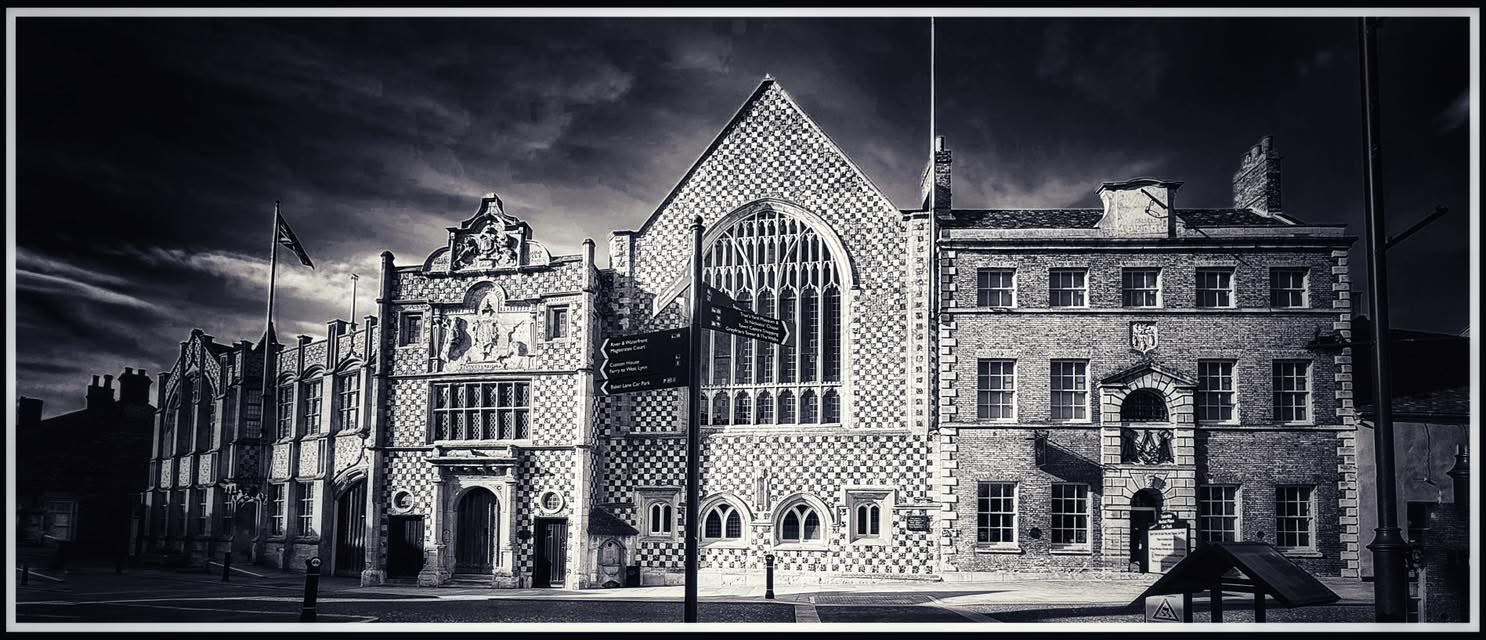
In July 1659, women from King’s Lynn and the surrounding countryside added their names to a national protest carrying an unusually blunt warning. Parliament had been chosen to remove oppression, they declared. If it refused to act justly, “God will overturn you by it.”
Their names appeared in a printed collection containing those of 7,746 women. Its lengthy title described them as the “Hand-Maids and Daughters of the Lord” who witnessed against the oppression of tithes. Organised through the young Quaker movement, the protest placed Lynn women inside one of the last great religious disputes of the English Republic.
Why the Quakers opposed tithes
Tithes were legally enforceable payments traditionally intended to support parish ministers. They might be collected in money, grain, livestock, wool or other produce. Some tithe rights belonged to clergymen, while others had passed into the hands of landowners and institutions.
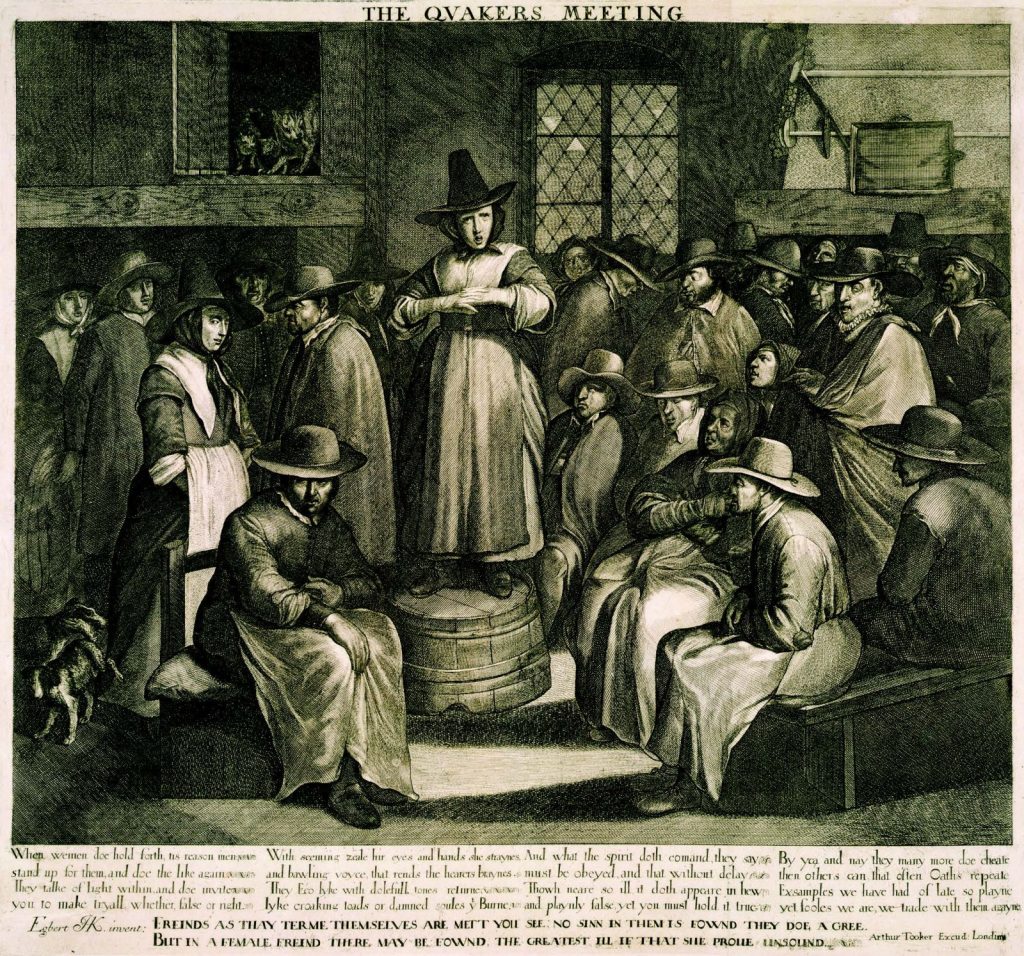
Image googleapis
Quakers rejected the system because they did not believe that Christianity required a professionally trained, salaried priesthood. A true minister, they argued, was called by God and should preach freely.
Refusing payment could be costly. Crops, animals, tools, cloth and household possessions might be seized. Persistent resistance could end in prison. The dispute therefore concerned family incomes and property as well as religious belief.
The political confusion of 1659 seemed to offer an opportunity for change. Oliver Cromwell had died the previous September, his son Richard had lost power, and the republican Parliament expelled by Cromwell in 1653 had returned to Westminster.
Quaker men presented Parliament with an anti-tithe appeal bearing about 15,000 names. On 27 June, MPs rejected it and voted to retain tithes for the support of a “godly preaching learned ministry”.
Three weeks later, the women reopened the argument.
The women Parliament would not hear
On 20 July 1659, two unnamed women attempted to present the collection at Westminster. The Commons refused to receive it. The papers were nevertheless published in London by Mary Westwood, a Quaker printer and bookseller.
Mary Forster’s introductory address acknowledged how extraordinary the intervention might appear. Women were entering public controversy, questioning a parliamentary decision and challenging the financial foundations of the established ministry.
Forster answered that God often worked through people whom the powerful considered weak. Quaker belief allowed women to preach, travel as missionaries and speak under divine inspiration. The “Hand-Maids and Daughters of the Lord” claimed authority not from husbands, magistrates or university learning, but from God.
The East Anglian address was particularly uncompromising. Parliament should not require flattering appeals before doing justice. Its members had been chosen to identify oppression and remove it. If the grievance were presented in “simplicity and innocency”, they had a duty to act.
Then came the warning: “God will overturn you by it.”
The Lynn women
Historian Peter Smith has linked twelve names in the petition to King’s Lynn and another six to nearby communities, although his detailed published account explicitly identifies only ten Lynn women and five from the surrounding area.
Among the Lynn names that can be identified with reasonable confidence are Isbel Barnard, Ann Bradshaw, Katherine Bull, Agnes Haselwood, Mary Moulton, Elizabeth Pice, Elizabeth Priest, Mary Priest, Elizabeth Waller and Mary Whitworth.
They were not an isolated collection of religious outsiders. Their families were connected with Lynn’s tradespeople, property owners and civic society. Some were comfortable widows or merchants’ relatives. Others belonged to households vulnerable to severe financial penalties.
Nor can every woman whose name appeared in the national volume automatically be called a committed Quaker. The movement was still developing its organisation, and some signatories may have been sympathisers who shared its hostility to tithes. The Lynn women who can be followed through later records, however, belonged to a recognisable and enduring community.
Katherine Bull’s house
Katherine Bull provides the clearest glimpse of that community.
By June 1656, she was corresponding with the Quaker preacher William Dewsbury. Signing herself “Katherine Bull from Linn”, she wrote about obedience to the divine Light and the need to remain faithful during a time of political and religious fear.
Her husband was probably George Bull, a Lynn fishmonger who had served the corporation as Sergeant-at-Mace and market clerk. After his death, Katherine’s house became one of the local centres of Quaker life.
Several Quaker marriages took place there during the early 1660s. In 1661, Mary Moulton, another woman named in the petition, married Edward Shooter in Katherine’s home. Catherine Fenn, associated with the surrounding district, married William Turner there during the same year.
Friends did not believe that a priest was needed to make a marriage valid. Couples declared their promises before the meeting, whose members acted as witnesses. By opening her house for these ceremonies, Katherine provided a space in which Lynn Quakers could practise their faith beyond the control of the parish church.
Families under pressure
The relationships revealed by the petition continued after 1659.
Isbel Barnard was a widow with property. In 1663 she married the Lynn Quaker William Nash at Upwell. Her family connections reached into the town’s commercial and civic establishment: her son-in-law Cyprian Anderson later became a councillor, alderman and mayor of Lynn.
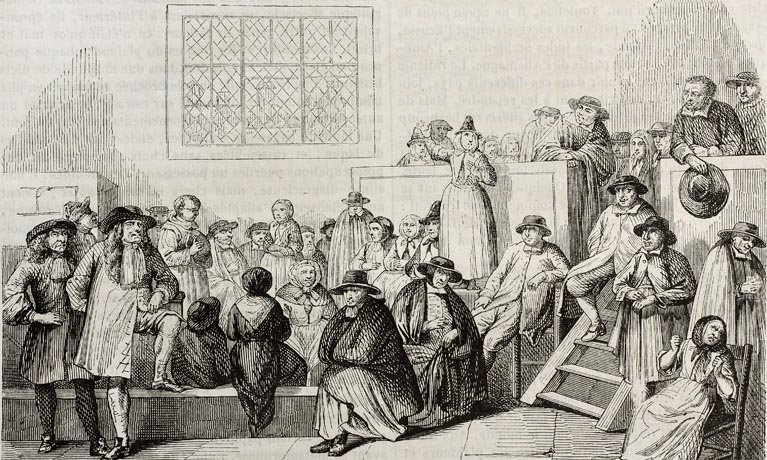
Image coventry.ac.uk
Isbel’s will also linked her to Mary Moulton’s family. She left money to Bernard Shooter, the son of Mary and Edward Shooter.
Edward did not live to see his son grow up. On 7 December 1663, soldiers from the Lynn garrison raided a Quaker meeting and arrested nine worshippers. Several of the detained men were husbands or future husbands of women named in the petition. Edward Shooter subsequently died in prison.
The raid demonstrates that the national protest had grown from a living local network. The women and their families worshipped together, arranged marriages, supported prisoners and maintained their beliefs despite official pressure.
Outside the town, punishments could be equally severe. Dorothy Ward of Hilgay and her husband Henry had goods seized for refusing tithes. In 1684, when both were approaching seventy, officers entered their house while Dorothy was ill. A Quaker account recorded that she was dragged from her bed and that property worth about £100 was removed.
Names that were meant to be seen
The petition did not persuade Parliament to abolish tithes. Within ten months Charles II was restored, and Quakers soon faced new laws against unauthorised religious meetings, refusal of oaths and absence from parish worship.
Yet the protest preserved the names of women who might otherwise have disappeared from the record. The publication allowed Lynn women to address the country in their own collective voice. They did not ask Parliament for personal charity or plead quietly on behalf of their husbands. They challenged a national religious policy and questioned whether Parliament was fulfilling the purpose for which it had been chosen.
Their argument was not a modern demand for complete political equality. It arose from Quaker theology and opposition to tithes. Nevertheless, it carried women beyond the boundaries normally allotted to them. They claimed the right to judge Parliament’s conduct and to speak publicly when conscience required it.
Parliament refused to receive their papers. Mary Westwood printed them instead. More than three and a half centuries later, the names of the Lynn women and their warning can still be read.
Appendix: Extracts from the 1659 Petition
The original publication is a collection of regional papers rather than one continuous petition. The following extracts have been selected for their relevance to the Lynn and East Anglian signatories. Spelling and punctuation have been lightly modernised; omissions are marked by ellipses.
From the title page
These several papers was sent to the Parliament the twentieth day of the fifth month, 1659. Being above seven thousand of the names of the Hand-Maids and Daughters of the Lord, and such as feels the oppression of tithes, in the names of many more of the said Hand-Maids and Daughters of the Lord, who witness against the oppression of tithes and other things as followeth.
The Quaker “fifth month” was July.
From Mary Forster’s preface, “To the Reader”
Friends,
It may seem strange to some that women should appear in so public a manner, in a matter of so great concernment as this of tithes, and that we also should bring in our testimony, even as our brethren, against that anti-Christian law …
But let such know that this is the work of the Lord at this day, even by weak means to bring to pass his mighty work in the earth … choosing the foolish things of the world to confound the wise, and weak things to confound the mighty.
Surely the Lord is risen, he is risen indeed, and hath appeared unto many … and he shall ride on, conquering and to conquer, till he hath subdued all our enemies, that God alone may rule and reign; and herein lies our strength, even in the power of our God.
From the address for Essex, Norfolk, Suffolk, Cambridge and Huntingdon
Now, friends, you being first chosen by the Nation as a Parliament for to do the Nation right, and to take off the Nation’s oppressions: are not you to search out the oppression?
… If oppression be made known to you in simplicity and innocency, without flattering petitions and addresses, are not you to remove the grievance?
… The Lord, who bringeth down the mountains and exalteth the valleys, will overturn by his power and arm all transgressors … God will overturn you by it.
© James Rye 2026
Book a Guided Tour with a Trained and Qualified King’s Lynn Guide Through Historic Lynn
References
- Forster, Mary, et al. These Several Papers Was Sent to the Parliament the Twentieth Day of the Fifth Moneth, 1659: Being above Seven Thousand of the Names of the Hand-Maids and Daughters of the Lord. London: Printed for Mary Westwood, 1659. https://quod.lib.umich.edu/e/eebo2/B03354.0001.001
- Kent, Stephen A. “‘Hand-Maids and Daughters of the Lord’: Quaker Women, Quaker Families, and Somerset’s Anti-Tithe Petition in 1659.” Quaker History 97, no. 1 (Spring 2008): 32–61. https://doi.org/10.1353/qkh.0.0001
- Nevitt, Marcus. Women and the Pamphlet Culture of Revolutionary England, 1640–1660. Aldershot: Ashgate, 2006. https://www.taylorfrancis.com/books/mono/10.4324/9781315233819/women-pamphlet-culture-revolutionary-england-1640-1660-marcus-nevitt
- Reay, Barry. “Quaker Opposition to Tithes, 1652–1660.” Past & Present, no. 86 (February 1980): 98–120. https://www.jstor.org/stable/650741
- Smith, Peter. “‘Handmaids of the Lord’ in King’s Lynn and West Norfolk.” Quaker History 102, no. 2 (Fall 2013): 12–27. https://doi.org/10.1353/qkh.2013.0009
- Smith, Peter. “Petitionary Negotiation in a Community in Conflict: King’s Lynn and West Norfolk.” PhD diss., University of East Anglia, 2012, 225–242. https://ueaeprints.uea.ac.uk/40587/1/2012SmithPPhD.pdf