The names in the books
The old civic records of Lynn are not quiet books. They are full of boys sent into service, craftsmen taking apprentices, merchants crossing the North Sea, householders protesting against burdens they could not bear, and outsiders seeking a place inside the borough.
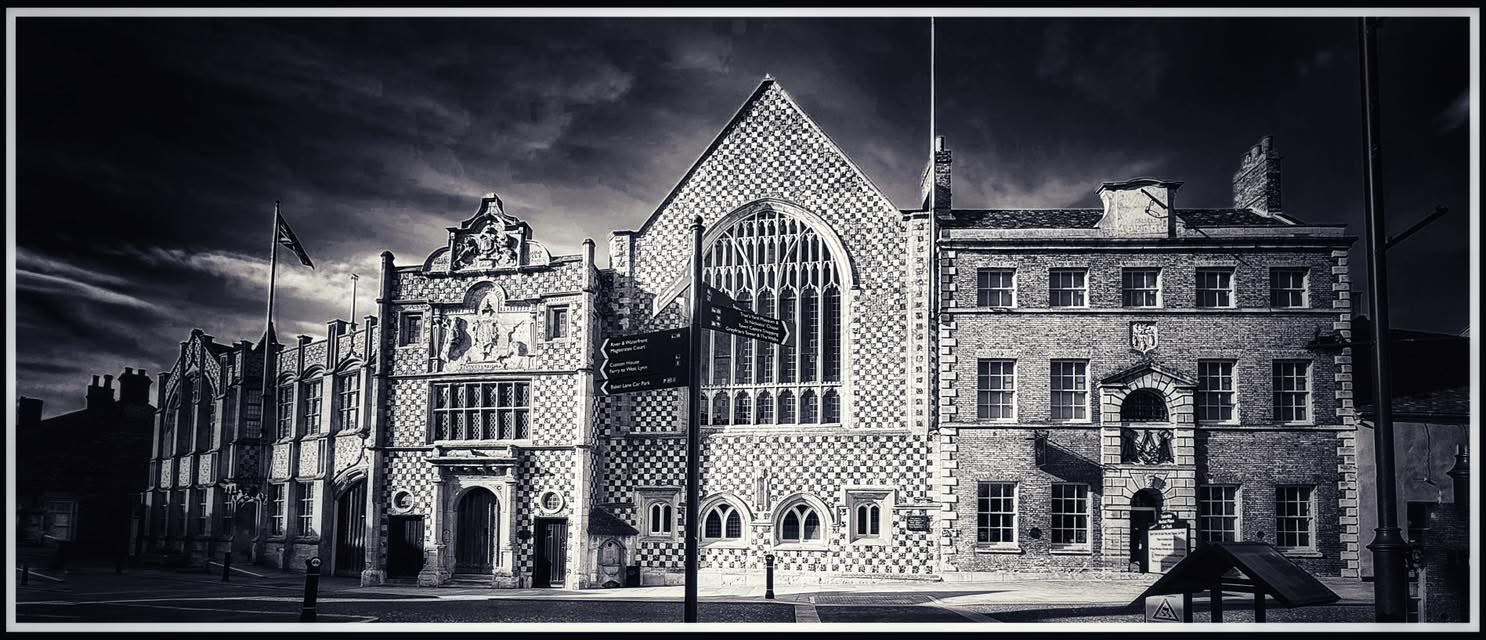
For most of the Middle Ages the town was Bishop’s Lynn. It became King’s Lynn after the estates and lordship of the bishop of Norwich passed to the Crown in 1536 to 1537. The older borough was centred on the parish of St Margaret, with South Lynn formally annexed in the mid-sixteenth century. Its civic records, now preserved in the King’s Lynn Borough Archives, include registers of freemen and apprenticeships from 1440 to 1868, separate apprenticeship registers from 1648 to 1851, hall books, court records, toll accounts, deeds, rentals, and the records of the town’s religious gilds.
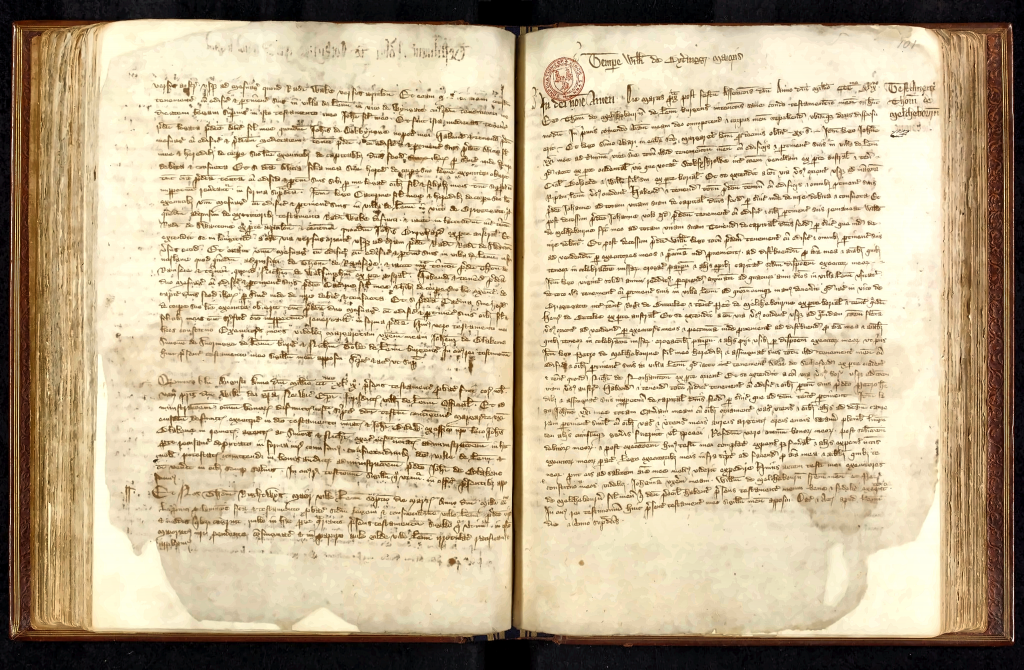
Image UNESCO
The freedom of Lynn was the formal doorway into the borough’s trading and civic community. A man might enter it by birth, by apprenticeship, by purchase, or by grant. In the records he appears as a freeman or burgess. Sometimes the entry is little more than a name. Sometimes it opens a door.
Coppin Issac of Diksmuide
One of the earliest names to stand out is Coppin Issac, from Diksmuide in Flanders. In 1351 he was admitted to the freedom of Lynn.
The record is brief. It does not tell us where he lodged, what he owned, whom he knew in Lynn, or whether he stayed for the rest of his life. Yet the place-name matters. Diksmuide lay in the textile country of Flanders, and the 1350s were years when English policy encouraged some Flemish exiles and skilled workers to settle in English towns. Coppin Issac’s admission places Lynn within that North Sea world of movement, craft, and trade.
He was not simply “foreign” in a loose sense. He was a named man from a named Flemish town, admitted into a named English borough.
John de Brunham and Edmund Belleyeter
A generation later, John de Brunham entered the freedom of Lynn. He was admitted as a burgess in 1353. He was the son of Ralph de Brunham, himself already a burgess before 1333 and probably a member of the merchant guild by 1324.
John rose quickly. He served as one of the borough chamberlains in 1355 to 1356 and again in later years, represented Lynn in Parliament six times between 1365 and 1384, served five terms as mayor, and from 1393 to at least 1402 held the office of alderman of the Holy Trinity merchant guild. He is better known now as the father of Margery Kempe, but in his own lifetime he was one of the most prominent burgesses of late medieval Lynn.
The apprenticeship system appears in his circle too. Edmund Belleyeter, later one of the town’s mayors in the troubled years after 1399, was John de Brunham’s former apprentice. That single connection gives a vivid glimpse of how apprenticeship could lead beyond training and into office, property, and borough government.
Apprentices in Prussia and Norway
Not all Lynn apprentices served their time within sight of St Margaret’s church or the Tuesday Market Place. In 1434, apprentices from Lynn who were in Prussia and Norway were admitted as freemen of the borough.
That entry belongs to Lynn’s Hanseatic and Baltic world. The town’s merchants dealt with Lübeck, Cologne, Danzig, Wismar, Rostock, Stralsund, Prussia, Denmark, Norway, Sweden, and the ports of the Low Countries. Lynn’s position on the Wash and the Great Ouse gave it access inland and outward to the North Sea, the Channel, Scandinavia, and the Baltic. The town’s records include letters, disputes, ordinances, and trading documents from that wider world.
The apprentices admitted in 1434 remain unnamed in the modern summary, but their circumstances are memorable. They were Lynn men in training, abroad on business, and still admitted into the freedom of their home borough.
William Beton, organmaker
In 1518 to 1519, William Beton, an organmaker of King’s Lynn, purchased his freedom for forty shillings. The record places a specialist craftsman within the civic body of the town. He was not a merchant of wool, wine, fish, or grain, but a maker of organs, working in a craft tied to churches, chapels, and households wealthy enough to commission or maintain such instruments.
His workshop can be traced through later admissions. In 1526 to 1527, James Croxston, apprentice of William Beton, became free. In 1536 to 1537, William Beton’s own son, also his apprentice, was admitted. In the same year William Bull, another apprentice of Beton, entered the freedom.
Those entries are unusually satisfying because they show the mechanism in motion. Beton bought his way into the freedom. His apprentices then followed through service. A craft, a household, a father, a son, and at least two young men trained under the same master are caught in the borough record.
Peter Lynn, baptised and bound
On 20 May 1643, in St Margaret’s church, a boy called Peter was baptised by the curate Lionel Gatford. He was described as a stranger and thought to be about eleven years old. The parish record used the racial language of the period, describing him in the margin as “A Moore or Mulatto”. A later Lynn source, Cooper’s Catalogue of Mayors of Lynn and Annual Occurrences, called him “A Blackmore of Mr Seth Hawley’s” and stated that after the baptism he was bound apprentice the same day.

Photo © James Rye 2022
Peter Lynn’s entry is one of the most arresting in the town’s apprenticeship history. Richard C. Maguire, in his study of Africans in East Anglia, notes that no separate apprenticeship record for Peter has been found. The baptism and later note are therefore not enough to reconstruct his life. We do not know where he was born, how he came to Lynn, what work he was set to learn, or what became of him.
What survives is stark: a child, described as a stranger, baptised in wartime Lynn, associated with Seth Hawley’s household, and said to have been bound apprentice immediately afterwards.
Henry Golding and John Bigg
In 1637, Henry Golding petitioned quarter sessions because he wanted to be released from an apprentice. This was not the polished story of a successful master training an obedient boy. It was a household in difficulty.
Golding explained that after his father’s death he had been left with heavy family responsibilities. His father, he said, had had sixteen or seventeen children by two wives. Golding had inherited land, but it had to be shared, and he had been left with debts, legacies, and younger children to provide for. He told the authorities that the poor law officers had forced an apprentice upon him.
The child was John Bigg. Golding said the boy had been seven years old when he took him, and lame. He asked to be released from him, offering to pay towards putting him elsewhere. The endorsement records the result: he was relieved of apprentice John Bigg.
The case gives a rare named apprentice at the poorer edge of the system. John Bigg was not being trained in a prosperous workshop visible through later freedom admissions. He appears because a burdened adult asked the court to move him on.
Robert Burgess asks for a change
A shorter but telling entry comes from 1656. Robert Burgess petitioned quarter sessions for a change of apprentice.
The surviving calendar does not give the apprentice’s name, nor does it explain the reason. Illness, behaviour, poverty, unsuitable trade, family pressure, or the needs of the parish could all lie behind such a request. The record simply tells us that the bond between master and apprentice was not fixed beyond challenge. It could be brought before authority and altered.
That is the value of even the briefest archival note. A name and a phrase are sometimes enough to show a strained household behind the formal language of apprenticeship.
Freemen, strangers, and coal
Freedom also mattered in the town’s everyday trade. In 1662, Lynn’s corporation complained that the poor of the borough had become numerous after losses and decay of trade, while much of the coal trade was being carried on by strangers and foreigners in vessels belonging to other ports. The corporation ordered that freemen or burgesses buying coal from such outsiders should pay twelve pence per chalder towards the relief and maintenance of the borough poor.
The order also protected local access to fuel. Burgesses and inhabitants were not to take coal from a stranger’s vessel for resale until three working days after its arrival, so that townspeople could first buy for their own firing.
Coal, apprenticeship, and freedom may seem separate subjects. In Lynn’s records they sit close together. The freeman was a trader, a householder, a taxpayer, and a member of a borough that guarded its markets, its poor relief, and its privileges.
The old books still speak
The freemen and apprenticeship records of Lynn do not give complete lives. They give admissions, petitions, masters, trades, payments, and occasional disputes. Yet the human outline is clear.
Coppin Issac came from Diksmuide and entered the freedom in 1351. John de Brunham became one of Lynn’s commanding burgesses, and his former apprentice Edmund Belleyeter rose into civic office. Apprentices were admitted as freemen while abroad in Prussia and Norway. William Beton, organmaker, bought his freedom and trained apprentices who followed him into the borough. Peter Lynn, a child described as a stranger, was baptised and said to have been bound apprentice in 1643. Henry Golding was released from apprentice John Bigg when debt and family duty overwhelmed him. Robert Burgess asked for a change of apprentice. The freemen of 1662 guarded the coal trade while linking civic privilege to poor relief.
The records are administrative, but they are not lifeless. In Lynn, freedom was written in books, worked out in households, argued over in courts, carried overseas, and measured at times in coal, debt, labour, and names.
© James Rye 2026
References
HathiTrust. A Calendar of the Freemen of Lynn, 1292–1836. Catalogue record. https://catalog.hathitrust.org/Record/000194191
Kalas, Laura, and Katherine J. Lewis, eds. Encountering The Book of Margery Kempe. Manchester: Manchester University Press, 2021. Includes Susan Maddock, “Margery Kempe’s Home Town and Worthy Kin.” https://www.perlego.com/book/3061909/encountering-ithe-book-of-margery-kempei-pdf
Lambert, Bart, and Milan Pajic. “Immigration and the Common Profit: Native Cloth Workers, Flemish Exiles, and Royal Policy in Fourteenth-Century England.” Journal of British Studies 55, no. 4 (2016): 633–657. https://www.repository.cam.ac.uk/bitstreams/b84eb023-bc20-492a-b26e-33bf40f09078/download
Maguire, Richard C. Africans in East Anglia, 1467–1833. Woodbridge: Boydell Press, 2021. Chapter 4, “The Seventeenth Century: The Early Shadow of Transatlantic Slavery.” https://www.cambridge.org/core/books/abs/africans-in-east-anglia-14671833/seventeenth-century-the-early-shadow-of-transatlantic-slavery/B8C613295A40F9F565FBF42B1CCB1BEC
Norfolk Record Office. “Family History Sources for King’s Lynn.” https://www.archives.norfolk.gov.uk/article/31103/Family-history-sources-for-Kings-Lynn
Norfolk Record Office. “King’s Lynn Borough Archives.” https://www.archives.norfolk.gov.uk/article/31098/Kings-Lynn-Borough-Archives
Richards, William. The History of Lynn. Vol. 2. King’s Lynn: W. G. Whittingham, 1812. Digitised by Project Gutenberg. https://www.gutenberg.org/cache/epub/62372/pg62372-images.html
Smith, Hannah. Petitionary Negotiation in a Community in Conflict: King’s Lynn and West Norfolk. PhD thesis, University of East Anglia, 2012. https://ueaeprints.uea.ac.uk/40587/1/2012SmithPPhD.pdf
Thorold, Andrew Freeman. A Dictionary of Organs and Organists. London: H. Logan, 1912. Digitised by Internet Archive. https://archive.org/stream/dictionaryoforga00thor/dictionaryoforga00thor_djvu.txt
Widdows, Pete. “King’s Lynn’s Trading Links with Europe: King’s Lynn and the Hansa.” Norfolk Record Office Blog, 15 July 2020. https://norfolkrecordofficeblog.org/2020/07/15/kings-lynns-trading-links-with-europe-kings-lynn-and-the-hansa/