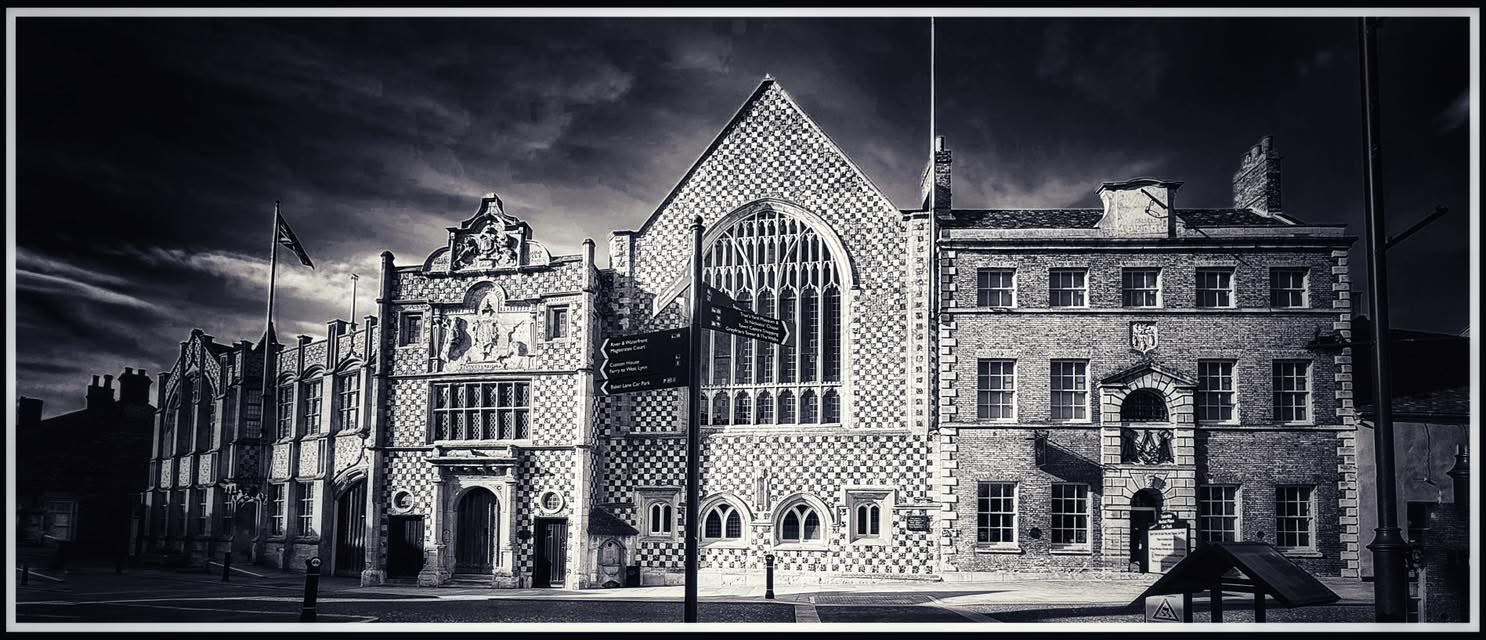
Samuel Gurney Cresswell is often described as the first Royal Navy officer to cross the North-West Passage. Yet HMS Investigator, the ship that carried him into the Arctic, never reached the Atlantic. It became trapped in ice, was abandoned, and eventually sank in Mercy Bay.
At first sight, the two statements seem impossible to reconcile. How could Cresswell have crossed the passage when his ship did not?
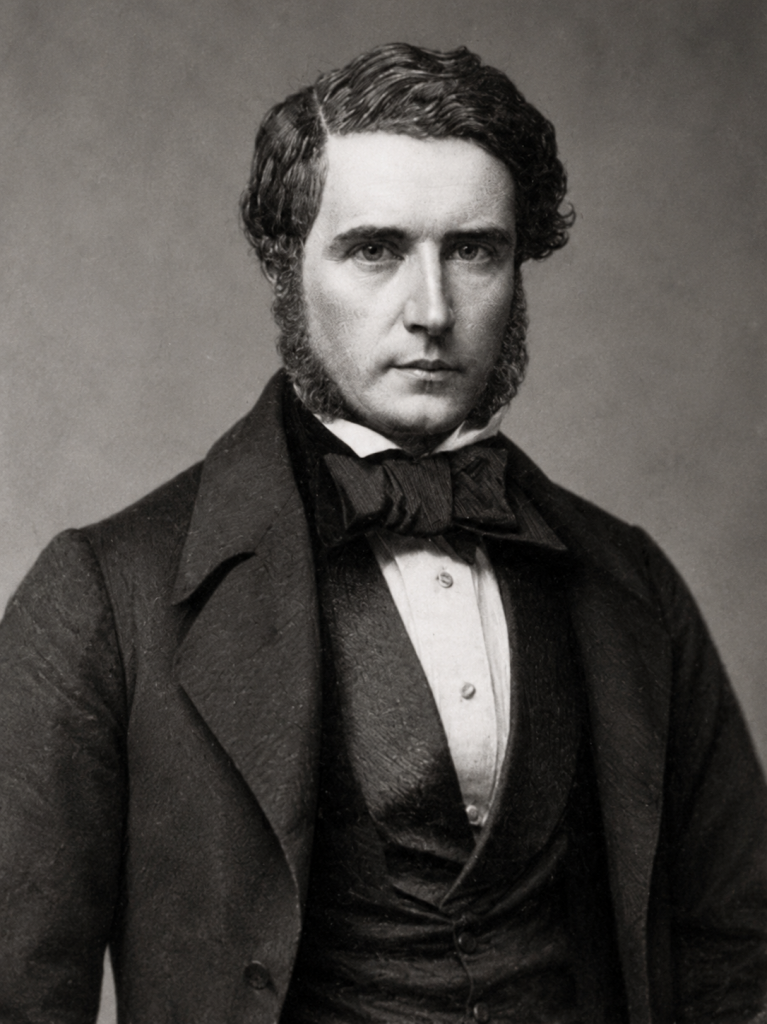
The answer is that Cresswell did not sail through the North-West Passage in a single vessel. He travelled through it by ship, sledge, and on foot, before completing the eastern part of his journey aboard another ship.
The man crossed the passage. His ship did not.
A young Lynn officer heads north
Samuel Gurney Cresswell was born in King’s Lynn on 25 September 1827. He entered the Royal Navy as a boy and served in the Far East before joining an expedition sent in search of Sir John Franklin’s missing ships. Franklin had sailed from Britain in 1845 with HMS Erebus and HMS Terror. The vessels disappeared after entering the Canadian Arctic, prompting one of the largest search efforts in nineteenth-century naval history.
Cresswell first took part in an unsuccessful search expedition in 1848–49. In 1850, he returned to the Arctic as second lieutenant of HMS Investigator, commanded by Robert McClure.
He was also an accomplished artist. His sketches and watercolours would later provide a vivid record of the expedition’s struggles among the ice.
The Investigator approached the Arctic from the Pacific. It sailed around Cape Horn, crossed the Pacific Ocean, passed through the Bering Strait, and entered the western Canadian Arctic during the summer of 1850. This direction of travel would become central to Cresswell’s later claim. He had entered the North-West Passage from its Pacific side. To complete a crossing, he would eventually have to emerge through its Atlantic side.
Finding the missing connection
The Investigator sailed eastwards into the Prince of Wales Strait, the channel separating Banks Island from Victoria Island. McClure hoped that the strait would lead northwards into Viscount Melville Sound. From there, the ship might reach waters already explored by expeditions entering from the Atlantic. Ice stopped the vessel before it could complete the route.
During October 1850, McClure travelled across Banks Island by sledge. From the northern coast, he could see towards Melville Island and the waters previously reached by William Edward Parry from the Atlantic direction in 1820. McClure concluded that the western waters entered from the Pacific were geographically connected with the eastern channels approached from the Atlantic.
In British naval terms, the North-West Passage had been discovered. But discovery did not mean that it could be sailed. A continuous route could now be traced on a chart between the Pacific and Atlantic Oceans. Much of that route, however, was covered by permanent or shifting ice. Establishing that a passage existed was not the same as taking a ship through it.
The trap at Mercy Bay
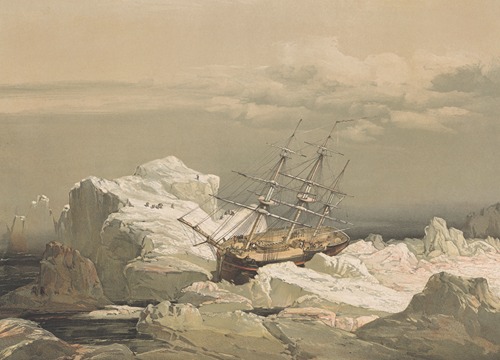
When the Prince of Wales Strait remained blocked, McClure turned the Investigator southwards. He attempted to sail around the western coast of Banks Island and approach the passage from the north. The ship reached the northern coast but became trapped in a sheltered inlet in September 1851. McClure named it the Bay of Mercy, now more commonly called Mercy Bay. The name was appropriate, but cruelly so. The bay protected the ship from being immediately crushed by moving pack ice. At the same time, the ice prevented it from escaping. The Investigator never sailed out of Mercy Bay.
The crew remained trapped through successive Arctic winters. Supplies diminished, fresh food became scarce, and the health of the men deteriorated. Scurvy, weakness, and malnutrition spread among them. By early 1853, the situation had become desperate. Some of the men were seriously ill, and McClure was considering sending separate parties away from the ship in the hope that at least some might survive.
Unknown to the crew, help was approaching from the opposite side of the Arctic.
A figure appears on the ice
Before becoming trapped, McClure had left messages describing the expedition’s position. One was eventually discovered on Melville Island by men from HMS Resolute, part of a search expedition that had entered the Arctic through Baffin Bay and Lancaster Sound.
On 6 April 1853, Lieutenant Bedford Pim set out across the ice from the Resolute. The men aboard the Investigator saw a distant figure approaching. At first, they reportedly assumed that he must be an Inuit traveller. They could hardly believe that another naval officer had reached them across the frozen sea.
Pim’s arrival was one of the great dramatic moments of Victorian Arctic exploration. McClure’s expedition had entered from the Pacific. Pim had come from ships connected with the Atlantic route. The two approaches had physically met.
The encounter also saved the surviving crew of the Investigator. Captain Henry Kellett of HMS Resolute ordered McClure to abandon the ship rather than risk more lives trying to release it.
Abandoning the Investigator
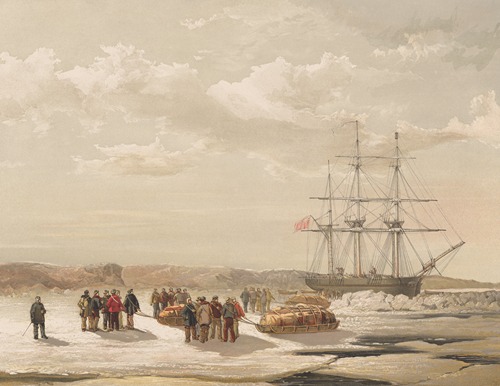
The crew left HMS Investigator on 3 June 1853. The ship was not destroyed before their eyes. It remained upright in the ice as the men secured what they could, raised their flags for the last time, and departed with sledges carrying food, equipment, and personal possessions. They then travelled eastwards across the frozen sea towards Melville Island and the ships of Kellett’s expedition.
This stage explains how Cresswell could cross the North-West Passage after the vessel carrying him had failed. He had entered the western Arctic from the Pacific aboard the Investigator. After leaving the ship, he continued eastwards across the central Arctic by sledge and on foot. The passage was being crossed by its travellers rather than navigated by their ship.
Cresswell was placed in charge of a party that included sick and weakened members of the crew. Assisted by the Moravian missionary and interpreter Johann August Miertsching, he brought the men across approximately 160 miles of ice without losing anyone during the journey.
It was an impressive feat of leadership. The men were exhausted, poorly nourished, and travelling through one of the harshest environments on Earth.
Cresswell completes the journey
Once he had reached the ships approaching from the Atlantic side, Cresswell was selected to carry McClure’s reports home. He continued eastwards to Beechey Island, where he boarded HMS Phoenix, commanded by Edward Inglefield. The Phoenix had entered the Arctic from the Atlantic through Baffin Bay and Lancaster Sound. Cresswell was therefore carried out through the eastern channels of the North-West Passage and returned to Britain.
He arrived in England in October 1853, bringing the first direct news that McClure and most of the Investigator’s crew were alive. His arrival had considerable symbolic importance. Cresswell had entered the Arctic from the Pacific and emerged through the Atlantic route. He had completed a continuous journey from one ocean to the other.
McClure, who remained in the Arctic until 1854, received the greatest official credit as commander of the expedition. Cresswell, however, was the first member of the party to complete the journey and return home.
This is why he is sometimes described as the first Royal Navy officer to cross the North-West Passage.
Crossing was not the same as sailing
The confusion comes from the different meanings attached to the words “discover”, “cross”, and “navigate”.
McClure’s expedition helped demonstrate that a continuous geographical passage connected the Pacific and Atlantic Oceans. Cresswell travelled through that passage from one side to the other. HMS Investigator did not.
The ship penetrated deeply into the western Arctic, but its journey ended at Mercy Bay. Cresswell completed the route by travelling over the ice and then joining another vessel. It would therefore be misleading to say that he sailed through the North-West Passage. He sailed through parts of it, crossed another substantial section by sledge and on foot, and sailed out through the eastern channels aboard HMS Phoenix.
Victorian accounts did not always make these distinctions clear. After decades of unsuccessful expeditions, the Admiralty and the British public wanted a triumph. McClure and his crew had established the geographical connection and travelled from ocean to ocean. That was enough for them to be celebrated as the discoverers of the passage.
Parliament awarded £10,000 for the achievement. McClure received half, while the remainder was divided among his officers and crew. Yet no single ship had completed the route.
The first successful navigation of the entire North-West Passage by one vessel was made by the Norwegian explorer Roald Amundsen in the small ship Gjøa between 1903 and 1906.
Cresswell’s pictures of the frozen passage
Cresswell’s contribution went beyond navigation and survival. His drawings created one of the most memorable visual records of nineteenth-century Arctic exploration. He depicted the Investigator trapped among enormous masses of ice, the crew hauling sledges through frozen landscapes, and the ship lying motionless in Mercy Bay.
A series of eight coloured lithographs based on his work was published in London in 1854. The images helped transform the expedition into a national story. They also reveal the reality behind the language of discovery.
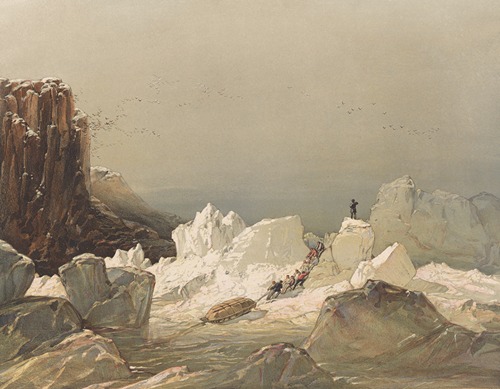
The ice appears immense, unstable, and threatening. Human figures are reduced to tiny shapes moving through a landscape that could overwhelm them at any moment. The Investigator itself often appears fragile and imprisoned. Cresswell became famous for crossing the North-West Passage, but his own pictures showed why his ship could not.
What became of the ship?
The abandoned Investigator eventually sank in the shallow waters of Mercy Bay. Its location was rediscovered in 2010 by underwater archaeologists from Parks Canada. The wreck was found resting upright on the seabed in approximately eleven metres of water. Parts of the hull and other structural remains survived remarkably well in the cold Arctic conditions.
The wreck confirms the limits of the expedition’s success. The Investigator had carried Cresswell far into the western passage, but he could complete the journey only by leaving it behind.
A remarkable achievement, accurately described
Cresswell’s achievement needs no exaggeration. He was the first Royal Navy officer to complete a journey through the North-West Passage from the Pacific side to the Atlantic side. He did so aboard two ships, with a long and dangerous journey across the ice between them.
The Investigator failed to cross. Cresswell did not.
© James Rye 2026
Book a Walk with a Trained and Qualified King’s Lynn Guide
References
- Cooke, W. M. E. “Cresswell, Samuel Gurney.” Dictionary of Canadian Biography, vol. 9. University of Toronto and Université Laval. https://www.biographi.ca/en/bio/cresswell_samuel_gurney_9E.html
- Cresswell, Samuel Gurney. A Series of Eight Sketches in Colour of the Voyage of H.M.S. Investigator (Captain M’Clure), during the Discovery of the North-West Passage. London: Day and Son and Ackermann and Co., 1854.
- Harrod, Dominick, ed. War, Ice and Piracy: The Remarkable Career of a Victorian Sailor: The Journals and Letters of Samuel Gurney Cresswell. London: Chatham Publishing, 2000.
- McClure, Robert John Le Mesurier. The Discovery of the North-West Passage by H.M.S. Investigator, 1850, 1851, 1852, 1853, 1854. Edited by Sherard Osborn. London: Longman, Brown, Green, Longmans, and Roberts, 1856. https://www.cambridge.org/core/series/cambridge-library-collection-polar-exploration/A74356110B19FE39ECE2FB41463BC531
- Parks Canada. “HMS Investigator National Historic Site.” https://parks.canada.ca/culture/arch/mer-sea/hist/exploration
- Royal Museums Greenwich. “Robert McClure North-West Passage Expedition, 1850–54.” https://www.rmg.co.uk/stories/maritime-history/robert-mcclure-north-west-passage-expedition-1850-54
- Royal Museums Greenwich. “The Search for the North-West Passage.” https://www.rmg.co.uk/stories/maritime-history/search-northwest-passage
- Stein, Glenn M. Discovering the North-West Passage: The Four-Year Arctic Odyssey of HMS Investigator and the McClure Expedition. Jefferson, NC: McFarland, 2015.