The Headteacher Who Helped Preserve The Town
At 28 Bridge Street stands one of King’s Lynn’s most remarkable historic buildings. Greenland Fishery was built in the early seventeenth century for the merchant John Atkin. With its timber frame and rare wall paintings, it is a precious survival from the town’s trading past. For more than forty years, it was also the home of Diana Bullock OBE.
Bullock was a headteacher, conservation campaigner, guide trainer, and longstanding member of King’s Lynn’s civic life. She did not save the historic town single-handedly. Its survival depended on a determined network of residents who challenged demolition, rescued neglected buildings, and persuaded others to recognise the value of Lynn’s architectural inheritance. But Bullock was close to the heart of that movement.
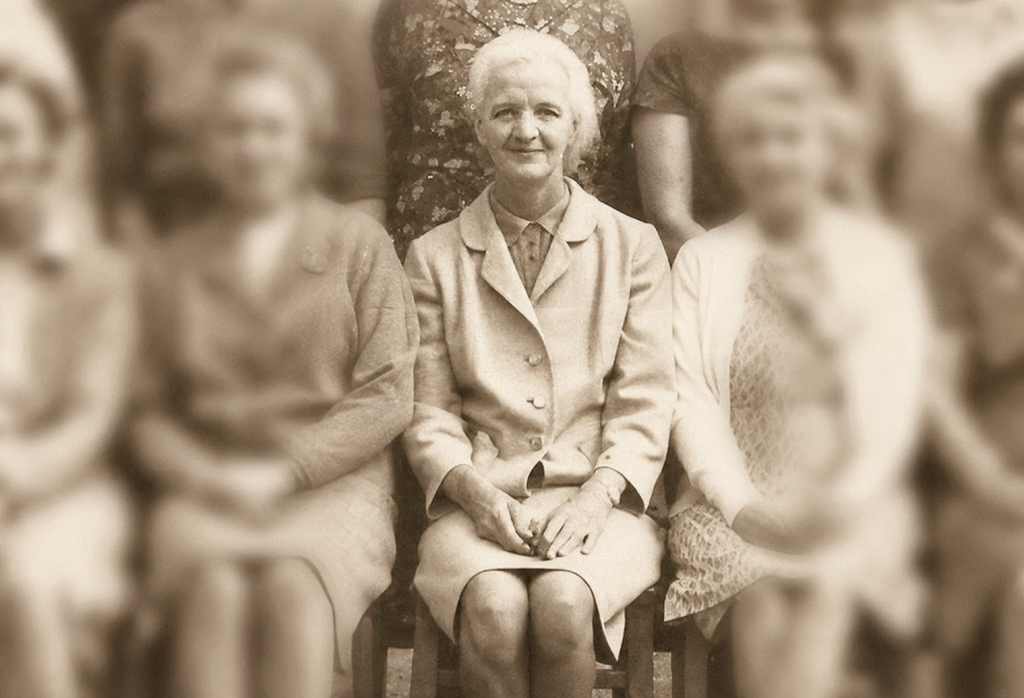
Image King’s Lynn Preservation Trust
A headteacher in a historic house
In 1951, Miss M Keith, King’s Lynn’s Borough Housing Manager, and Miss D Bullock, the recently appointed headteacher of Gaywood Park Girls’ School, moved into Greenland Fishery (28 Bridge Street) following its post-war conversion.
The two women became known as skilled gardeners and careful custodians of the house. After Miss Keith’s death, Bullock continued to live there alone, reportedly remaining until 1992.
It was an unusually appropriate home for someone who would dedicate so much of her life to conservation. Built between 1605 and 1608, Greenland Fishery is described by Historic England as the last principally timber-framed house known to have been constructed in Lynn. It was first listed in December 1951, the same year Bullock moved in.
Bullock’s professional life was equally distinguished. The official 1967 New Year Honours list identifies her as headmistress of Gaywood Park Secondary Girls’ School and records her appointment as an OBE.
There is one unresolved detail. The official honours list calls her Doris Bullock, while King’s Lynn’s heritage organisations, memorials, and local histories remember her as Diana Bullock. The evidence strongly indicates that they were the same woman, although the reason for the different forenames has not yet been discovered. Within the town’s conservation story, she was known as Diana.
Resisting the loss of old Lynn
Post-war King’s Lynn was a town caught between competing visions of its future.
Its medieval streets, merchants’ houses, warehouses, courtyards, and religious buildings represented centuries of history. Yet many were neglected, considered unsuitable for modern life, or threatened by clearance and redevelopment. Parts of the historic town disappeared, while the survival of other buildings was far from certain.
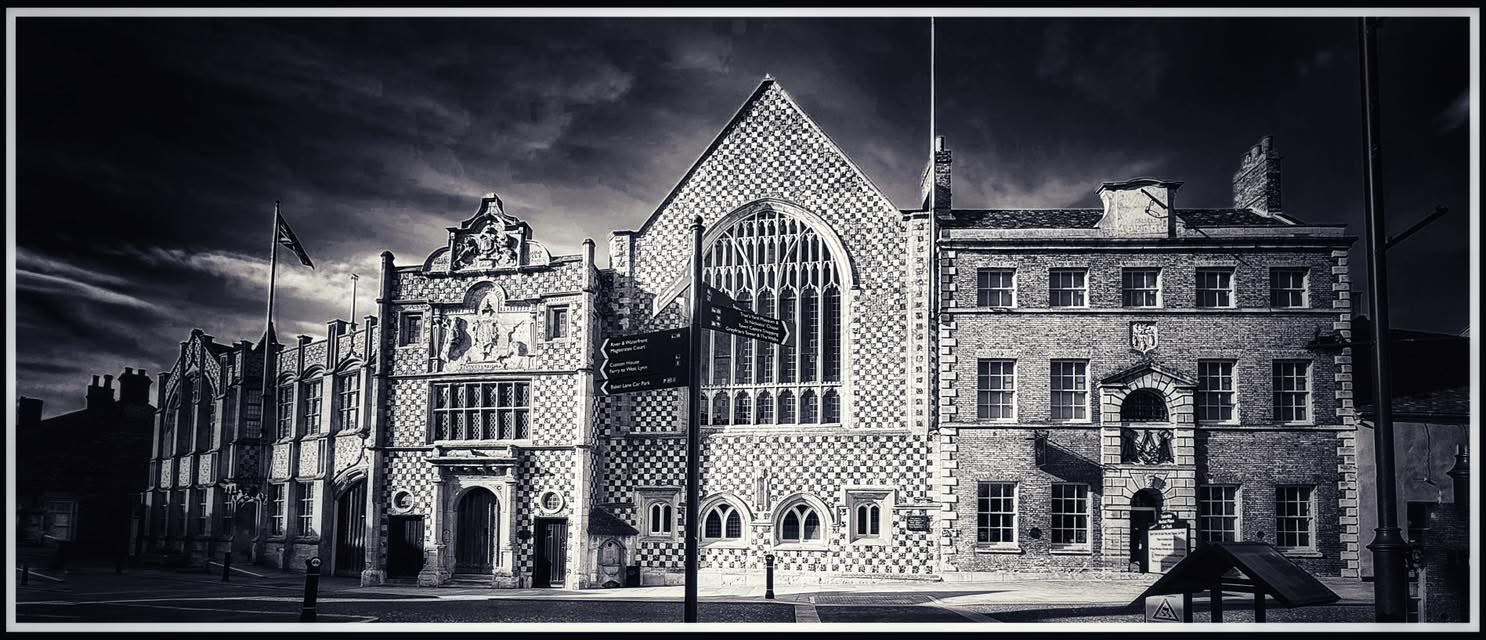
The rescue of Hampton Court in the 1950s demonstrated what determined local action could achieve. When the medieval complex was threatened with demolition, a campaign led by Nora Lane helped secure its future. Out of the growing conservation movement came King’s Lynn Preservation Trust, formally launched at the Town Hall on 24 October 1958 under the leadership of Lady Joan Evershed.
Diana Bullock was a founder member of the Trust’s management committee and worked alongside Lady Evershed for many years. Greenland Fishery became the Trust’s first registered office.
The use of Bullock’s home as an office captures the character of Lynn’s early conservation movement. It did not begin with a large professional staff or a purpose-built headquarters. It depended on volunteers prepared to offer their homes, knowledge, time, and persistence. Meetings had to be organised, letters written, money raised, buildings surveyed, and owners and public bodies persuaded.
The Trust went on to restore buildings across King’s Lynn, including Hampton Court, Thoresby College, and properties in Priory Lane, King Street, Pilot Street, and South Lynn.
Its importance received national recognition. During a House of Lords debate in 1973, it was said that without the Trust, “some of the finest buildings in the town would certainly have disappeared”.
Those achievements belonged to many people. Bullock’s importance lay in her sustained contribution to their shared cause: helping to establish the Trust, providing it with an early base, and remaining involved as conservation became an increasingly powerful force in the town.
Teaching people to read the town
Saving historic buildings was only part of the task. People also needed to understand why those buildings mattered.
Bullock helped meet that need through the development of King’s Lynn’s modern Town Guides. Although a temporary group of guides had been trained for the Festival of Britain in 1951, the present guiding tradition began in 1977 under the Reverend George Bridge.
The East Anglian Tourist Board supplied instruction in the practical skills of guiding. The prospective guides then undertook ten weeks of local-history training with George Bridge, Diana Bullock, and the respected King’s Lynn historian Michael Begley. Each guide had to pass an examination on local knowledge.
A town guide does more than recite names and dates. Good guides teach people how to read a place: to recognise an ancient street line, understand why warehouses grew up beside the river, or discover an older structure concealed behind a later façade.
By helping to train the guides, Bullock ensured that knowledge accumulated by Lynn’s historians and conservationists could be shared with residents and visitors. Later accounts remembered her as one of the founders of the Town Guides. The organisation’s annual Diana Bullock Memorial Lecture continues to honour her contribution.
A lifetime of civic work
Bullock’s involvement extended beyond the Preservation Trust and the Town Guides.
A memorial bench in the town centre honours her work “in preserving the heritage of the town” and records that she served as president of King’s Lynn Civic Society from 1979 until 1992.
Those dates reveal the longevity of her commitment. By the time she became president, she had already been associated with the Preservation Trust for more than twenty years.
Her civic work connected several forms of public service. She helped protect historic buildings, campaigned for the character of the old town, educated residents and visitors, supported voluntary organisations, and passed local knowledge to a new generation.
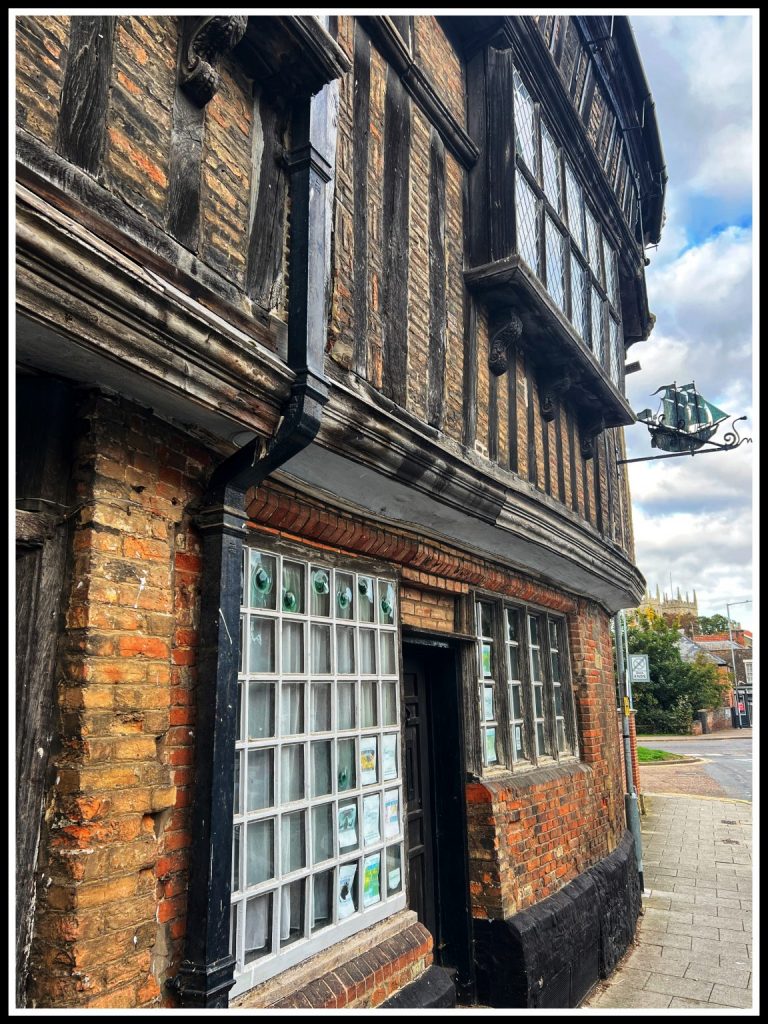
Photo © James Rye 2022
Much of this was patient and largely unglamorous work. Conservation victories may be remembered through a dramatic rescue or a beautifully restored building, but they are built upon countless meetings, letters, negotiations, fundraising efforts, and conversations.
Bullock appears to have understood that preserving a town required both practical action and public education. Buildings would be safer if people knew their stories and recognised their value.
A legacy in brick, timber, and memory
Diana Bullock reportedly left Greenland Fishery in 1992 and died in 1994. Three years later, Norfolk Archaeological Trust transferred the house to King’s Lynn Preservation Trust for a nominal sum. The building that had served as her home and the Trust’s early office thus passed into the organisation’s direct care.
Her memorial bench was restored in 2026 after volunteers decided that both the seat and the woman it commemorated deserved better. It was a fitting gesture for someone who had spent so much of her life resisting neglect.
Today, visitors can walk through King’s Lynn and encounter buildings whose survival was once far from assured. They can explore restored courtyards, merchants’ houses, warehouses, religious buildings, and streets that still reveal the pattern of the historic port.
Diana Bullock did not work alone, and her story should not eclipse the many other people who fought for old Lynn. Her achievement was to become one of the movement’s most steadfast figures: a headteacher who made education part of conservation, a resident who opened her historic home to a new preservation trust, and a civic leader who helped the town understand the value of its past.
Her most enduring memorial is not simply a bench or an annual lecture. It is the historic King’s Lynn that people are still able to see, study, and enjoy.
Research note
The London Gazette records the headmistress and OBE as Doris Bullock, while King’s Lynn’s heritage organisations commemorate her as Diana Bullock. The connection is supported by the Greenland Fishery history, which first identifies the resident as “Miss D Bullock”, headteacher of Gaywood Park Girls’ School, and subsequently calls her Diana.
King’s Lynn Civic Society’s current webpage prints the guide trainer’s surname as “Bagley”. Independent publications identify the relevant King’s Lynn historian as Michael Begley, including his co-authorship of the Churches Conservation Trust’s guide to St Nicholas’ Chapel. The spelling Begley has therefore been used here.
© James Rye 2026
Book a Walk with a Trained and Qualified King’s Lynn Guide
References
- Butler, Natalie. Norfolk Archaeological Trust: A History. Norfolk Archaeological Trust, 2024. Accessed 15 July 2026.
https://www.norfarchtrust.org.uk/wp-content/uploads/2024/07/NAT-a-history_online-version-1.pdf - Greenland Fishery. “The Greenland Fishery, King’s Lynn.” Accessed 15 July 2026.
https://greenland-fishery.org.uk/the-greenland-fishery-kings-lynn/ - Historic England. “Greenland Fishery House.” National Heritage List for England, list entry 1219470. Accessed 15 July 2026.
https://historicengland.org.uk/listing/the-list/list-entry/1219470 - House of Lords. “Historic Towns and Villages.” Historic Hansard, 11 April 1973. Accessed 15 July 2026.
https://api.parliament.uk/historic-hansard/lords/1973/apr/11/historic-towns-and-villages - James, Elizabeth, and Michael Begley. St Nicholas’ Chapel, King’s Lynn, Norfolk. Churches Conservation Trust. Accessed 15 July 2026.
https://cdn.visitchurches.org.uk/uploads/images/Churches/Kings-Lynn-St-Nicholas/St-Nicholas-Chapel-Kings-Lynn-Guide.pdf?v=1733235411 - King’s Lynn Civic Society. “Our History.” Accessed 15 July 2026.
https://www.kingslynncivicsociety.co.uk/our-history/ - King’s Lynn Preservation Trust. “Greenland Fishery.” Accessed 15 July 2026.
https://www.klprestrust.org.uk/project/greenland-fishery/ - King’s Lynn Preservation Trust. “History.” Accessed 15 July 2026.
https://www.klprestrust.org.uk/history/ - King’s Lynn Preservation Trust. “KLPT Beginnings.” Accessed 15 July 2026.
https://www.klprestrust.org.uk/klpt-beginnings/ - King’s Lynn Town Guides. “About Us.” Accessed 15 July 2026.
https://www.kingslynntownguides.co.uk/about-us - King’s Lynn Town Guides. “Annual Lecture.” Accessed 15 July 2026.
https://www.kingslynntownguides.co.uk/annual-lecture - Local Free News. “‘She Deserved Better’: Volunteers Restore Memorial Bench.” 26 June 2026. Accessed 15 July 2026.
https://localfreenews.co.uk/she-deserved-better-volunteers-restore-memorial-bench/ - London Gazette. “New Year Honours List.” Issue 44210, supplement, 1967, p. 12.
https://www.thegazette.co.uk/London/issue/44210/supplement/12/data.pdf - Wikimedia Commons. “Photograph of a Bench (OpenBenches 546).” Photograph taken 27 July 2017. Accessed 15 July 2026.
https://commons.wikimedia.org/wiki/File%3APhotograph_of_a_bench_%28OpenBenches_546%29.jpg