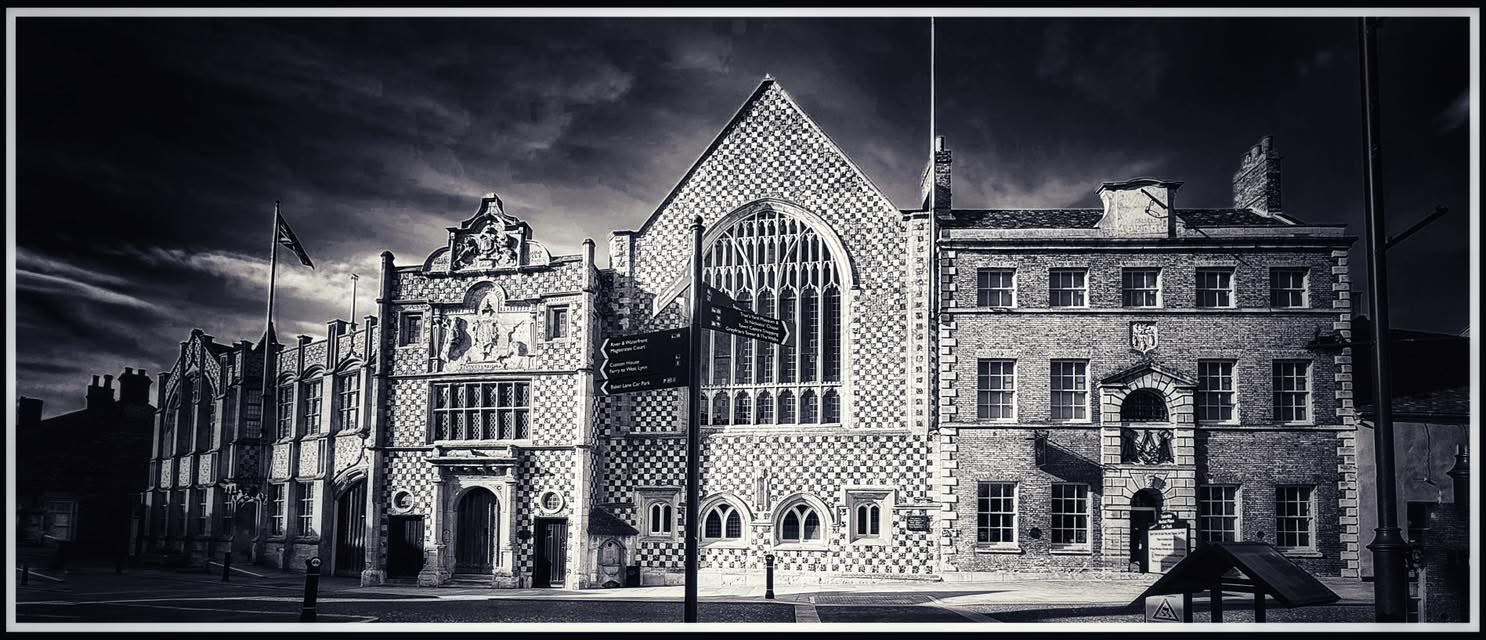
At the east end of St Nicholas’ Chapel in King’s Lynn stands a great marble monument shaped like an urn. Designed by Robert Adam, it carries the insignia of the Order of the Bath and a relief of ships in Lisbon harbour. Its inscription records that nearby lie the remains of Sir Benjamin Keene, ambassador to the king of Spain, who died in Madrid on 15 December 1757.
Keene became one of the eighteenth century’s most accomplished British diplomats. He negotiated European treaties and gained exceptional access to the Spanish court. Yet his career also served imperial rivalry and the commerce of slavery. His story is about a gifted negotiator working inside the harsher realities of British power.
From King’s Lynn to Madrid
Keene was born in King’s Lynn in about 1696 or 1697. His Cambridge age and the inscription on his monument make 1696 possible, although no baptismal record has settled the question.

His father, Charles, was a Lynn mercer and alderman who served as mayor in 1714–15. His mother’s family had connections to Sir Robert Walpole. After attending school in Lynn, Keene studied law at Cambridge and graduated in 1718. Patronage opened his path into government. Ability kept him there after Walpole’s influence had disappeared.
In 1723 Keene became the South Sea Company’s agent in Spain. He was appointed British consul-general at Madrid the following year, becoming minister plenipotentiary in 1727. Long residence gave him a rare understanding of Spanish court politics and the commercial disputes dividing the two kingdoms.
His company role was not ordinary trade promotion. The South Sea Company held the asiento, a state-backed monopoly to transport enslaved Africans to Spanish America. It carried about 30,000 people during the effective life of the contract. No evidence shows that Keene personally owned enslaved people or financed slave voyages, but his official work supported the corporation’s interests.
A peace that could not hold
Keene helped negotiate the Treaty of Seville in 1729, which restored commercial arrangements and addressed dynastic disputes in Italy. His more difficult test came ten years later.
Britain and Spain were moving towards war over contested trade and rival claims in the Americas. Keene negotiated the Convention of Pardo in January 1739. Spain was to pay £95,000 in compensation, while Britain or the South Sea Company would meet a £68,000 counterclaim.
The convention is sometimes called an unratified draft rejected by Parliament. In fact, both monarchs ratified it and the Commons voted in its favour. Implementation failed when South Sea Company directors denied agreeing to the payment. Spain suspended the asiento, and war followed in October.
Keene returned home under fierce criticism. Pardo exposed the limits of diplomacy: he could secure agreement at Madrid, but could not control a powerful company or political anger in Britain.
Keene’s greatest settlement
After several years in Parliament and a diplomatic mission to Portugal, Keene returned to Madrid in 1748. He became ambassador the following year.
His greatest success was the Treaty of Madrid, signed on 5 October 1750. Britain surrendered the South Sea Company’s asiento and annual trading ship. Spain agreed to pay the company £100,000, while British commercial privileges were restored. The agreement removed a grievance that had repeatedly brought the two countries close to conflict.
It also ended Britain’s official monopoly for supplying enslaved Africans to Spanish America. That was a consequence of diplomatic compromise, not an abolitionist act. Atlantic slavery continued.
Keene’s reputation soared. The duke of Newcastle reported that France believed he “govern[ed] all at Madrid”. This exaggeration reflected his unusual access. Keene watched changes at court and translated London’s demands into terms Spanish politicians might accept. His dispatches also advertised his usefulness, so they should be read as arguments as well as reports.
Influence without control
In 1754 Keene helped to undermine the powerful marquis of Ensenada, whose naval programme alarmed London. Older British histories presented Ensenada’s dismissal as Keene’s triumph. Modern research gives Spanish politicians greater agency. Queen Barbara of Braganza opposed the minister, while the duke of Huéscar influenced Ferdinand VI. Keene was important, but did not control Spanish policy.
That September Keene received the Order of the Bath. His motto, Regibus Amicis, “to friendly kings”, neatly expressed a method founded on personal trust.
When the Seven Years’ War began, Keene worked with the Spanish minister Ricardo Wall to prevent Spain joining France. Britain relied heavily upon him. In 1757 William Pitt was even prepared to discuss returning Gibraltar in exchange for Spanish support.
Spain remained neutral until after Keene’s death, although he deserves only part of the credit. Ferdinand preferred peace and French diplomacy made damaging mistakes. Keene helped preserve the relationship; he did not manufacture Spanish neutrality.
Home to King’s Lynn
Keene’s health had been failing, but ministers considered him difficult to replace. He died unmarried in Madrid on 15 December 1757. His body was returned to St Nicholas’ Chapel.
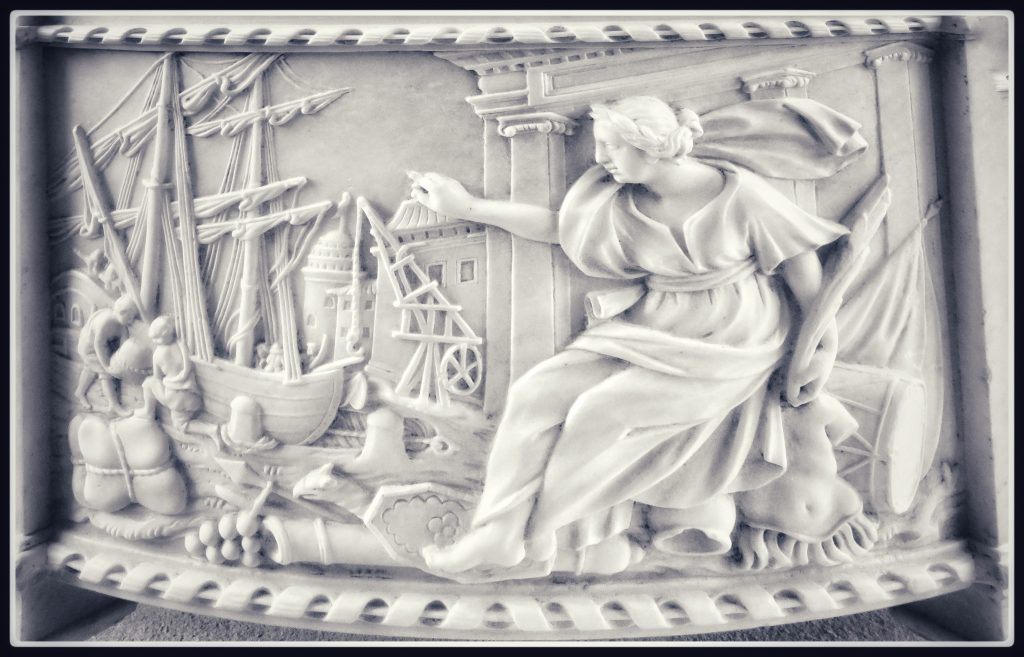
Photo © James Rye 2022
The Robert Adam monument was erected in 1762. Its marble urn is symbolic: the inscription says Keene’s remains were deposited nearby, not inside it. The ships carved on its side recall a life spent between Britain and Iberia.
Keene was neither the all-powerful court operator imagined by some admirers nor merely a servant of commerce. He was a highly capable diplomat whose successes depended upon patience, local knowledge, and compromise. He helped prevent conflict, yet failed to stop war in 1739. He ended Britain’s asiento, but not from humanitarian conviction. He influenced decisions at Madrid without controlling them.
That complexity is precisely what makes him worth remembering. The son of a King’s Lynn mercer became one of Britain’s leading interpreters of Spain. His elegant monument celebrates friendship between kings. His career reveals the more difficult reality beneath it: diplomacy conducted where trust met rivalry, and where negotiation remained inseparable from empire.
© James Rye 2026
Book a Walk with a Trained and Qualified King’s Lynn Guide
References
British Library. “Keene Papers: Official and Private Correspondence of Sir Benjamin Keene.” Add MSS 43412–43443. https://searcharchives.bl.uk/catalog/032-002056299
Brinkman, Anna. “Death Comes for the Ambassador.” In Balancing Strategy: Sea Power, Neutrality, and Prize Law in the Seven Years’ War. Cambridge University Press, 2024. https://www.cambridge.org/core/books/abs/balancing-strategy/death-comes-for-the-ambassador/D9CBF780EE020091AF651CDDB4098185. DOI: https://doi.org/10.1017/9781009425599.012
Cambridge University Press. “Keene, Benjamin.” In John Venn and J. A. Venn, Alumni Cantabrigienses. https://www.cambridge.org/core/books/abs/alumni-cantabrigienses/k/C10EA9293551920638D9E96D519A0A87. DOI: https://doi.org/10.1017/CBO9781139093910.002
Great Britain and Spain. The Convention between the Crowns of Great Britain and Spain, Concluded at the Pardo on the 14th of January 1739, N.S. London: S. Buckley, 1739. https://catalogue.nla.gov.au/catalog/2846323
Great Britain and Spain. The Treaty of Madrid, Signed the 5th Day of October, N.S. 1750. London, 1750. https://catalog.hathitrust.org/Record/100276747. Digital copy: https://hdl.handle.net/2027/aeu.ark:/13960/t6k07nr22
Lodge, Richard. “Sir Benjamin Keene, K.B.: A Study in Anglo-Spanish Relations in the Earlier Part of the Eighteenth Century.” Transactions of the Royal Historical Society 15 (1932): 1–43. https://www.cambridge.org/core/journals/transactions-of-the-royal-historical-society/article/abs/presidential-address-sir-benjamin-keent-kb-a-study-in-anglospanish-relations-in-the-earlier-part-of-the-eighteenth/C1BDFE164A20A7030DDCD706F2695EA4. DOI: https://doi.org/10.2307/3678642
Mercer, M. J. “Keene, Sir Benjamin (1696/7–1757).” Oxford Dictionary of National Biography. Oxford University Press, 2004. https://doi.org/10.1093/ref:odnb/15245
Paul, Helen. “The South Sea Bubble and the Erasure of Slavery and Impressment.” English Studies (2021). https://eprints.soton.ac.uk/452245/1/0013838X.2021.pdf. DOI: https://doi.org/10.1080/0013838X.2021.1995971
Rosenmüller, Christoph. “The Marquis of Ensenada: His Significance and Fall.” In Formative Modernities in the Early Modern Atlantic and Beyond. Springer, 2023. https://link.springer.com/chapter/10.1007/978-981-19-8417-4_6. DOI: https://doi.org/10.1007/978-981-19-8417-4_6