
In the summer of 1765, a nine-year-old boy travelled by stagecoach from Norwich to King’s Lynn. He stayed for several days in the house of an unnamed family, watched the adults play cards, tried unsuccessfully to win at the game of commerce, and then continued towards Wisbech. His name was William Godwin. There is no reason to think that the visit to Lynn shaped his later ideas, and Godwin himself remembered it simply as part of an unusually vivid childhood excursion. Yet the identity of the traveller gives the episode an unexpected interest. The deeply religious Norfolk boy who passed through Lynn would become an atheist, marry Mary Wollstonecraft, write one of the most radical political books of the eighteenth century, influence poets, reformers, socialists, and anarchists, and argue that human society might eventually have no need for government at all.
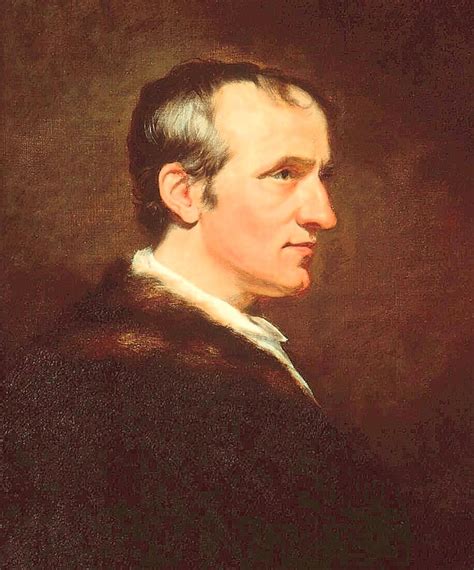
Godwin was born at Wisbech on 3 March 1756, the son of John Godwin, a Dissenting minister, and Anne Hull. His early life was shaped by Protestant Dissent and by a severe Calvinist religious culture. The family moved to Guestwick in Norfolk in 1760, and Godwin grew up in a world in which questions of sin, salvation, conscience, and divine judgement were taken with great seriousness. He was intended for the ministry, and nothing in his childhood suggests an instinctive rebel against religion. On the contrary, he was formed inside it.
From Calvinism to doubt
One of the strongest influences on the young Godwin was Samuel Newton, an Independent minister in Norwich associated with the strict Calvinism of Robert Sandeman. Godwin later remembered this period critically, but the experience mattered because it trained him to examine belief with unusual intensity. He eventually rejected the theology of his youth, yet he retained something of the Dissenting insistence upon private judgement. The doctrines changed; the habit of asking by what authority one person could command the conscience of another did not.
Godwin later studied at Hoxton Academy in London, where Dissenters could receive an education denied to them by the religious restrictions surrounding Oxford and Cambridge. His teachers included Andrew Kippis and Abraham Rees, both substantial figures in the intellectual culture of Dissent. He entered the ministry in 1778 and served congregations including one at Stowmarket in Suffolk. His movement away from Christianity took time. He passed through deism and rational forms of Dissent before finally abandoning Christianity, and his own retrospective chronology dates his atheism to 1792.
That date is important because Godwin is often labelled too quickly. The famous atheist philosopher was once a serious Calvinist and then a Dissenting minister. His intellectual life was not a straight road from childhood scepticism to unbelief. It was a long argument with the religious culture that had formed him. By the time he became an atheist, he had also left the ministry, settled in London, and begun the uncertain business of earning a living by writing.
Revolution and the making of a radical
The event that transformed Godwin’s career was the French Revolution. British political discussion in the early 1790s became intensely charged. Edmund Burke attacked the Revolution in Reflections on the Revolution in France; Thomas Paine answered him with Rights of Man; Mary Wollstonecraft and others entered disputes over monarchy, representation, privilege, property, religion, and the rights of individuals. Godwin joined this argument with a work that went further than most calls for reform.
In February 1793 he published An Enquiry Concerning Political Justice, and its Influence on General Virtue and Happiness. The book made his reputation because it did not ask merely how Britain might be better governed. Godwin asked whether government itself was one of the principal obstacles to human improvement. Political institutions, he argued, tended to preserve inherited arrangements, reward deference, protect concentrations of wealth, and substitute obedience for independent judgement. Laws carried the decisions and prejudices of one generation into the next. Governments encouraged people to rely upon authority when they ought to reason for themselves.
Godwin believed human beings capable of improvement through education, experience, discussion, and the spread of knowledge. If people became more rational and morally responsible, coercive government would have less work to do. The long-term implication was startling: a society might eventually become capable of managing its affairs with very little government, perhaps none at all.
For this reason Godwin is often described as one of the founders of philosophical anarchism. The term is useful, provided it is not confused with later revolutionary anarchism. Godwin was deeply suspicious of violence, political conspiracy, and organised movements that demanded loyalty from their members. He did not imagine a better society being born from insurrection. He thought it would emerge as individuals became more capable of exercising judgement for themselves.
His politics therefore combined radical conclusions with gradual methods. He wanted a society without masters, but he did not think it could be created by force.
The moral independence of the individual
Godwin’s distrust of authority extended well beyond kings and governments. He was suspicious of political parties because they could pressure a person to defend a collective line rather than think independently. He even questioned the moral force of promises. A promise made today might bind a person tomorrow to an action which later evidence showed to be wrong. Why should the judgement of one’s past self take precedence over the judgement of one’s present self?
This emphasis on private judgement gave his philosophy both its power and its severity. Godwin wanted individuals to act according to reason rather than custom, sentiment, rank, or inherited obligation. He applied the same logic to property. Legal ownership, he argued, did not settle the moral question of possession. If one person had more than he needed while another lacked the means to live, justice required more than the protection of property rights.
He did not propose replacing private ownership with an enormous state apparatus. That would have contradicted his suspicion of government. Instead, he imagined a society in which people came voluntarily to reject gross inequalities because they recognised them as irrational and unjust. Later socialists and anarchists would find much to admire in this attack upon property and domination, although Godwin fits neither movement neatly in its mature nineteenth-century form.
The demanding character of his moral philosophy is clearest in his famous example of the burning building. Suppose only one of two people can be saved. One is someone close to you; the other is François Fénelon, the French archbishop and writer, whom Godwin presents as a person capable of bringing great benefit to humanity. In his early formulation, if saving Fénelon would produce the greater public good, then personal affection should not override justice.
The example became notorious because it stripped morality of favouritism so thoroughly that it seemed to strip it of ordinary humanity as well. Godwin later softened some of these positions. The second and third editions of Political Justice revised important parts of the argument, and his later writings gave greater place to feeling, attachment, and the private affections. He did not spend his life defending every conclusion reached in 1793.
Caleb Williams: power turned into fiction
A year after Political Justice, Godwin found another way to examine authority. In 1794 he published Things as They Are; or, The Adventures of Caleb Williams, now usually known simply as Caleb Williams. It remains his most accessible major work because the political ideas appear through suspense rather than abstract argument.
Caleb becomes secretary to Ferdinando Falkland, a wealthy gentleman whose public reputation rests upon honour and social standing. Caleb discovers a terrible secret about his employer and finds that knowledge places him in danger. Falkland possesses wealth, rank, connections, and credibility. Caleb possesses the truth. Once the conflict begins, the institutions of society repeatedly favour the powerful man.
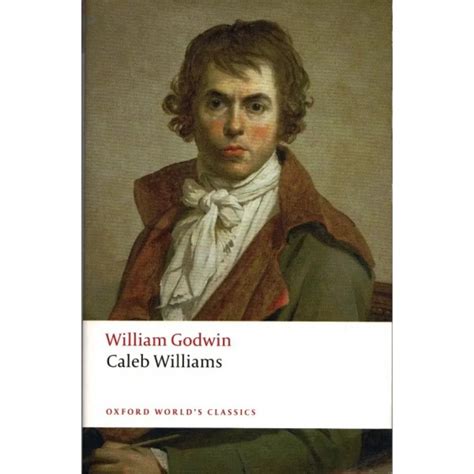
Godwin turned his political philosophy into a story of pursuit, imprisonment, fear, and helplessness. Law, reputation, class, and property no longer appear as abstractions. They become forces pressing upon an individual who cannot make himself heard. This is one reason the novel has had such a long afterlife. It belongs to the history of the political novel, but also to the Gothic and psychological traditions, and it showed how fiction could expose social power by making the reader experience its effects.
The political atmosphere made such themes more than literary devices. Britain was at war with revolutionary France, and the government feared domestic radicalism. Thomas Holcroft, John Horne Tooke, John Thelwall, and other reformers were arrested and prosecuted for high treason. Godwin knew this world personally. He responded to the treason trials of 1794 with Cursory Strictures on the Charge Delivered by Lord Chief Justice Eyre to the Grand Jury, attacking the legal reasoning behind the prosecutions. The defendants were acquitted.
Godwin’s position remained distinctive. He opposed repression by the state, but also distrusted organised political agitation. He could defend radicals without wanting to become a party activist, and he could write one of the most radical books of the age while insisting that persuasion was preferable to insurrection.
Mary Wollstonecraft and the collision of principle with life
By the middle of the 1790s, Godwin had become a recognised figure in London’s radical and literary circles. Mary Wollstonecraft moved in the same world. She had already published A Vindication of the Rights of Men and A Vindication of the Rights of Woman, and like Godwin she subjected inherited institutions to reason rather than reverence.
Their first encounters were not especially warm, but when they met again their intellectual friendship developed into a love affair. There was an obvious irony. Both had criticised conventional marriage, yet Wollstonecraft became pregnant and they married in March 1797. Their relationship did not immediately settle into the ordinary pattern of Georgian domestic life. They tried to preserve working independence and maintained separate spaces.
Their daughter Mary was born on 30 August 1797. Wollstonecraft died on 10 September following complications after childbirth. Godwin was left grieving and caring for the newborn Mary and Wollstonecraft’s older daughter, Fanny Imlay.
His response produced one of the most painful misjudgements of his life. In 1798 he published Memoirs of the Author of A Vindication of the Rights of Woman. He intended it as a tribute, but his commitment to candour led him to reveal details that many contemporaries regarded as scandalous: Wollstonecraft’s relationship with Gilbert Imlay, the birth of Fanny outside marriage, and her attempts to take her own life.
Godwin appears to have believed that honesty would increase respect for Wollstonecraft by presenting the whole person rather than a sanitised public figure. Instead, conservative critics seized upon the revelations and used them against her. The book damaged her posthumous reputation for years and harmed Godwin’s standing as well.
There is something deeply characteristic in the episode. Godwin followed a principle of truthfulness into circumstances in which social prejudice proved stronger than philosophical intention.
From celebrated thinker to target
Godwin’s reputation was already changing. The political optimism of the early French Revolution had given way to war, repression, and fear. “Godwinism” became a term of abuse, associated by enemies with atheism, attacks on marriage, hostility to property, and political subversion. Some writers who had once taken radical positions moved away from them.
Yet this hostility is itself evidence of his influence. Godwin mattered enough to be attacked. Young writers such as Samuel Taylor Coleridge, William Wordsworth, and Robert Southey read him seriously. William Hazlitt later recalled the excitement surrounding Political Justice. Thomas Holcroft and John Thelwall belonged to the broader radical network in which Godwin was a major intellectual presence.
Influence does not require lifelong discipleship. Few important thinkers produce followers who remain unchanged. Godwin’s significance lies in the fact that a generation of writers had to argue with him, borrow from him, reject him, or revise themselves in response to questions he had helped place at the centre of political discussion.
The man Malthus answered
One of the clearest measures of Godwin’s influence is that Thomas Robert Malthus wrote partly against him. In 1798 Malthus published the first edition of An Essay on the Principle of Population, challenging optimistic accounts of human perfectibility associated especially with Godwin and Condorcet.
Godwin believed that many forms of misery were produced by bad institutions and that human conduct could alter as institutions, education, and knowledge changed. Malthus argued that such hopes underestimated the pressure created by population growth. Population had a tendency to increase faster than the food required to sustain it, and this would frustrate schemes of indefinite social improvement.
The dispute between them outlived both men. It fed into nineteenth-century arguments over poverty, welfare, political economy, population, and the limits of reform. Godwin’s influence therefore worked not only through admirers but through opponents who believed his arguments were important enough to refute.
Shelley enters the family
Godwin’s ideas continued to attract younger radicals after his own celebrity had faded. The most important was Percy Bysshe Shelley. Shelley read Political Justice with enthusiasm and sought out its author as a philosophical mentor. The relationship became considerably more difficult when Shelley fell in love with Godwin’s seventeen-year-old daughter Mary.
In 1814 Mary left Britain with Shelley, who was still married to Harriet Westbrook. Claire Clairmont accompanied them. Godwin strongly disapproved. The situation has often been presented as an amusing contradiction: the philosopher who had criticised conventional marriage objected when his daughter acted outside it.
There was an irony, but the charge of simple hypocrisy is too easy. Godwin’s opinions had changed, and the actual circumstances involved an existing wife, family responsibilities, debts, reputation, and a teenage daughter. Political theory did not remove the consequences of personal decisions.
Mary and Percy Shelley married in December 1816, after Harriet Shelley’s death. Two years later Mary Shelley published Frankenstein. Godwin thus became the father of one of the most famous novelists in English literature and the father-in-law of one of the major Romantic poets.
Yet his importance should not be reduced to those relationships. Shelley had sought him out because Political Justicealready mattered. Godwin’s arguments about coercion, hierarchy, property, and political authority left a clear mark on Shelley’s intellectual world, even though Shelley developed those ideas in directions of his own.
An ancestor of anarchism
Godwin died before anarchism emerged as an organised political movement, but later anarchists recognised him as a predecessor. Peter Kropotkin, in particular, treated him as an important early thinker in the history of anarchist ideas.
The connection is not difficult to see. Political Justice argues that government is not a permanent necessity, that coercive institutions damage moral independence, and that a better society would reduce rather than perfect political authority. At the same time, Godwin’s hostility to centralised power distinguished him from forms of socialism that placed greater confidence in the state.
This makes his political position both historically important and difficult to classify. He attacked inequality without wanting a powerful government to impose equality. He distrusted property when it produced dependence, but distrusted state coercion as well. Later anarchists could therefore find in him a recognisable ambition: equality without domination.
His influence also travelled through literature. Caleb Williams demonstrated that political power could be represented through the experience of a single hunted individual. Instead of describing Parliament, ministers, or constitutions from above, Godwin showed what institutions feel like when they close around someone who lacks money, rank, and credibility. That method would become one of the enduring strengths of political fiction.
The long decline from radical celebrity
Godwin’s later life was less dramatic but no less productive. He married Mary Jane Clairmont in 1801, and together they became involved in publishing, including books for children through the Juvenile Library. Godwin wrote under his own name and at times under the pseudonym Edward Baldwin. He continued to publish novels, essays, biography, history, and educational works.
His output included St Leon, Fleetwood, a substantial biography of Chaucer, a multi-volume History of the Commonwealth of England, and Thoughts on Man. He was not merely the author of two famous works from the 1790s. He continued writing for decades, though his finances were often precarious and his public standing never returned to its earlier height.
In 1833 came a final irony. Godwin received the government office of Yeoman Usher of the Exchequer, which brought financial security and accommodation. The man who had once imagined the eventual disappearance of government ended his life partly sustained by government employment. The contradiction is entertaining, though less devastating than it first appears. Godwin had never argued that individuals living under existing institutions could behave as though those institutions had already vanished.
He died on 7 April 1836, aged eighty.
Why Godwin mattered
Godwin’s historical importance rests on more than one book or one political label. Political Justice gave one of the earliest sustained arguments that coercive government might not be a permanent feature of human society. Caleb Williamsturned arguments about class, law, reputation, and institutional power into fiction. His ideas helped shape the political imagination of the Romantic generation, especially Percy Shelley. Malthus wrote partly against him. Later anarchists recognised him as an intellectual ancestor, and socialist writers encountered his attack on inequality and accumulated property.
He also stood at the centre of one of the most remarkable literary families in Britain. He married Mary Wollstonecraft, became the father of Mary Shelley, and the father-in-law of Percy Shelley. Yet when Political Justice appeared in 1793, Mary Shelley had not been born and Percy Shelley was still an infant. Godwin’s reputation did not derive from them. For a brief period, the direction of intellectual pilgrimage ran towards him.
What made him formidable was the question he refused to leave alone. Why should one human being obey another? Godwin applied that question to monarchy, law, property, marriage, promises, political parties, and government itself. Some of his answers were severe, some proved impractical, and several he later revised. The question survived.
The Norfolk boy raised in strict Calvinism became a minister, lost his faith, embraced atheism, challenged political authority, wrote a novel about the machinery of social power, influenced Romantic writers, provoked Malthus, and entered the ancestry of philosophical anarchism. His childhood visit to King’s Lynn was only a passing episode. The remarkable story lies in what followed.
© James Rye 2026
Book a Guided Walk with a Trained and Qualified King’s Lynn Guide
References
Bodleian Libraries. “The Abinger Papers.” Bodleian Archives & Manuscripts. University of Oxford. https://archives.bodleian.ox.ac.uk/repositories/2/resources/3190
Bodleian Libraries. William Godwin’s Diary. University of Oxford. https://godwindiary.bodleian.ox.ac.uk/
Godwin, William. An Enquiry Concerning Political Justice, and Its Influence on General Virtue and Happiness. 2 vols. London: G. G. J. and J. Robinson, 1793. Internet Archive. https://archive.org/details/enquiryconcernin01godw
Godwin, William. An Enquiry Concerning Political Justice, and Its Influence on General Virtue and Happiness. Online Library of Liberty. https://oll.libertyfund.org/titles/godwin-an-enquiry-concerning-political-justice-vol-i
Godwin, William. Memoirs of the Author of A Vindication of the Rights of Woman. London: J. Johnson and G. G. and J. Robinson, 1798. Internet Archive. https://archive.org/search?query=creator%3A%22Godwin%2C+William%2C+1756-1836%22
Godwin, William. Things as They Are; or, The Adventures of Caleb Williams. 3 vols. London: B. Crosby, 1794. Internet Archive. https://archive.org/search?query=creator%3A%22Godwin%2C+William%2C+1756-1836%22
Marshall, Peter H. William Godwin: Philosopher, Novelist, Revolutionary. Corrected and updated ed. Oakland, CA: PM Press, 2017. https://www.pmpress.org/index.php?l=product_detail&p=904
O’Shaughnessy, David, ed. The Oxford Handbook of William Godwin. Oxford: Oxford University Press, 2021. https://academic.oup.com/edited-volume/43514
Philp, Mark. Godwin’s Political Justice. Ithaca, NY: Cornell University Press, 1986. https://www.cornellpress.cornell.edu/
Philp, Mark. “William Godwin.” Stanford Encyclopedia of Philosophy. https://plato.stanford.edu/entries/godwin/
Weston, Rowland. “William Godwin’s Religious Sense.” Journal for Eighteenth-Century Studies 32, no. 3 (2009): 407–24. https://researchcommons.waikato.ac.nz/entities/publication/92395c2f-5348-4555-97db-864ee5eb99a2