Recorded and possible visits to Lynn by monarchs, royal consorts, future monarchs, and two royal princes whose visits help to explain the reception given to Princess Victoria in 1835.
Visits confined to Sandringham, Castle Rising, Gaywood, or Walsingham have been distinguished from confirmed visits within Lynn.
| Date | Royal visitor | Purpose of visit | What happened in Lynn |
|---|---|---|---|
| 8–9 October 1205 | King John | Royal travel through Norfolk. The specific business at Lynn is uncertain. | John is recorded at the bishop’s residence at Gaywood, immediately outside medieval Lynn. This establishes a stay in the neighbourhood, but does not by itself prove a visit within the borough. |
| 8–11 October 1216 | King John | Travel during the civil war at the end of his reign. | John stayed in Lynn before leaving towards the Wash. Hillen cites a royal receipt for 100 marks from the town. The visit should be distinguished from the later stories about the loss of his treasure and the supposed gift of ‘King John’s Cup’. |
| 18–19 March 1277 | Edward I | Royal travel and government business. | Edward stayed at Gaywood. A visit to Lynn is possible, but the itinerary evidence cited by Hillen places him at the bishop’s residence rather than securely within the town. |
| 1281 | Edward I | Travel through Norfolk. A specific purpose in Lynn has not been established. | Hillen discusses a possible visit from the king’s movements in the neighbourhood. This is an inferred visit, not a securely dated appearance in the borough. |
| August 1328 | Edward III | Receiving the fealty of Simon Mepham, Archbishop of Canterbury. | Hillen records that Mepham did homage or fealty to the king at Lynn. This gives a specific royal and ecclesiastical purpose for the king’s presence. |
| From 1331 to 1358 | Isabella of France, widow of Edward II | Residence at nearby Castle Rising and relations with Lynn. | The borough sent gifts to Isabella during her years at Castle Rising. These demonstrate contact with the queen dowager, but gifts delivered to Rising cannot be treated as proof that she personally visited Lynn on each occasion. Exact town visits remain to be established. |
| 1335–36 | Edward III and Philippa of Hainault | Royal travel. The precise purpose of the Lynn visit is not established. | Borough expenditure cited by Hillen records arrangements connected with the king and queen travelling by water. The financial year supplies the date range, rather than an exact day. |
| 1340–41 | Edward III | Passing through Lynn. | The accounts record expenditure on wine and royal sergeants when the king passed through Lynn. This supports a visit, although the surviving summary does not establish its full itinerary or purpose. |
| 1344–45 | Edward III | Royal business in the Lynn and Castle Rising area. | Payments for messengers and horses link Lynn with the royal presence at Castle Rising. These should not be read as conclusive evidence of a separate visit inside Lynn. |
| 1347–48 | Edward III and Philippa of Hainault | Royal visit. The specific reason has not been established. | The borough accounts record gifts for the king and queen associated with their lodgings at the friars. This is stronger evidence of a stay in Lynn than entries recording only messages or gifts sent to Castle Rising. |
| 1349–50 | Edward III | Royal presence at Castle Rising. | Lynn paid for messengers connected with the king at Rising. This records municipal contact with the king nearby, not a confirmed visit to the town itself. |
| 1352–53 | Edward III | Royal presence at Castle Rising. | Expenditure on a porter and horses relates to the king at Rising. As with the preceding entry, a visit within Lynn is not established by this evidence alone. |
| About 1400 | Henry IV | Royal visit early in his reign, with financial assistance from the borough. | Hillen associates the king’s visit with the mayoralty of Henry Belleyeter and a borough loan of £58 15s. 10d. The debt remained an issue in 1417–18. The exact date and full purpose require further checking. |
| 1406 | Henry IV and Joan of Navarre, with Princess Philippa | Accompanying Philippa before her departure to marry Eric of Pomerania, ruler of the Scandinavian kingdoms. | The royal family stayed in Lynn in connection with Philippa’s departure. John Capgrave’s account, as discussed by Hillen, describes a stay of nine days. Philippa was travelling to become a queen consort. |
| 9 April 1421, as dated by Hillen | Henry V | A visit associated with his return to England between campaigns in France. The precise local purpose needs checking. | Hillen places Henry at the Austin Friary and records a substantial civic gift. The date should be checked against the underlying borough entry before treating it as a verified day of arrival. |
| 1446 | Henry VI | Royal visit and reception by the borough. | Henry stayed at the Austin Friary, where John Capgrave was associated with the community. Civic records describe preparations and ceremonial arrangements. The surviving accounts support the visit, although not every preparatory entry represents a separate occasion. |
| 26 June 1469 | Edward IV | Travel following a visit to Walsingham. | Hillen records that the king was received by Mayor Coney. His itinerary subsequently took him towards Crowland. This was a visit during his first reign. |
| 30 September 1470 | Edward IV | Flight from his opponents during the political crisis that restored Henry VI. | Edward reached Lynn late in the evening with a substantial following before escaping overseas. The Hall Book provides evidence for his arrival. Contemporary and later accounts differ over the number of men accompanying him. |
| 1500 | Henry VII | Royal progress. The precise purpose of the Lynn visit is not securely established here. | Hillen reports a reception by the mayor at the boundary near the Witton Gap and cites a Hall Book entry. The original entry and the king’s itinerary should be checked to confirm the date and circumstances. |
| 1500–1835: gap in the identified evidence | No further reigning monarch or consort securely identified in this review | An interval in the documented chronology, rather than a visit. | The sources reviewed have not supplied a securely established visit by a reigning monarch or royal consort during this interval after the reported visit of Henry VII. This is not proof that no visit occurred. Royal progresses elsewhere in Norfolk, and royal interest in Lynn’s charters or government, do not establish personal presence in the town. The two princely visits below help explain the background to Victoria’s reception in 1835. |
| 6 December 1820 | Prince William Frederick, Duke of Gloucester | Royal visit and civic reception. | Hillen records the duke’s reception in Lynn. He was a nephew and son-in-law of George III, not a monarch or the spouse of a monarch. This contextual entry is retained from the earlier chronology. |
| 1822 | Prince Augustus Frederick, Duke of Sussex | Visit connected with a journey to Holkham. | Hillen records a reception during the duke’s Norfolk journey. He was a son of George III, not a reigning monarch or consort. The occasion forms part of the background to local expectations of royal receptions. |
| 22 September 1835 | Princess Victoria, the future queen, with her mother, the Duchess of Kent | Passing through Lynn on a private journey from Burghley to Holkham. | The sixteen-year-old princess received an enthusiastic welcome. Contemporary recollections describe people removing the horses and drawing the carriage through the town. A formal civic address had not been permitted. Victoria was not yet queen, and the Duchess of Kent was not a royal consort. |
| 3 February 1862 | Albert Edward, Prince of Wales, the future Edward VII | Journey to inspect Sandringham. | Hillen records his arrival at Lynn station at about 12.15. The occasion belongs in the chronology as a documented railway arrival connected with the development of Sandringham as a royal residence. |
| 19 June 1872 | Albert Edward and Alexandra, Prince and Princess of Wales | Attendance at the agricultural show. | The future king and queen attended the show in Lynn. They were not yet the reigning monarch and consort. |
| 23 April 1889 | Queen Victoria | Journey to Sandringham. | Victoria was formally welcomed at Lynn railway station before continuing towards Wolferton. This was a railway reception, rather than an extended tour of the town. |
| 5 November 1906 | Edward VII and Queen Alexandra | Opening the new King Edward VII School. | The king opened the school and knighted its benefactor, William Lancaster. Alexandra unveiled a statue of Edward VII. The school’s history records the royal party travelling from Sandringham. Source. |
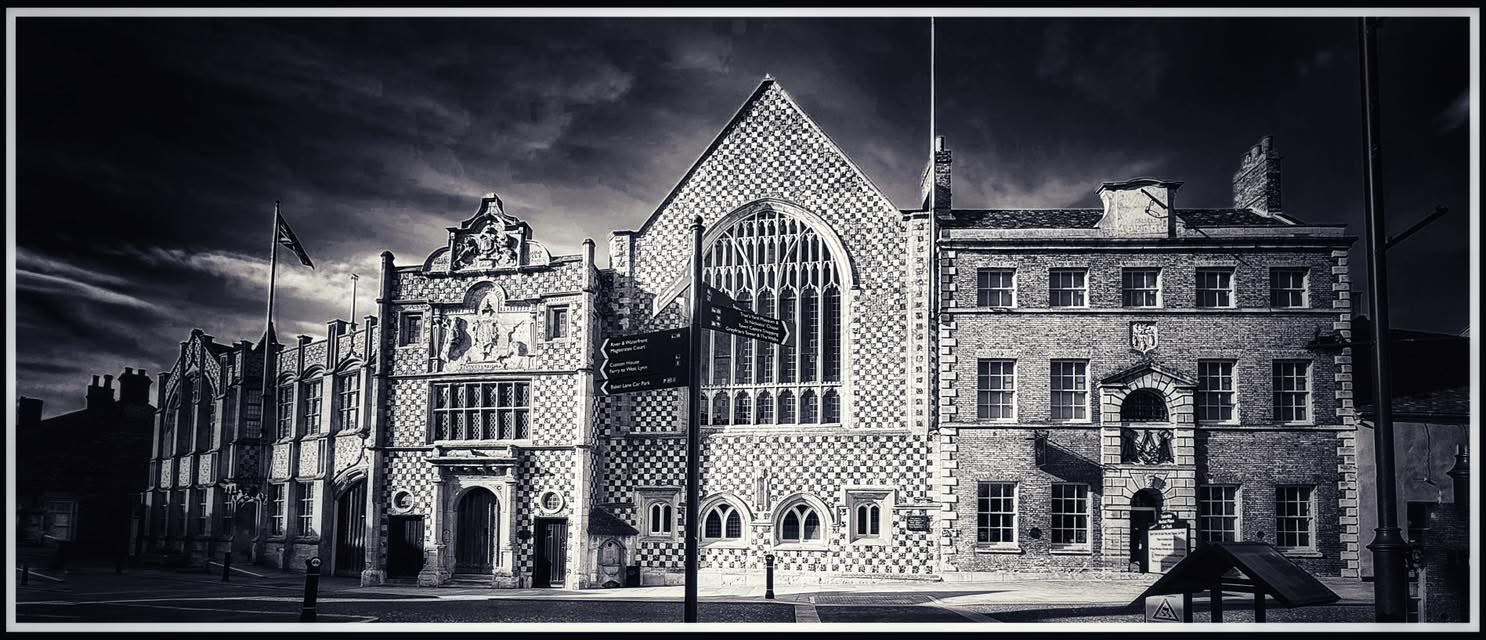
| 25 January 1946 | Queen Mary, Queen Elizabeth, and Princess Elizabeth | Visit to the Town Hall. | Remembered locally as the ‘visit of the three Queens’. Mary was the widow of George V, Elizabeth was the consort of George VI, and Princess Elizabeth was the future Elizabeth II. The Town Hall’s history confirms the date. Source. |
| July 1951 | Queen Elizabeth, consort of George VI | Opening the restored St George’s Guildhall and supporting the first King’s Lynn Festival. | The queen opened the restored Guildhall. She later became known as Queen Elizabeth the Queen Mother, but was still queen consort at the time of this visit. Source. |
| February 1953 | Elizabeth II | Seeing the effects of the East Coast floods and meeting those affected. | The Queen visited the affected West Norfolk area, including Lynn. The exact programme in the town and its distinction from the Hunstanton visit should be checked against contemporary reports. |
| 1953 or 1955: date unresolved | Elizabeth II and Queen Elizabeth the Queen Mother | Visit to Lynn Mart. | Published recollections describe the royal visitors meeting travelling showpeople and taking tea in their caravans. Accounts give conflicting dates. This remains one reported occasion requiring confirmation, rather than two established visits. |
| 1956 | Elizabeth II | Marking the fiftieth anniversary of the opening of King Edward VII School. | The Queen opened the Biology Block. The school’s history also records the presentation of its gold medal at school on this occasion. Source. |
| 1 February 1993 | Prince Philip | Rotary lunch. | Attended at the Duke’s Head Hotel as an honorary member. Source. |
| 11 January 1999 | Elizabeth II | Opening the Arthur Levin Day Surgery Centre at the Queen Elizabeth Hospital. | The Queen visited the hospital to open its day surgery facilities. This was an official engagement. |
| 6 February 2002 | Elizabeth II | Opening the Macmillan cancer facilities at the Queen Elizabeth Hospital. | The visit brought the Queen to the hospital in her Golden Jubilee year. The detailed programme should be checked against the hospital’s contemporary record. |
| 24 January 2007 | Elizabeth II | Marking the centenary of King Edward VII School. | The Queen met students and staff, together with governors and invited guests. She unveiled a plaque commemorating the visit, which formed part of the school’s centenary celebrations. Source. |
| 5 February 2010 | Elizabeth II and Prince Philip, Duke of Edinburgh | Opening an extension to True’s Yard Fisherfolk Museum. | Philip accompanied the Queen to the museum celebrating Lynn’s North End fishing community. Contemporary reporting records his reminder that they should sign the visitors’ book. Source. |
| 2 February 2011 | Elizabeth II and Prince Philip, Duke of Edinburgh | Visit to Palm Paper’s mill to see recycled newsprint production. | While the Queen toured the paper machine and control room, Philip inspected the finishing process, including the winding and packaging of rolls. Both signed the visitors’ book. The mill had already opened before this royal visit. Source. |
| 6 February 2012 | Elizabeth II | Marking the sixtieth anniversary of her accession. | The Queen visited the Town Hall, where she viewed exhibits and met local dignitaries. The date is corrected here from 9 February in the earlier table. Contemporary Norfolk archive and museum reports identify the visit as 6 February. Source. |
| 2 February 2015 | Elizabeth II and Prince Philip, Duke of Edinburgh | Official opening of South Lynn Fire Station. | Philip accompanied the Queen at the opening of the new fire station. Firefighters and their families welcomed the royal couple. Source. |
| 21 December 2017 | Elizabeth II and Prince Philip, Duke of Edinburgh | Railway arrival for their Christmas stay at Sandringham. | Dated press photographs show the couple arriving at King’s Lynn station from London King’s Cross. This records their presence in Lynn during a journey to Sandringham, rather than a civic engagement. Source. |
| 18 January 2019 | Prince Philip, Duke of Edinburgh | Precautionary hospital examination after a road accident. | Philip attended the Queen Elizabeth Hospital in Lynn on medical advice following the previous day’s collision near Sandringham. Buckingham Palace confirmed the attendance and reported no injuries of concern. This was a private medical attendance. Source. |
© James Rye 2026