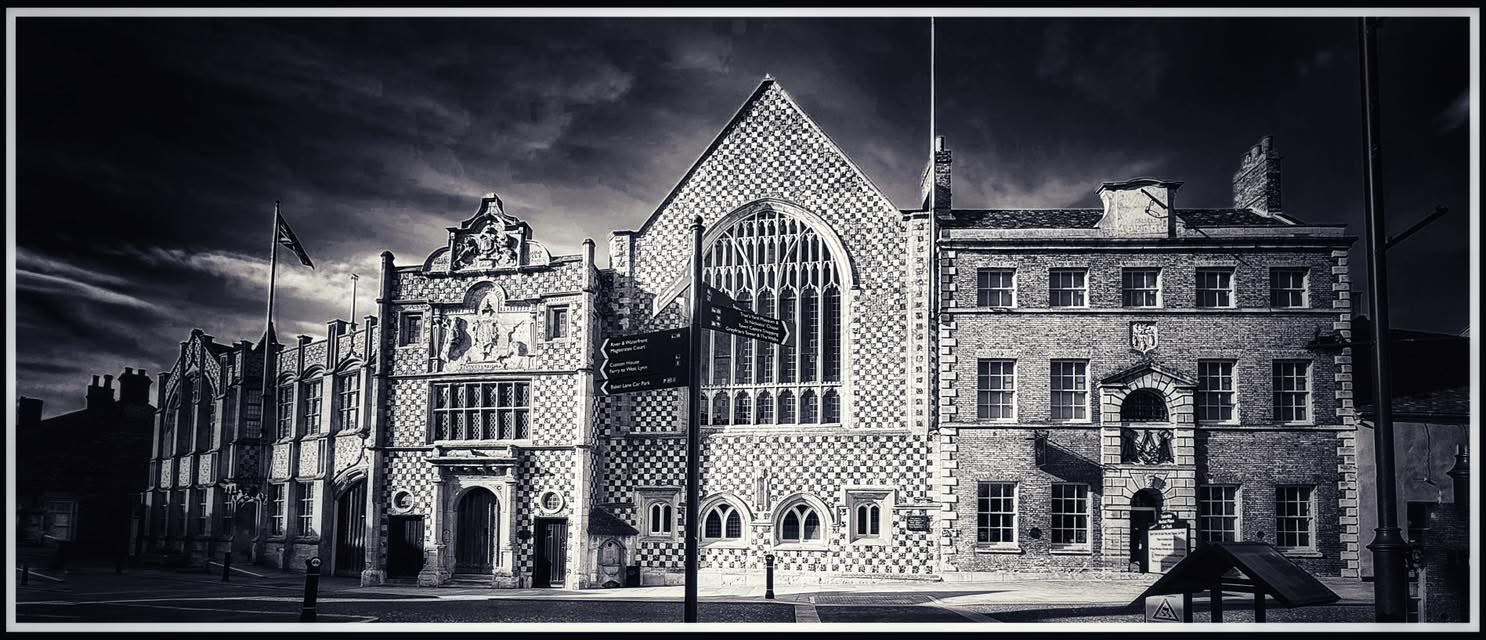
In March 1194, representatives of England’s Jewish communities met at Northampton. King Richard I had returned from captivity, and the Jews of England were ordered to contribute towards the enormous expense of his ransom. The surviving assessment records Jewish communities across the country, including Norwich, Cambridge, Lincoln, Oxford and several considerably smaller places.
Lynn is missing.
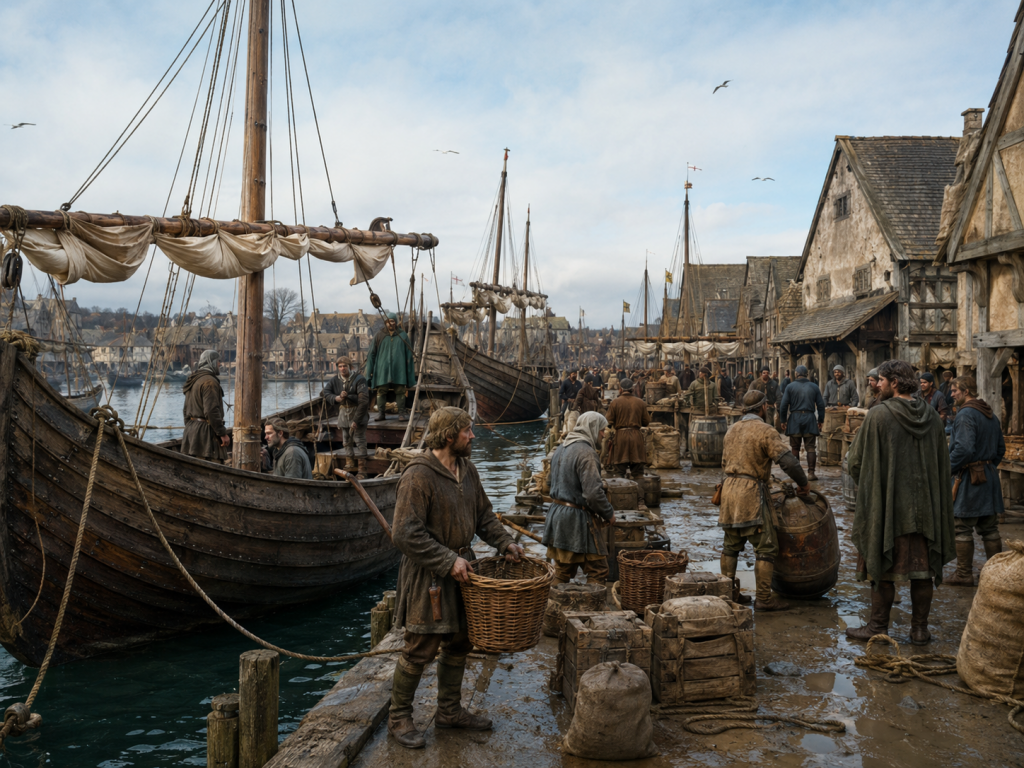
Four years earlier, a Jewish community had been living in the prosperous Norfolk port. Its members owned houses, conducted business and were sufficiently established to attract the attention of a contemporary chronicler. Then, probably in January 1190, their homes were attacked and robbed. Buildings were set alight, an unknown number of people were killed, and the survivors fled.
The absence of Lynn from the Northampton assessment does not prove that every Jewish inhabitant died. It does, however, strongly suggest that the community destroyed in 1190 had not recovered.
Jews in a growing port
The town was not yet King’s Lynn. During the Middle Ages it was usually known as Bishop’s Lynn because it belonged to the bishops of Norwich. The name King’s Lynn came only after Henry VIII took possession of the town in 1537.
By the late twelfth century Lynn was already growing into an important trading centre. The older settlement around St Margaret’s Church and the Saturday Market had been extended northwards from about 1145. A second commercial centre developed around Tuesday Market Place and St Nicholas’s Chapel, founded in 1146.
The origins of Lynn’s Jewish community are uncertain. Judith Olszowy-Schlanger and Sian Collins have suggested that some Jewish families may have moved from nearby Castle Rising after Henry II closed its mint in 1154. The evidence does not permit a definite conclusion, although a Jewish financier known as Deulebeneie of Rising certainly conducted business in Lynn during Richard I’s reign.
The later name Jews Lane, now Surrey Street, also preserves the memory of a Jewish presence near Tuesday Market Place. It cannot show precisely where every Jewish household stood in 1190, and no synagogue or Jewish cemetery has yet been identified archaeologically. Even so, the street name suggests that Jewish residence or property ownership remained part of the town’s memory long after the community itself had disappeared.
Jews in Angevin England lived under royal protection. That protection was conditional. The Crown valued Jewish communities partly because it could tax them, fine them and claim their property. Jewish lenders supplied credit in an economy where Christian restrictions on lending money at interest created opportunities for non-Christian financiers, although it is misleading to imagine that every Jew was wealthy or involved in lending.
Protection could be effective when royal authority was strong. In 1190 it failed disastrously.
The crusading atmosphere
Violence against English Jews began during Richard I’s coronation at Westminster on 3 September 1189. Jewish representatives who had brought gifts for the new king were excluded from the festivities. A disturbance at the palace gates was followed by rumours that the king had ordered the Jews to be attacked.
Jewish homes in London were robbed and burned. Some residents were murdered in the streets; others died inside their houses.
Richard had issued no order for a massacre. He tried to halt the attacks and renewed royal protection for the Jews. Soon afterwards, however, he left England while preparing to join the Third Crusade.
During the winter that followed, armed crusaders gathered in towns and ports, raising money and obtaining supplies. Hostility towards Jews was sharpened by crusading preaching. Men preparing to fight enemies of Christianity overseas could persuade themselves that Jews at home were also legitimate targets.
Religion did not operate alone. William of Newburgh, the chronicler who supplies the principal account of the Lynn pogrom, openly acknowledged the part played by envy and greed. Jewish property could be seized while robbery was disguised as an act of religious devotion.
The attack at Lynn appears to have been the first provincial pogrom in this renewed wave of violence. Norwich followed on 6 February. Attacks also occurred at Stamford and Bury St Edmunds, while the largest massacre took place at York in March.
A convert runs into a church
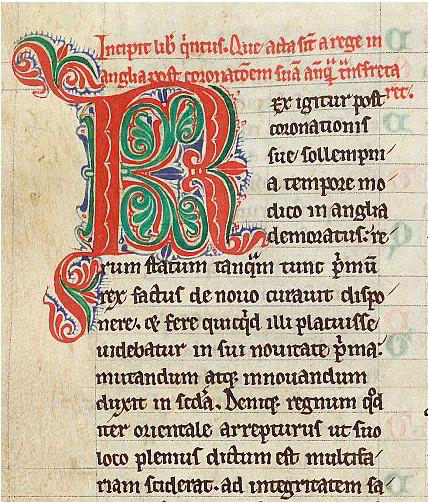
William of Newburgh wrote his account later in the 1190s. He was an Augustinian canon living in Yorkshire, not an eyewitness in Lynn. He introduced the story with the qualification “as we have heard”, showing that he depended upon information received from others.
According to William, a Jewish man had converted to Christianity. Members of Lynn’s Jewish community regarded him as an apostate and attempted to attack him. He fled into the nearest church, where his pursuers allegedly tried to seize him.
A cry of “Help for the Christian!” brought people running.
The story may contain some truth. Conversion could produce bitter disputes involving relatives, property and financial obligations. Yet no independent source confirms that Jews attempted to break into a church. The episode also offered a convenient Christian explanation for what followed. The attackers could be presented initially as rescuing a convert rather than assaulting Jewish residents.
The church cannot be identified. St Margaret’s existed, but so did St Nicholas’s Chapel in the newer northern settlement. William merely says that the convert entered the nearest church. Claims that the incident occurred at St Margaret’s are therefore speculative.
Young crusaders take the lead
William says that Lynn’s inhabitants initially hesitated because they feared the consequences of defying the king’s protection. The first men to attack were described in an older English translation as “strange youths”.
The Latin phrase is peregrini juvenes. Christoph Maier has argued persuasively that it should be understood as “young crusaders”. In twelfth-century writing, peregrinus could describe someone undertaking an armed religious pilgrimage. William adds that the men had come to Lynn for trade or supplies, which would fit crusaders preparing to travel overseas.
Lynn was an obvious gathering place. It was a busy port where travellers could obtain provisions, arrange shipping and join other armed men.
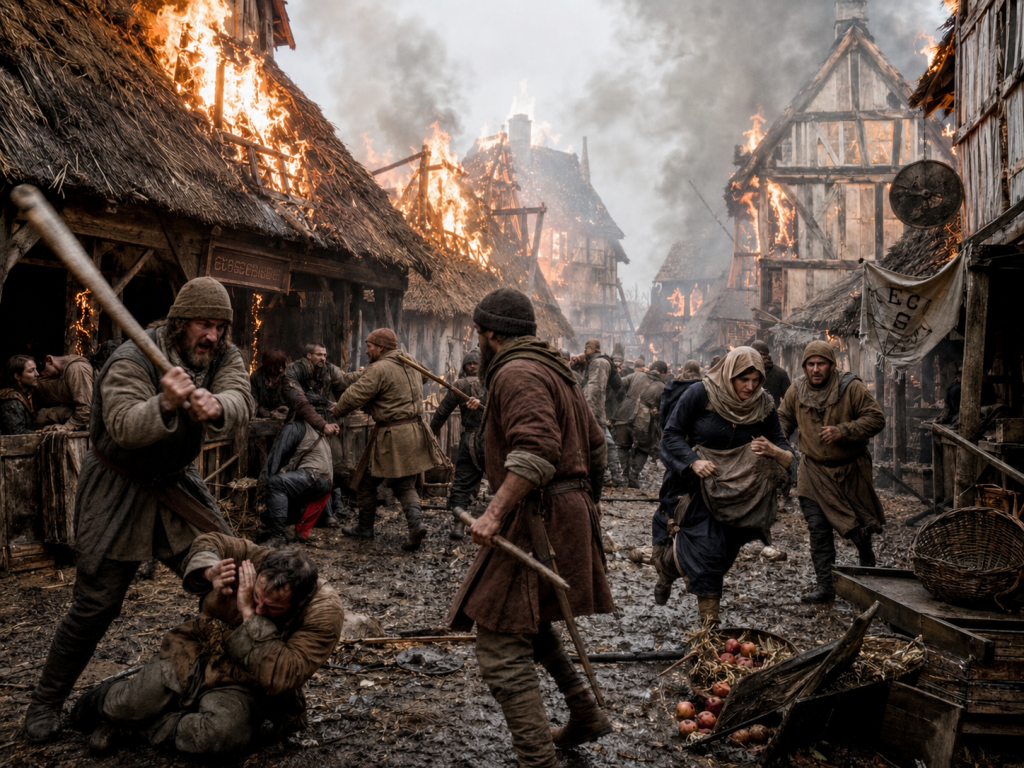
Once the visitors began the attack, the Jewish residents fled. Some were killed while trying to escape. Their houses were broken into, their belongings removed, and the buildings set on fire. William says that many people died by weapons or in the flames, but he supplies no names and gives no total.
The visiting crusaders probably did not act alone. William moves from describing the outsiders to speaking more generally of what “the Christians” did. Local people may have joined the robbery after the outsiders had begun it. No surviving document names an individual Lynn resident as an attacker, so personal accusations would be unjustified. It is equally difficult to believe that a substantial pogrom could have taken place without any local participation.
The leading attackers carried the stolen goods to their ships and sailed away. When royal officers investigated, Lynn’s inhabitants blamed the departed strangers. William records no successful prosecution, restitution or compensation.
The physician who came too late
On the following day, a Jewish physician arrived in Lynn.
William describes him as a man of recognised medical skill who was respected by Christians. He grieved over the killings and reportedly warned that punishment would follow. The remaining crowd turned upon him and killed him.
His name is not recorded. The detail is nevertheless revealing. Professional standing and friendly relations with Christian patients could not protect an individual once the whole Jewish population had been marked out as an enemy.
One probable victim may be named. A royal financial record states that Deulebeneie of Rising, who had lent money in Lynn, could not meet a payment owed to the Crown because he had died in the fire at Lynn. The document does not state directly that he was killed in the pogrom, but the date and circumstances make the connection likely. Deulebeneie is the closest we have to an identified victim of the massacre.
The finding at Northampton
The Northampton Donum of 1194 provides evidence of a different kind.
After Richard I was captured while returning from crusade, an enormous ransom was demanded for his release. English Jews were required to contribute 5,000 marks. At Northampton on 30 March 1194, representatives apportioned the burden among Jewish communities and individual householders.
The surviving record names nearly 270 contributors. It was a fiscal assessment rather than a census, and it is not complete. Even so, it offers one of the clearest pictures available of organised Jewish settlement in England shortly after the massacres of 1190.
Lynn does not appear as a contributing community.
That omission must be interpreted carefully. A survivor from Lynn might have moved to Norwich or another town and been assessed there. Impoverished individuals may have been unable to contribute, while some parts of the record may have been lost.
Yet the absence remains significant. William of Newburgh had described an established group possessing several houses and enough property to attract organised looting. Only four years later, the royal administration no longer recognised Lynn as a separate Jewish centre.
Lynn is also absent as an independent community from later thirteenth-century Jewish tax lists. Jewish financiers based elsewhere continued to lend money upon Lynn property and to conduct business in the surrounding marshlands. A thirteenth-century Hebrew document studied by Olszowy-Schlanger and Collins records transactions involving Samuel of Norwich and land near Lynn. Jewish economic activity therefore returned to the area, but the evidence does not show that a permanent local congregation was re-established.
The conclusion should not be exaggerated. The Northampton assessment does not prove that the community was completely exterminated. It does show that the Jewish settlement known before the attack had ceased to function as a recognised community by 1194.
What remains uncertain
We do not know the exact date of the pogrom, although January 1190 is the most likely. Older accounts sometimes place it in early February.
The number of dead is also unknown. William’s statement that “many” were killed cannot be converted into a reliable figure. Some residents almost certainly escaped, but their destinations are not recorded.
Nor can we be certain that the dispute involving the convert happened as William described it. His account was based on report and was written from a Christian perspective hostile to Judaism. He condemned the attackers’ greed, but he also repeated prejudiced assumptions about Jewish behaviour.
What can be stated securely is stark enough. Jewish residents were attacked collectively, their homes were robbed and burned, and an unknown number were murdered. The killers escaped with the stolen property, while the royal investigation achieved no recorded punishment.
Four years later, when England’s Jewish communities were counted for taxation at Northampton, Lynn had vanished from the list.
Source Note
The central interpretation follows Olszowy-Schlanger and Collins, who note both Lynn’s absence from the Northampton Donum and its failure to appear later as a distinct Jewish community. William of Newburgh remains the sole extended narrative source for the pogrom, while Maier’s reading of the leading attackers as crusaders offers the strongest modern explanation of the difficult Latin terminology.
© James Rye 2026
Book a Guided Tour with a Trained and Qualified King’s Lynn Guide Through Historic Lynn
References
- Abulafia, Anna Sapir. “William of Newburgh on the Attack on the Jews of York in 1190.” Jewish/non-Jewish Relations: Between Exclusion and Embrace. University of Edinburgh. https://jnjr.div.ed.ac.uk/primary-sources/medieval/william-of-newburgh-on-the-attack-on-the-jews-of-york-in-1190/
- Hillaby, Joe, and Caroline Hillaby. The Palgrave Dictionary of Medieval Anglo-Jewish History. Basingstoke: Palgrave Macmillan, 2013. https://link.springer.com/book/10.1057/9781137308153
- Jacobs, Joseph, ed. and trans. The Jews of Angevin England: Documents and Records from Latin and Hebrew Sources, Printed and Manuscript. London: David Nutt, 1893. https://archive.org/details/jewsangevinengl00jacogoog
- Maier, Christoph T. “Crusaders and Jews: The York Massacre of 1190 Revisited.” In Anglo-Norman Studies XLIV: Proceedings of the Battle Conference 2021, edited by Stephen D. Church, 47–68. Woodbridge: Boydell Press, 2022. https://www.academia.edu/107620357/Crusaders_and_Jews_The_York_Massacre_of_1190_Revisited
- Olszowy-Schlanger, Judith, and Sian Collins. “Samuel of Norwich in the Marshlands of King’s Lynn: Economic Tribulations Reconstructed from a Newly Discovered Thirteenth-Century Hebrew Starr in Cambridge University Library.” Jewish Historical Studies 50, no. 1 (2018): 14–44. https://journals.uclpress.co.uk/jhs/article/id/1008/
- William of Newburgh. Historia Rerum Anglicarum. Book IV, chapter 7. Translated in Joseph Stevenson, The Church Historians of England, vol. 4, part 2. London: Seeleys, 1856. https://sourcebooks.web.fordham.edu/basis/williamofnewburgh-four.asp