In late July 1608, a furious Dutch shipmaster stepped into one of the most uncomfortable episodes in the civic history of King’s Lynn. His name was Simon Johnson. He was master of the Fortune of Dordrecht, a vessel that came regularly into Lynn as part of the town’s trade with the Low Countries. Johnson was not making a polite enquiry. He was angry, and he wanted action.
His complaint concerned one of Lynn’s own rulers: Thomas Baker, alderman, former mayor, wealthy townsman, and member of the borough’s governing elite. Johnson alleged that Baker had sexually assaulted two of his ship-boys. The boys were Dutch. The accused man was one of the people who helped govern Lynn. That made the matter dangerous.

What followed was not a clean story of justice. It was a story of exposure, embarrassment, legal manoeuvring, and civic damage limitation. It tells us a great deal about early seventeenth century Lynn: its trade, its waterfront, its closed corporation, and the protection that wealth and office could give to a man whose conduct his own colleagues found disgraceful.
A Dutch voice on Lynn’s waterfront
The Dutch connection is not incidental. In the early 1600s, Lynn was a port deeply tied into the North Sea world. Its quays were used by English, Scottish, Dutch, and other seamen. The surviving port books for 1604 to 1614 show a lively trade with the Low Countries, especially with Dutch ports such as Amsterdam, Rotterdam, Enkhuizen, Dordrecht, Flushing, and Veere. G. Alan Metters has shown that eighty-five Dutch shipmasters appear in the Lynn port books for this period, with many acting as both shipmasters and merchants.
Simon Johnson was part of that world. He regularly skippered the Fortune of Dordrecht and seems at times to have worked with Cornelius Clawson, master of the Griffen of Dordrecht. He was not an unknown foreign sailor shouting from the margins. He was a recognised figure in the commercial life of the port.
This matters because the scandal was exposed from the outside. Lynn’s corporation was a closed governing body. Aldermen and common councillors formed a tight civic circle. Its records were not public, its offices were held for life unless a man resigned or was removed, and its members controlled much of the town’s formal political life. In such a system, an embarrassing matter involving one of their own could be softened, delayed, or kept private. A foreign shipmaster standing before merchants and officers near the custom house was much harder to ignore.
Not Henry Bell’s Custom House
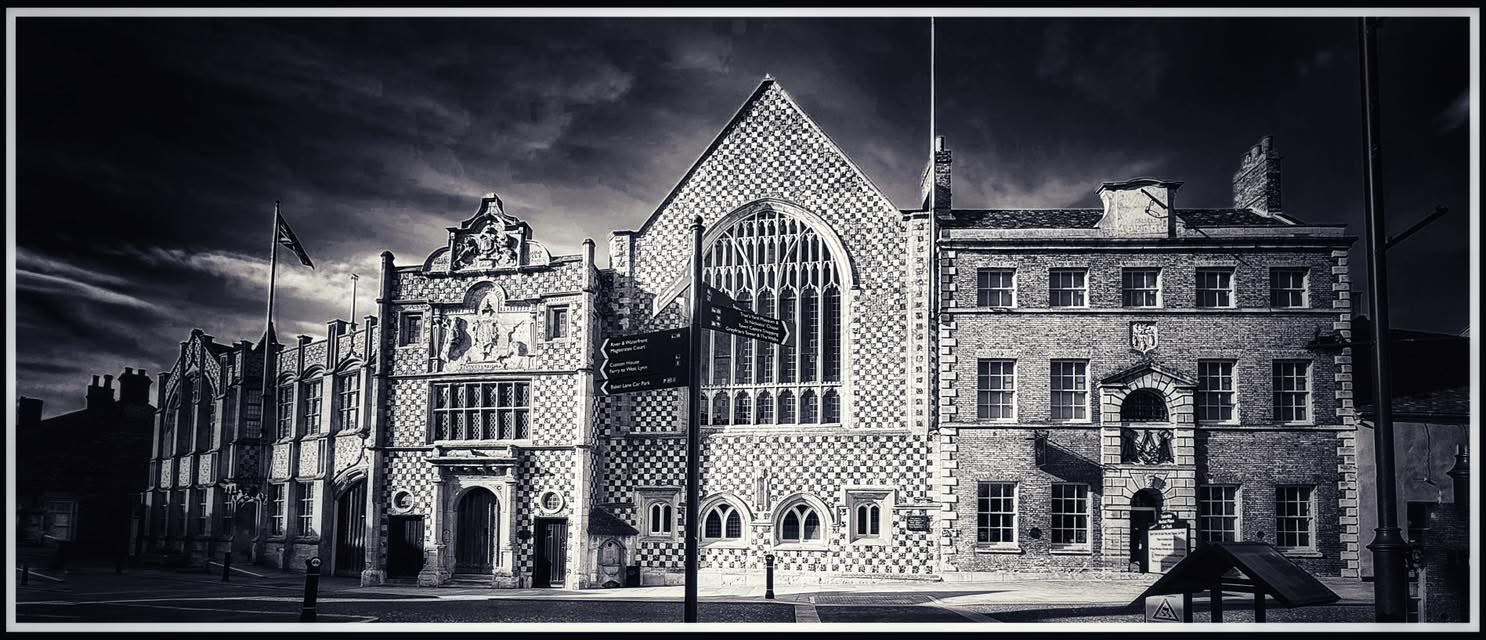
The setting needs a little care. Johnson did not make his complaint outside the handsome Custom House that still stands beside the Purfleet. Henry Bell’s building belongs to the 1680s. In 1608, the customs officers used a corporation-owned property in the Tuesday Market Place, with the custom house on the first floor.
There, according to the later evidence, Johnson confronted leading Lynn merchants and members of the corporation who were sitting beneath the custom house. Thomas White, the customer of the port, was present and later said that he knew Johnson from previous official dealings. At least one Lynn merchant, William Parkin, understood enough Dutch to grasp what Johnson was saying.
Johnson accused Thomas Baker of sexual assaulting two of his ship-boys. The Latin wording preserved in the borough record was “commisit pederasciam cum …”, meaning that Baker had committed pederasty with them. The term must be handled carefully, because early modern legal and moral language does not map neatly on to modern categories. Even so, the charge was extremely serious. Johnson demanded that the town authorities act.
Thomas Baker: no ordinary offender
Thomas Baker was not merely a troublesome townsman. He was an alderman and had served as mayor in 1598 to 1599. His father, George Baker, had also been an alderman and mayor. Thomas Baker belonged to Lynn’s civic elite by birth, office, wealth, and connections.
He had already caused trouble before 1608. Metters notes earlier disputes involving his family’s debts and a breach of local trading ordinances, but the Dutch complaint revealed something far more damaging. The problem for Lynn’s rulers was not simply that Baker had been accused. It was that the accusation began to expose a wider pattern of behaviour that some of them may already have known about.
Mayor John Atkin had to respond. Atkin was himself a substantial merchant and brewer, and he had not always been on friendly terms with Baker. Yet the evidence does not suggest a quick partisan stitch-up. Metters points out that Atkin gave Baker opportunities to answer the allegations, and Baker repeatedly refused.
Atkin took advice from other borough justices, including former mayors and the recorder. He also sent for Alderman John Wallis, who was known to be fluent in Dutch. This small detail is a vivid reminder of Lynn’s international life. The town needed not only merchants, shipmasters, and customs officers, but also men who could move between languages when a dispute on the waterfront became a legal and civic matter.
The boys give evidence

Photo © James Rye 2022
On 2 August 1608, the two Dutch boys, Esdras Jacobson and Cornelius van Stigen, were summoned before the justices. The inquiry was held not in the Trinity Guildhall but at Atkin’s house in South Lynn, now known as Greenland Fishery House. The house was relatively new in 1608 and still stands today.
The location is telling. This was an official inquiry, but it began in a semi-private setting. It is hard not to sense caution. A public hearing in the town hall would have made the scandal more visible. A hearing at the mayor’s house allowed the authorities to investigate while keeping some control over who heard what.
The boys’ testimony was recorded in detail. Esdras Jacobson said that he had gone to Baker at the command of his shipmaster, carrying food including bacon, cheese, and pickled herrings. Baker received him, called for beer in a silver cup, pressed him to drink, struck him when he resisted, gave him three pence, and then sexually assaulted him. Esdras returned to the ship ashamed and told another young man what had happened.
Cornelius van Stigen gave evidence about other incidents. He described Baker trying to put his hand into his breeches, attempting to get him alone, untying his points, and shutting a chamber door. These details are unpleasant, but they are central to the story. Without them, the episode becomes just another vague “scandal”. The evidence shows something more specific: a powerful older man using access, drink, money, and privacy against younger and more vulnerable males.
The wall begins to crack
Johnson’s complaint did not end with the two Dutch boys. Once the inquiry began, other allegations emerged.
Some days later, witnesses from Lynn were summoned. John Bloye, a Lynn shipmaster, gave evidence about Baker asking to be whipped in a sexualised context. More disturbing were the statements from members of Lynn’s own civic circle. John Boston and Joshua Greene, both members of the common council, gave evidence about Baker’s conduct when they had been younger. Greene later became an alderman and mayor, which makes his evidence particularly striking [Metters, 2025, pp. 189–90].
Greene said that during Baker’s mayoralty, around ten or twelve years earlier, he had gone to Baker while seeking his freedom of the borough. This was no small matter. Freedom of the borough gave a man civic and trading privileges. According to Greene’s evidence, Baker took him into a chamber and sexually abused him, with the implied threat that Greene would not secure his franchise otherwise.
This is where the episode becomes more than a sordid tale about one alderman. It becomes a story about power. Baker’s alleged victims were not all of the same status, but many were boys, young men, ship-boys, sailors, or people who needed something from him. The allegations suggest a man using position, privacy, and dependence to get what he wanted.

Why was there no criminal prosecution?
Here the story becomes awkward. Lynn’s authorities did act. On 17 August 1608, the mayor, aldermen, and common council removed Baker from the office of alderman. The hall book stated that he had committed “divers misdemeanors and eviell behaviours” to the great disgrace of the borough government and the scandal of the corporation.
That was a serious civic punishment. But there was no criminal prosecution.
The reason cannot be known with certainty, but the likely explanation lies partly in the law and partly in self-protection. Since the Buggery Act of 1533, buggery had been a capital felony. A criminal case would have raised difficult questions about the exact acts alleged, the reliability and vulnerability of witnesses, the shame attached to victims, and the public embarrassment of dragging a former mayor of Lynn through a capital trial. The surviving evidence does not appear to include explicit statements of anal penetration, which contemporaries treated as the fullest form of sodomy.
There was also the corporation’s reputation to consider. A criminal prosecution might have exposed not only Baker, but also the failure of his colleagues to deal with him earlier. If several men within the corporation already knew something of his behaviour, then a public trial would have asked painful questions about silence, complicity, and fear.
So Lynn’s rulers chose a civic remedy. They expelled him from the aldermanry. It looked firm. It was not enough.
Baker fights back
Thomas Baker knew the law. He had carried out legal work for the borough and, with his brother John, for Sir Nathaniel Bacon of Stiffkey. After his removal, Baker went to the Court of King’s Bench and obtained two writs of restitution. The first was resisted, but the second succeeded. On 9 June 1609, the corporation accepted the writ and restored him to his place as alderman.
This was a humiliating reversal. The town’s rulers had expelled a man they considered scandalous, only to be forced to take him back. They were also left with an administrative problem, because another alderman had already been chosen in his place.
Baker then attacked John Atkin through the Court of Star Chamber, accusing him of misconduct during his mayoralty, including allegations relating to beer sales. Atkin was a brewer, so the charge was not random. The final outcome of the Star Chamber case is not known, and Metters suggests that it may have lapsed. Yet the case preserved further depositions, taken in 1609 and 1610, which revealed more allegations about Baker’s earlier conduct.
In other words, Baker’s attempt to fight back helped keep the scandal on record.
A man who survived disgrace
The ending is unsettling. Baker was not destroyed. He remained an alderman until his death in 1626. He was never again chosen as mayor, which suggests that his colleagues had not forgotten what had happened. But he retained office, wealth, and status. In the subsidy assessment of 1625 he was among the three wealthiest taxpayers in the town. His will left substantial bequests, including money to Pembroke Hall, Cambridge, for library books.
There are hints that his colleagues continued to find him difficult. On one occasion he refused to attend a hall meeting, saying he was too weary. A sergeant-at-mace was sent to fetch him and found him in an inn “refreshing himself”. Later, when the sergeant went again, Baker was at home but had instructed his maidservant to say that he was asleep. It is a small comic ending to a very dark story, but it also shows how completely he had returned to the civic world. He could irritate his fellow rulers because he was still one of them.
When he died in 1626, the hall book recorded him as “Thomas Baker mortuus”. Metters notes that this wording was unusual, since the death of a corporation member was normally recorded only when a replacement was elected. It sounds almost like official relief.
What the Dutch captain changed
Simon Johnson did not bring Baker down permanently. He did not secure the punishment he wanted. The Dutch boys vanish from the story after the early inquiry, and we do not know what became of them. Trade between Lynn and the Low Countries appears to have continued much as before. Commerce survived the scandal.
Yet Johnson’s complaint did something important. It forced Lynn’s rulers to confront a matter that might otherwise have remained hidden in private shame and closed-room knowledge. Baker’s alleged behaviour had affected young men from Lynn and elsewhere, but it was the anger of a Dutch shipmaster that made it impossible to ignore.
The episode also reminds us that Lynn’s history was never only local. The town’s international trade brought ships, goods, languages, disputes, and people into its streets. Sometimes that contact enriched the town. Sometimes it exposed what the town would rather not see.
In 1608, a Dutch captain stood in Lynn and made a complaint about a powerful English alderman. The corporation tried to deal with the problem quietly and officially. Baker lost office, then won it back. The scandal did not stop the port from trading. But it left behind a paper trail, and that paper trail still lets us glimpse a closed civic world suddenly forced open by a voice from the quayside.
© James Rye 2026
Book a Guided Tour with a Trained and Qualified King’s Lynn Guide Through Historic Lynn
References
- Malcolm, Noel. Forbidden Desire: Male-Male Sexual Relations, 1400–1700. Oxford: Oxford University Press, 2024.
- Metters, G. Alan. “King’s Lynn and the Low Countries in the Early Seventeenth Century: Maritime Trade and Sexual Scandal.” History 110, no. 390 (2025): 173–193.
- Metters, G. Alan. “Office-Holding and Local Politics in Early Seventeenth-Century King’s Lynn.” Norfolk Archaeology 47, no. 2 (2015): 183–207.
- Metters, G. Alan. The King’s Lynn Port Books, 1610–1614. Norwich: Norfolk Record Society, 2009.
- Norfolk Record Office. KL/C 7/8. King’s Lynn Hall Book, including the order removing Thomas Baker from the aldermanry.
- Norfolk Record Office. KL/C 64/7/1. Mayor and burgesses’ answer to Thomas Baker’s mandamus for reinstatement as alderman.
- Pevsner, Nikolaus, and Bill Wilson. The Buildings of England: Norfolk 2: North-West and South. 2nd ed. New Haven and London: Yale University Press, 1999.
- Smith, Peter. Petitionary Negotiation in a Community in Conflict: King’s Lynn and West Norfolk, c.1575 to 1662. PhD thesis, University of East Anglia, 2012.
- The National Archives. STAC 8/59/6. Court of Star Chamber proceedings involving Thomas Baker and John Atkin.