Source Agincourt in the Royal Armouries – Medieval Histories
In the summer of 1415, Henry V was preparing to invade France. Soldiers had to be paid, horses transported, provisions purchased and hundreds of ships assembled. The king possessed lands, customs revenues, and the promise of taxation, but what he needed immediately was ready money.
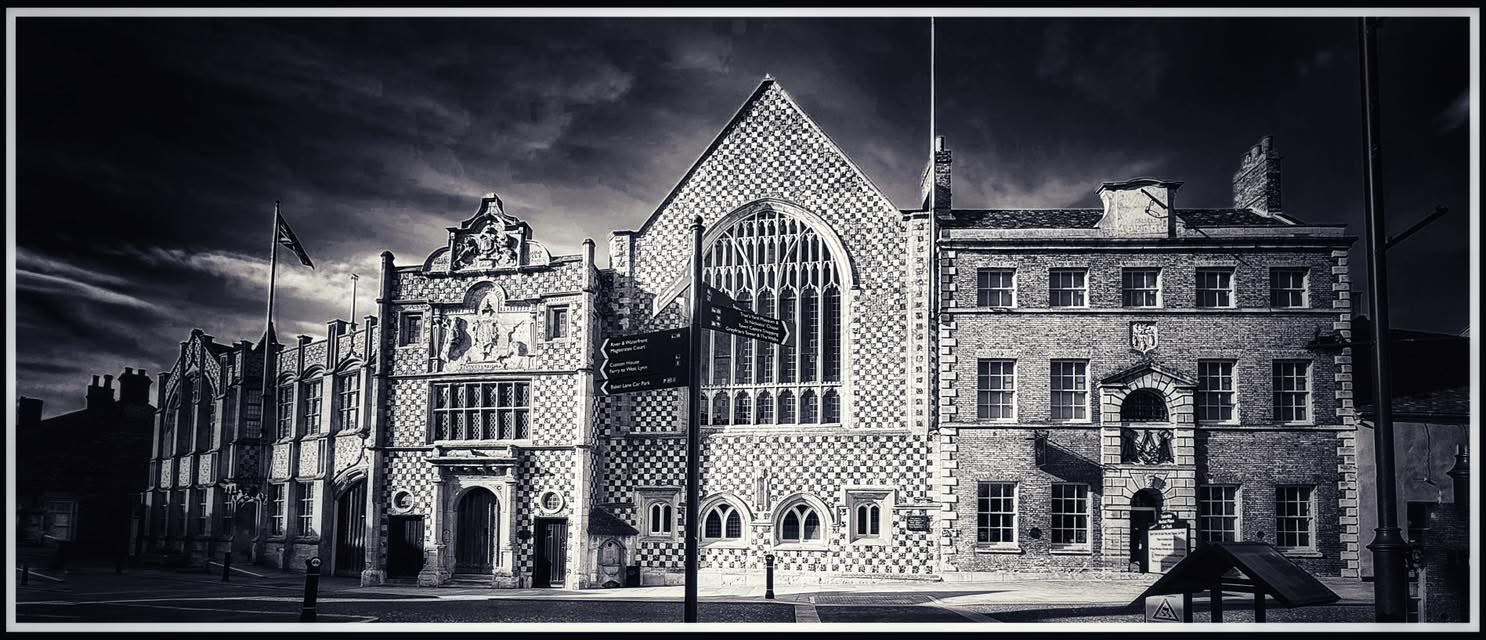
Part of it came from Bishop’s Lynn, the prosperous Norfolk port later known as King’s Lynn. The borough advanced Henry 400 marks and its ships took part in the maritime operation supporting his army. Lynn’s contribution was considerable, but it was not offered with uncomplicated enthusiasm. The town tried to resist the demand, took elaborate precautions over the royal jewel pledged as security, and ultimately recovered less than half its money.
Henry V asks Lynn for 400 marks
On 14 July 1415, less than a month before Henry’s expedition crossed the Channel, a loan of 1,000 marks was raised in Norfolk. Norwich provided 500 marks and the mayor and commonalty of Lynn supplied 400. The remaining 100 marks came from individual lenders.
A mark was a unit of account worth 13 shillings and 4 pence. Lynn’s contribution therefore amounted to £266 13s 4d. This was a formidable sum for a medieval borough and only one fifth less than the amount provided by Norwich.
The wording of the agreement is significant. The lender was the “mayor and commonalty” of Lynn, meaning that the obligation was accepted in the name of the borough rather than by one wealthy merchant. The surviving published evidence does not reveal exactly how the authorities raised the money. It may have come from civic funds, contributions from prosperous inhabitants, borrowing, or a mixture of these.
The loan formed part of Henry’s wider effort to finance the campaign. Although Parliament had granted taxation, royal income did not necessarily arrive when bills had to be paid. The king therefore borrowed from towns, church institutions and private individuals, handing over jewels and valuable objects as security.
A royal circlet in pawn
The Norfolk lenders received a magnificent gold circlet. It weighed four pounds and was valued at £800. According to its recorded description, it was decorated with 56 balas rubies, 40 sapphires, eight diamonds, and seven large pearls. A balas ruby was a pale red or rose coloured spinel rather than what would now be classified as a true ruby. Even so, the circlet was a spectacular object whose value exceeded the £666 13s 4d raised upon it.
The jewel was more than decoration. It was being used as a financial instrument, converting royal magnificence into money that could be spent on ships, wages and supplies.
The agreement stated that if Henry, his heirs or representatives failed to redeem the circlet within one year, six months and one month, the lenders could sell it. Any proceeds beyond the amount owed were to be returned to the Crown. On paper, Lynn appeared well protected. In practice, selling a royal jewel would not have been straightforward, especially after Henry’s death, when his debts became entangled with the finances of his young son’s government.
Lynn tries to escape the loan
Lynn’s civic leaders did not accept the demand without protest.
Henry Hillen, drawing upon Henry Harrod’s earlier transcription of the borough records, reports that Thomas Brygge was sent to London to investigate the jewel. When he returned, three of Lynn’s jurats were chosen to approach John Wakering, Bishop of Norwich, and the royal servant John Wodehouse. A jurat was a senior member of the borough’s governing body.
The deputation claimed that the town was too poor to raise the required sum. Bishop Wakering declined to help. John Wodehouse argued Lynn’s case, but without success. Claims of civic poverty were common when medieval towns faced royal demands. Lynn was an important port, but the wealth of its merchants was not the same as money immediately available to the borough government. Raising more than £266 at short notice could have forced the town to borrow or impose contributions upon its inhabitants.
The circlet was eventually locked away in Norwich. Lynn retained one of the keys, ensuring that it could not be removed without the borough’s agreement.
There is a difficulty in the local chronology. One of the regnal years printed by Hillen is plainly wrong, and he himself suggested a correction. The main transaction is nevertheless securely dated to July 1415 by the national records.
Lynn’s ships in Henry’s service
The town’s involvement was not confined to money. Vessels from Lynn also served in the naval operations surrounding the campaign. Historian Craig Lambert has identified ships, barges, and balingers from Lynn among a flotilla retained for six weeks from 1 August 1415. A balinger was a relatively light vessel, usually smaller than a barge and capable of operating under sail or oars. The flotilla included vessels from ports such as Hull, London, Sandwich, Cromer, and Winchelsea. Lambert suggests that they probably carried supplies to the English army and transported sick soldiers home from Harfleur.
That interpretation fits the circumstances. Henry’s army besieged Harfleur from August until September, but disease spread through the camp. Large numbers of men became too ill to continue. Ships were needed not only for the original crossing but to maintain communications, move provisions and return casualties to England.
The surviving records do not identify every Lynn vessel or crew. Only part of the documentation for the extended service remains, although orders for the payment of arrears show that more ships were employed than can now be individually named.
Nor should the presence of Lynn shipping be treated as proof of voluntary enthusiasm. The Crown could arrest merchant vessels and require their owners and mariners to serve. Payment was supposed to follow, but it was often delayed. Removing ships during the sailing season could disrupt trade and deprive a port of working vessels and experienced crews.
Did men from Lynn fight at Agincourt?
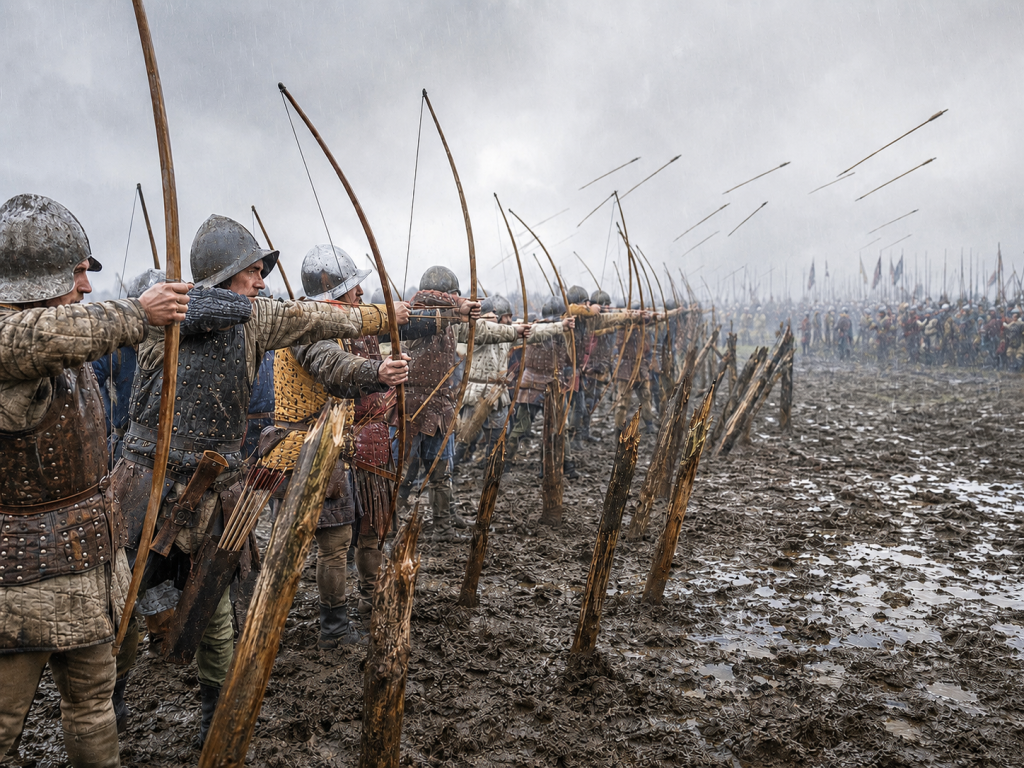
No distinct Lynn contingent has yet been identified among the forces that fought on 25 October 1415. This does not prove that no Lynn men were present. Medieval soldiers were usually recorded as members of a captain’s retinue rather than by their place of origin. Many archers were counted without being named, while some accounts and muster rolls have been lost. A man from Lynn could therefore have served without any surviving document identifying his home town.
The town’s documented contribution remains financial and maritime rather than military. Lynn helped provide the money and shipping without leaving clear evidence of named townsmen on the battlefield.
A costly victory for Lynn
Henry V’s army captured Harfleur and then marched towards Calais. On 25 October it defeated a larger French force at Agincourt, creating the victory with which Henry’s name remains most closely associated.
Henry died in 1422. By 1427 the circlet still had not brought Lynn the security its leaders had expected. The town’s burgesses in Parliament reported that they could obtain only £100 from Henry V’s executors for the pledged jewel, and the assembly agreed to accept it because no more could be recovered. Soon afterwards the circlet was delivered back into the royal Treasury. Lynn had lent £266 13s 4d and recovered £100. The jewel survived the transaction; Lynn’s money did not.
© James Rye 2026
Book a Guided Tour with a Trained and Qualified King’s Lynn Guide Through Historic Lynn
References
- Great Britain, Historical Manuscripts Commission. Eleventh Report, Appendix, Part III: The Manuscripts of the Corporations of Southampton and King’s Lynn. London: Her Majesty’s Stationery Office, 1887, 159–61. https://archive.org/details/manuscriptsofcor00grea
- Hillen, Henry J. History of the Borough of King’s Lynn. Vol. 1. Norwich: East of England Newspaper Company, 1907, 161–63. https://archive.org/details/historyofborough01hill
- Lambert, Craig. “Henry V and the Crossing to France: Reconstructing Naval Operations for the Agincourt Campaign, 1415.” Journal of Medieval History 43, no. 1 (2017): 24–39. https://doi.org/10.1080/03044181.2016.1236503
- Nicolas, Nicholas Harris. History of the Battle of Agincourt, and of the Expedition of Henry the Fifth into France, in 1415. London: Johnson and Co., 1832. https://archive.org/details/historyofbattl00nico
- Rymer, Thomas. Foedera, Conventiones, Literae, et Cujuscunque Generis Acta Publica. Vol. 9. London, 1729. https://www.british-history.ac.uk/rymer-foedera/vol9/pp283-298