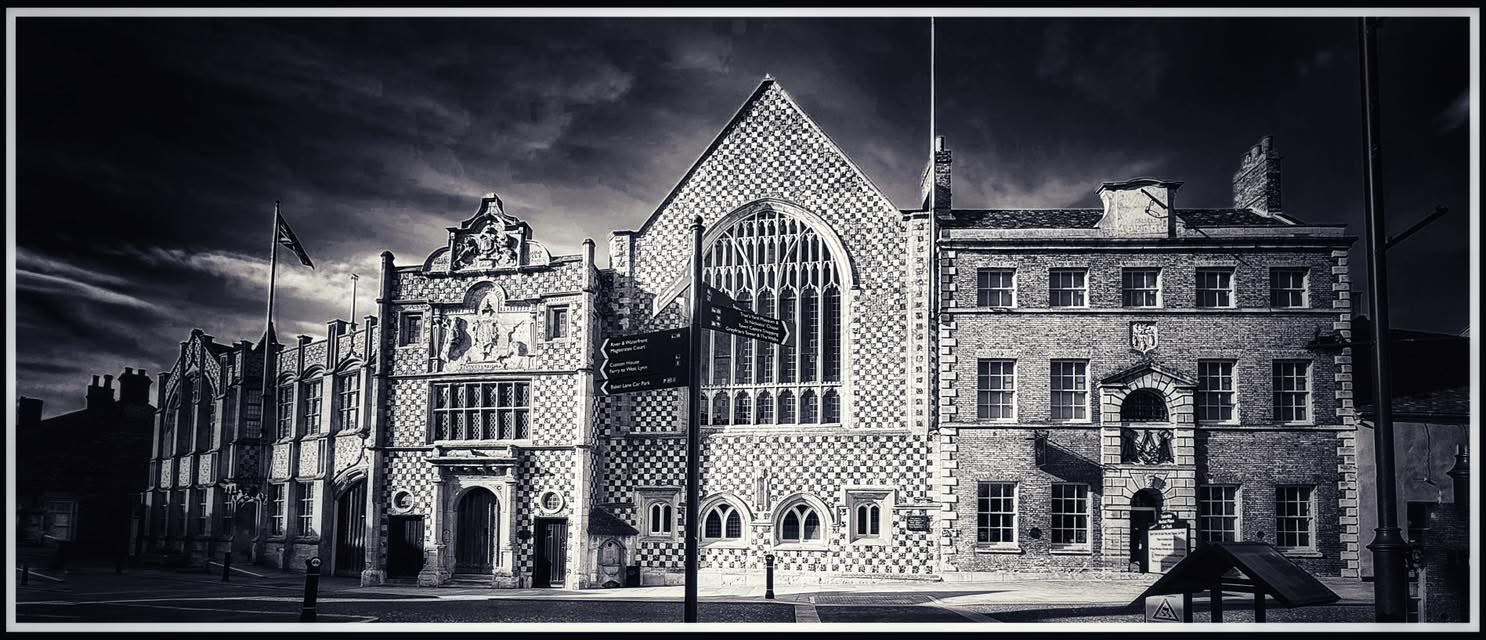
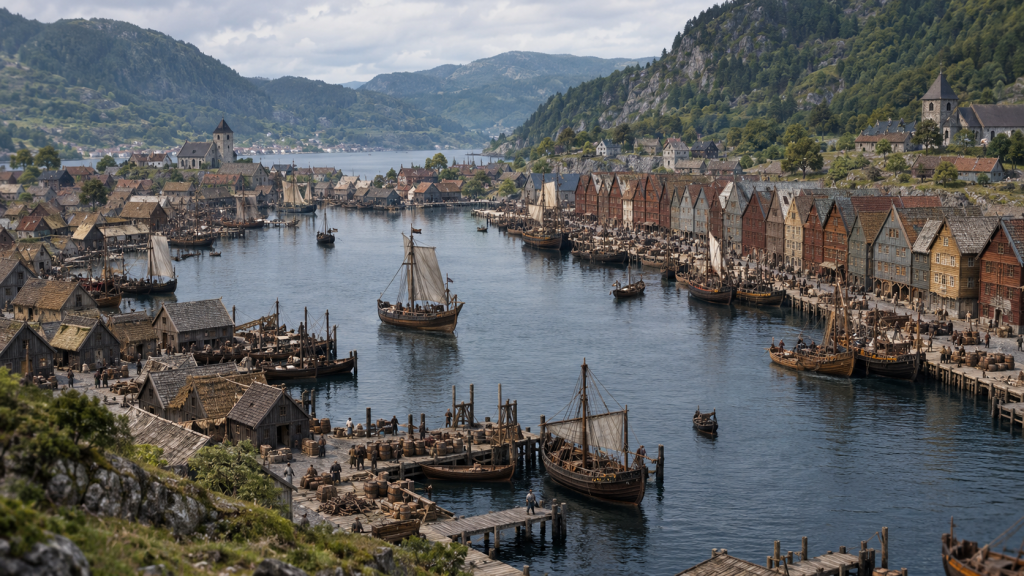
On 22 April 1393, twenty-one buildings belonging to English merchants went up in flames. Their goods were seized, merchants were captured and ransomed, and valuable commercial records disappeared. Yet this did not happen in Lynn. It happened nearly 600 miles away, at Bergen in Norway.
The merchants were principally men from Lynn. Among those who later claimed heavy losses were Edmund Belyetere, a former mayor and MP, and John Brandon, a leading Lynn merchant and customs official. Their misfortune reveals something remarkable about the medieval town. By the end of the fourteenth century Lynn’s merchants had established what amounted to a small trading colony in Bergen. Then a Scandinavian war swept through it.
A little piece of Lynn in Norway
The attraction of Bergen was fish. Cod caught in northern Norway was dried in the cold air to produce stockfish, which could be stored for long periods and transported across Europe. In medieval England, where the Church required abstinence from meat on numerous days, there was an enormous market for it.
Lynn was particularly well placed to take advantage. Its river connected it with the grain-producing counties of eastern England, while the North Sea provided a direct route to Norway. Ships carried grain, malt, and cloth to Bergen and returned laden with stockfish. Customs records for 1390–91 show six English ships bringing 158 lasts of stockfish into Lynn, and the historian Arnved Nedkvitne identifies Lynn as the principal English port trading directly with Bergen at this time.
The scale could be impressive. In 1392 the Lynn merchant John Wace transported 600 quarters of malt to Bergen in two voyages, partly conducting the business himself and partly through his servants. This was not a merchant accompanying a few sacks of grain across the North Sea. It was an organised business requiring ships, agents, storage, credit, and reliable contacts in Norway.
Those merchants needed somewhere to operate. They appear to have established themselves around Vågsbunnen at the southern end of Bergen’s harbour, separate from the famous German Hanseatic settlement at Bryggen. Their later compensation claim refers to twenty-one houses destroyed there. These were probably not twenty-one comfortable private homes, but the separate timber buildings of a merchant gård, a compound containing warehouses, storerooms, lodgings, and trading premises.
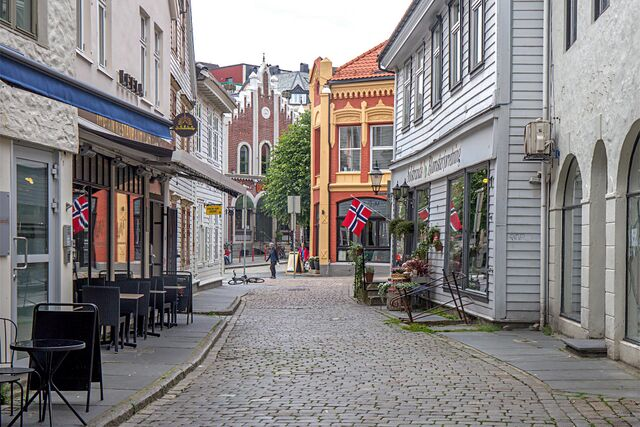
The location has left a tantalising trace. A medieval street in this part of Bergen was called Engelskmannstretet, “Englishmen’s Street”. It later became associated with Dutch merchants and is now Hollendergaten. We cannot say that a particular surviving doorway marks the site of a Lynn warehouse, but somewhere around this small area stood a substantial English commercial community in which Lynn merchants were prominent.
The men who had fortunes at stake
These were not obscure adventurers. Edmund Belyetere had represented Lynn in Parliament in 1386 and 1388 and served as mayor in 1390–91. He would be mayor again the year after the Bergen attack. John Brandon had received permission in 1383 to export 300 quarters of corn and malt from Lynn to Norway and subsequently became controller of customs at Lynn. The third merchant specifically named in the later claim, Thomas Hunt, was probably the man who later became another prominent Lynn trader and mayor, although that identification is less certain.
The men governing Lynn were therefore also investing heavily overseas. They did not necessarily travel with every cargo. John Wace’s surviving certificate shows merchants using servants and agents to conduct business in Bergen. Nor do we know whether Belyetere or Brandon was actually there when the attack came. We do know that their property was.
Eighteen ships arrive
The danger came from a struggle for control of Scandinavia. Queen Margaret of Denmark and Norway was fighting supporters of Albert of Mecklenburg, the defeated king of Sweden. Armed seafarers known as the Vitalienbrüder, or Victual Brothers, operated particularly from Rostock and Wismar in support of Albert’s cause. They are often called pirates, although they had emerged from the murky world of privateering and maritime warfare.
Lynn was already becoming involved. On 20 April 1393, Richard II authorised Margaret’s envoy to hire three large warships at Lynn, complete with crews and equipment, for the defence of her territories. Two days later Margaret’s enemies attacked Bergen. The timing is extraordinary, although the events cannot have been directly connected. There was simply no time for news of the English licence to reach Scandinavia and provoke an attack. What it shows is that Lynn’s ships and merchants were already caught up in the same international conflict.
On 22 April, eighteen large ships associated with Rostock and Wismar entered Bergen. Contemporary Icelandic annals describe the attackers landing near Nordnes and meeting resistance from the townspeople. Fighting spread towards Vågsbunnen and the Franciscan monastery, close to the present Bergen Cathedral. The royal treasurer was captured and mortally wounded, churches were plundered, and the attackers remained in control of Bergen for about eight days.
The English merchants were directly in their path. Their compound at Vågsbunnen was burnt. Twenty-one buildings disappeared, merchandise was seized, and English merchants resident in Bergen were captured and forced to pay ransoms before they could regain their freedom.
What disappeared in the fire
The Lynn merchants later claimed £1,815 for lost merchandise, with another 440 nobles, about £147, for the twenty-one buildings. Those figures came from men seeking compensation and should not be treated as an audited account, but they show the scale of the disaster. More revealing still is what they subsequently said had disappeared with their goods.
The merchants claimed that written acknowledgements of debts worth around £1,000 had been destroyed. Medieval international trade depended heavily on credit. A Lynn merchant might deliver malt to a Norwegian customer who would pay later in money or fish. The written document recorded the obligation. If the parchment burnt, proving that the debt existed could become extremely difficult. A small chest of papers might therefore be worth far more than the timber warehouse containing it.
By 1412 Lynn’s total claim had risen to about £4,000, including property, merchandise, lost debt documents, ransoms, and other expenses. The increasing figure probably owes something to the enthusiasm of medieval merchants pursuing compensation, but the underlying picture is clear. The attackers had not merely burnt some sheds beside Bergen harbour. They had torn through a commercial network linking Norfolk farmers, Lynn merchants, Norwegian customers, ships, servants, credit, and the cod fisheries of northern Norway.
Lynn went back
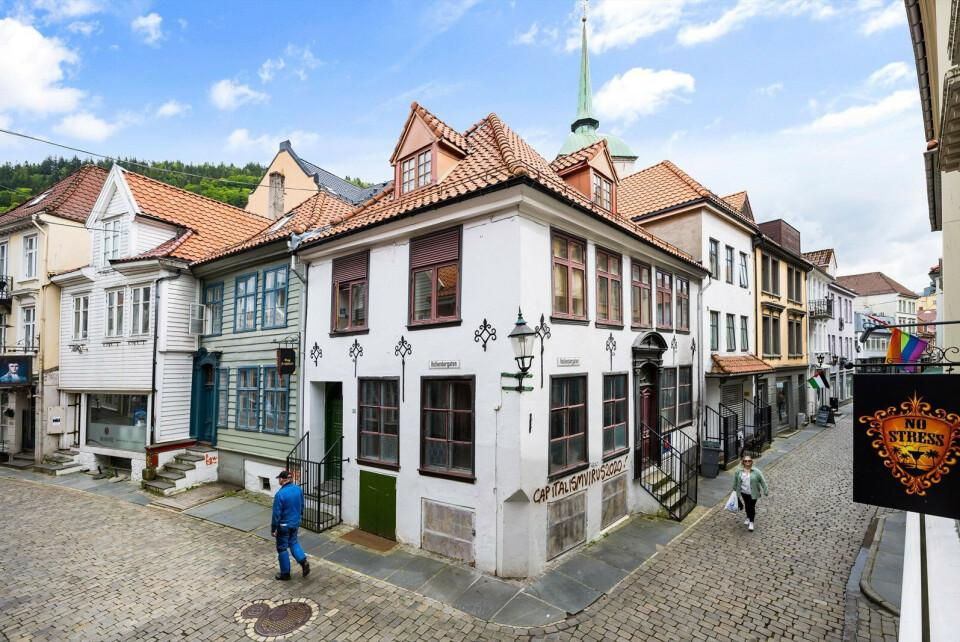
The most remarkable part of the story is that the disaster did not end the relationship. Lynn’s merchants returned to Bergen and resumed their trade. By 1411 Henry IV was personally intervening in disputes involving English merchants detained there and German merchants detained in England. Two years later another major fire began in an English merchant gårdat Vågsbunnen. Whatever had been destroyed in 1393 had been rebuilt.
The old name Engelskmannstretet provides a faint survival of this forgotten community. Medieval Lynn’s overseas trade was not simply a succession of ships appearing at the town’s quays with exotic cargoes. Its leading merchants had servants abroad, extended credit to foreign customers, maintained commercial premises in another kingdom, and exposed considerable parts of their fortunes to events hundreds of miles from home.
On 22 April 1393 that international world suddenly caught fire. Armed ships entered Bergen harbour, fighting swept into Vågsbunnen, and somewhere near Englishmen’s Street the timber buildings used by Lynn’s merchants began to burn. Nearly 600 miles from the Great Ouse, twenty-one buildings disappeared. The Lynn merchants rebuilt them.
© James Rye 2026
Book a Walk with a Trained and Qualified King’s Lynn Guide
References
Bergen Byarkiv. Bergen byleksikon. Entries on Bergen’s historic fires, Hollendergaten, and Vågsbunnen. https://www.bergenbyarkiv.no/bergenbyleksikon/
Diplomatarium Danicum. Documents for April–May 1393 and Anglo-Norwegian correspondence of 1411. https://tekstnet.dk/books/dipdan/
Lloyd, T. H. England and the German Hanse, 1157–1611: A Study of Their Trade and Commercial Diplomacy. Cambridge: Cambridge University Press, 1991.
Nedkvitne, Arnved. The German Hansa and Bergen 1100–1600. Cologne, Weimar, and Vienna: Böhlau, 2014.
Storm, Gustav. “Vitaliebrødrenes Plyndretog til Bergen i 1393.” Historisk Tidsskrift, 1898. https://no.wikisource.org/wiki/Vitaliebr%C3%B8drenes_Plyndretog_til_Bergen_i_1393