Photo © James Rye 2021
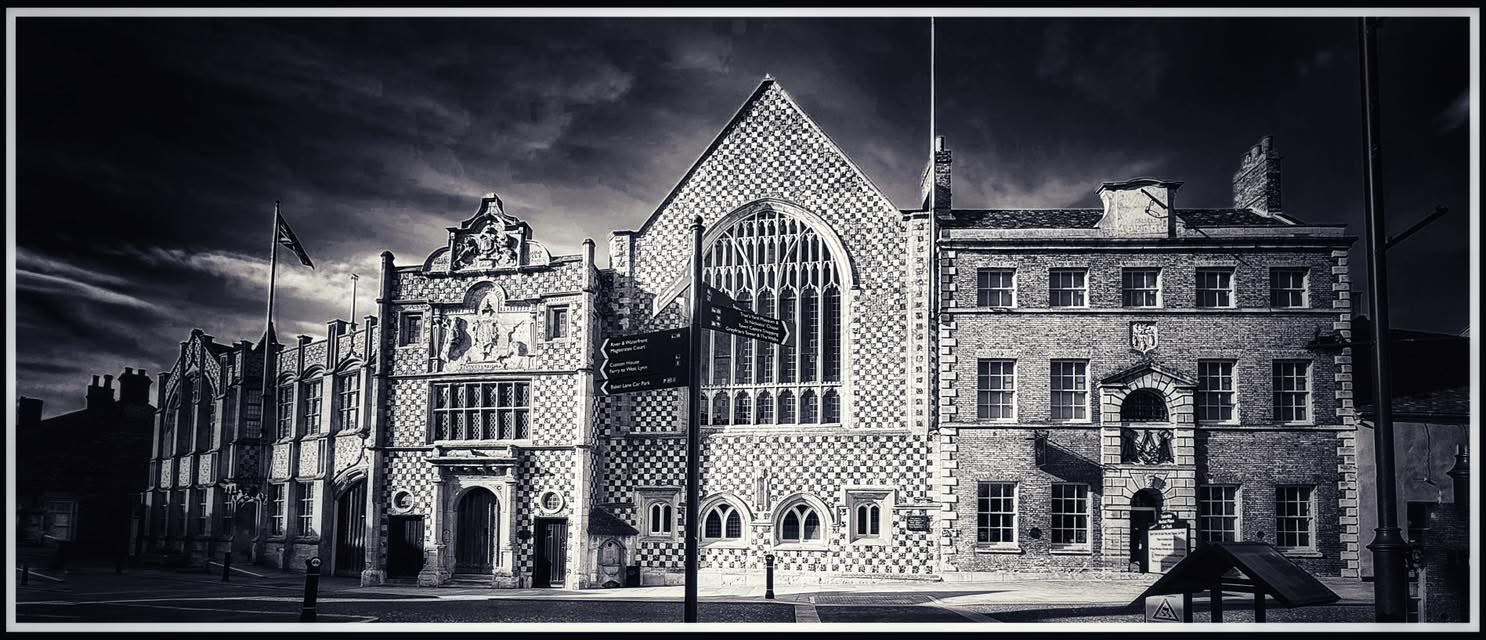
In 1547, the government of the young Edward VI prepared to take the property of England’s chantries and religious guilds. King’s Lynn’s representatives in Parliament fought back so persistently that the Privy Council complained that “none were stiffer” in their opposition. They knew what was at stake. The Holy Trinity Guild’s wealth was tied to houses and warehouses, farmland, a ferry, and the Guildhall where the town conducted its business. Its income also helped pay for the banks and watercourses that kept tidal water from Lynn and the surrounding land.
The burgesses won a promise that much of the guild estate would be granted back to the town. They could not save the guild’s religious life. Thoresby College, built only a generation earlier for its priests, lost the purpose for which Thomas Thoresby had endowed it.
A house built for perpetual prayer
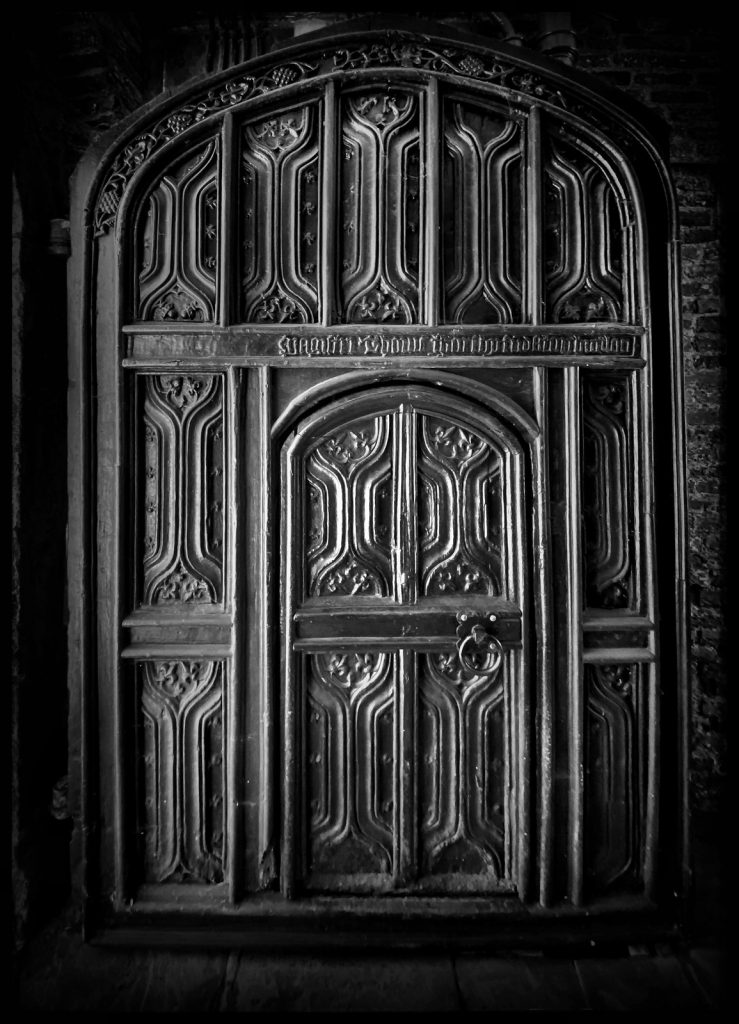
Walk along Queen Street and Thoresby College still looks substantial enough to have endured for centuries. Its ranges surround a courtyard, with a hall towards the river. Thomas Thoresby, a merchant and three-times mayor, founded it as Trinity College. Building began around 1508 and was still under way when he died in 1510. His executors completed the work. The accommodation was intended for thirteen chantry priests attached to the Trinity Guild, with provision also for the charnel priest and for priests charged with praying for Thoresby and his family.
That was a practical as well as a spiritual undertaking. Rooms and a shared hall gave the priests a place to live, while rents and property paid for their work. At nearby St Margaret’s Church they could celebrate masses and pray for the dead. Thoresby wanted those prayers to continue “as long as the world shall endure”. His memorial was meant to be an institution that would outlast everyone who knew him. In less than forty years, its legal foundation was swept away.
The objection from Lynn
Thoresby College had survived Henry VIII’s dissolution of the monasteries because its priests were not monks. Under Edward VI, chantries faced a separate attack. Protestant reformers rejected the belief that masses offered by the living could benefit souls in purgatory. The Dissolution of Colleges Act, passed in December 1547, transferred the endowments of chantries, colleges, fraternities, and guilds to the Crown. Its effects were worked through in 1548, as property was surveyed, granted, or sold.
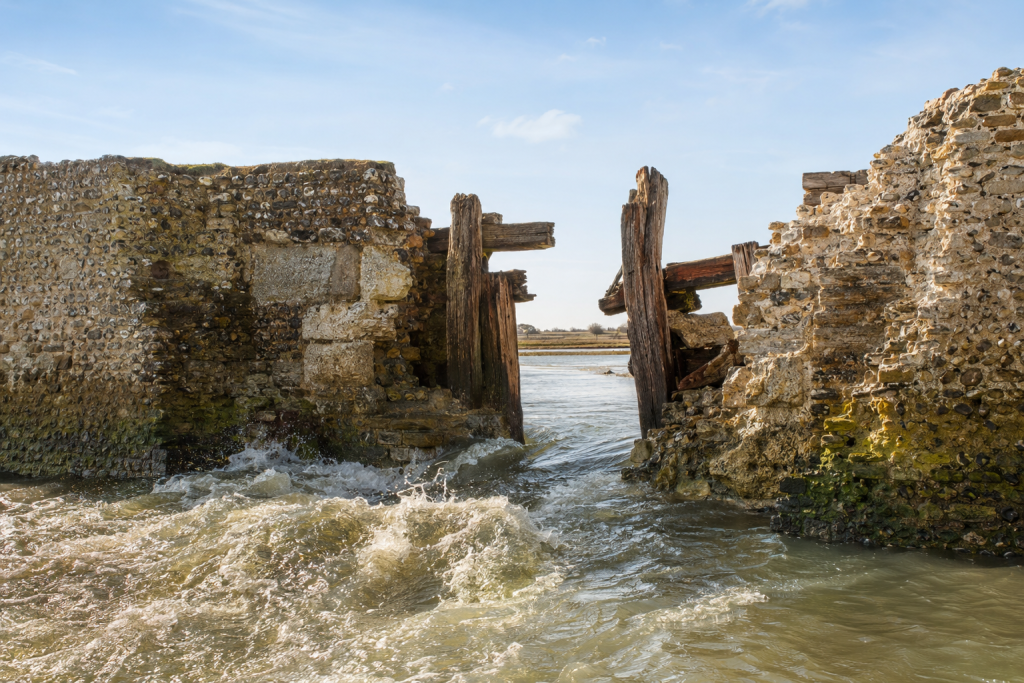
For Lynn, this legislation reached far beyond the College. The Trinity Guild combined worship and priestly service with the material affairs of a port. Its rents helped maintain the sea banks, walls, fleets, and watercourses. The town argued that, without those defences, water could reclaim low-lying ground. To a government intent on ending chantry masses, the condition of the harbour and its banks offered a stronger argument than the defence of prayers for the dead.
Lynn’s MPs, Thomas Gawdy and William Overend, opposed the provision taking guild property. Representatives of Coventry, another town with substantial guild possessions, did the same. The Privy Council later admitted that they had not merely spoken against the measure. They had encouraged other members of the Commons to resist it too. To keep the bill intact, the government promised that the contested lands could pass first to the king and then be granted back to the towns for their public uses. The concession preserved the Crown’s authority while allowing a civic body to recover property once held by a religious guild.
The promise did not execute itself. Overend, now mayor, and the Lynn burgesses pursued it with Lord Protector Somerset. On 6 May 1548, the Privy Council ordered the promised grant to be prepared. Edward VI’s letters patent followed on 21 May.
What the king gave back
The charter transferred a substantial former Trinity Guild estate to Lynn’s mayor and burgesses. Its stated annual value was £32 12s. 11d. after deductions, and the town was to pay the Crown £13 16s. a year. The grant was therefore neither a simple restoration of the old guild nor a gift without a continuing charge.
Within Lynn it included the Guildhall, the White Hart inn, other houses and tenements, gardens, rents, and a right of passage across the port. At the Common Staith, where goods moved between vessels and the town, it specified seven warehouses with six chambers above on the north side and nine warehouses with chambers above on the south. The list brings the dispute down to the level of working property. Sixteen warehouses were a considerable commercial asset, quite apart from the income from the many smaller holdings.
The estate stretched beyond the town. In Snettisham, Ingoldisthorpe, Eaton, and Shernborne the grant named a watermill, houses, and extensive arable land, meadow, and pasture, much of it then occupied by Overend. It also covered land and rents around South Lynn, Gaywood, Hardwick, Middleton, West Winch, and other nearby places. At Brandon Ferry, the Chequer and Peppers properties came with fields and a right to maintain a fold for 340 sheep. A messuage, the word used repeatedly in the charter, meant a dwelling together with its associated yard, outbuildings, and land. It described a holding, not a particular style of house. The grant even included the guild’s stock of millstones, valued at £40, a reminder that this was a merchant fraternity as well as a religious one.

Photo © James Rye 2021
William Richards printed an extensive abstract of the charter in 1812, but it is an abstract rather than a full edition of the letters patent. The grant did not necessarily encompass every asset the guild had owned. Nor does Richards’s account clearly name Thoresby College among the properties returned. We should not turn the return of the wider estate into a claim that this particular building was transferred by that clause. What the record establishes is the recovery of a large landed and commercial portfolio under a new civic title. The guild’s masses, priestly community, and obligations to pray for Thoresby were not restored.
The college after the priests
The fate of the building followed a different course. A return made in 1561 called it “a house called Trinity college” and reported that the mayor and municipal authorities had sold it. Later accounts name Robert Houghton as purchaser. The surviving summaries do not settle exactly when the sale took place or how the Corporation first acquired title to the College. A comparison of the full 1548 grant with borough conveyances would be needed to trace that chain of ownership.
The same return identified Thoresby as the founder but said of the College’s purpose, “to what use we know not”. It is a startling phrase barely half a century after he began building. The officials may have meant that they could identify no continuing lawful use after the abolition of the chantries. Their words cannot show that people in Lynn had forgotten the prayers Thoresby commissioned.
The individual priests are harder still to follow. The intended complement was thirteen, but that does not establish how many were resident when the foundation closed. The Norfolk chantry certificate and pension records must be checked before naming the last occupants or describing how they left. What we can see is the institutional change: by 1561 the College was in private hands, and rooms once provided for a community of priests were being adapted to other purposes. Later uses altered its interiors, yet kept its courtyard buildings standing. The King’s Lynn Preservation Trust now occupies and cares for the restored complex.
Thoresby had endowed prayers meant to survive indefinitely. Instead, his College outlived its priests, while Lynn’s burgesses saved the Guildhall, warehouses, rents, and land by persuading the government that a port needed more than the Crown’s promise of religious reform. The Privy Council’s irritated description of their resistance remains unusually vivid: “none were stiffer”.
© James Rye 2026
Book a Walk with a Trained and Qualified King’s Lynn Guide
References
- Blomefield, Francis, and Charles Parkin. An Essay Towards a Topographical History of the County of Norfolk. Vol. 8. London, 1808. “Freebridge Hundred and Half: Lynn.”
- Dasent, John Roche, ed. Acts of the Privy Council of England: New Series. Vol. 2, 1547–1550. London: HMSO, 1890, 193–95. Digitised edition.
- Gill, Sylvia May. “Managing Change in the English Reformation: The 1548 Dissolution of the Chantries and the Clergy of the Midlands.” PhD diss., University of Birmingham, 2010, 71–72, 89–90.
- Historic England. “Thoresby College, 31, 33 Queen Street.” National Heritage List for England, 1195418.
- King’s Lynn Preservation Trust. “Thoresby College.”
- Richards, William. The History of Lynn. Vol. 1. Lynn: W. G. Whittingham, 1812, 467–73.