Photo © James Rye 2024
Margery Kempe is usually remembered for her visions, her tears, and her extraordinary journeys. Yet one of the strongest threads running through The Book of Margery Kempe is much closer to home. St Margaret’s Church in Bishop’s Lynn was not simply the place where some of her experiences happened. It was the centre of her religious life and one of the institutions she defended most fiercely.
Laura Varnam’s study of Margery and St Margaret’s brings this local story into focus. Read in that light, the Book becomes not only the account of a remarkable medieval woman, but also a record of parish rivalry, church politics, civic pride, damaged buildings, public fear, and the uneasy place Margery occupied in the life of Lynn.
“I am of Lynne in Norfolke”
Margery was born around 1373 as Margery Brunham, daughter of John Brunham, a prosperous merchant who served several times as mayor of Lynn and represented the town in Parliament. She married John Kempe, the younger son of a Lynn skinner, and remained closely connected to the town even after her religious life took her across Europe and to the Holy Land.
When questioned at Leicester, Margery identified herself plainly: “I am of Lynne in Norfolke.” She then referred to her father’s standing and her husband’s status as a burgess. It is a revealing moment. However unusual she became, Margery still understood herself through Lynn, through family reputation, and through membership of an urban community.
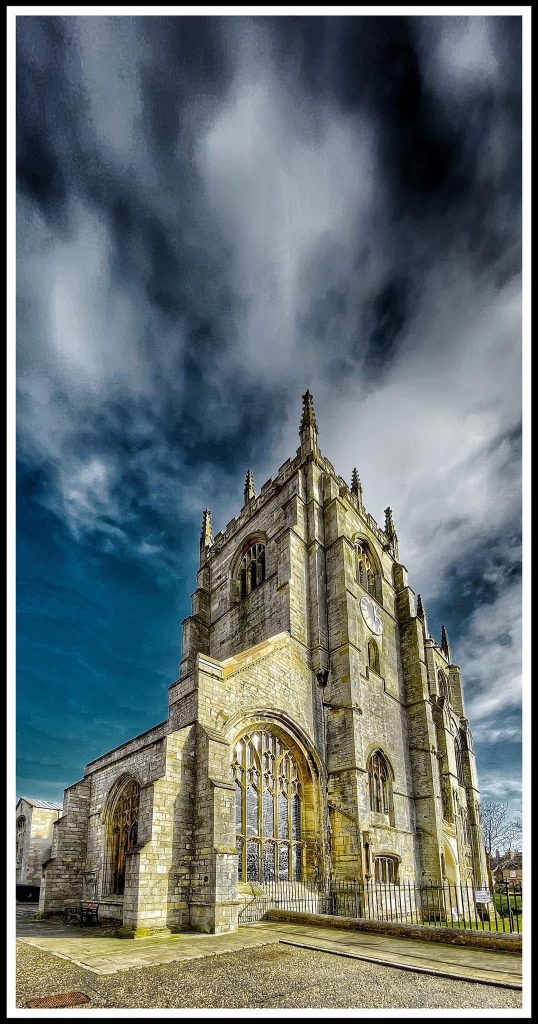
St Margaret’s stood at the centre of that community. It was both the parish church and the church of the small Benedictine priory attached to its south side. That dual role could create tension, and Margery often found herself in the middle of it.
Who controlled the church?
One of the clearest clashes involved Thomas Hevyngham, prior of Lynn, and Robert Spryngolde, parish priest of St Margaret’s and one of Margery’s principal supporters.
Hevyngham wanted Margery moved because one of the monks refused to enter “our chapel” while she was there. Spryngolde replied that she could not simply be excluded. He and others were under instructions from the archbishop of Canterbury to hear her confession and administer the sacrament when required.
The dispute was about more than an inconvenient woman. It was also about who controlled space within St Margaret’s. The prior claimed particular areas for the Benedictine community. Margery behaved as though the whole church belonged equally to the religious life of the parish.
Her noisy crying made the issue impossible to ignore. At times it irritated those around her, but her very refusal to become invisible forced clergy and parishioners to decide what place she was entitled to occupy.
When the church itself struck Margery
One of the strangest episodes in the Book takes place during Mass. A stone weighing about three pounds and a piece of timber weighing about six pounds fell from high in the church and struck Margery on the head and back. She believed for a moment that her back had been broken.
The details are unusually physical. Alan of Lynn later weighed the stone and prevented the piece of timber from being burnt. The Book wants the reader to imagine actual stone, wood, weight, and impact.
Varnam connects this episode with the real condition of St Margaret’s. The church fabric was not always sound. Bell-ringing had been restricted in the late fourteenth century because of concerns about the tower, and in the 1430s money had to be raised towards major rebuilding.
This gives the miracle story a very local setting. Medieval parish religion was not only about prayer and doctrine. Churches needed roofs, timber, bells, repairs, and money. St Margaret’s was sacred, but it was also an ageing building that Lynn had to maintain.
The reaction to Margery’s escape from serious injury was divided. Some people may have seen divine favour, others divine warning. Either way, the incident made her harder to dismiss.
The fire that changed everything
The most dramatic Lynn episode comes when fire threatened the heart of the town.
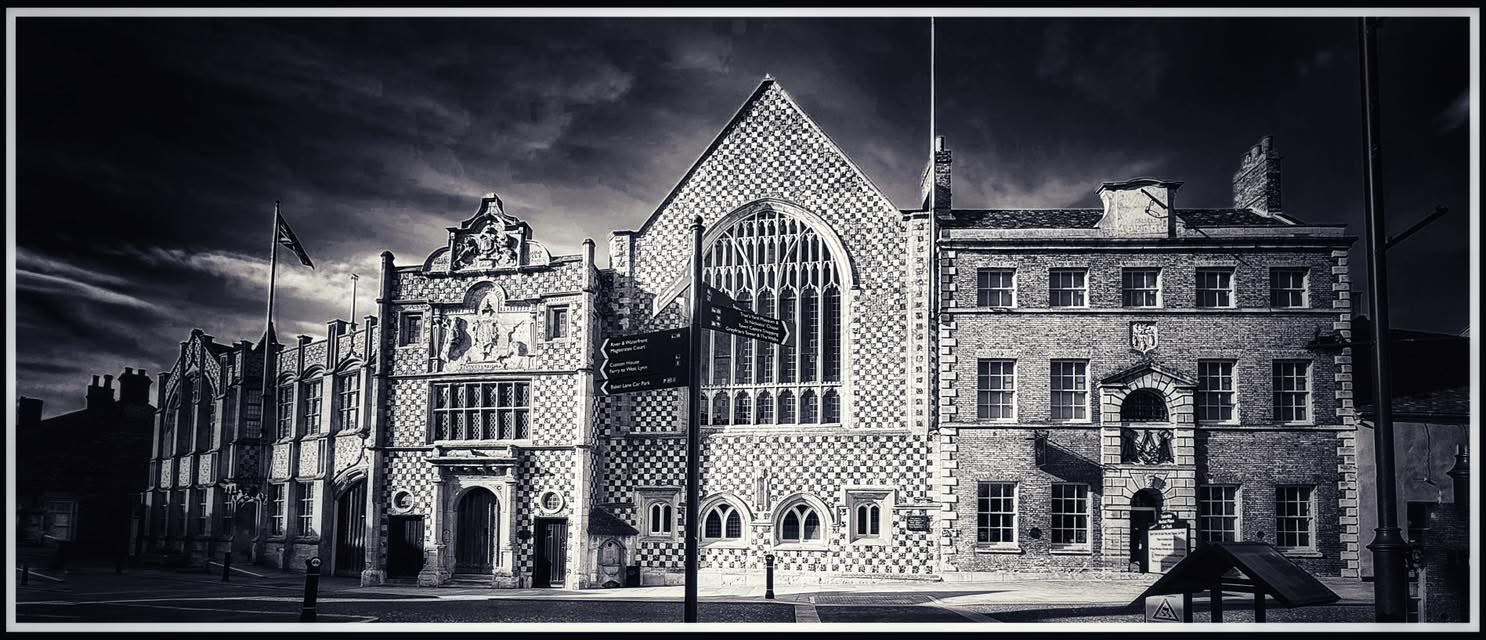
The Book describes a great blaze that had already damaged the Guild Hall area and now threatened St Margaret’s. The danger was therefore both religious and civic. Two of Lynn’s most important institutions stood in the path of the flames.
At this moment, Margery’s tears acquired a different meaning. The same crying that so often irritated people was suddenly welcomed. Townspeople encouraged her to pray and weep in the hope that God might show mercy.
Robert Spryngolde asked whether he should carry the sacrament towards the fire. Margery told him that he should. He did so, while sparks were falling around the church, and Margery followed, praying that God would “make it well”. The Book says that snow then fell and helped to check the fire.
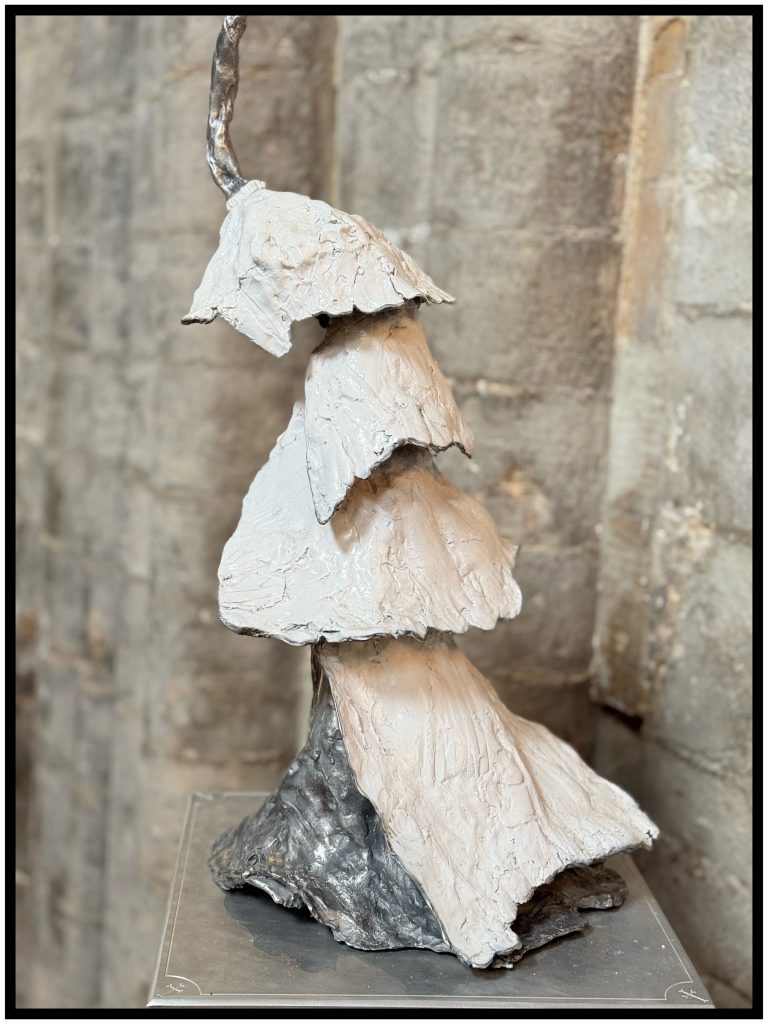
Photo © James Rye 2026
We do not have to decide exactly how to interpret that account to see what has changed. The woman who could be treated as an embarrassment in ordinary times became valuable when the whole community felt threatened.
The fire also reveals how closely the identity of Lynn was bound to particular buildings. St Margaret’s was not simply somewhere people attended Mass. It represented continuity, status, memory, investment, and civic pride.
A fight over fonts, baptisms, and status
Margery also involved herself in a dispute that at first sight seems far less dramatic.
The chapels of St Nicholas and St James sought the right to perform baptisms and the churching of women. Margery strongly opposed the proposal. The Book says that wealthy and influential merchants backed the chapels, particularly St Nicholas, which served the northern part of the town.
This was not a minor argument about church furniture. A baptismal font carried prestige, but it also brought offerings and reinforced a church’s standing within the town. If St Nicholas gained greater independence, St Margaret’s might lose both status and income.
Margery therefore sided firmly with the parish church. According to the Book, she declared that even if the supporters of the rival chapels offered “a bushel of nobles”, they should not be allowed to diminish St Margaret’s rights.
St Nicholas did eventually obtain a font, but with safeguards intended to protect the position of the mother church. The Book celebrates the fact that St Margaret’s remained in its “worship and degree”.
That phrase captures much of the religious geography of medieval Lynn. Churches possessed status. They competed for income, privileges, burial rights, and parish loyalty. The disputes were spiritual, but also social and financial.
Margery as a Lynn parishioner
Seen through St Margaret’s, Margery becomes easier to understand.
She was certainly unusual, but she was not detached from the ordinary structures of medieval life. She cared about parish rights. She knew local clergy. She became involved in disputes between religious institutions. She worried about the physical church, and she believed deeply in the standing of St Margaret’s within Lynn.
The Book therefore gives us something rarer than the life of an extraordinary woman. It allows us to glimpse the religious life of Bishop’s Lynn from inside: Thomas Hevyngham defending priory space, Robert Spryngolde supporting a troublesome parishioner, Alan of Lynn weighing a fallen stone, merchants pressing the claims of St Nicholas, and townspeople watching anxiously as fire approached their church.
Margery travelled to Jerusalem, Rome, Santiago, and beyond, but her religious identity remained anchored in one place. St Margaret’s was where she was known, challenged, mocked, defended, and finally remembered.
Perhaps that is why Margery Kempe still belongs so naturally in King’s Lynn. Her story was never only about visions or distant pilgrimages. It was also about one woman’s stubborn attachment to her church and to the town that had made her.
© James Rye 2026
Book a Guided Tour with a Trained and Qualified King’s Lynn Guide
References
British Library. “Add MS 61823: The Book of Margery Kempe.” British Library Archives and Manuscripts Catalogue. https://searcharchives.bl.uk/catalog/032-001962059
Kempe, Margery. The Book of Margery Kempe. Edited by Barry Windeatt. Woodbridge: D. S. Brewer, 2004.
Norfolk Record Office. “Margery Kempe.” https://norfolkrecordofficeblog.org/margery-kempe/
Owen, Dorothy. The Making of King’s Lynn: A Documentary Survey. London: Oxford University Press for the British Academy, 1984.
Varnam, Laura. “The Importance of St Margaret’s Church in The Book of Margery Kempe: A Sacred Place and an Exemplary Parishioner.” Nottingham Medieval Studies 61 (2017): 197–243. https://ora.ox.ac.uk/objects/uuid:c515c579-8ad6-420e-b97a-a1fcb5f1367d/files/m0f473a5dcadb1b7319fd812ce9e77c77