In September 1204, King John issued a charter to the burgesses of Lynn. The document still survives in the King’s Lynn Borough Archives, with part of the king’s green wax seal attached.
It has often been presented as a royal gift. The charter made Lynn a free borough and gave its merchants a legal framework within which their town could prosper.
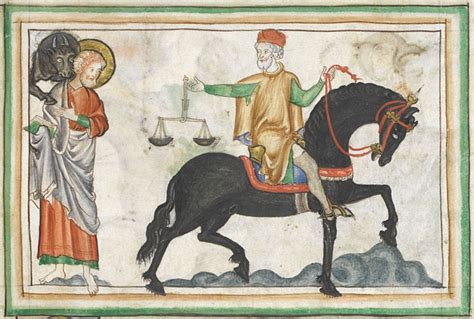
Picture medievalbritain.com
The Crown’s financial records tell a less ceremonial story. Lynn’s burgesses promised the king three palfreys, or riding horses, for their charter. They were probably also charged 100 marks, the equivalent of £66 13s 4d at the time.
Measured against modern prices, that sum might represent about £170,000 to £180,000. Measured against wages, it could exceed £1 million.
King John’s grant was valuable, but it was not necessarily free.
Lynn’s three charters
The change did not happen through one document alone.
On 27 January 1204, John granted that Lynn should become a free borough. He acted at the request of John de Grey, Bishop of Norwich and Lynn’s lord. The grant protected the existing rights of the bishop and William d’Aubigny, Earl of Arundel.
On 24 March, Bishop John issued his own charter. He allowed Lynn’s burgesses to hold their town as a free borough and adopted Oxford as the model for their liberties and customs.
The decisive document followed on 14 September. This was a royal charter addressed directly to Lynn’s burgesses. It confirmed their liberties and provided the legal foundation on which the borough developed.
The surviving parchment is impressive, but it does not state a price. For that, the evidence lies in the Crown’s financial rolls.
Three palfreys for the charter
King John’s Fine Roll for his sixth regnal year contains an entry concerning Lynn’s burgesses:
Burgenses de Lenna dant iij. palefridos pro habenda carta domini Regis.
In translation, the burgesses of Lynn gave three palfreys to obtain the lord king’s charter.
A palfrey was a riding horse, valued for travel and display. It was not a token gift. Horses varied greatly in quality, however, and the entry gives no monetary valuation. Any attempt to convert the three animals into a modern sum would therefore rest on conjecture.
The important point is explicit. The burgesses agreed to provide three horses “for obtaining” the charter. This is the clearest evidence that the town paid for its royal liberties.
An entry in the following year’s Fine Roll records another obligation:
Memorandum de burgensibus de Len de C. m.
This means, “A memorandum concerning the burgesses of Lynn and the 100 marks.”
Historian Kate Parker connects the 100 marks with the charter, describing the burgesses as having obtained it for three palfreys and 100 marks. The position of the entry and its date support that interpretation.
The roll itself does not say what the 100 marks purchased. The connection is probable, but not proved in the same direct language as the three-horse payment.
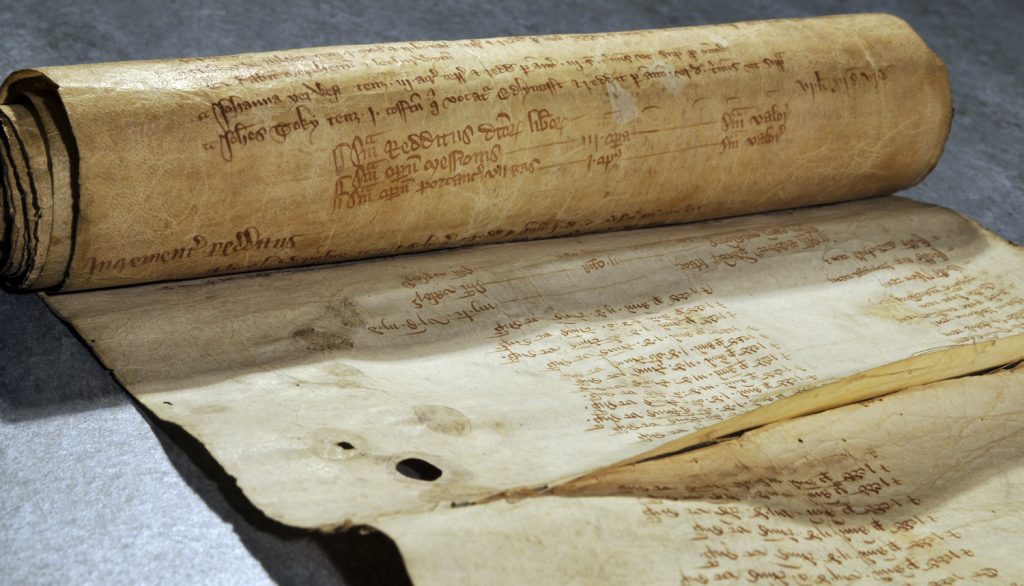
There is another qualification. Fine Rolls record offers, agreements and debts due to the Crown. They do not, by themselves, prove that every penny or every horse reached the Exchequer. The surviving entries establish Lynn’s liability. Further account evidence would be needed to demonstrate final payment in full.
How much was 100 marks?
A medieval English mark was a unit of account worth 13 shillings and 4 pence. It was not a coin. One hundred marks equalled £66 13s 4d, or 16,000 medieval pennies.
There is no single reliable exchange rate between money in 1204 and money in 2026. A modern comparison changes according to what is being measured.
The Bank of England inflation calculator begins in 1209, five years after Lynn’s charter. Using that earliest year as a rough proxy, £66 13s 4d represents approximately £170,000 to £180,000 in current consumer purchasing power.
That figure compares the prices of goods and services. It does not measure the status, influence or labour that money could command in medieval society.
A wage comparison produces a much larger number. Gregory Clark’s historical wage data place the cash wage of an English agricultural labourer around 1200 at approximately 1.37 pence a day. At that rate, 100 marks represented nearly 11,650 days of cash wages.
If those days are valued at the current National Living Wage of £12.71 an hour for an eight-hour day, the result is about £1.18 million. Using the 2025 median full-time hourly wage of £19.67 raises the comparison to about £1.83 million.
These figures should not be treated as precise conversions. Medieval workers might receive food, accommodation or other payments in kind. Employment was irregular and consumption patterns differed from those of modern households. The calculations show scale, not an exchange rate.
A fair shorthand is that the probable 100-mark charge was worth about £175,000 by consumer purchasing power, or roughly £1.2 million to £1.8 million when compared with labour. The three palfreys came on top of that.
The bishop had his own bill
Lynn’s burgesses were not the only debtors.
Thomas Madox’s transcription of the Pipe Roll records that the Bishop of Norwich owed 40 marks “for making Lynn a free borough and for having the king’s charter”.
Forty marks equalled £26 13s 4d. On the same rough methods, that might correspond to about £70,000 in consumer purchasing power or between £470,000 and £730,000 in labour value.
This appears to relate to the first royal grant of January 1204, made at Bishop John de Grey’s request. It should not automatically be added to the burgesses’ probable 100 marks and described as a bill paid by the town. The debtor was the bishop, and the wording points to a related but distinct stage in Lynn’s transformation.
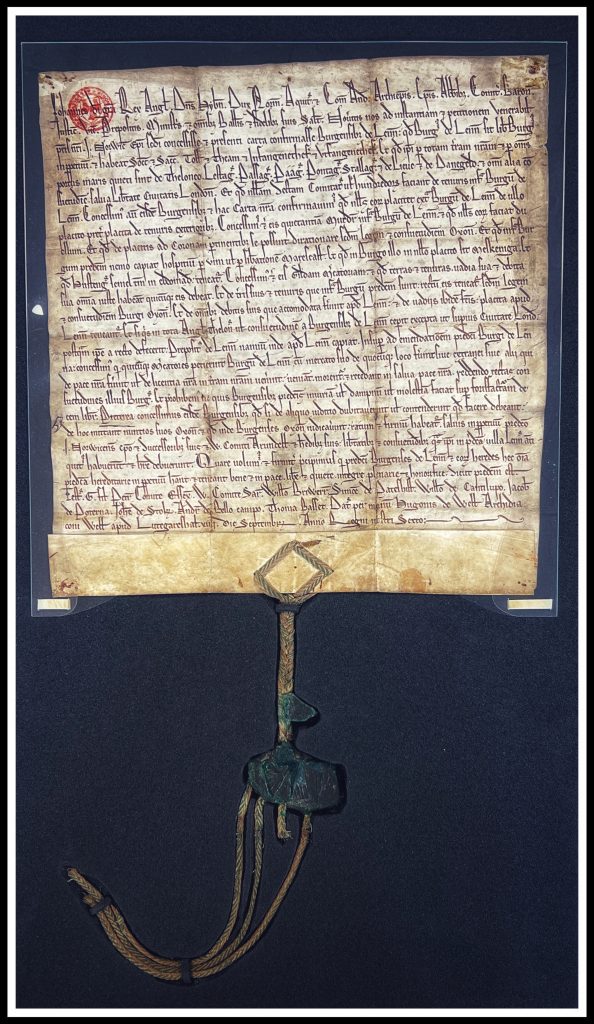
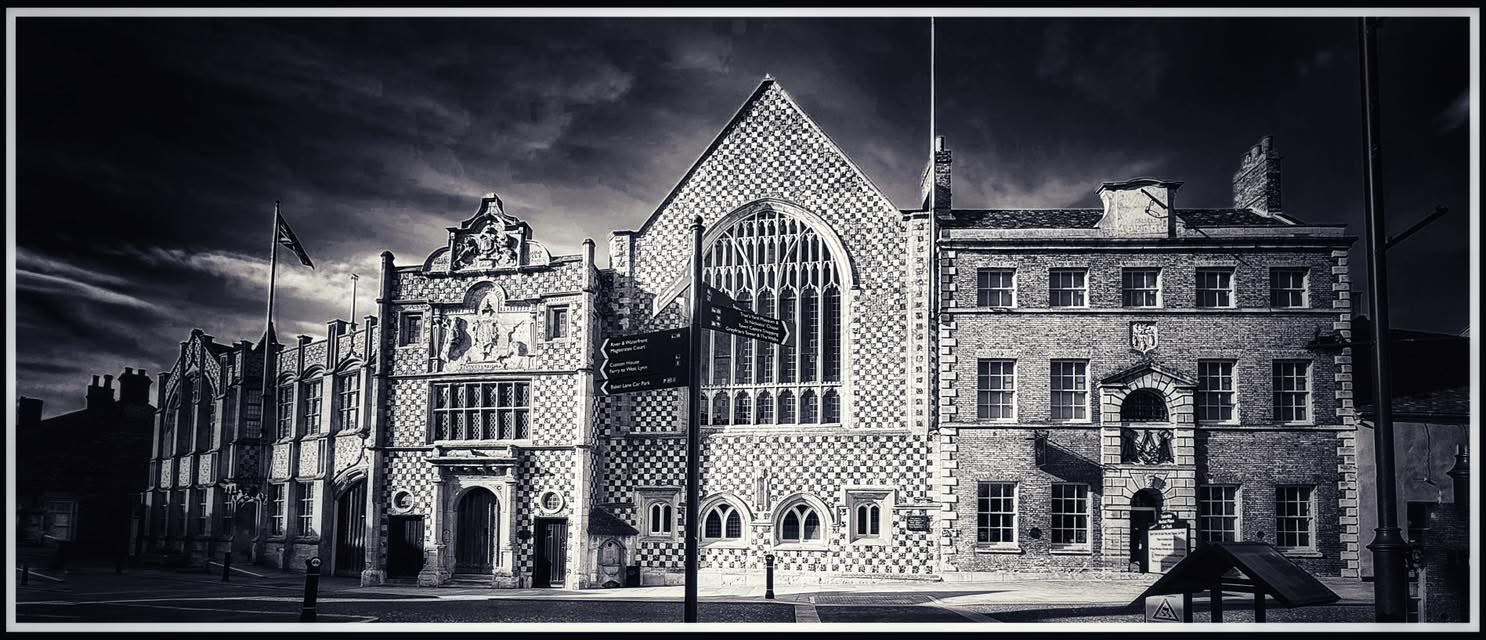
Photo © James Rye 2023
A later entry also records that the bishop offered one palfrey for a duplicate of Lynn’s charter. That horse was separate from the three promised by the burgesses.
The surviving evidence therefore reveals several transactions rather than one simple purchase:
The bishop owed 40 marks for the initial royal grant. Lynn’s burgesses certainly promised three palfreys for their own charter and probably incurred a further charge of 100 marks. The bishop then offered another palfrey for a duplicate document.
What did the burgesses buy?
The word “free” needs care. Lynn did not become independent of every lord or royal demand.
The charters gave its burgesses recognised customs, legal privileges and a corporate place within the king’s government. These rights could assist trade, property ownership and the administration of the borough. They also allowed Lynn to invoke written royal authority when its privileges were challenged.
The documents preserved existing lordship. Lynn remained Bishop’s Lynn, and the bishop retained substantial rights. The king’s charter itself protected the interests of the bishop and the Earl of Arundel.
What the burgesses bought was not freedom in the modern political sense. They bought a defined legal position and direct royal confirmation of their liberties. In a trading town, that certainty had economic value.
John also had reason to charge for it. In 1204 he lost Normandy to Philip II of France and faced mounting financial demands. Charters, confirmations and legal favours formed part of the Crown’s machinery for raising revenue.
The green seal still hangs from Lynn’s charter. Behind it stood three riding horses, a probable debt of 100 marks and a king who seldom allowed a valuable privilege to pass without a price.
© James Rye 2026
Book a Walk with a Trained and Qualified King’s Lynn Guide
References
- Bank of England. “Inflation Calculator.” Accessed 7 August 2026. https://www.bankofengland.co.uk/monetary-policy/inflation/inflation-calculator.
- Clark, Gregory. “England: Wages, Prices and Population.” University of California, Davis. https://faculty.econ.ucdavis.edu/faculty/gclark/data.html.
- Great Britain, Historical Manuscripts Commission. “The Borough of King’s Lynn: Charters, Letters Patent, etc.” In Eleventh Report, Appendix, Part III, 185–209. https://www.british-history.ac.uk/hist-mss-comm/vol11/pt3/pp185-209.
- Hardy, Thomas Duffus, ed. Rotuli Chartarum in Turri Londinensi Asservati. London: Record Commission, 1837. https://archive.org/details/rotulichartarumi00grea.
- Hardy, Thomas Duffus, ed. Rotuli de Oblatis et Finibus in Turri Londinensi Asservati, Tempore Regis Johannis. London: Record Commission, 1835, 223 and 370. https://archive.org/details/rotulideoblatse00johngoog.
- UK Government. “National Minimum Wage and National Living Wage Rates.” https://www.gov.uk/national-minimum-wage-rates.
- London School of Economics. “It’s Not Just About the Money: A Reappraisal of Medieval English Agricultural Wages.” https://www.lse.ac.uk/research/research-for-the-world/economics/its-not-just-about-the-money-a-reappraisal-of-medieval-english-agricultural-wages.
- Madox, Thomas. The History and Antiquities of the Exchequer of the Kings of England. 2nd ed. London, 1769, vol. 1, 407. https://archive.org/details/bim_eighteenth-century_the-history-and-antiquit_madox-thomas_1769_1.
- Norfolk Record Office. “One of King’s Lynn Borough Archives’ Earliest Documents: The Charter of King John to the Burgesses of Lynn, 14 September 1204.” 21 October 2016. https://norfolkrecordofficeblog.org/2016/10/21/one-of-kings-lynn-borough-archives-earliest-documents-the-charter-of-king-john-to-the-burgesses-of-lynn-14-september-1204/.
- Office for National Statistics. “Employee Earnings in the UK: 2025.” 23 October 2025. https://www.ons.gov.uk/employmentandlabourmarket/peopleinwork/earningsandworkinghours/bulletins/annualsurveyofhoursandearnings/2025.
- Parker, Kate. “Politics and Patronage in Lynn, 1399–1416.” In The Reign of Henry IV: Rebellion and Survival, 1403–1413, edited by Gwilym Dodd and Douglas Biggs. York Medieval Press. https://doi.org/10.1017/9781846156694.011.