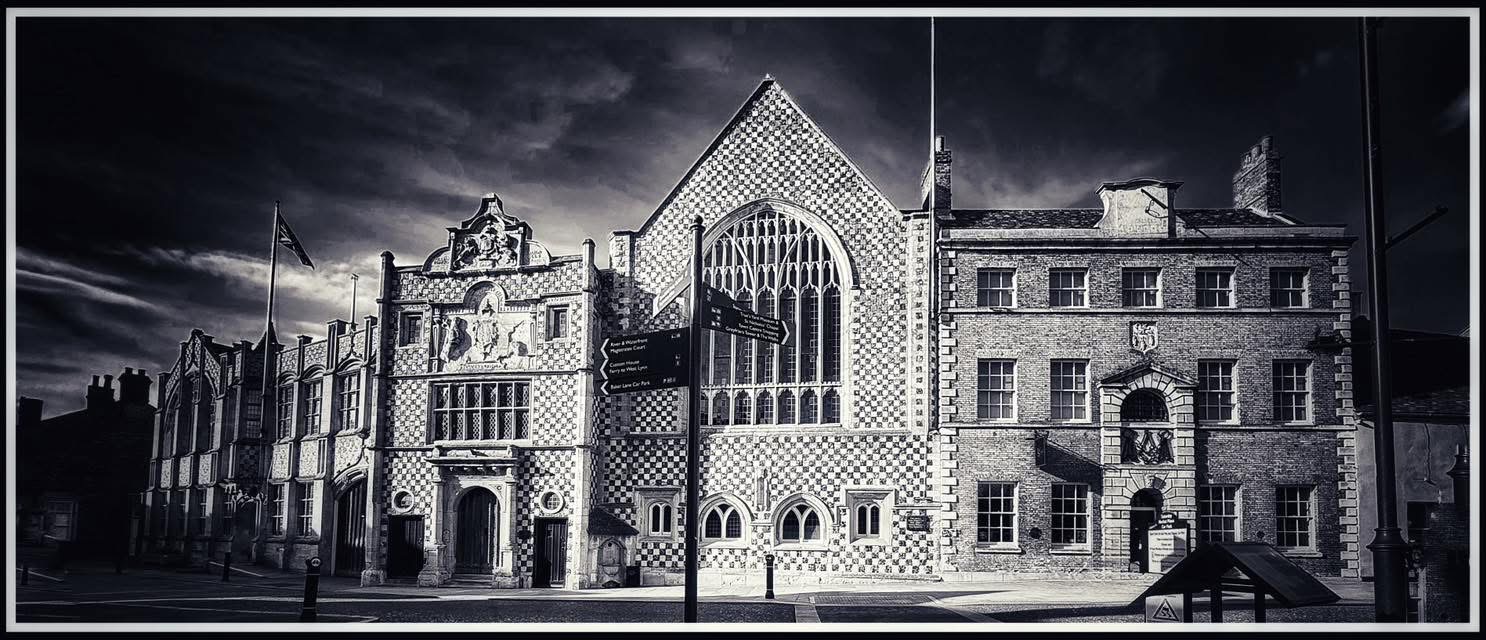
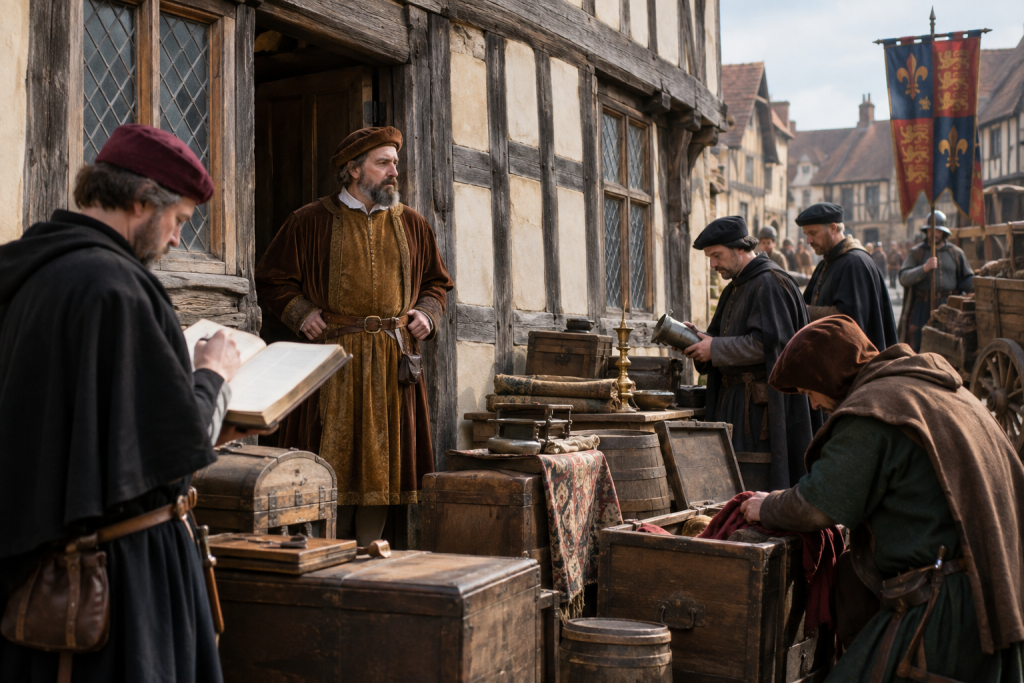
In 1272 the king’s officials described John de St Omer as a merchant of Lynn. A year later he was a burgess. In 1277 Edward I gave him royal protection when he travelled overseas to trade, and in 1285 the townsmen of Bishop’s Lynn made him their mayor. John owned a house in the town and, with his family, sixty-six acres across the river around North Clenchwarton. Then England went to war with France. In 1294 royal officials seized his property, not because John had committed a crime, but because he was French-born.
From foreign merchant to mayor
John probably came from Saint-Omer in Artois, now in northern France, a commercial town with strong connections to the trading world of Flanders and the Channel. Lynn belonged to that same international network. Foreign merchants were familiar figures around its quays, and some stayed long enough to become part of the town.
John had apparently settled in Lynn by 1272. The following year a royal record described “John de Sancto Omero, burgess of Len” alongside Lambert de St Omer, who was still described as a “merchant of St Omer”. The distinction is revealing. Whatever relationship existed between the two men, John was now officially identified through Lynn.
Becoming a burgess brought him into the recognised commercial and civic community. His overseas trading continued. In November 1277 Edward I granted a safe-conduct to John and Reginald Stuket, both described as burgesses of Lynn, while they travelled overseas to trade. Eight years later John reached the highest civic office in the town. The surviving mayoral list records him as mayor in 1285.
John was not the only man of apparently foreign origin to reach Lynn’s governing elite. John de Yspania, or John of Spain, repeatedly served as mayor during the same period. Thirteenth-century Lynn was not simply a Norfolk community visited by foreign traders. Some outsiders became deeply embedded in its civic life.
A house in Lynn and land across the river
John had also put down substantial economic roots. He possessed a house in Lynn, while he, his wife, and his son held sixty-six acres in and around North Clenchwarton, together with livestock. His property therefore straddled the Great Ouse. On one side was his house in the port where he had become a merchant, burgess, and mayor. Across the river were the family’s fields and animals.
We do not know where his Lynn house stood, and the surviving published evidence does not name his wife or son. What it does show is permanence. John was not a visiting merchant waiting for the next favourable tide. By the 1280s he had acquired family interests, land, commercial connections, civic rights, and political authority. If someone in Lynn had been asked whether John de St Omer belonged to the town, the answer might have seemed obvious.
War changed the question.
The Crown decides that John is French
In 1294 Edward I and Philip IV of France went to war over Gascony. The English government ordered the seizure of property belonging to people regarded as subjects of the French king and his allies. Lands, goods, and chattels could be confiscated, while debts owed to French creditors could be frozen. In Norfolk the surviving records show officials identifying and valuing foreign property before placing it in other hands.
John was caught by this policy despite more than twenty years of recognised membership of the Lynn community. The evidence survives among Exchequer records now at The National Archives, including E 106/3/17, membrane 2. Historian Bart Lambert has used these records to reconstruct what happened to foreign-born residents such as John.
Officials seized the sixty-six acres held by John, his wife, and his son around North Clenchwarton, together with their animals. John’s house in Lynn was confiscated, and his goods and chattels were valued at £13 3s 6d. The figure should not be converted into a supposedly precise modern equivalent, but added to a house, land, and livestock it shows that John possessed substantial wealth.
Somewhere in medieval Lynn, officials could identify the house belonging to the man who had been mayor only nine years earlier. Across the river they could identify his family’s fields and animals. His possessions could be listed and valued. A life accumulated over more than two decades was reduced to assets available for confiscation.
When did John become a Lynn man?
This is what makes John’s story so striking. The Crown itself had previously recognised his acquired identity. In 1272 its officials called him a merchant of Lynn. In 1273 he was a burgess of Lynn. In 1277 Edward I protected him as a Lynn burgess travelling overseas. Lynn subsequently elected him mayor.
Nothing suggests that the town itself suddenly rejected John in 1294. This was royal policy imposed during wartime. Lynn had accepted a French-born merchant so completely that it had entrusted him with its highest civic office. The Crown could nevertheless look beyond his residence, property, family, burgess status, and former mayoralty and decide that his birthplace mattered more.
Money probably contributed to the policy. Edward I was fighting France while facing serious demands elsewhere, and Lambert identifies a strong financial element in the confiscations. Successful foreign merchants possessed houses, land, merchandise, and debts that could be seized. John’s success therefore made him particularly vulnerable. The possessions that demonstrated how firmly he had settled in England also made him worth confiscating.
The foreigners did not disappear
The story becomes stranger when Lambert de St Omer reappears. We cannot safely call Lambert John’s brother or establish their precise relationship. In the early 1270s he was still described as a merchant of St Omer while John was already a burgess of Lynn. By 1296, however, Lambert had apparently established himself in Lynn.
That year, while England was still at war with France and only two years after John’s property had been seized, Edward I appointed Lambert de St Omer and John Lamberd to collect the new customs at Lynn and along the coast towards Yarmouth. A man associated with St Omer could therefore be trusted to collect royal revenue while another French-born St Omer merchant, formerly mayor of Lynn, had suffered confiscation. Lambert subsequently remained prominent in the town, and a man of that name appears among Lynn’s early fourteenth-century mayors.
There was no simple dividing line between Lynn people and foreigners. Foreign birth could coexist with property ownership, burgess status, royal employment, and civic office. War could suddenly make that same foreign origin dangerous.
What happened to John?
The confiscation regime eventually eased. Following the Anglo-French truce of 1297, many seizures were reversed, although some property remained in royal hands until the peace of 1303. Unfortunately, I have found no secure evidence showing whether John recovered his Lynn house, his family’s sixty-six acres, or his other possessions. Nor can we presently show that he was still alive when restitution became possible.
What survives instead is an extraordinary sequence in the records. In 1272 John de St Omer was a merchant of Lynn. In 1273 he was its burgess. In 1277 he travelled overseas under royal protection. In 1285 he became mayor. By 1294 he owned a house in the town while his family held land across the river.
Then England went to war, and the government decided that the most important fact about the former mayor of Lynn was that he had been born in France.
© James Rye 2026
Book a Guided Tour with a Trained and Qualified King’s Lynn Guide Through Historic Lynn
References
Borough Council of King’s Lynn & West Norfolk. List of Mayors of King’s Lynn.
https://www.west-norfolk.gov.uk/download/downloads/id/5646/list_of_mayors.pdf
Lambert, Bart. “A Matter of Trust: The Royal Regulation of England’s French Residents during Wartime, 1294–1377.” Historical Research 89, no. 244 (2016): 208–226.
https://academic.oup.com/histres/article/89/244/208/5602995
The National Archives. E 106/3/17, m. 2. Exchequer records concerning confiscated foreign property in Norfolk, 1294.
Reading the Rolls. “John de Sancto Mauro: Entries, Organised.”
https://readingtherolls.com/person/john-de-sancto-mauro/entries
Reading the Rolls. “Lambert de Sancto Omero.”
https://readingtherolls.com/person/lambert-de-sancto-omero