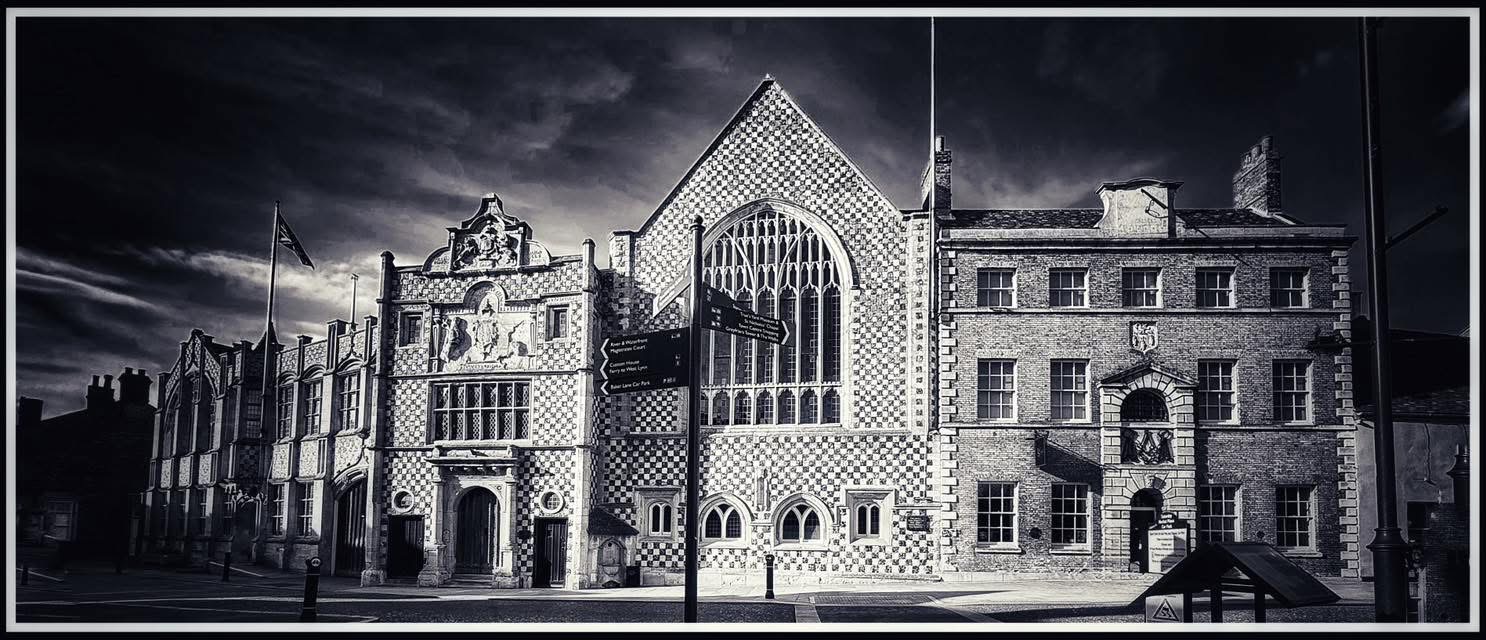
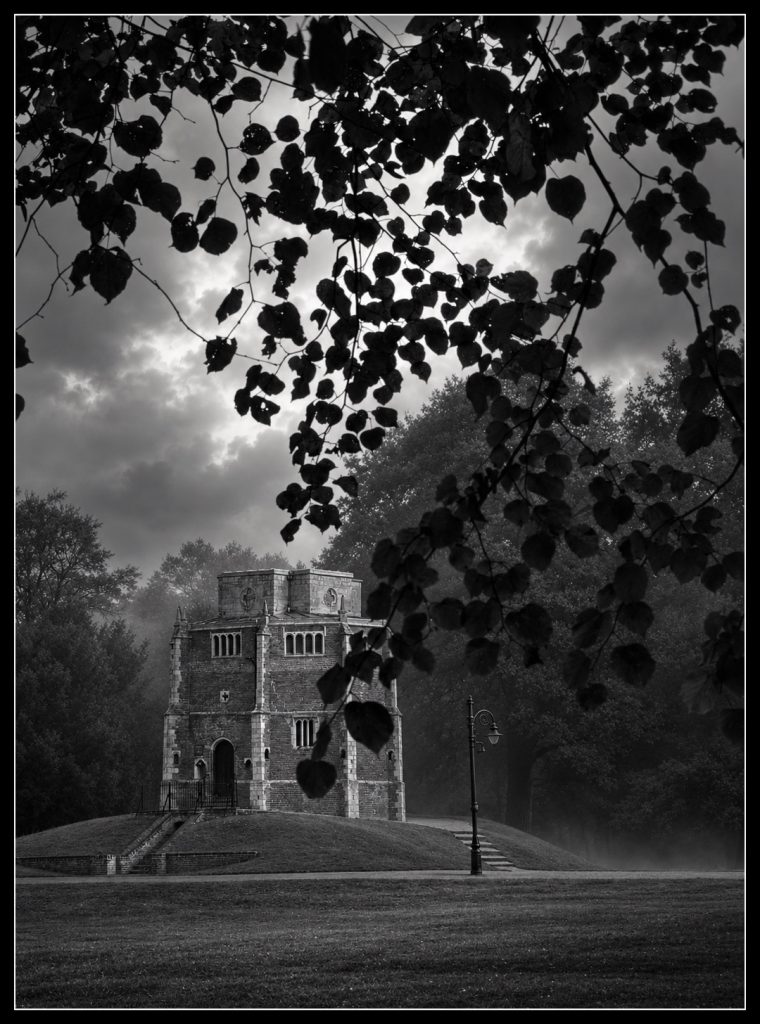
Photo © James Rye 2026
For centuries, the Red Mount Chapel has been one of King’s Lynn’s most unusual buildings. Built for medieval pilgrims, it later became a store for gunpowder. But was that dangerous cargo still inside when Parliament’s army besieged the town in 1643? The surviving evidence reveals a story that began several years before the Civil War.
When the Earl of Manchester’s Parliamentarian army approached King’s Lynn in August 1643, the town’s defenders faced an uncomfortable prospect. They had cannon and muskets, but these would be useless without adequate supplies of gunpowder. The whereabouts of that powder, and the ability to protect it from enemy fire, would be vital to the town’s survival.
One place associated with its storage was the Red Mount Chapel, standing on its mound beside the eastern defences. This extraordinary little building had been constructed in the late fifteenth century for pilgrims travelling towards Walsingham. Its elaborate stone vaulting and intimate devotional spaces belonged to a world of medieval religious belief. Yet little more than a century after the Reformation, the chapel had acquired a decidedly different purpose.
It had become a gunpowder magazine.
That much is well supported by the historical record. What is less certain is precisely when the powder was stored there, how much was kept, and whether any remained inside during the three weeks of fighting in 1643.
A chapel prepared for gunpowder
The Red Mount was already an old building when the Civil War began. Construction had commenced in 1483, and its richly decorated upper chapel was completed in the early sixteenth century. The dissolution of Lynn’s Benedictine priory in 1537 effectively ended its original religious purpose, although the building survived and subsequently found other uses.
In 1586, for example, the Corporation arranged for a study to be created there for Thomas Howes, a minister of St Margaret’s. By the seventeenth century, however, the authorities were becoming increasingly concerned about the town’s security. Lynn was a valuable commercial port with an extensive maritime trade, and the threat of attack was not confined to the possibility of civil conflict. Piracy and foreign raiding were already familiar dangers.
Research by the Norfolk Record Office, using the surviving Corporation Hall Books, has revealed purchases of gunpowder in 1612, 1626 and 1630. In 1635 there was a warrant concerning thirty-six barrels. These records show that Lynn was maintaining military supplies long before Charles I and Parliament went to war. The problem was not simply acquiring gunpowder, but finding somewhere suitable to keep it.
This brings us to the most important document in the story.
On 8 May 1638, the Corporation ordered:
“that the town store of gunpowder be removed to Our Lady’s Mount, new prepared.”
The instruction was quoted by the antiquarian Edward Edwards in his account of the Red Mount, published in John Britton’s Architectural Antiquities of Great Britain in 1811. Although Edwards was writing long after the event, he was reproducing what he identified as a dated municipal order.
The significance is considerable. Five years before the siege, the town authorities had formally decided that the Red Mount should become their gunpowder magazine.
The expression new prepared is particularly intriguing. It suggests that something had been done to make the building suitable for storing the powder. Perhaps the authorities had cleared part of the interior or arranged more secure access. They may also have been concerned about damp, which could render gunpowder ineffective. Unfortunately, the surviving quotation gives no indication of the work undertaken.
Nor does the instruction identify the room used. The Red Mount contains a lower brick-vaulted chamber, passages and the magnificent upper chapel, but there is no contemporary evidence establishing precisely where the barrels were kept.
Nevertheless, the transfer appears to have been carried out. William Richards, writing in his History of Lynn in 1812, recorded that in 1638 the town’s gunpowder was lodged in the Red Mount. Nearly a century later, Henry J. Hillen confirmed the building’s use as a powder magazine in the same year. These historians may have drawn on the same Corporation records, but their accounts leave little reason to doubt that gunpowder storage had become an established function of the chapel.
What makes the discovery especially interesting is its timing. The Red Mount was not suddenly commandeered as a magazine when Manchester’s army appeared outside Lynn. It had been incorporated into the town’s defensive arrangements during the final years of peace.
Eighteen barrels – or fifty?
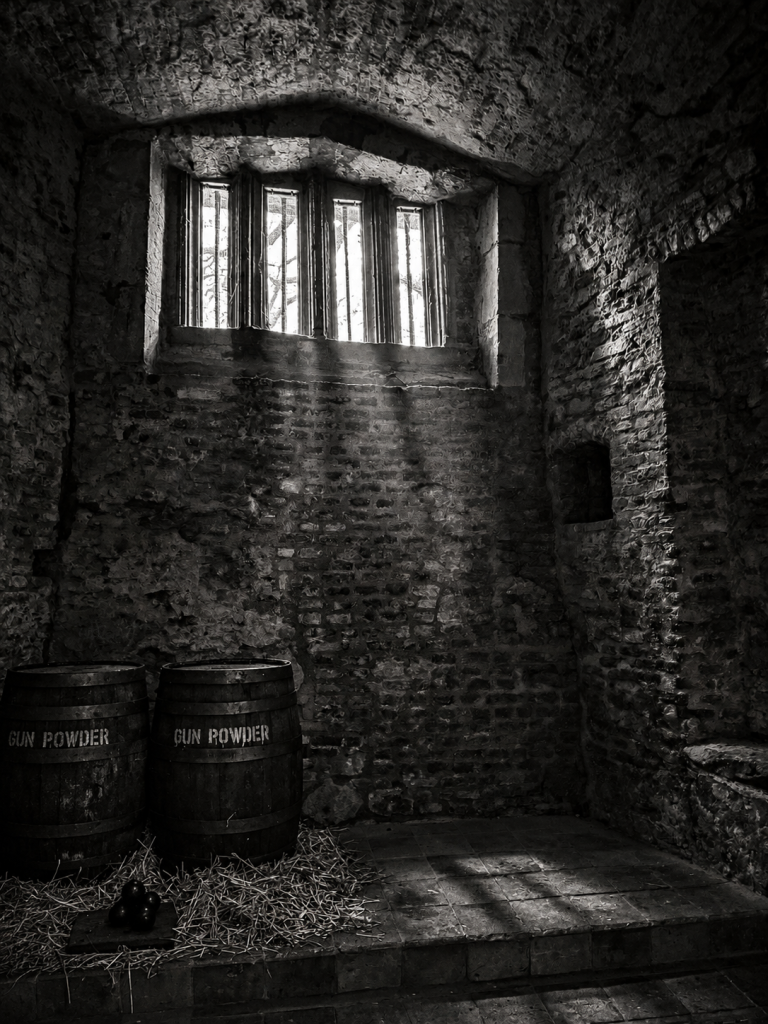
Photo © James Rye 2026
Many modern descriptions of the Red Mount state that eighteen barrels of gunpowder were stored there in 1641. The figure has become an established part of the chapel’s popular history and appears, for example, in a local chronology published by The Walks.
However, the difficulty with this attractive detail is that I have been unable to trace it to a contemporary inventory. The accounts repeating it generally provide no documentary reference, and neither Richards nor Hillen establishes that eighteen barrels were present in the chapel in 1641. It may be perfectly correct, but until the original source can be identified, the quantity should be treated as unconfirmed.
There is stronger evidence about Lynn’s ammunition supplies as the Civil War approached. On 21 August 1642, according to Hillen, the Corporation sent its slightly deteriorated gunpowder to London to be exchanged for a fresh supply. The following day, Charles I raised his royal standard at Nottingham, conventionally marking the beginning of the Civil War.
The coincidence is striking. At precisely the moment England was descending into war, Lynn was ensuring that its ammunition remained serviceable. Yet the record does not say whether the powder sent to London had been taken from the Red Mount, or whether the replacement stock was returned there.
By the summer of 1643, the town was well armed. Hillen estimated that its defenders possessed some 1,200 muskets, between forty and fifty pieces of artillery, and fifty barrels of usable gunpowder. The last figure is particularly interesting because it refers to the town’s supplies as a whole, not specifically to the Red Mount. Even if the often-quoted eighteen barrels were held in the chapel, they would have represented only part of the available ammunition.
The Red Mount during the siege
Lynn’s decision to support the King in August 1643 created an immediate crisis for Parliament. The port was too important to leave in Royalist hands, and Manchester brought his army against the town. The siege began towards the end of August and continued until the Royalist surrender in September.
The Red Mount occupied a useful position beside the town’s eastern defences, overlooking ground from which an enemy might approach. Its military importance is reflected in Hillen’s description of the chapel as the Mount Fortress in 1643. The name suggests that it had become recognised as part of Lynn’s defensive system rather than merely a convenient building in which to store ammunition.

https://amzn.eu/d/0hg7BRGo
Edwards, writing in 1811, believed that the chapel had served as a military position during the siege and that a bastion had been constructed in front of it. His account is valuable, but there is a complication concerning the date of those earthworks.
Historic England’s research record associates the Red Mount with a gunpowder magazine and strongpoint in 1642, but attributes the more substantial two-level bastion, complete with parapet and ditch, to the period after Parliament regained control of Lynn. The defences were evidently developed in stages, and it would be misleading to assume that everything visible in later plans or descriptions already existed during the Royalist siege.
There is also physical evidence of the building’s military associations. Graffiti dating from the Civil War survives within the chapel, offering a reminder of the soldiers who occupied or visited it. Such inscriptions help establish the building’s use during this turbulent period, although they cannot tell us whether barrels of powder stood nearby when they were made.
This is where the central question becomes difficult to answer.
The Corporation’s decision of 1638, followed by the historical accounts of the powder being lodged there, provides convincing evidence of the Red Mount’s use as a magazine before the siege. Its continuing military role in 1642–43 is also well established. Yet no dated inventory or contemporary account has been identified that proves gunpowder remained inside the chapel during the actual siege.
That does not mean the powder had been removed. It means that the surviving evidence does not establish its whereabouts with the precision we would like.
The missing gunpowder
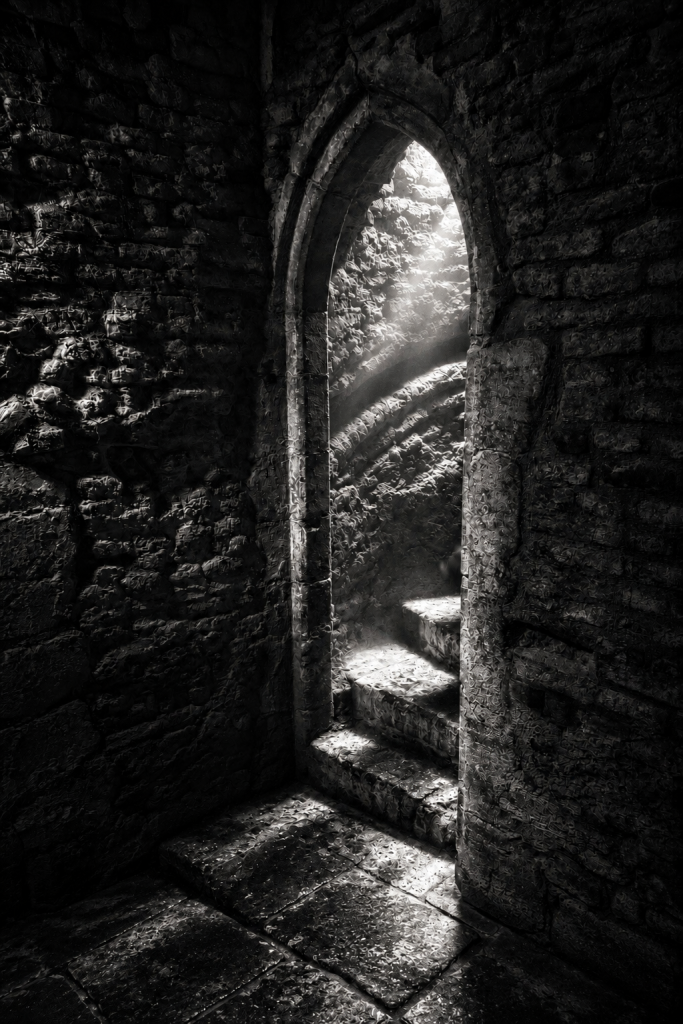
Photo © James Rye 2026
There is one final episode that makes the question even more intriguing. William Richards, drawing upon an older manuscript account of the siege, reported that most of Lynn’s powder and shot were secretly removed by townspeople a night or two before the surrender.
The circumstances remain mysterious. Apparently, the commissioners negotiating the surrender on behalf of Manchester’s army were unaware that much of the ammunition had disappeared. Richards believed that, had they known, the town might have faced less favourable terms.
Where had the powder been stored? Who removed it, and where was it taken?
Unfortunately, the manuscript account provides no answers. There is nothing to connect the episode specifically with the Red Mount, although it establishes that the town’s ammunition was still being moved during the closing stages of the siege.
It is tempting to imagine barrels being carried secretly down from the chapel during those final nights, but that would be speculation. The historian must resist the attraction of a good story when the documents do not support it.
We can be confident that the Red Mount Chapel was prepared for gunpowder storage in 1638, that the town’s powder was subsequently lodged there, and that the building played a military role during the Civil War. Whether gunpowder remained within the chapel throughout the siege of 1643 is possible, even likely, but has not been conclusively demonstrated.
For medieval pilgrims, the Red Mount had been a place of devotion on the road to Walsingham. For the Corporation of the seventeenth century, it became a practical resource in the defence of an increasingly vulnerable port. By 1643, its sacred origins had become almost incidental to its military value. The chapel had survived the Reformation, the abandonment of pilgrimage and the upheavals of the early seventeenth century. It would survive the Civil War too. And beneath the stone vaulting, the story of the Red Mount’s gunpowder magazine remains one of the most unexpected chapters in the history of King’s Lynn.
© James Rye 2026
Book a Guided Tour with a Trained and Qualified King’s Lynn Guide Through Historic Lynn
References
Edwards, Edward (1811). ‘The Chapel of Our Lady on the Mount, or Red Mount at Lynn, Norfolk’, in John Britton, The Architectural Antiquities of Great Britain, vol. III, pp. 61–66. The Corporation order of 8 May 1638 is quoted on p. 66. Read the original publication.
Hillen, Henry J. (1907). History of the Borough of King’s Lynn, vol. I, pp. 232, 353–355. Particularly useful for the Red Mount’s description as a powder magazine and Mount Fortress, the exchange of gunpowder in 1642, and Lynn’s military supplies in 1643. Read volume I.
Historic England. Red Mount, Research Record 877010. Describes its military use and the development of the surrounding bastion after the Parliamentarian capture of Lynn. Read the record.
Norfolk Historic Environment Record. NHER 5478, Red Mount Chapel, King’s Lynn. Includes architectural information and the building’s later uses. Read the record.
Norfolk Record Office (2018). Pete Widdows, ‘Barbary Pirates near King’s Lynn!’ Research based on the Corporation Hall Books concerning gunpowder purchases and preparations for the defence of the port. Read the article.
Richards, William (1812). The History of Lynn, vol. II, particularly the chronological entry for 1638 and pp. 755–759 concerning the siege. Read volume II.
The Walks (2026). A Brief History of the Red Mount Chapel. Includes the assertion that eighteen barrels were stored in 1641, although no primary reference is supplied. Read the chronology.