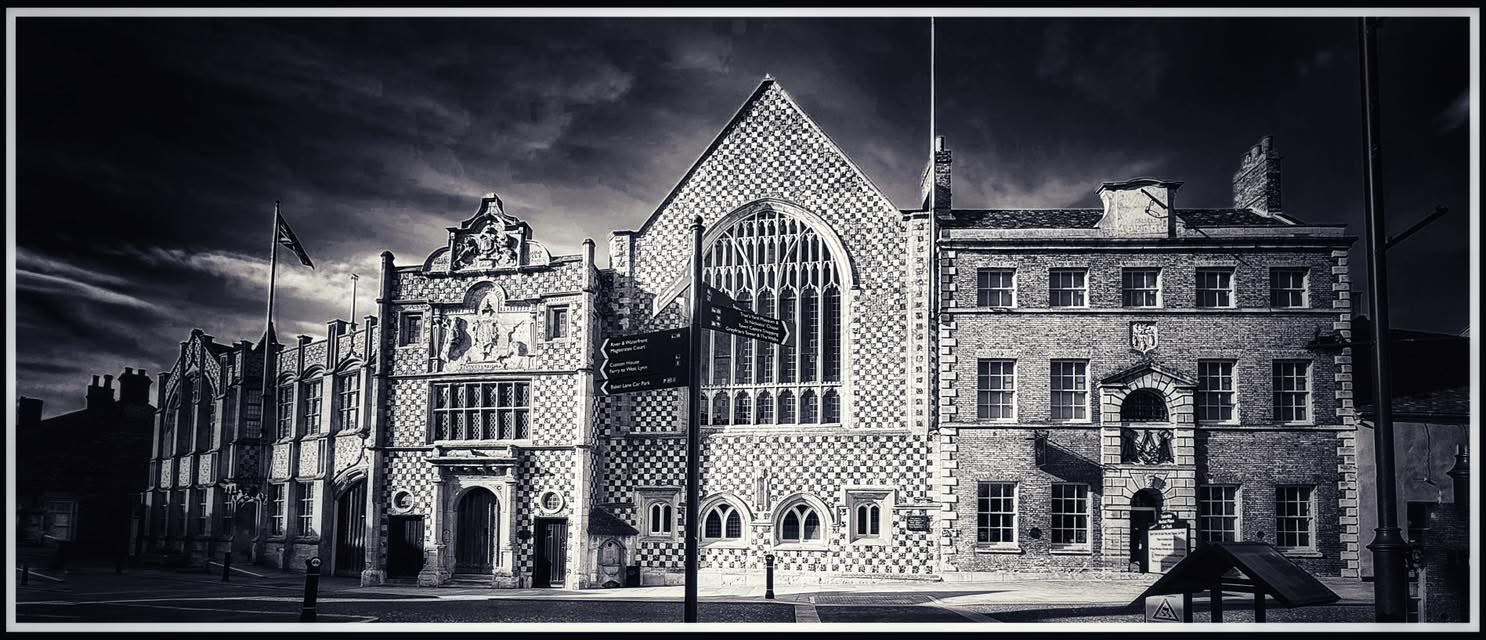
On 15 January 1905, Ralph Vaughan Williams sat down at Cozens’ Temperance Hotel in King’s Lynn and wrote to his cousin. After mentioning plans to attend a concert in Leeds, he added a far more arresting piece of news: “I am collecting most wonderful songs among the fishermen here.”
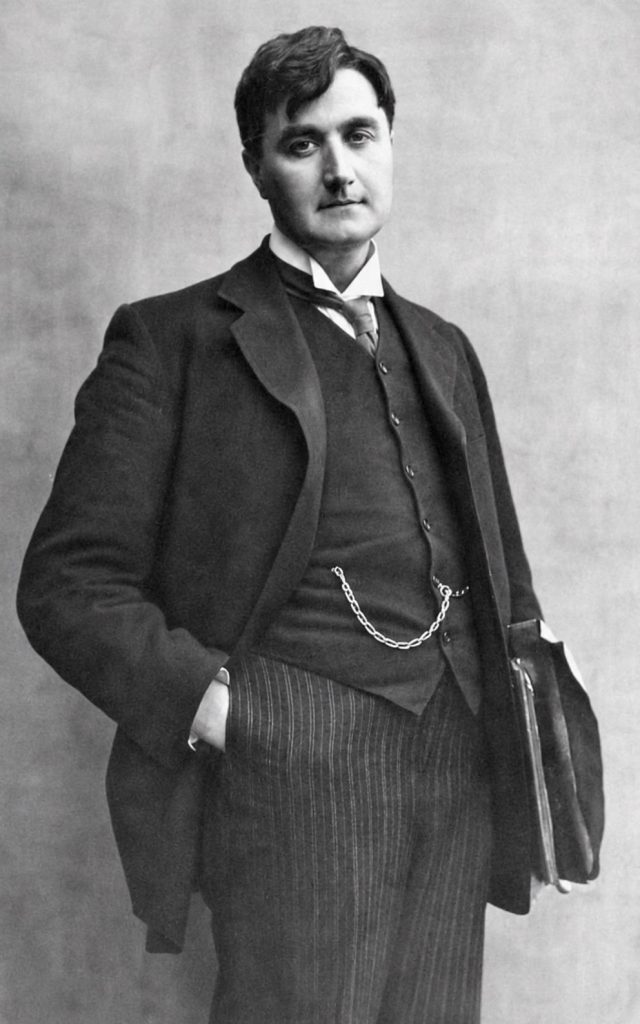
Source https://www.eatmt.org.uk/end-voices/
Vaughan Williams was thirty-two and not yet the composer of The Lark Ascending, the Fantasia on a Theme by Thomas Tallis or nine symphonies. He had come to West Norfolk with pencils and manuscript paper, searching for traditional songs that were still being passed from one singer to another.
During six productive days in King’s Lynn, he wrote down sixty-one songs. Some soon entered concert halls and hymn books. Behind them were North End fishermen, elderly sailors, workhouse residents and local women whose music Vaughan Williams helped preserve, even though most of their names were soon forgotten outside Lynn.
In search of old songs
Vaughan Williams had begun collecting traditional music in Essex in December 1903. The following year he joined the Folk-Song Society, whose members feared that older songs were disappearing as communities changed and printed popular music became more widely available.
Why he selected West Norfolk is uncertain. He may have responded to information received after publicly asking people to tell him about traditional singers. He may also have read earlier reports suggesting that old songs survived among Norfolk fishermen. His notebooks record where he went, but reveal little about the arrangements behind the journey.
He began at Tilney All Saints and Tilney St Lawrence on 7 and 8 January 1905. The following day he reached King’s Lynn. There he met the Reverend Alfred Huddle, curate of St Nicholas’ Chapel, who knew the North End fishing community well.
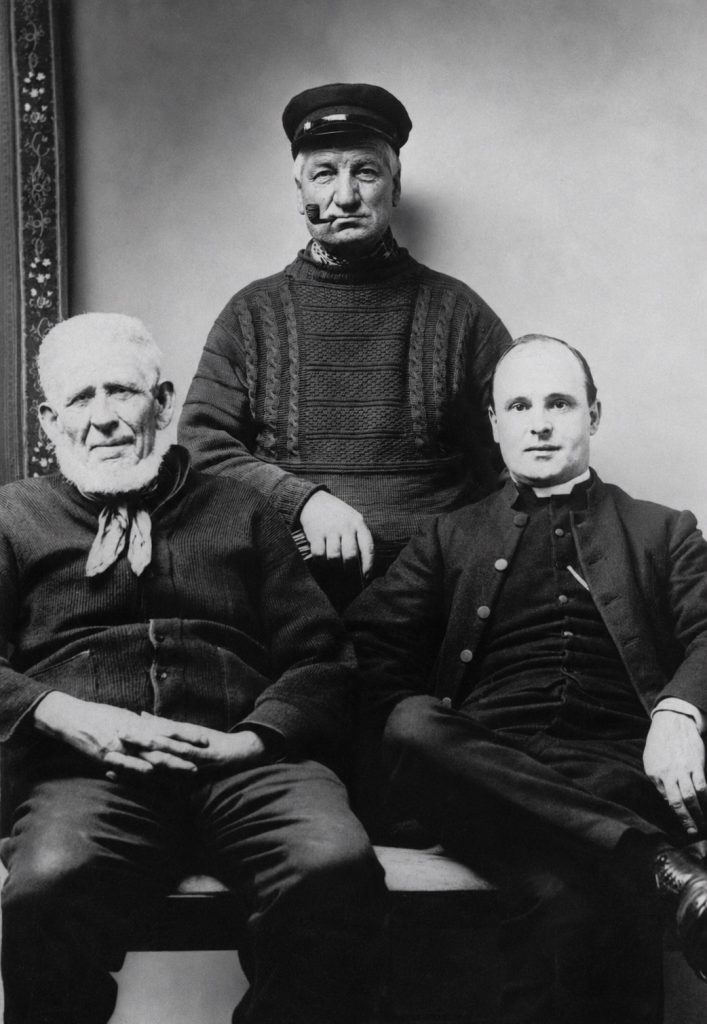
Source https://www.eatmt.org.uk/alfred-huddle-1863-1946/
Huddle’s introduction was decisive. North End was a close neighbourhood in which an unfamiliar, well-spoken visitor carrying sheets of music paper might not have been welcomed without a trusted local intermediary. Vaughan Williams later remembered that the curate took him to hear the fishermen and that he “reaped a rich reward”.
Into North End
The North End of 1905 was a district of narrow streets and crowded yards around the Fisher Fleet. Fishing families lived close to the boats, nets and shellfish on which their incomes depended. Singing belonged to everyday life. Songs were heard in cottages, yards, public houses and working spaces, not presented as carefully rehearsed performances.
Among the first singers Vaughan Williams met were James “Duggie” Carter and Joe Anderson, both elderly fishermen. Carter sang ballads about Napoleon, pirates, unhappy lovers and life at sea. One of them, “The Captain’s Apprentice”, told of a boy who was starved and beaten aboard ship before dying from his injuries.
The story bore a disturbing resemblance to the death in 1857 of Robert Eastick, a fifteen-year-old former inmate of St James’s Workhouse who died aboard the Lynn-owned vessel John Sugars. The ballad itself is much older than Eastick’s death, so it was not composed about him. It remains possible, though unproven, that Lynn singers associated an existing song with a remembered local tragedy.
Joe Anderson possessed an equally valuable repertory. His songs included “A Basket of Eggs”, “The Bold Young Sailor” and “Young Henry the Poacher”. Their subjects ranged from comic deception to transportation overseas.
Vaughan Williams listened as the singers repeated their melodies and then wrote the notes in pencil. He was chiefly interested in the tune. When he recognised the words, he sometimes recorded only part of them. No sound recordings were made, so we cannot hear Carter’s phrasing, Anderson’s voice or the distinctive speech of the North End fishermen. The manuscript pages are all that remain of those particular performances.
Music in the workhouse
Vaughan Williams also visited the King’s Lynn Union on Exton’s Road, still widely called St James’s Workhouse. Its elderly inhabitants included men who had spent their lives fishing or sailing but could no longer support themselves.
Robert Leatherday sang “On Board a Ninety-Eight”, a song about a pressed sailor who eventually accepts naval life. Charles Crisp contributed “The Dream of Napoleon” and other maritime ballads. William Harper, who had once lived at True’s Yard, sang several songs after poverty or old age had brought him into the Union.
Women were also part of Lynn’s singing tradition. Betty Howard gave Vaughan Williams “Homeward Bound”, while Harriet Benefer sang “Barbara Allen”. By visiting homes rather than relying solely upon public-house singing, he heard women who might otherwise have been excluded from his collection.
The songs did not describe an isolated Norfolk world. They carried memories of Ireland, Australia, North America and distant seas. Their subjects included naval warfare, transportation, poaching, separation and homecoming. Some were old ballads; others were comparatively recent songs learned from relatives, shipmates or printed sheets.
Between 9 and 14 January, Vaughan Williams collected sixty-one songs in King’s Lynn. He made a one-day return on 1 September 1906 and added further tunes from several of the same singers.
From Fisher Fleet to concert hall
Vaughan Williams did not regard traditional songs simply as objects to be preserved. He was searching for ways to build an individual English musical language, and the melodies he heard in Lynn became part of that search.
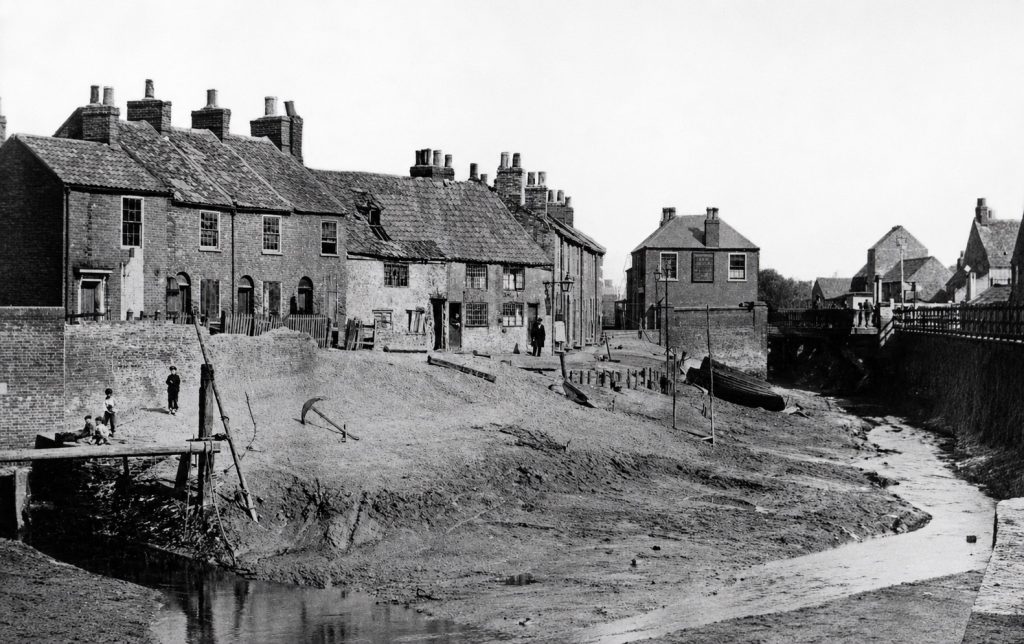
Source https://www.eatmt.org.uk/end-voices/
His First Norfolk Rhapsody, composed in 1906 and later revised, draws upon five songs collected in the area. They include Carter’s “The Captain’s Apprentice”, Anderson’s “A Basket of Eggs” and “The Bold Young Sailor”, Leatherday’s “On Board a Ninety-Eight”, and “Ward the Pirate”.
The work begins quietly, with fragments of melody appearing as though heard across water. The music then gathers pace and weight. Vaughan Williams did not merely arrange the songs one after another. He altered their harmonies, rhythms and orchestral colouring, turning unaccompanied performances into a single orchestral movement.
The rhapsody received its first performance in London on 23 August 1906, conducted by Henry Wood. Although called a Norfolk Rhapsody, much of its musical character came specifically from named singers in King’s Lynn.
The tune called KING’S LYNN
One North End melody travelled still farther.
Joe Anderson’s “Young Henry the Poacher” concerned a young man transported to Van Diemen’s Land. Vaughan Williams adapted its tune for The English Hymnal, published in 1906, and named it KING’S LYNN.
The melody became associated with G. K. Chesterton’s hymn “O God of Earth and Altar”. A tune once used to tell the story of a convicted poacher was transformed into solemn congregational music and printed in hymn books far beyond Norfolk.
Most people who have sung the hymn will never have heard of Joe Anderson. Yet it was his performance in King’s Lynn that carried the melody into Vaughan Williams’s notebook.
The composer and the singers
Vaughan Williams became one of Britain’s most distinguished composers. Carter, Anderson, Leatherday and the other singers received no continuing payment when their tunes were published or performed.

https://www.bridgemanimages.com/it/lambert/ralph-vaughan-williams-musical-composer-b-w-photo/photo/asset/5987009
The relationship between collector and singers was unequal. Vaughan Williams possessed musical training and access to publishers, broadcasters and concert orchestras. Several of the people from whom he collected were living close to poverty.
It would nevertheless be unfair to portray him simply as taking their music. The songs were generally regarded as communal rather than the property of an individual performer, and Vaughan Williams carefully recorded singers’ names when many earlier collectors had not. His notebooks preserved both the melodies and the identities of the people who sang them.
The achievement of the Norfolk Rhapsody was Vaughan Williams’s, but the music from which it grew belonged to a much wider tradition maintained by working people.
A return to Lynn
Vaughan Williams returned to King’s Lynn on 23 July 1952 to speak at the town’s Festival. Nearly half a century had passed since his visit to North End. He was now approaching eighty and recognised as one of the country’s leading composers.
In his lecture, he remembered the clergyman who had introduced him to the fishermen and recalled the musical reward he had found among them.
By then, the North End fishing community was already changing. Much of its physical setting later disappeared through clearance and redevelopment. Vaughan Williams’s notebooks therefore preserve more than a collection of useful melodies. They retain fragments of a neighbourhood’s cultural life at a moment when nobody could know how quickly that world would vanish.
Vaughan Williams came to Lynn looking for traditional music. He found it in the voices of James Carter, Joe Anderson, Betty Howard, Robert Leatherday and their neighbours.
The hymn tune KING’S LYNN remains their memorial as well as his.
© James Rye 2026
Book a Guided Tour with a Trained and Qualified King’s Lynn Guide Through Historic Lynn
References
- East Anglian Traditional Music Trust. “Alfred Huddle (1863–1946).” Accessed 13 June 2026. https://www.eatmt.org.uk/alfred-huddle-1863-1946/
- East Anglian Traditional Music Trust. “Behind the Songs.” Accessed 13 June 2026. https://www.eatmt.org.uk/behind-the-songs/
- East Anglian Traditional Music Trust. “North End Voices.” Accessed 13 June 2026. https://www.eatmt.org.uk/end-voices/
- East Anglian Traditional Music Trust. “Vaughan Williams’ King’s Lynn Collection.” Accessed 13 June 2026. https://www.eatmt.org.uk/vaughan-williams-kings-lynn-collection/
- Hymnary.org. “KING’S LYNN.” Accessed 13 June 2026. https://hymnary.org/tune/kings_lynn
- Kennedy, Michael. The Works of Ralph Vaughan Williams. 2nd ed. Oxford: Oxford University Press, 1980.
- Palmer, Roy, ed. Folk Songs Collected by Ralph Vaughan Williams. London: J. M. Dent, 1983.
- Samuel, Edgar. “Vaughan Williams and King’s Lynn.” Journal of the Ralph Vaughan Williams Society, no. 14. https://rvwsociety.com/wp-content/uploads/2016/07/rvw_journal_14.pdf
- Vaughan Williams Foundation. “Letter from Ralph Vaughan Williams to Ralph Wedgwood, 15 January 1905.” Letter VWL189. British Library, Add. MS 71700, fols. 15–16. https://vaughanwilliamsfoundation.org/letter/letter-from-ralph-vaughan-williams-to-ralph-wedgwood-56/
- Vaughan Williams Memorial Library. “Ralph Vaughan Williams Folk Song Collection.” English Folk Dance and Song Society. https://archives.vwml.org/