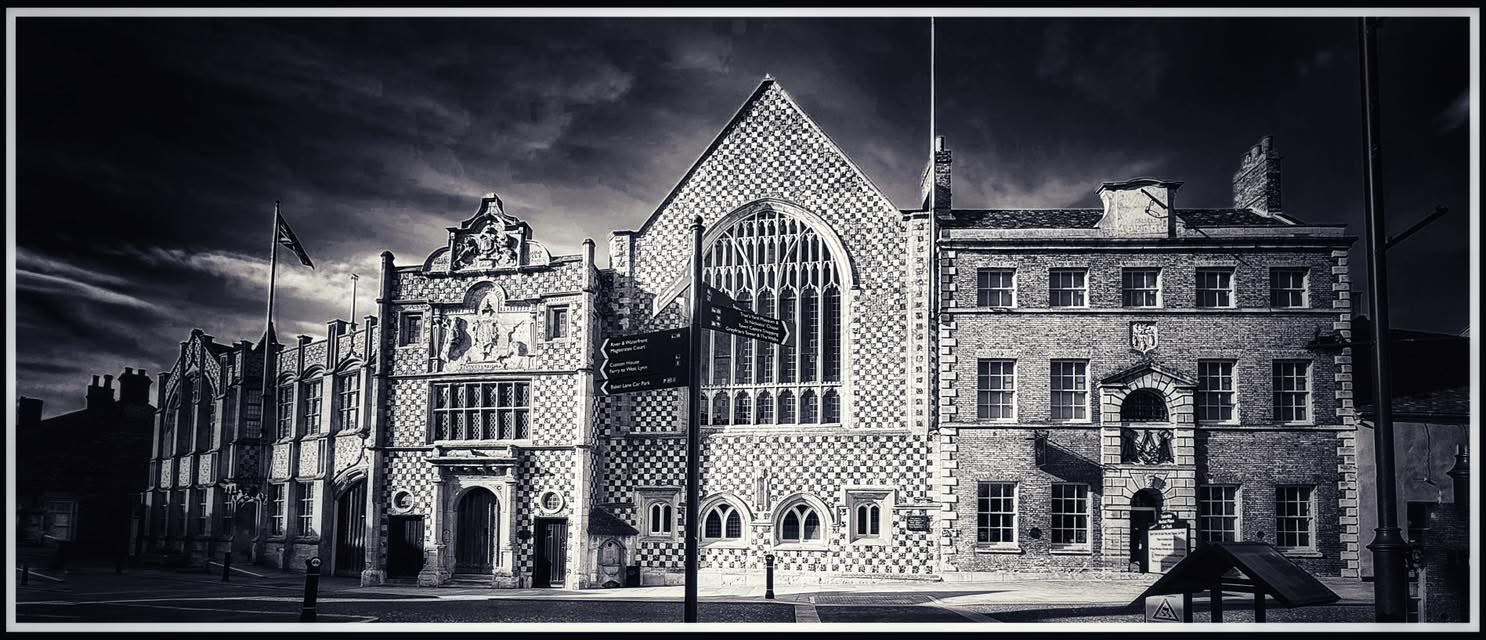
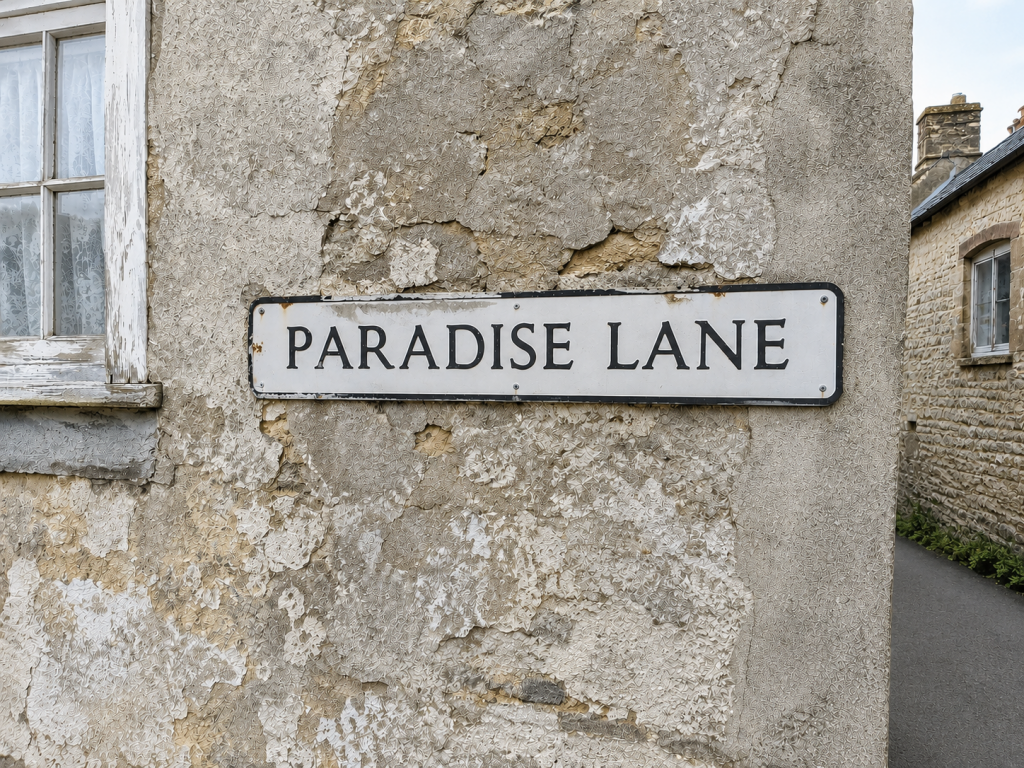
On 22 April 1852, government inspector William Lee walked into Paradise Lane and recorded one of the starkest sentences ever written about Victorian King’s Lynn:
Paradise-lane. Many of the occupants are prostitutes; scarcely a privy to any of the houses; boxes are generally used.
In fewer than twenty words, Lee joined prostitution to extreme poverty. Most houses lacked even a privy. The residents commonly had to use boxes.
His observation is firm evidence, but it is only one fragment of a much longer story. Women associated with prostitution appear in Lynn’s records when their lives crossed the concerns of coroners, constables, sanitary inspectors, magistrates, and moral reformers. They are labelled, regulated, and sometimes punished, but seldom allowed to speak for themselves.
A fatal medieval encounter
The earliest evidence comes from a King’s Lynn coroner’s roll covering 1302–05. Henry Cook, servant of Etheldrede, wife of Philip de Fenne, entered the house of Sir William Howard. Inside, he found Nicholas Wycke with three women: Beatrice Schalle of Norwich, Agnete Peper, and Isolde of Oxford.
The Latin record described them as meretrices, a word often translated as prostitutes. Nicholas pursued Henry and stabbed him in the cheek. Henry died, while Nicholas and the three women fled. [Norfolk Record Office, KL/C14/1; Karras, Common Women, 95]
The circumstances strongly suggest commercial sex, but meretrix was also a moral label. Medieval officials might use it for a woman who sold sex, had several partners, or was considered sexually disreputable. We do not know what the women charged, where they lived, or what became of them.
Nor can Sir William Howard’s house be called a brothel. The record places one encounter there; it does not establish the building’s regular use. Beatrice’s and Isolde’s geographical bynames may suggest movement between towns, but they do not prove that either woman had recently travelled to Lynn.
Harbouring “whores”
On 5 June 1309, Lynn’s constables held an inquisition into theft, disorder, and the harbouring of offenders. Kamma, wife of Michael Culling, was accused of harbouring “thieves and whores”. Matilda de Banham, Matilda Clauda, and a woman called Grace faced similar accusations. [Norfolk Record Office, KL/C15/1; Alsford, “Judicial Cases from King’s Lynn”]
The four named women were the alleged harbourers, not the unnamed “whores”. Harbouring could mean providing shelter, lodging, protection, or a meeting place. It might indicate an informal brothel, but the record does not prove that any of these women kept one.
Later evidence shows Lynn’s authorities watching inns closely. Ruth Mazo Karras, who studied the borough’s medieval records, writes that the town banned brothels in the fifteenth century and excluded “common women” from inns. Inns brought strangers, alcohol, accommodation, and private rooms together. Restricting access also allowed the borough to act against an innkeeper without proving every sexual transaction. [Karras, Common Women, 18, 100]
The exact date and wording of this rule still need checking in the original leet rolls. Nothing yet found suggests that Lynn licensed or operated an official municipal brothel.
Sex outside marriage was not necessarily prostitution
After the Middle Ages, the evidence becomes much thinner. On 25 September 1633, Lynn’s sessions ordered public whipping in the wherry cart for petty theft, adultery, fornication, and unmarried parenthood. The wording included both a woman who bore an illegitimate child and the man reputed to be its father. [Norfolk Record Office, KL/C21/1]
The order reveals the humiliating public punishment of sexual misconduct, but it says nothing about payment for sex. The same distinction applies to eighteenth-century church cases involving fornication. Such records cannot be used to turn every woman accused of sexual wrongdoing into a prostitute.
No securely identified eighteenth-century Lynn prostitute or brothel has emerged from this research. Private arrangements could escape official notice, and records may survive under terms that modern catalogue searches do not recover.
The truth about Paradise Lane
Paradise Lane was already an ancient route when William Lee inspected it. Medieval tenements had stood on its eastern side. It remained lightly developed on maps of about 1670 and 1725, but courtyard housing crowded its edges by 1830. Cheap accommodation lay close to markets, licensed premises, and the commercial centre.
Lee was investigating King’s Lynn for the General Board of Health. His subject was the town’s drainage, water supply, overcrowding, and sanitation. He named no woman, counted no prostitutes, and identified no brothel. He simply reported that “many” occupants were prostitutes.
A modern King’s Lynn Civic Society leaflet has given the story an unfortunate twist. It says that Paradise Lane was lined with slaughterhouses and “prostitute hovels” in the 1851 census. The census was taken on 30 March 1851. Lee inspected the lane nearly thirteen months later, on 22 April 1852. “Prostitute hovels” was not his phrase.
The difference is substantial. A census statement suggests a counted population recorded through a national enumeration. Lee supplied an inspector’s judgement during a walk through the lane. The relevant census schedules may reveal residents, lodgers, occupations, ages, and birthplaces, but they have not yet been shown to identify anyone as a prostitute.
Lee’s actual words are vivid enough. They establish that he believed a considerable number of Paradise Lane’s residents were prostitutes in April 1852. They do not prove that every house was involved, that the lane had always served this purpose, or that it was Lynn’s only centre of commercial sex.
Raspberry wine at the Sailors’ Home
Seven years later, four unnamed women repeatedly entered the Sailors’ Home, a licensed alehouse kept by Thomas William Cole in Purfleet Street. The events of 22 November 1859 eventually reached the Queen’s Bench in Cole v Coulton.
The women were classified in the proceedings as “common prostitutes”. Each remained for no more than about half an hour on any one visit. On one occasion, all four bought raspberry wine.
The legal machinery had been put in place earlier that year. The King’s Lynn Waterworks and Borough Improvement Act incorporated a section of the Town Police Clauses Act 1847. It imposed a penalty on anyone keeping refreshment premises who knowingly allowed “common prostitutes or reputed thieves” to assemble and remain. John James Coulton, clerk to the Paving Commissioners, issued a handbill warning that the provision would be enforced.
At the Petty Sessions on 5 December 1859, Cole argued that the women had come for refreshments and had not gathered for an illegal purpose. The magistrates decided that they remained longer than was reasonably necessary. Cole was fined £1 and ordered to pay £1 6s. costs. The Queen’s Bench upheld the conviction on 21 April 1860. [Cole v Coulton, 2 Ellis & Ellis 695–704]
The raspberry wine exposes the difficulty of the case. The women made an ordinary purchase, but their reputation changed the legal meaning of their presence. The court did not find that they solicited customers or sold sex inside the Sailors’ Home that evening. Cole, not the women, was prosecuted for allowing them to assemble and continue there.
The decision proves that Lynn’s authorities were using licensing law to restrict where known or reputed prostitutes could meet. It does not prove that the Sailors’ Home was a brothel.
The uncertain public-house evidence
Later allegations may reveal a wider network of taverns and lodging rooms. A Norfolk public-house database reports that Rose Barker and Sarah Ann Beavis lived at the Tower Tavern (19 tower Street) in 1870, paid for lodging, and admitted taking men upstairs. A police superintendent supposedly called the premises “simply a brothel”.
These details are promising, but the database supplies no newspaper title, issue date, page, or column. Its cited licensing-register series begins in 1872 and cannot be the source of an 1870 case. Until the original newspaper or court record is found, the names, testimony, and quotation must remain research leads.
Other entries associate prostitutes with several Lynn public houses. If confirmed, they would suggest that commercial sex was not confined to Paradise Lane but operated through drink, lodging, and hired rooms across the town.
American servicemen and the Wolfenden inquiry
King’s Lynn next appears in evidence submitted during the 1950s to the Departmental Committee on Homosexual Offences and Prostitution, better known as the Wolfenden Committee.
Miss E. M. Steel of the Association for Moral and Social Hygiene referred to welfare workers’ reports concerning American servicemen “in King’s Lynn” and near Burtonwood. She said that women travelled to such places on American paydays. A report from the King’s Lynn area stated that “girls have come from away”. Steel called them “amateur prostitutes, not real ones at all”. [Caslin and Laite, Wolfenden’s Women, 195–96]
Steel presumably meant women who sometimes exchanged sex for money but were not regarded as established professionals. She was summarising reports written by others, however. The published evidence provides no names, numbers, dates, premises, or precise American installation. It cannot safely be attached to a particular airbase.
Even with those limits, the testimony shows King’s Lynn entering the national post-war debate about prostitution, women’s mobility, and the spending power of American servicemen.
The women behind the labels
Across more than six centuries, Lynn’s records preserve prostitution when it touched another official concern: homicide, neighbourhood order, insanitary housing, public-house licensing, or anxiety about servicemen.
The women themselves remain harder to see. Beatrice Schalle, Agnete Peper, and Isolde of Oxford fled after a killing. Paradise Lane’s residents became a sentence in a sanitary report. The four women at the Sailors’ Home disappeared behind the legal category “common prostitutes”.
There is no evidence for a single sex trade operating unchanged from the Middle Ages, nor for a formally defined red-light district. What survives is a more scattered history of commercial sex in houses, inns, cheap lodgings, and narrow streets. Officials repeatedly tried to classify and contain it, while recording remarkably little about the women whose lives they judged.
© James Rye 2026
Book a Walk with a Trained and Qualified King’s Lynn Guide
References
- Alsford, Stephen, trans. “Urban Government: Judicial Cases from King’s Lynn.” ORB/ARLIMA. https://arlima.net/the-orb/encyclop/culture/towns/florilegium/government/gvjust05.html
- Caslin, Samantha, and Julia Laite, eds. Wolfenden’s Women: Prostitution in Post-war Britain. Cham: Palgrave Macmillan, 2020. https://doi.org/10.1057/978-1-137-44022-8
- Cole v Coulton (1860), 2 Ellis & Ellis 695–704; 29 LJMC 125; 121 ER 261. https://books.google.com/books?id=TiQwAQAAMAAJ&pg=PA914
- Great Britain. Town Police Clauses Act 1847, 10 & 11 Vict. c. 89. https://www.legislation.gov.uk/ukpga/Vict/10-11/89
- Karras, Ruth Mazo. Common Women: Prostitution and Sexuality in Medieval England. New York and Oxford: Oxford University Press, 1996. https://books.google.com/books?id=9S_rO2TXRq4C
- Karras, Ruth Mazo. “The Regulation of Brothels in Later Medieval England.” Signs 14, no. 2 (1989): 399–433. https://www.journals.uchicago.edu/doi/10.1086/494515
- King’s Lynn Civic Society. Every Street Name Tells a Story. Cited for the modern Paradise Lane claim corrected in the text. https://www.kingslynncivicsociety.co.uk/wp-content/uploads/Every-street-name-tells-a-story_web.pdf
- Lee, William. Report to the General Board of Health on a Preliminary Inquiry into the Sewerage, Drainage, Supply of Water, and the Sanitary Condition of the Inhabitants of the Borough of King’s Lynn. London: Eyre and Spottiswoode, 1853. https://play.google.com/store/books/details/Great_Britain_General_Board_of_Health_Public_Healt?id=DVYuJJeVPeQC
- Norfolk Record Office. King’s Lynn Borough Archives, KL/C14/1, “Roll of coroners’ inquests”, 1302–05. https://nrocatalogue.norfolk.gov.uk/index.php/roll-of-coroners-inquests
- Norfolk Record Office. King’s Lynn Borough Archives, KL/C15/1, constables’ inquisition, 5 June 1309. https://nrocatalogue.norfolk.gov.uk/index.php/inquisition-held-before-william-schilling-peter-de-folsham-and-elias-de-warham-constables
- Norfolk Record Office. King’s Lynn Borough Archives, KL/C21/1, sessions minutes, 1620–39. https://nrocatalogue.norfolk.gov.uk/index.php/minutes-39
- Norfolk Record Office Blog. “Strange Ways to Die: Medieval Edition.” 15 July 2026. https://norfolkrecordofficeblog.org/2026/07/15/strange-ways-to-die-medieval-edition/
- Norfolk Public Houses. “Tower Tavern.” Used only as an unverified research lead. https://norfolkpubs.co.uk/kingslynn/tkingslynn/kltot.htm
- The National Archives. “Census Records.” https://www.nationalarchives.gov.uk/help-with-your-research/research-guides/census-records/