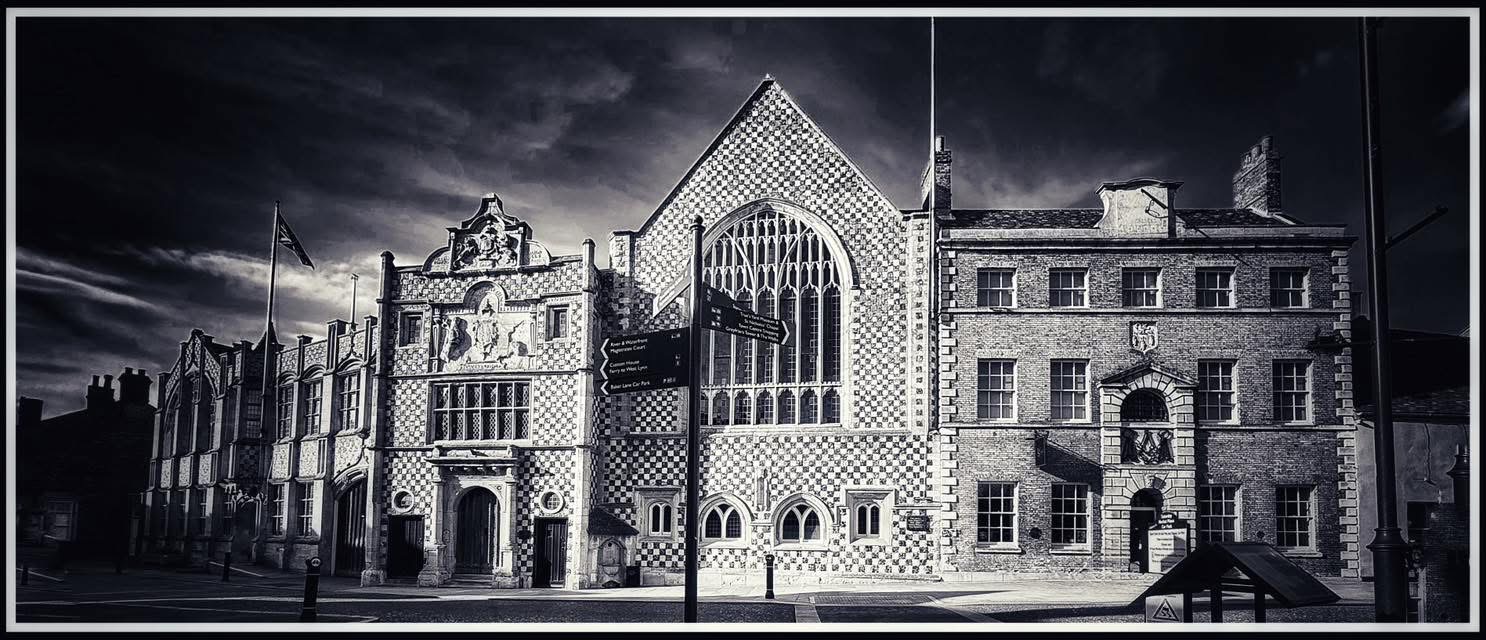

Source: https://www.joditaylorbooks.com/
The central historical question
The loss of King John’s treasure in October 1216 is one of the most famous episodes in medieval English history. Yet the story commonly told, in which the king lost the Crown Jewels in the quicksands of the Wash, is more definite than the surviving evidence permits.
The academic literature raises several distinct questions. Was a royal baggage convoy actually lost? What did it contain? Where did it attempt to cross the tidal waters between Norfolk and Lincolnshire? And how much of the familiar account derives from later interpretations rather than contemporary testimony?
One particularly important study provides a useful starting point:
W. H. St John Hope, “The Loss of King John’s Baggage Train in the Wellstream in October, 1216”, Archaeologia 60, no. 1 (1906): 93–111. Read the article details
This is a substantial investigation, not merely a retelling of the legend. St John Hope compared medieval chronicles with the royal itinerary and historical geography. He was also interested in the possible whereabouts of the lost baggage. Although published in 1906, it remains a particularly relevant foundation for reviewing the subject. cambridge.org
There is also a valuable distinction between the king’s movements and those of his possessions. Surviving royal administrative records help historians reconstruct John’s itinerary. They do not, however, provide an equally precise account of every wagon in his baggage train. The University of Cambridge’s research on medieval royal travel explains both the usefulness of these records and the substantial logistical apparatus accompanying the itinerant court.
What the medieval chroniclers actually reported
The accounts are not identical, and they should not be treated as independent confirmation of every detail.
Roger of Wendover described an extensive loss of carts, packhorses, valuables, and other possessions in the Wellstream. His narrative suggests a catastrophe on a considerable scale. Matthew Paris incorporated Wendover’s account into his Chronica Majora, but that repetition does not provide a second independent witness.
Ralph of Coggeshall offers a particularly interesting alternative. His account specifically mentions the loss of John’s travelling chapel and its relics, together with baggage and members of the royal household who drowned. It is much less definite about the loss of an entire royal treasury. Furthermore, Ralph places the beginning of John’s fatal illness at Lynn, before the disaster, whereas Wendover associates its onset with the king’s distress afterwards.
There is therefore good reason to regard the baggage loss as a historical event while remaining cautious about the quantity and nature of the treasure supposedly involved.
The geographical problem: where did it happen?
Historical reconstructions place the proposed crossing in the former tidal landscape between Walpole Cross Keys and Long Sutton. The exact location has not been established archaeologically.
St John Hope’s reconstruction places John at Lynn from 9 to 11 October 1216, with royal documents locating him at Wisbech and Swineshead on 12 October. His explanation is that the king travelled around the head of the estuary, while the slower baggage convoy attempted the more direct tidal crossing from the Norfolk side towards Long Sutton. He favoured the Cross Keys passage.
This is a persuasive reconstruction, but there is a distinction between establishing John’s whereabouts from dated documents and establishing the precise route taken by the baggage convoy. The latter remains an inference.
There is also a striking piece of local archaeological evidence that deserves attention. Norfolk’s Historic Environment Record, NHER 24560, describes small fragments of gold and silver reportedly recovered during borehole work in 1963, with the discovery later publicised as possibly connected to King’s treasure. The record explicitly states that the objects were undatable, so it does not establish a connection with the events of 1216.
How later historians have interpreted the evidence
An important development in the scholarship is the move away from treating the story principally as a mystery about buried valuables.
In Peter des Roches: An Alien in English Politics, 1205–1238 (1996), Nicholas Vincent discusses the makeshift coronation of Henry III at Gloucester on 28 October 1216. He allows that John’s regalia might have been lost, but also raises the possibility that it had been pawned to pay mercenaries. This is a useful corrective to the assumption that the absence of the usual crown in Gloucester proves its destruction in the Wash.
Paul Webster takes a rather different approach in King John and Religion (2015). His discussion of the king’s death concentrates on the travelling chapel and its relics, treating their loss as evidence of how John continued to practise royal religion even during his final military campaign. Webster also accepts that the king was already ill before his death, probably suffering from dysentery. cambridge.org
Benjamin Wild’s study of Henry III’s jewel accounts is relevant for another reason. It demonstrates the value of royal financial documentation for understanding the acquisition, possession, and ceremonial use of precious objects. However, the surviving jewel accounts are not an inventory of everything carried through the Wash in 1216. They cannot independently establish what disappeared.
The more recent academic literature thus helps explain John’s possessions and the historical context of the loss, but it has not resolved the precise location or contents of the missing baggage.
Assessment of the evidence
| Historical proposition | Confidence | Reason |
|---|---|---|
| Part of John’s baggage was lost in October 1216 | High | Supported by near-contemporary narrative accounts |
| John was at Lynn immediately beforehand | High | Supported by royal administrative records |
| The loss included John’s chapel and relics | High | Specifically reported by Ralph of Coggeshall |
| The convoy crossed near Cross Keys and Long Sutton | Moderate | Plausible reconstruction, not directly proved |
| The lost baggage contained the royal crown | Low | No conclusive contemporary identification |
| The treasure remains buried near Sutton Bridge | Very low | No securely identified archaeological discovery |
| The disaster caused John’s death | Very low | Evidence indicates illness had already begun |
The main gap in the literature is clear. There is a surprisingly limited body of specialist academic research directly examining the disappearance itself. Much of the modern scholarship addresses King John’s reign, his possessions, or medieval coastal environments rather than systematically re-examining the event.
The strongest conclusion is that the historical loss was real, but the familiar story of the Crown Jewels being swallowed by the Wash goes further than the evidence.
Recommended academic reading
1. Hope, W. H. St John. “The Loss of King John’s Baggage Train in the Wellstream in October, 1216.” Archaeologia 60, no. 1 (1906): 93–111. https://doi.org/10.1017/S026134090000936X. The most directly relevant historical investigation, especially for King’s Lynn and the proposed crossing. A scanned copy of the original volume is also available.
2. Vincent, Nicholas. Peter des Roches: An Alien in English Politics, 1205–1238. Cambridge: Cambridge University Press, 1996. Especially chapter 5, “The King’s Guardian, 1216–1219”, pp. 134–183. https://doi.org/10.1017/CBO9780511560316.006. Valuable for considering what became of the royal regalia and the problems surrounding Henry III’s coronation.
3. Webster, Paul. King John and Religion. Woodbridge: Boydell Press, 2015. Especially chapter 8, “King John’s Deathbed and Beyond”, pp. 173–192. https://doi.org/10.1017/9781782045120.009. An important modern treatment of the final days of John’s reign, including the loss of his chapel and relics.
4. Wild, Benjamin L. “Secrecy, Splendour and Statecraft: The Jewel Accounts of King Henry III of England, 1216–72.” Historical Research 83, no. 221 (2010): 409–430. https://doi.org/10.1111/j.1468-2281.2009.00524.x. Useful for understanding the documentary evidence for royal precious objects, though not a direct investigation of the Wash disaster.
5. Lewin, John. “Medieval Environmental Impacts and Feedbacks: The Lowland Floodplains of England and Wales.” Geoarchaeology 25 (2010). https://doi.org/10.1002/gea.20308. Relevant to reconstructing medieval channels and recognising the limitations of present-day geography.
6. Lee, Alexander. “King John’s Lost Treasure.” History Today 74, no. 8 (August 2024): 90 onwards. A modern historical essay focused on the event itself. Publication record. This is accessible historical writing rather than a specialist peer-reviewed research article.
7. Norfolk Historic Environment Record. NHER 24560, “King John’s Treasure.” View the archaeological record. Particularly worth following up for its references to the borehole finds and original newspaper reports.