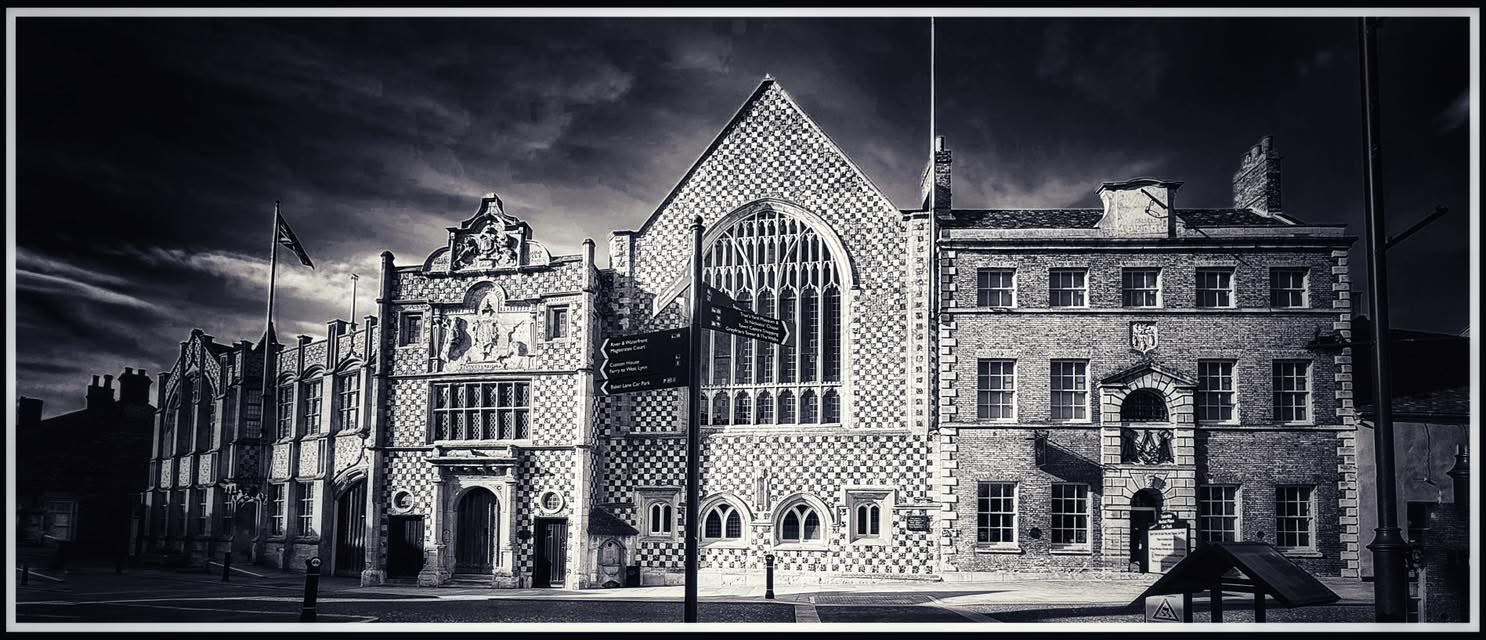
A ship in the channel
On a December afternoon in 1889, the iron steamship Wick Bay grounded in the approaches to King’s Lynn. She was not an elderly coastal vessel limping towards retirement, but a modern cargo steamer, built at Hebburn on the Tyne only five years earlier. She had crossed from Baltimore with maize and cattle cake, a cargo well suited to the agricultural economy of Lynn and its hinterland.
Most accounts place the accident on Friday, 20 December 1889, though Henry Hillen’s history of the borough gives the following day. The exact date matters less than the place. The Wick Bay grounded not at the quayside, but in the Lynn Channel, near Daisley’s Beacon, in the difficult tidal approach through The Wash.
That was why the accident became more than a shipping mishap. Lynn was a port whose prosperity depended on a route through sand, tide, and shifting water. A large iron steamer in the wrong part of the channel was not simply wreckage. It was a threat to the town’s working artery.
The ship that would not move
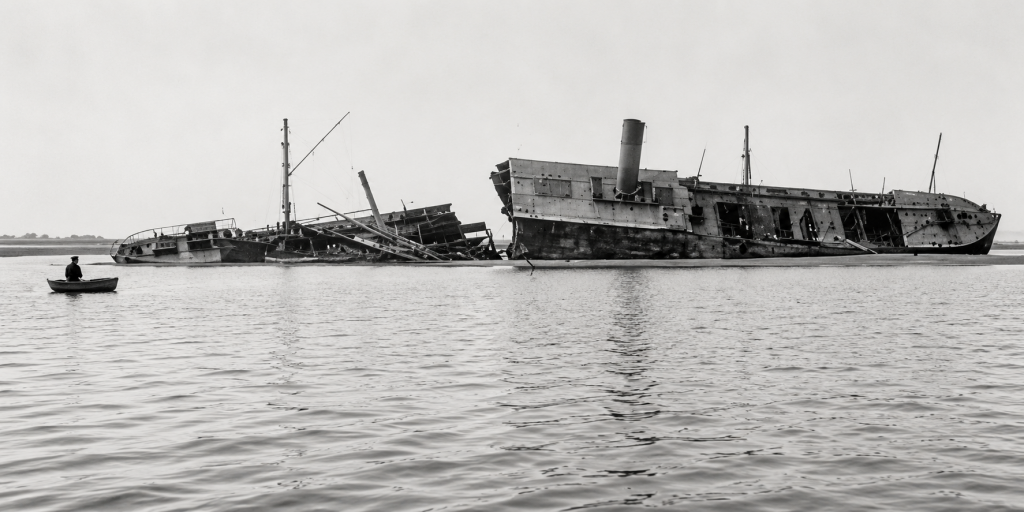
The Wick Bay was in the charge of a pilot when she grounded. Attempts were made to tow her off, but the tides and sands had taken command. She settled, filled, and split. The phrase used in later accounts is vivid and exact: she “broke her back”.
No evidence used for this piece shows that anyone died. The disaster lay elsewhere. The ship became a total wreck, her cargo had to be salvaged, and her broken hull remained a danger to navigation. In a deeper port, or on a less awkward coast, the story might have ended as a costly loss for owners and underwriters. At King’s Lynn, it became a civic burden.
Why it hit Lynn so hard
King’s Lynn Corporation was then responsible for the harbour and its approaches. That responsibility sounded manageable until a wreck of this scale lay in the channel. Hillen later put the cost to the ratepayers at about £20,000, a severe sum for a local authority in the 1890s. He compared it with the earlier removal of the Fly of Sunderland, blown up in 1875 at a cost of £175. The Wick Bay belonged to a different world of risk.
The town had to face an uncomfortable fact. It was trying to run a modern port through old arrangements. Steamships were larger, claims were larger, and mistakes in the approaches were more expensive. The wreck exposed not only the force of tide and sand, but the weakness of Lynn’s harbour administration.
Four years in the mud
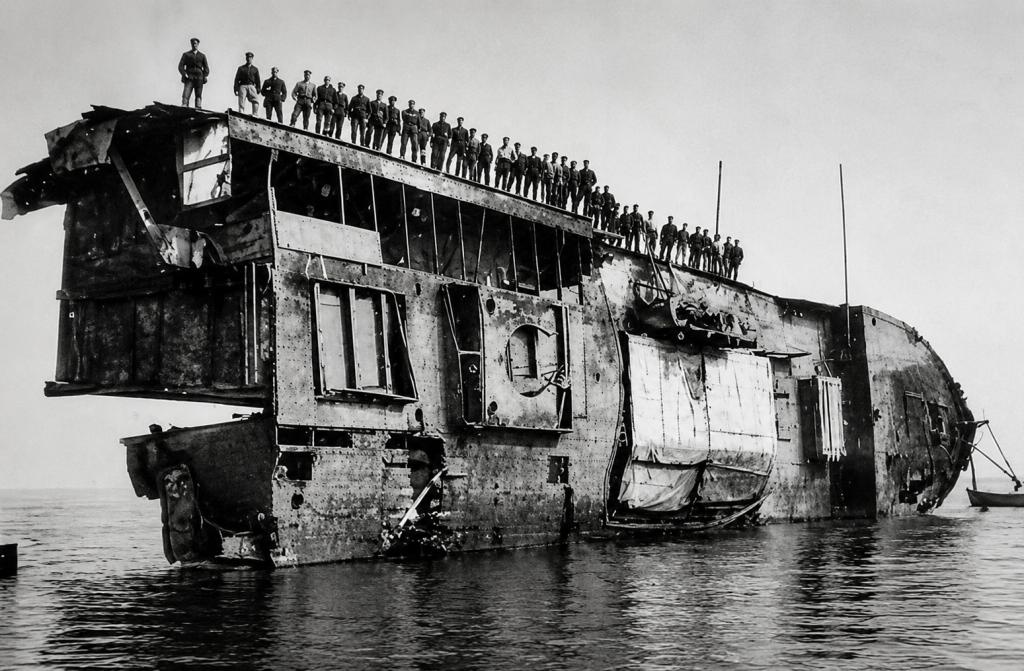
The Wick Bay was not easily cleared. Salvage attempts dragged on, and the wreck was sold and worked on by different salvors. A Strand Magazine article later described her as lying for four years in mud near King’s Lynn, with pumps discharging thousands of tons of mud when she was finally raised. Photographs of the broken vessel show why the removal became such a spectacle. This was not a neat operation. It was industrial surgery on a wreck embedded in The Wash.
By the time the wreck was cleared, it had done its damage to the town’s confidence as well as to its finances. Lynn had learned that a port could not simply hope that the channel would remain open, or that emergencies could be solved after the event.
A wreck becomes an Act of Parliament
The lasting result was the creation of the King’s Lynn Conservancy Board. The King’s Lynn Conservancy Act received royal assent in 1897, transferring harbour powers from the Corporation to a new body charged with safeguarding the river, marking the channel, collecting dues, and dealing with wrecks.
That was the real impact of the Wick Bay. She did not end Lynn’s trade, and she did not create the dangers of The Wash. Those dangers were already part of the port’s life. What she did was make them impossible to manage casually.
A ship had grounded in the channel. A town had paid the bill. Out of that came a more specialised authority for the port and its approaches. The wreck of the Wick Bay is therefore not just a story of iron, mud, and tide. It is the moment when King’s Lynn was forced to modernise the way it looked after the water road on which so much of the town depended.
The old lesson
The Wash gave Lynn its wealth and its worry. It brought ships in from the North Sea, and it threatened them with banks, channels, fog, tide, and weather. In December 1889, the Wick Bay turned that familiar danger into a public crisis.
She broke her back in the Lynn Channel. In doing so, she helped reshape the governance of King’s Lynn’s harbour.
© James Rye 2026
Book a Walk with a Trained and Qualified King’s Lynn Guide
References
FitzGerald, William G. “Wrecks.” The Strand Magazine 14, 1897, 550–560. https://www.victorianvoices.net/ARTICLES/STRAND/1897B/S1897B-Wrecks.pdf.
Hansard. “Local Acts.” House of Commons, 6 August 1897. https://hansard.parliament.uk/Commons/1897-08-06/debates/b08b12b3-f36c-469e-b42b-494f61f36d34/LocalActs.
Hillen, Henry J. History of the Borough of King’s Lynn. Vol. 2. Norwich: East of England Newspaper Co., 1907. https://archive.org/stream/historyofborough02hill/historyofborough02hill_djvu.txt.
King’s Lynn Conservancy Board. “History.” https://www.kingslynnport.co.uk/about/history/.
Melton, Dick. “Brucie 14.” Dersingham Village Voice 73, 15 December 2011. https://dersinghamhistory.info/Dersingham%20Village%20Voice%20073.pdf.
Tyne Built Ships. “Wick Bay 1884.” https://www.tynebuiltships.co.uk/W-Ships/wickbay1884.html.
Worfolk, Stephen. The SS Wick Bay. King’s Lynn: True’s Yard Museum, 1992.