The name Herbert de Losinga looks straightforward. Medieval names containing de usually identify a person’s place of origin. William de Warenne came from Varenne, Robert de Beaumont from Beaumont, and Herbert de Losinga ought, at first sight, to have come from somewhere called Losinga.
No such place has been convincingly identified. Herbert was born at Exmes in Normandy, probably around the middle of the eleventh century. Modern research suggests that “de Losinga” may be a misleading form of his name. What appears to be a Norman place-name may instead preserve a distinctly unflattering family nickname.
A “de” that may not belong
Herbert is now usually called Herbert de Losinga, but that is not how most medieval sources name him. They generally call him simply Herbertus Losinga, without de. Samu Niskanen, writing in 2024, noted that earlier scholars treated Losinga as a place-name, which explains the familiar forms “Herbert of Losinga” and “Herbert de Losinga”. He concluded more cautiously that Losinga may not be a place-name at all.
This makes a considerable difference. Without de, the name no longer reads naturally as “Herbert from Losinga”. It looks more like a byname added to distinguish him from other men called Herbert.
Medieval bynames arose in many ways. A man might be identified by his occupation, appearance, parentage, place of origin, or some memorable personal quality. Some were complimentary. Others were decidedly not. A nickname might then pass to descendants and survive long after its original meaning had ceased to describe the person carrying it.
Flattery, cajolery, and deception
The most intriguing explanation connects Losinga with the medieval French word losenge. The Anglo-Norman Dictionary defines losenge as “flattery” or “sycophancy”, with a secondary sense of coaxing or cajoling. Related words included losengeur and losengier, meaning a flatterer, deceiver, or smooth talker.
These French forms have been traced to the reconstructed Germanic word lausinga, associated with falsehood or deception. The resemblance between lausinga and Losinga is striking. If the bishop’s name came from this family of words, its approximate meaning was “the flatterer”, “the cajoler”, or perhaps “the deceiver”.
It is an attractive interpretation, but it should not be presented as proven. No surviving record explains why Herbert bore the name, and modern scholarship is firmer about what Losinga probably was not than about precisely what it meant. It was probably not a territorial designation. Its connection with the language of flattery is plausible and long established, but the exact route by which the word became a personal name remains uncertain.
A name that seemed to fit
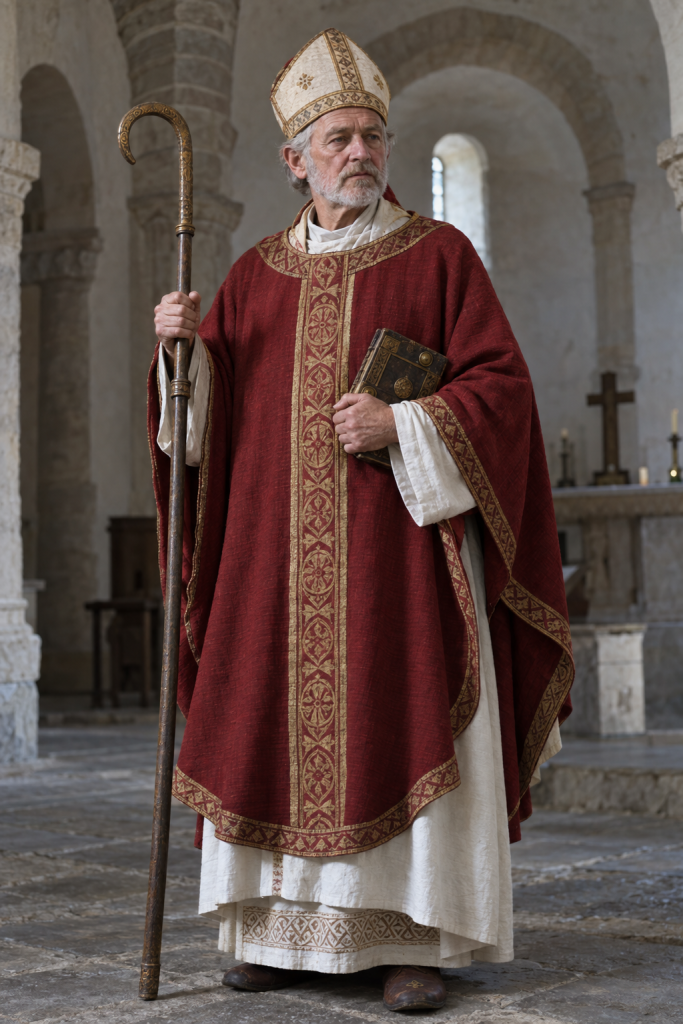
The traditional interpretation gained force from Herbert’s career. He was an ambitious, intelligent, and politically skilful churchman who knew how to prosper at the court of William Rufus. Having become a monk, and then prior, at Fécamp Abbey, he was brought to England and appointed abbot of Ramsey in 1087. In January 1091 he became Bishop of Thetford.
His advancement came at a formidable price. Herbert paid William Rufus £1,000 for the bishopric, while his father, Robert, received the abbacy of New Minster at Winchester as part of the transaction. The purchase of spiritual office constituted simony. Herbert’s conduct attracted enough attention for an anonymous poem to attack him and mention his family.
In 1094 Herbert travelled to Rome, where Pope Urban II absolved him. Later accounts turned this into a simple tale of sin, repentance, and restitution. Tom Licence’s re-examination of the evidence presents a more politically astute Herbert. The bishop was not merely a tearful penitent. He was trying to preserve his position, negotiate with the papacy, and pursue his claims against the abbey of Bury St Edmunds.
A man capable of negotiating with kings, popes, abbots, and rival churchmen might readily be described by his enemies as a flatterer or cajoler. The literal interpretation of Losinga therefore feels almost too appropriate. That does not mean the name was coined in response to his purchase of the bishopric.
A family name, not necessarily Herbert’s nickname
Herbert’s father was also called Robert Losinga. This is an important objection to the idea that Herbert personally acquired the name through flattery at William Rufus’s court. The name was probably already attached to the family.
It may originally have been a nickname applied to Robert, an earlier ancestor, or another relative. By Herbert’s lifetime it could have been functioning as an inherited family name without saying anything about his own character. Modern surnames continue to preserve descriptions that no longer apply to their bearers. A man called Smith need not work at a forge, and a medieval Losinga need not necessarily have been a flatterer.
The family connection also helps to explain why a hostile poem could attack Herbert by referring to his kin. Losinga was recognisable as more than a private nickname. It identified the family to which the bishop belonged.
There is a further trap here. Robert Losinga, Herbert’s father and abbot of New Minster, is sometimes confused with Robert the Lotharingian, the learned Bishop of Hereford. Older writers occasionally called the Hereford bishop “Robert de Losinga”, partly because they assumed some connection with Herbert. The Oxford Dictionary of National Biographywarns that the earliest evidence identifies this other Robert as the Lotharingian, meaning the man from Lorraine. He was not Herbert’s father.
Herbert Losinga and Lynn
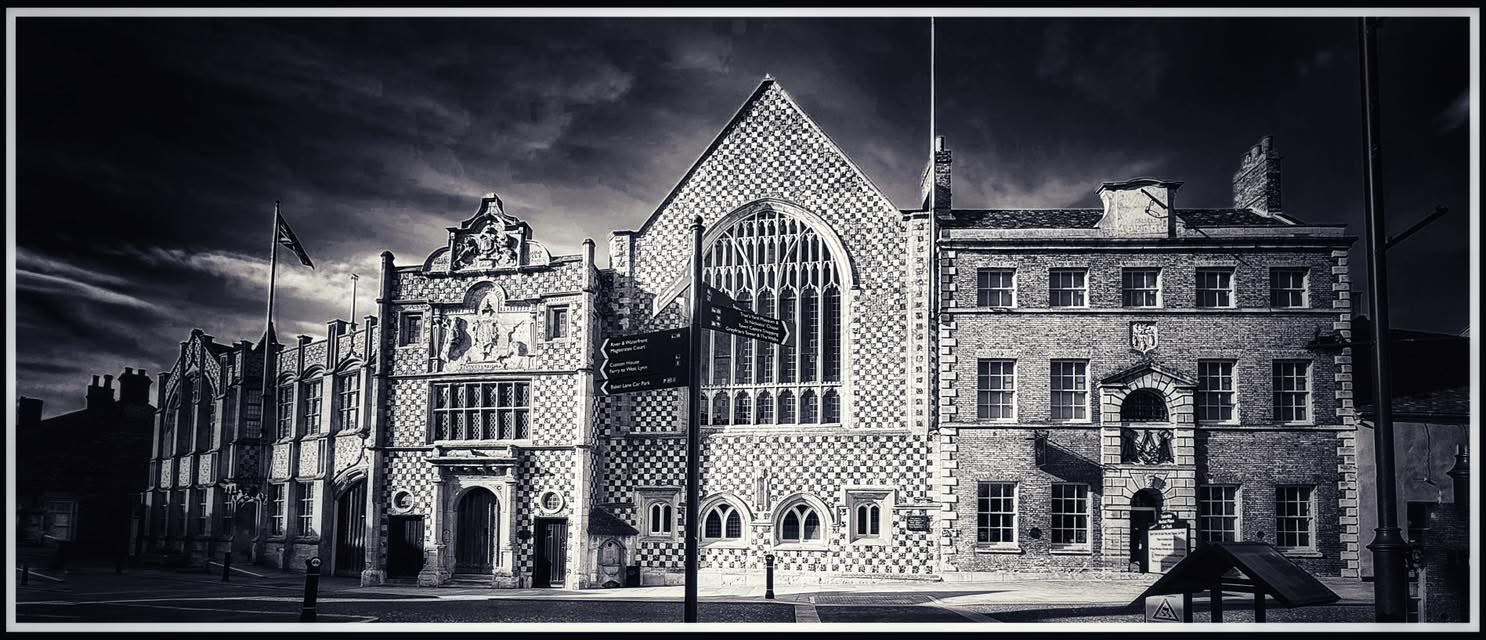
For the people of Bishop’s Lynn, this question concerns more than an unusual surname. Herbert was the bishop under whom the settlement developed into a recognisable Norman town. He founded the Benedictine cathedral priory at Norwich, transferred his episcopal seat there from Thetford, and began the Norman cathedral that still dominates the city. At Lynn he is traditionally associated with the establishment of St Margaret’s Church, now King’s Lynn Minster, although the precise extent of his personal involvement is less securely documented than later tradition sometimes suggests.
Perhaps we should therefore become accustomed to calling him simply Herbert Losinga. That is closer to the form used by most medieval writers and avoids suggesting that he came from a place which may never have existed. Whether his name really meant “Herbert the Flatterer” cannot be settled beyond doubt. It remains a persuasive possibility attached to a bishop whose command of persuasion helped carry him from a Norman monastery to power in the English Church.
© James Rye 2026
Book a Guided Tour with a Trained and Qualified King’s Lynn Guide Through Historic Lynn
References
- Anglo-Norman Dictionary. “Losenge¹.” Anglo-Norman Dictionary. Accessed 18 September 2026. https://anglo-norman.net/entry/losenge_1.
- Harper-Bill, Christopher. “Losinga, Herbert de (d. 1119), Abbot of Ramsey and Bishop of Norwich.” Oxford Dictionary of National Biography. Oxford: Oxford University Press, 2004. https://www.oxforddnb.com/display/10.1093/ref:odnb/9780198614128.001.0001/odnb-9780198614128-e-17008.
- Licence, Tom. “Herbert Losinga’s Trip to Rome and the Bishopric of Bury St Edmunds.” Anglo-Norman Studies 34 (2012): 151–68. https://www.academia.edu/2202715/Herbert_Losinga_s_Trip_to_Rome_and_the_Bishopric_of_Bury_St_Edmunds.
- Niskanen, Samu. “Stocking a Library at the Turn of the Eleventh Century: The Case of Herbert Losinga, Bishop of Norwich.” Interfaces: A Journal of Medieval European Literatures 12 (2024): 77–94. https://doi.org/10.54103/interfaces-12-06.
- Norwich Cathedral. “Herbert de Losinga.” Accessed 18 September 2026. https://cathedral.org.uk/cathedral-highlights/herbert-de-losinga/.
- ATILF–CNRS and Université de Lorraine. “Losenge.” Dictionnaire du Moyen Français. Accessed 18 September 2026. https://www.atilf.fr/dmf/definition/losenge.